


Red Sox Video
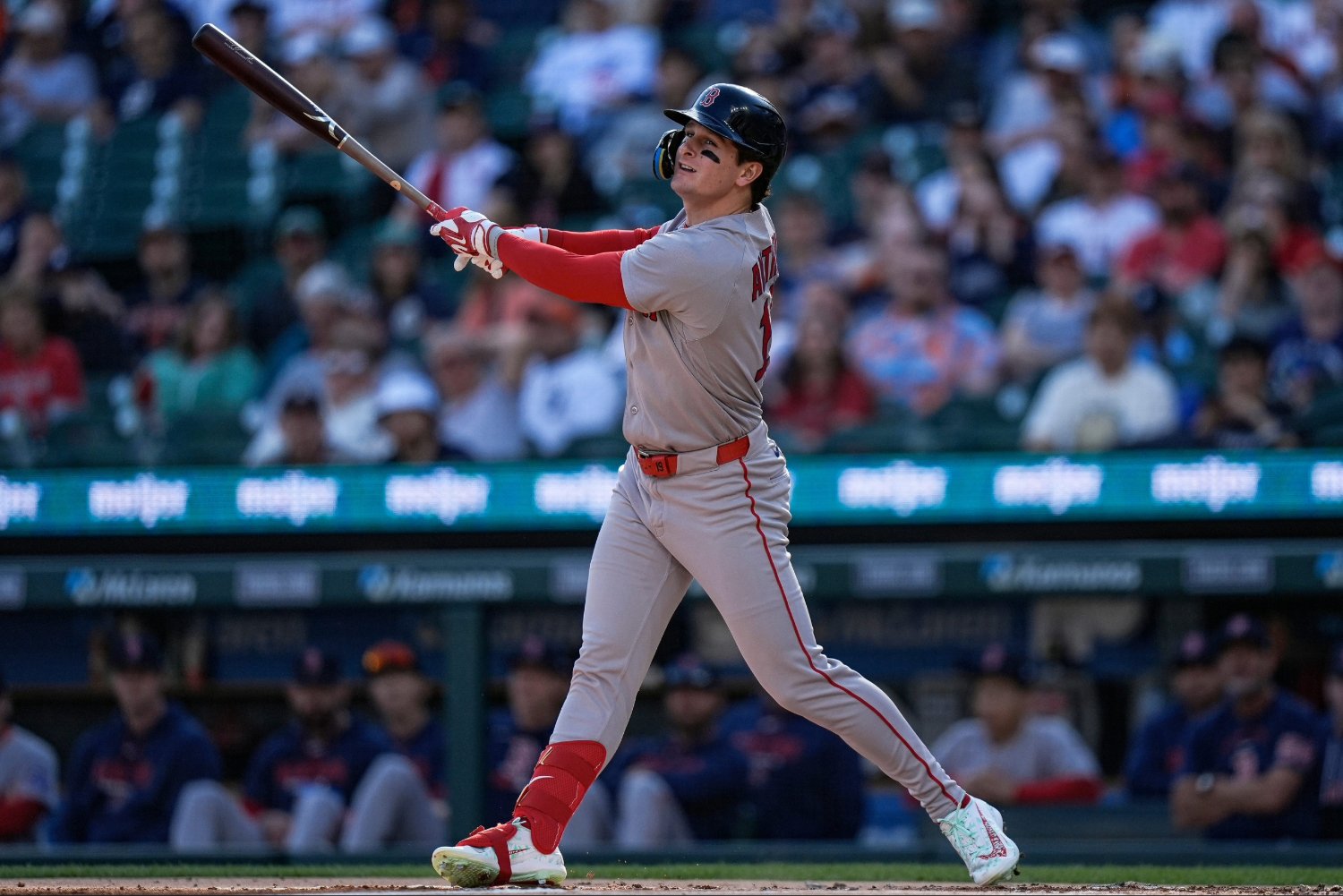
Roman Anthony has gotten off to a slow start in 2026 after lighting it up in the World Baseball Classic this March. Prior to the start of the season, Anthony was a staple in Top 100 players lists across all platforms and many, including myself, assumed continued to ascension into the upper echelon of hitters that MLB has to offer.
The high expectations were deserved. Only 11 rookies since the Wild Card Era began have posted a higher OBP than Roman Anthony did in 2025. Some of the names on that list include Aaron Judge, Juan Soto, Albert Pujols, among others. And, since 1947, only three rookies accumulated more than Anthony's 3.1 bWAR in 71 games or fewer. It's rare air for Anthony to be sitting in, and he did not get there by accident. A month and change is no reason to wave the white flag on a 22-year-old's career, but the slow start has been well below the expectations set on him in the spring.
There has not been major regression across the board and, in fact, Anthony was improving in some key categories up until his right wrist injury.
Roman Anthony: 109 AB, .229/354/.321, 1 HR, 5 RBI, 33 K, 20 BB

As you can see above, Anthony's percentiles, especially in the power department, remain bright red. He ranks in the 91st percentile in average exit velocity, the 86th percentile in maximum exit velocity, and the 93rd percentile in bat speed. Not only is he hitting the ball harder on average, but he is also striking out less and walking more than he did in his rookie year, improving from a 27.7% strikeout rate to 25.4% and 13.2% walk rate to 15.4%. His expected batting average remains around where it was last season, sitting at a .262 mark compared to last year's .258; based off of quality of contact and launch angle, Anthony has gotten better this year,
Looking at his batted ball metrics, we see that further improvements may be in store:

What we do not like to see is a sharp decrease in PullAir%, with Anthony showing a drop of more than three percent. This comes despite improvements this season in AIR% and Pull%. At face value, a drop like this doesn't add up. But another look at the batted ball data shows us why the decrease is happening. He has increased his pulled groundball percentage from 24.1% in 2025 to 27.6% this year. Along with that, he's hitting more balls in the air either back up the middle or the other way, going from an Oppo AIR% of 14.9% to 18.4% and a Straight AIR% of 20.7% to 22.4%. The latter half of this approach may be a little league coach's dream, but pulling the ball in the air will naturally lead to more home runs.
As of May 13, according to Baseball Savant, there had been 1,347 home runs hit this season. Of those, 163 of them were hit to the opposite field, 248 of them were hit to the middle third of the field, and the other 936 were pulled. That is a stark contrast and one that should be noted when evaluating Roman Anthony's season thus far.
One thing that was harped on as a problem for Anthony last season was his propensity to hit the ball on the ground, and he has worked to improve that. His average launch angle has moved from 6.9 degrees to 8.3 degrees. Statcast defines the "sweet spot" for launch angle to be between eight and 32 degrees, as that is where most hits are found. Eight is just high enough to avoid being a routine ground ball, and 32 is just low enough to avoid being a routine fly ball or pop-up.
But while Anthony has improved his launch angle and maintained solid exit velocities, he's not hitting the ball in a way that is taking advantage of all of that power.

Above is a chart of all Roman Anthony's total balls in play contrasted with balls in play that have a launch angle of 15 or more degrees, along with a rough field sketch for visualization purposes. The blue dots indicate low exit velocities and red is his higher-end exit velocities. The spray chart plot is thanks to @jonpgh on X/Twitter. What is interesting to see is how many balls in play vanish after increasing the minimum threshold and, more importantly, how many of those balls on the left image were hit with launch angles below 15 degrees. Cutting the field in half will give an approximate value of how many balls in play were pulled.
By my count on the right image, Anthony pulled nine balls compared to the 17 that went the opposite way, including his lone home run this season.
The intangibles for the Roman Empire are still there. He still crushes the baseball and draws walks like he had before. He has even made improvements in lifting the ball more consistently, which is a better step forward than continuing to hit groundballs at an unsustainable rate. Now, it's time for him to start ripping baseballs into right field instead of center or left.
There is so much upside in him and, as I'm sure you have heard before, he is only 22 years old. A bad April won't mean anything if he can start hitting like we've seen him do before. His expected metrics, like xBA (.229 -> .262) and xwOBA (.323 -> .379) all indicate brighter days are ahead.
This seems much more like a continued adjustment period than a collapse. His underlying skills remain the same, if not largely better than before. All of his natural power needs to be used to deposit the baseball into seats. Upon his eventual return from the injured list, should he begin pulling AND elevating, the season we expected out of Roman Anthony may very well be on the horizon.






Recommended Comments
There are no comments to display.
Create an account or sign in to comment
You need to be a member in order to leave a comment
Create an account
Sign up for a new account in our community. It's easy!
Register a new accountSign in
Already have an account? Sign in here.
Sign In Now