


N.B. Lindberg
-
Posts
6 -
Joined
-
Last visited
N.B. Lindberg's Achievements


-
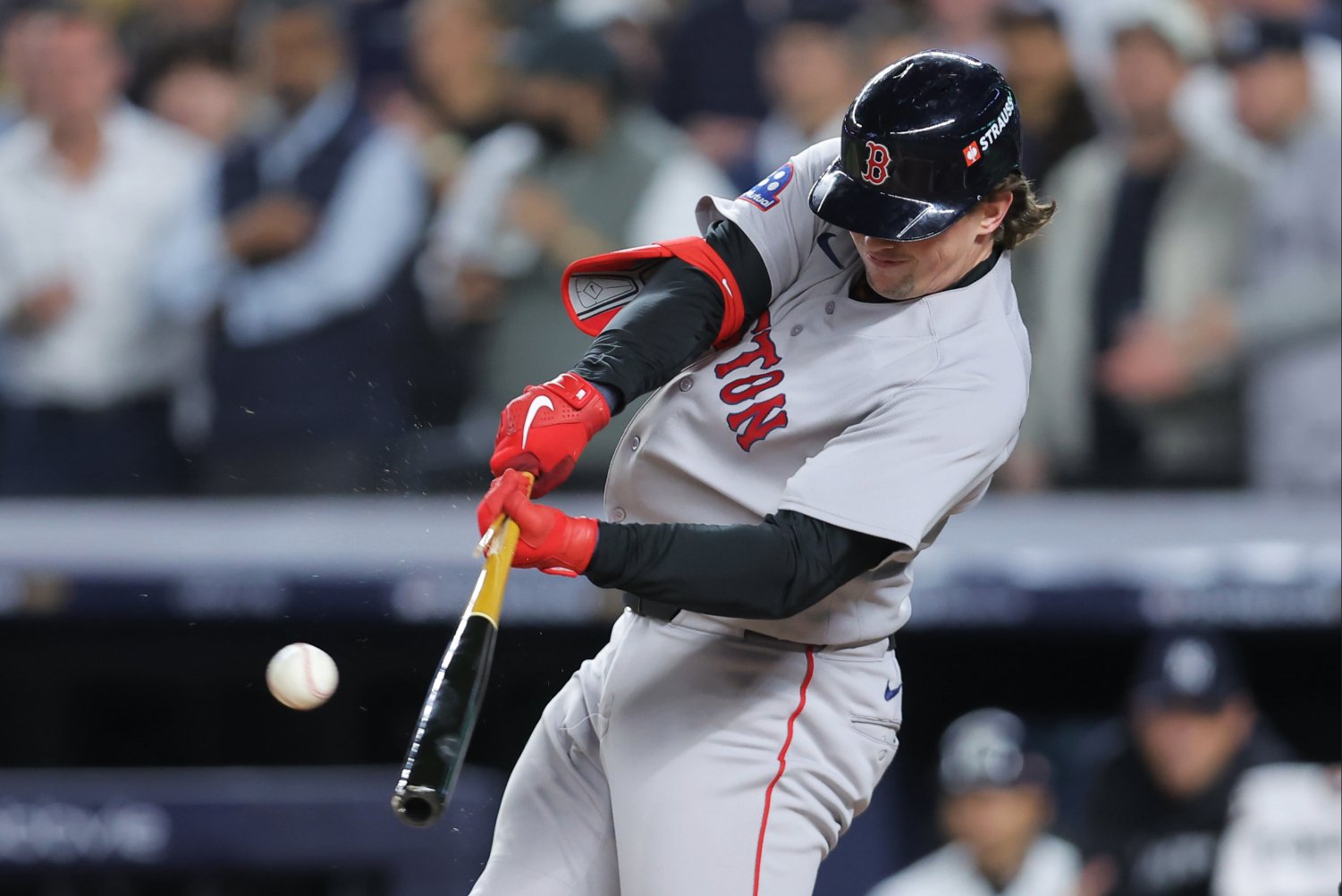 Cam Schlittler is, without a doubt, the AL Cy Young favorite. He led the AL in fWAR (6.2), ERA (1.95), xERA (2.85), and FIP (2.56) on the strength of a three-fastball mix. Over 33 starts and 193.2 innings, 89.3% of his pitches were either a four-seamer, cutter, or sinker. Entering Game 1 of the Wild Card Series, the Boston Red Sox were preparing to face a steady stream of the hard stuff. So, naturally, Schlittler leaned on his worst pitch to befuddle them all night long. Throughout the regular season, Schlittler’s curveball was his fourth pitch. He threw it 9.8% of the time, with his highest single-game usage at 20.4% (for a total of 19). And the reason why was very simple: it wasn’t particularly good. Based on run values, it was easily his worst pitch, and it even had a higher contact rate than his sinker. It would be one thing if the young right-hander threw a few curveballs in the first inning to keep the Red Sox guessing, but he came out firing and never stopped. All it took was four innings and 66 pitches for him to hit 19 curveballs, equaling his season high. By the time his night was done, he had thrown 32 curveballs, comprising 27.3% of his total pitches. It wasn’t just the volume of curves that stood out; it was the effectiveness. Fourteen were thrown for strikes, eight swinging, six called, four were fouled off, and only two were put in play. Schlittler's curveball propelled him to 6.1 innings of shutout ball with 10 strikeouts and only one walk. The Red Sox got caught with their pants down in Game 1. While Schlittler threw his curveball a little under 10% of the time on the season, his usage had inched up to 13.34% since June 30. It’s tough when an elite pitcher makes a wholesale shift out of the blue, though it's not like this was completely unexpected. Simply put, this team got out-prepared by the Yankees. The fact remains that the Sox were completely helpless against a pitcher who leaned into his worst pitch. The element of surprise should only get you so far. It was a gambit that paid off for New York, but it was also an opportunity missed for Boston. They got the presumptive Cy Young winner to abandon his terms and still came up empty.
 -
Cam Schlittler is, without a doubt, the AL Cy Young favorite. He led the AL in fWAR (6.2), ERA (1.95), xERA (2.85), and FIP (2.56) on the strength of a three-fastball mix. Over 33 starts and 193.2 innings, 89.3% of his pitches were either a four-seamer, cutter, or sinker. Entering Game 1 of the Wild Card Series, the Boston Red Sox were preparing to face a steady stream of the hard stuff. So, naturally, Schlittler leaned on his worst pitch to befuddle them all night long. Throughout the regular season, Schlittler’s curveball was his fourth pitch. He threw it 9.8% of the time, with his highest single-game usage at 20.4% (for a total of 19). And the reason why was very simple: it wasn’t particularly good. Based on run values, it was easily his worst pitch, and it even had a higher contact rate than his sinker. It would be one thing if the young right-hander threw a few curveballs in the first inning to keep the Red Sox guessing, but he came out firing and never stopped. All it took was four innings and 66 pitches for him to hit 19 curveballs, equaling his season high. By the time his night was done, he had thrown 32 curveballs, comprising 27.3% of his total pitches. It wasn’t just the volume of curves that stood out; it was the effectiveness. Fourteen were thrown for strikes, eight swinging, six called, four were fouled off, and only two were put in play. Schlittler's curveball propelled him to 6.1 innings of shutout ball with 10 strikeouts and only one walk. The Red Sox got caught with their pants down in Game 1. While Schlittler threw his curveball a little under 10% of the time on the season, his usage had inched up to 13.34% since June 30. It’s tough when an elite pitcher makes a wholesale shift out of the blue, though it's not like this was completely unexpected. Simply put, this team got out-prepared by the Yankees. The fact remains that the Sox were completely helpless against a pitcher who leaned into his worst pitch. The element of surprise should only get you so far. It was a gambit that paid off for New York, but it was also an opportunity missed for Boston. They got the presumptive Cy Young winner to abandon his terms and still came up empty. View full article
-
 NHNative reacted to an article:
Caleb Durbin Epitomizes the 2026 Red Sox, But That Needs to Change In October
NHNative reacted to an article:
Caleb Durbin Epitomizes the 2026 Red Sox, But That Needs to Change In October
-
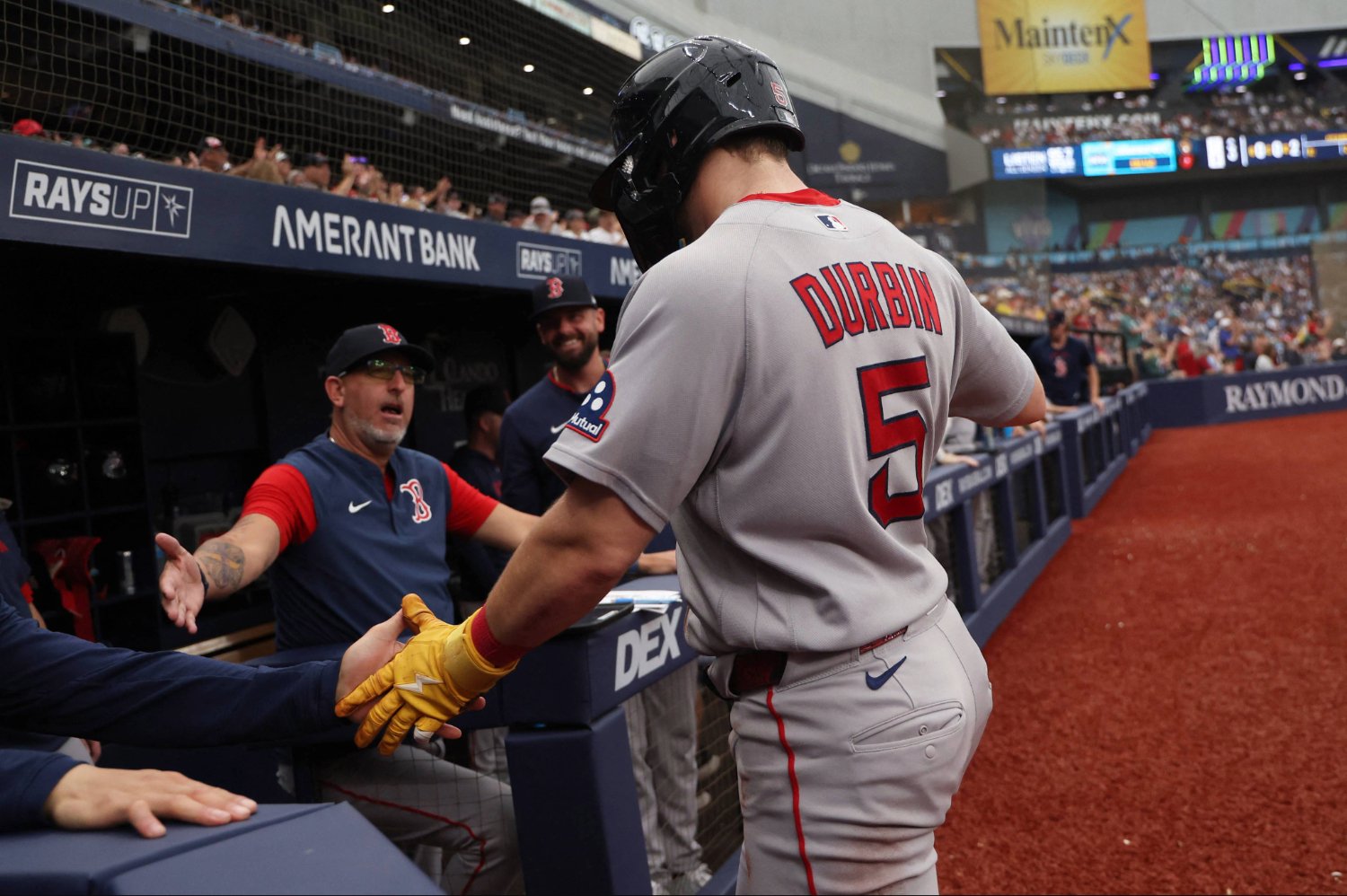 The single best personification of the 2026 Boston Red Sox is Caleb Durbin. The Sox are an average hitting team (100 wRC+), a good-but-not-great defensive unit, and shook off a morbid start to recapture respectability. Does that sound like anybody? The pair’s strength rests on a lack of weaknesses rather than any single overwhelming attribute. And while that’s fantastic in the regular season, it has diminishing returns in the postseason. Contrary to popular belief, what wins in the playoffs isn’t contact, small ball, or any of the other things that baseball fans of a certain age fetishize. Standing on the shoulders of Dan Szymborski’s research, the MLB playoffs come down a whole bunch to randomness, but once you get past team quality, the things that give you an ever so slight edge are hitting home runs, having a good bullpen, and front-line talent. The reason for home run supremacy actually follows the same logic as the contact and small ball line of thought. The playoffs feature better pitching, and better pitching usually comes via the strikeout. However, it’s not teams that are difficult to strike out that prosper; it’s the ones who can put runs on the board with their limited contact, which brings us back to Durbin and the Sox. Caleb Durbin and his team shouldn’t be expected to collapse in the playoffs, but their brand of hitting is not postseason optimized. Durbin runs high contact rates and solid plate discipline metrics to get on base and has just enough oomph to run into the occasional extra-base hit, but with 13 home runs, he’s not a huge threat to go deep. And over the past month, he’s trended even farther from the boom stick. Since August 20, Durbin has a 102 wRC+, the same as his season-long figure, but his on-base ability has made up for a cratering in contact quality. Caleb Durbin PA HR HR% BB% K% ISO AVG OBP SLG wRC+ Since August 20 116 1 0.86% 13.80% 13.80% 0.065 0.239 0.381 0.304 102 Before August 20 458 12 2.62% 7.40% 13.50% 0.148 0.254 0.325 0.402 102 While the overall production is identical, the process to get there has not been. Trading plate discipline for power isn’t the worst idea, but the driving force behind his explosion in walk rate has to do with pitchers and passivity, not newfound selectivity. Caleb Durbin PA O-Swing% Z-Swing% Zone% F-Strike% O-Contact% Z-Contact% Since August 20 116 31.50% 57.70% 40.20% 56.90% 74.40% 89.10% Before August 20 458 31.00% 67.40% 43.00% 62.90% 77.70% 90.70% Most of these changes are small and it’s still only 116 plate appearances, but Durbin seems to be benefitting tremendously from pitchers inability to throw him strike one, and then waiting out at-bats. The fact that his out-of-zone swing rate has remained virtually unchanged suggests his plate discipline hasn’t gone to a new level. None of this necessarily spells doom for Durbin in the playoffs, but his current approach is very unlikely to work against elite pitching. As for the Red Sox, their overall offense does not have the look of a playoff riser. Their wRC+ of 100 is bang on average, and they rank 24th in baseball in home runs (162). On top of that, many of their plate discipline metrics are average. Basically, this offense has nothing to hang its hat on, especially against elite pitching. However, the playoff Sox should look a lot different to what the team has been on the year. Roman Anthony missed most of the season, and while he hasn’t rediscovered his power stroke, when right he is a real deep threat. Adley Rutschman was acquired at the deadline and is a far better hitter than what he’s shown thus far. Jarren Duran hopefully won’t be needed to hit. And Mickey Gasper has provided the exact type of pop over the past month that they’ve missed all season. For better and for worse, Caleb Durbin is a paradigmatic example of the 2026 Red Sox as a whole. That’ll win a bunch of regular season games, but competency rarely trumps the superlative. Boston's best chance to make another World Series run is to veer away from his image. Some players are built for 162, and others are built for four weeks in October.
 -
The single best personification of the 2026 Boston Red Sox is Caleb Durbin. The Sox are an average hitting team (100 wRC+), a good-but-not-great defensive unit, and shook off a morbid start to recapture respectability. Does that sound like anybody? The pair’s strength rests on a lack of weaknesses rather than any single overwhelming attribute. And while that’s fantastic in the regular season, it has diminishing returns in the postseason. Contrary to popular belief, what wins in the playoffs isn’t contact, small ball, or any of the other things that baseball fans of a certain age fetishize. Standing on the shoulders of Dan Szymborski’s research, the MLB playoffs come down a whole bunch to randomness, but once you get past team quality, the things that give you an ever so slight edge are hitting home runs, having a good bullpen, and front-line talent. The reason for home run supremacy actually follows the same logic as the contact and small ball line of thought. The playoffs feature better pitching, and better pitching usually comes via the strikeout. However, it’s not teams that are difficult to strike out that prosper; it’s the ones who can put runs on the board with their limited contact, which brings us back to Durbin and the Sox. Caleb Durbin and his team shouldn’t be expected to collapse in the playoffs, but their brand of hitting is not postseason optimized. Durbin runs high contact rates and solid plate discipline metrics to get on base and has just enough oomph to run into the occasional extra-base hit, but with 13 home runs, he’s not a huge threat to go deep. And over the past month, he’s trended even farther from the boom stick. Since August 20, Durbin has a 102 wRC+, the same as his season-long figure, but his on-base ability has made up for a cratering in contact quality. Caleb Durbin PA HR HR% BB% K% ISO AVG OBP SLG wRC+ Since August 20 116 1 0.86% 13.80% 13.80% 0.065 0.239 0.381 0.304 102 Before August 20 458 12 2.62% 7.40% 13.50% 0.148 0.254 0.325 0.402 102 While the overall production is identical, the process to get there has not been. Trading plate discipline for power isn’t the worst idea, but the driving force behind his explosion in walk rate has to do with pitchers and passivity, not newfound selectivity. Caleb Durbin PA O-Swing% Z-Swing% Zone% F-Strike% O-Contact% Z-Contact% Since August 20 116 31.50% 57.70% 40.20% 56.90% 74.40% 89.10% Before August 20 458 31.00% 67.40% 43.00% 62.90% 77.70% 90.70% Most of these changes are small and it’s still only 116 plate appearances, but Durbin seems to be benefitting tremendously from pitchers inability to throw him strike one, and then waiting out at-bats. The fact that his out-of-zone swing rate has remained virtually unchanged suggests his plate discipline hasn’t gone to a new level. None of this necessarily spells doom for Durbin in the playoffs, but his current approach is very unlikely to work against elite pitching. As for the Red Sox, their overall offense does not have the look of a playoff riser. Their wRC+ of 100 is bang on average, and they rank 24th in baseball in home runs (162). On top of that, many of their plate discipline metrics are average. Basically, this offense has nothing to hang its hat on, especially against elite pitching. However, the playoff Sox should look a lot different to what the team has been on the year. Roman Anthony missed most of the season, and while he hasn’t rediscovered his power stroke, when right he is a real deep threat. Adley Rutschman was acquired at the deadline and is a far better hitter than what he’s shown thus far. Jarren Duran hopefully won’t be needed to hit. And Mickey Gasper has provided the exact type of pop over the past month that they’ve missed all season. For better and for worse, Caleb Durbin is a paradigmatic example of the 2026 Red Sox as a whole. That’ll win a bunch of regular season games, but competency rarely trumps the superlative. Boston's best chance to make another World Series run is to veer away from his image. Some players are built for 162, and others are built for four weeks in October. View full article
-
mvp 78 reacted to a post in a topic:
Jarren Duran Can Be Fixed, but the Red Sox Are Running Out of Time
-
The Boston Red Sox are a near-lock for the second AL Wild Card spot. With just over 10 games left in the season, it’d take a whole mess of crazy for the Sox to move up or down. While it would be great to have a shot at moving up in the standings, their current situation will allow them to spend the final two weeks of the season freshening up their stalwarts, getting injury returnees back up to speed, and fixing Jarren Duran. Duran hasn’t quite been the worst regular in Major League Baseball, but that’s damning with faint praise. He’s still an excellent baserunner and a plus fielder, but only Ezequiel Tovar has a lower wRC+ (51) among qualified hitters than Duran’s mark of 67. Despite his disintegrated noodle of a bat, he has racked up 578 plate appearances due to injuries and, presumably, a lack of better options, but that doesn’t make him a lost cause. What makes Duran’s complete collapse at the plate so shocking is that he was a top-25 hitter by wRC+ only two seasons ago (132), and well above average just last season (112). While it’s safe to assume 2024 was a career year, he looked to have established himself as an above-average bat, and it’s not like all of his underlying metrics have cratered. If anything, many have improved. He’s swinging the bat as fast as ever. His barrel rate is almost identical to the past two seasons. He’s pulling the ball in the air more. And while his in-zone contact rate is a career-low 84%, that’s a completely fair trade-off for what should be better power. Duran Duran Season Ave Bat Speed Barrel Rate Pulled Air% Z-Contact% 2024 73.6 9.3% 10.3% 87.3% 2025 74.8 9.7% 15.2% 86.9% 2026 75.1 9.6% 14.9% 84.0% Now, you could argue that Duran didn’t need to change his approach from 2024, but given these figures, there’d be no reason to believe he had gone from one of the best hitters in baseball to almost the very worst. However, this chart doesn’t contain every last kernel of underlying data, and the one thing that has cratered for Duran is the most basic, fundamental skill of hitting—not chasing (f***ing) fastballs out of the zone. Duran is running a wRC+ of 67 because his out-of-zone swing rate (O-Swing%) has ballooned to 34.5%, which is largely driven by a career-high O-Swing% of 36.8% against four-seam fastballs. Throughout his career, Duran’s production has largely followed his ability to lay off pitches out of the zone, but his inability to lay off four-seam fastballs (FA), to this degree, is new. Season O-Swing% O-Swing% FA wRC+ 2021 34.70% 29.60% 48 2022 31.30% 26.60% 77 2023 29.80% 23.60% 122 2024 28% 20.80% 132 2025 31.10% 29.20% 112 2026 34.50% 36.80% 67 What makes his cratering performance against four-seamers so baffling is that it is exclusively down to swing decisions. His production when he makes contact is relatively unchanged, and he’s not whiffing a concerning amount in the zone. In fact, his zone contact rate against four-seamers is better than it was in 2024. Duran vs 4-Seam Fastballs Season Z-Contact% FastSw% EV90 Launch Angle Barrel% wRC+ 2021 81.20% NA 103.5 22.8 7.40% 67 2022 85.60% NA 102.5 18.6 11.80% 123 2023 88.40% 26.70% 106.5 16.9 4.30% 137 2024 84.80% 30.20% 105.6 21.5 12.80% 164 2025 88.10% 41.80% 108.8 18.8 11.40% 155 2026 85.30% 44% 107.4 20.5 11% 75 It’s not groundbreaking analysis to say that swinging at fastballs out of the zone is a bad idea, but it doesn’t necessarily doom a hitter to the abyss. However, Duran’s ability against four-seamers was a load-bearing trait, and it becoming a weakness has completely collapsed his profile because it has cost him the platoon advantage. Unsurprisingly, Duran, a left-handed hitter, has made a career out of pulverizing right-handed pitching. His career wRC+ against righties is 114, compared to 72 against lefties. Splits like this are far from unusual, but what has happened to Duran in 2026 is. Over 410 plate appearances against righties, he has a wRC+ of 63. That’s the second-worst among qualified hitters, and it all stems from his struggles against four-seam fastballs. This season, 37.3% of the pitches right-handers have thrown Duran have been four-seam fastballs, right in line with his career average of 38.7%. While four-seamers generally have more neutral platoon splits, historically, Duran absolutely feasted on right-handed four-seamers. Entering 2026, Duran had a +20.6 run value against right-handed four-seam fastballs, but he has somehow managed an absolutely preposterous, incomprehensible -13.1 run value in 2026. The reason why Duran’s plate discipline has completely collapsed against four-seamers is a bit more of a mystery, but I think it starts with his increased desire to swing hard, lift, and pull. Over the past four seasons, as Duran’s swing speed has increased, he has hit the ball out in front a bit more. Season Bat Speed Intercept Point 2023 73.2 -2.0 2024 73.6 0.0 2025 74.7 3.1 2026 75.1 4.4 None of this is particularly surprising and should be expected. A faster bat will make contact out in front more often, and bat speed increases throughout a swing. The two moving in tandem make all the sense in the world, but getting to this point could have come at a cost. To sell out for swing speed and contact out in front, Duran likely has to get his operation started just a fraction of a second earlier, which means committing to pitches a tad earlier as well. The trickle-down effect is swinging at more pitches out of the zone, and in particular four-seam fastballs, which require the quickest decisions at the plate. The Red Sox don’t need Jarren Duran to figure it out to make the playoffs, but getting him back to basics could unlock another level of the offense. With Duran producing at an average offensive level, suddenly the Sox could field an elite outfield defense of Wilyer Abreu, Ceddanne Rafaela, and Duran, while letting Roman Anthony DH. However, for that dream arrangement to work, Duran needs to actually hit again, and that starts with laying off fastballs outside of the zone. View full article
-
Jarren Duran Can Be Fixed, but the Red Sox Are Running Out of Time
N.B. Lindberg posted an article in Red Sox
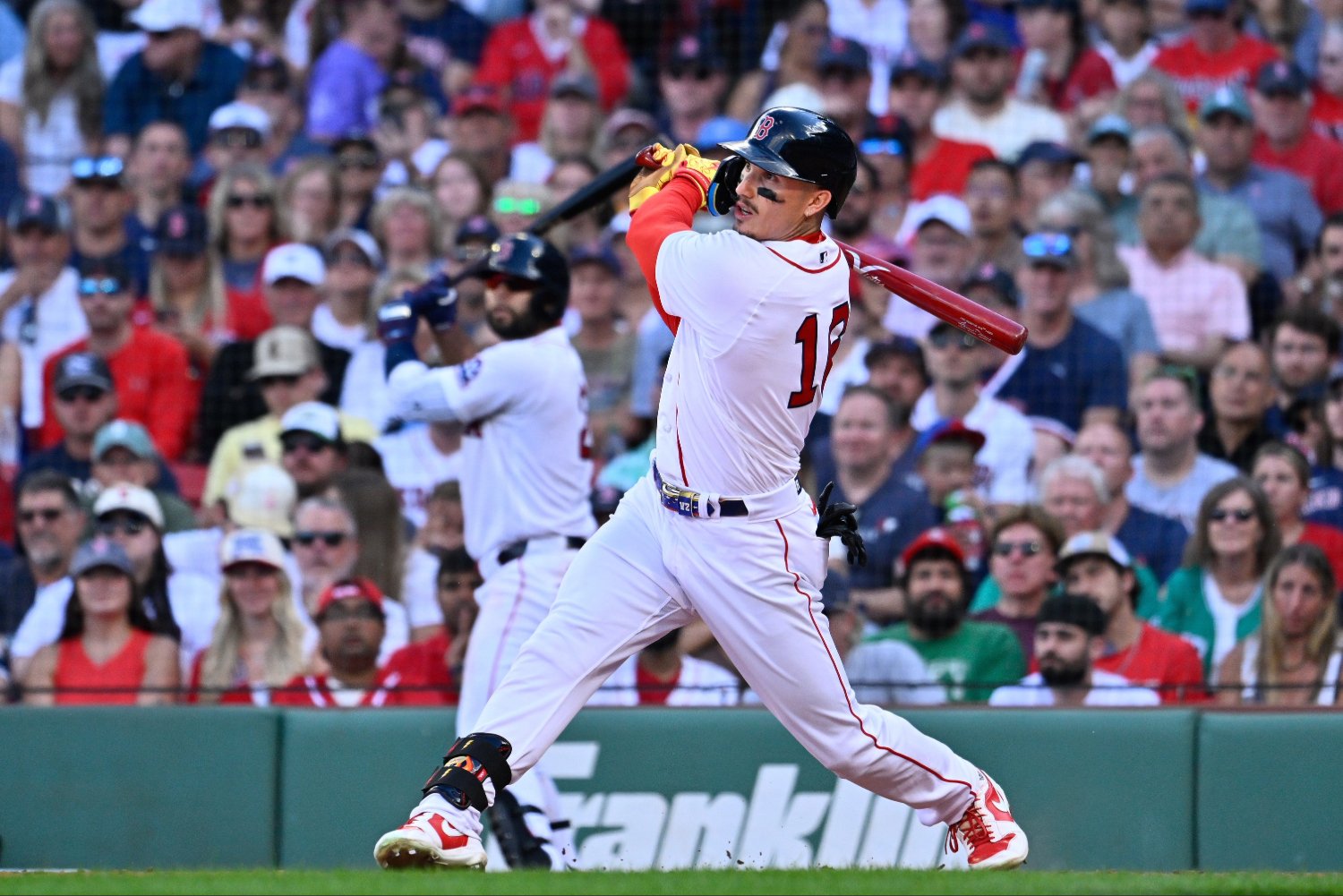 The Boston Red Sox are a near-lock for the second AL Wild Card spot. With just over 10 games left in the season, it’d take a whole mess of crazy for the Sox to move up or down. While it would be great to have a shot at moving up in the standings, their current situation will allow them to spend the final two weeks of the season freshening up their stalwarts, getting injury returnees back up to speed, and fixing Jarren Duran. Duran hasn’t quite been the worst regular in Major League Baseball, but that’s damning with faint praise. He’s still an excellent baserunner and a plus fielder, but only Ezequiel Tovar has a lower wRC+ (51) among qualified hitters than Duran’s mark of 67. Despite his disintegrated noodle of a bat, he has racked up 578 plate appearances due to injuries and, presumably, a lack of better options, but that doesn’t make him a lost cause. What makes Duran’s complete collapse at the plate so shocking is that he was a top-25 hitter by wRC+ only two seasons ago (132), and well above average just last season (112). While it’s safe to assume 2024 was a career year, he looked to have established himself as an above-average bat, and it’s not like all of his underlying metrics have cratered. If anything, many have improved. He’s swinging the bat as fast as ever. His barrel rate is almost identical to the past two seasons. He’s pulling the ball in the air more. And while his in-zone contact rate is a career-low 84%, that’s a completely fair trade-off for what should be better power. Duran Duran Season Ave Bat Speed Barrel Rate Pulled Air% Z-Contact% 2024 73.6 9.3% 10.3% 87.3% 2025 74.8 9.7% 15.2% 86.9% 2026 75.1 9.6% 14.9% 84.0% Now, you could argue that Duran didn’t need to change his approach from 2024, but given these figures, there’d be no reason to believe he had gone from one of the best hitters in baseball to almost the very worst. However, this chart doesn’t contain every last kernel of underlying data, and the one thing that has cratered for Duran is the most basic, fundamental skill of hitting—not chasing (f***ing) fastballs out of the zone. Duran is running a wRC+ of 67 because his out-of-zone swing rate (O-Swing%) has ballooned to 34.5%, which is largely driven by a career-high O-Swing% of 36.8% against four-seam fastballs. Throughout his career, Duran’s production has largely followed his ability to lay off pitches out of the zone, but his inability to lay off four-seam fastballs (FA), to this degree, is new. Season O-Swing% O-Swing% FA wRC+ 2021 34.70% 29.60% 48 2022 31.30% 26.60% 77 2023 29.80% 23.60% 122 2024 28% 20.80% 132 2025 31.10% 29.20% 112 2026 34.50% 36.80% 67 What makes his cratering performance against four-seamers so baffling is that it is exclusively down to swing decisions. His production when he makes contact is relatively unchanged, and he’s not whiffing a concerning amount in the zone. In fact, his zone contact rate against four-seamers is better than it was in 2024. Duran vs 4-Seam Fastballs Season Z-Contact% FastSw% EV90 Launch Angle Barrel% wRC+ 2021 81.20% NA 103.5 22.8 7.40% 67 2022 85.60% NA 102.5 18.6 11.80% 123 2023 88.40% 26.70% 106.5 16.9 4.30% 137 2024 84.80% 30.20% 105.6 21.5 12.80% 164 2025 88.10% 41.80% 108.8 18.8 11.40% 155 2026 85.30% 44% 107.4 20.5 11% 75 It’s not groundbreaking analysis to say that swinging at fastballs out of the zone is a bad idea, but it doesn’t necessarily doom a hitter to the abyss. However, Duran’s ability against four-seamers was a load-bearing trait, and it becoming a weakness has completely collapsed his profile because it has cost him the platoon advantage. Unsurprisingly, Duran, a left-handed hitter, has made a career out of pulverizing right-handed pitching. His career wRC+ against righties is 114, compared to 72 against lefties. Splits like this are far from unusual, but what has happened to Duran in 2026 is. Over 410 plate appearances against righties, he has a wRC+ of 63. That’s the second-worst among qualified hitters, and it all stems from his struggles against four-seam fastballs. This season, 37.3% of the pitches right-handers have thrown Duran have been four-seam fastballs, right in line with his career average of 38.7%. While four-seamers generally have more neutral platoon splits, historically, Duran absolutely feasted on right-handed four-seamers. Entering 2026, Duran had a +20.6 run value against right-handed four-seam fastballs, but he has somehow managed an absolutely preposterous, incomprehensible -13.1 run value in 2026. The reason why Duran’s plate discipline has completely collapsed against four-seamers is a bit more of a mystery, but I think it starts with his increased desire to swing hard, lift, and pull. Over the past four seasons, as Duran’s swing speed has increased, he has hit the ball out in front a bit more. Season Bat Speed Intercept Point 2023 73.2 -2.0 2024 73.6 0.0 2025 74.7 3.1 2026 75.1 4.4 None of this is particularly surprising and should be expected. A faster bat will make contact out in front more often, and bat speed increases throughout a swing. The two moving in tandem make all the sense in the world, but getting to this point could have come at a cost. To sell out for swing speed and contact out in front, Duran likely has to get his operation started just a fraction of a second earlier, which means committing to pitches a tad earlier as well. The trickle-down effect is swinging at more pitches out of the zone, and in particular four-seam fastballs, which require the quickest decisions at the plate. The Red Sox don’t need Jarren Duran to figure it out to make the playoffs, but getting him back to basics could unlock another level of the offense. With Duran producing at an average offensive level, suddenly the Sox could field an elite outfield defense of Wilyer Abreu, Ceddanne Rafaela, and Duran, while letting Roman Anthony DH. However, for that dream arrangement to work, Duran needs to actually hit again, and that starts with laying off fastballs outside of the zone.
