Jack Lindsay
-
Posts
73 -
Joined
-
Last visited
Content Type
Profiles
Boston Red Sox Videos
2026 Boston Red Sox Top Prospects Ranking
Boston Red Sox Free Agent & Trade Rumors, Notes, & Tidbits
Guides & Resources
2025 Boston Red Sox Draft Pick Tracker
News
2026 Boston Red Sox Draft Tracker: Picks & Bonuses
Forums
Blogs
Events
Store
Downloads
Gallery
Everything posted by Jack Lindsay
-
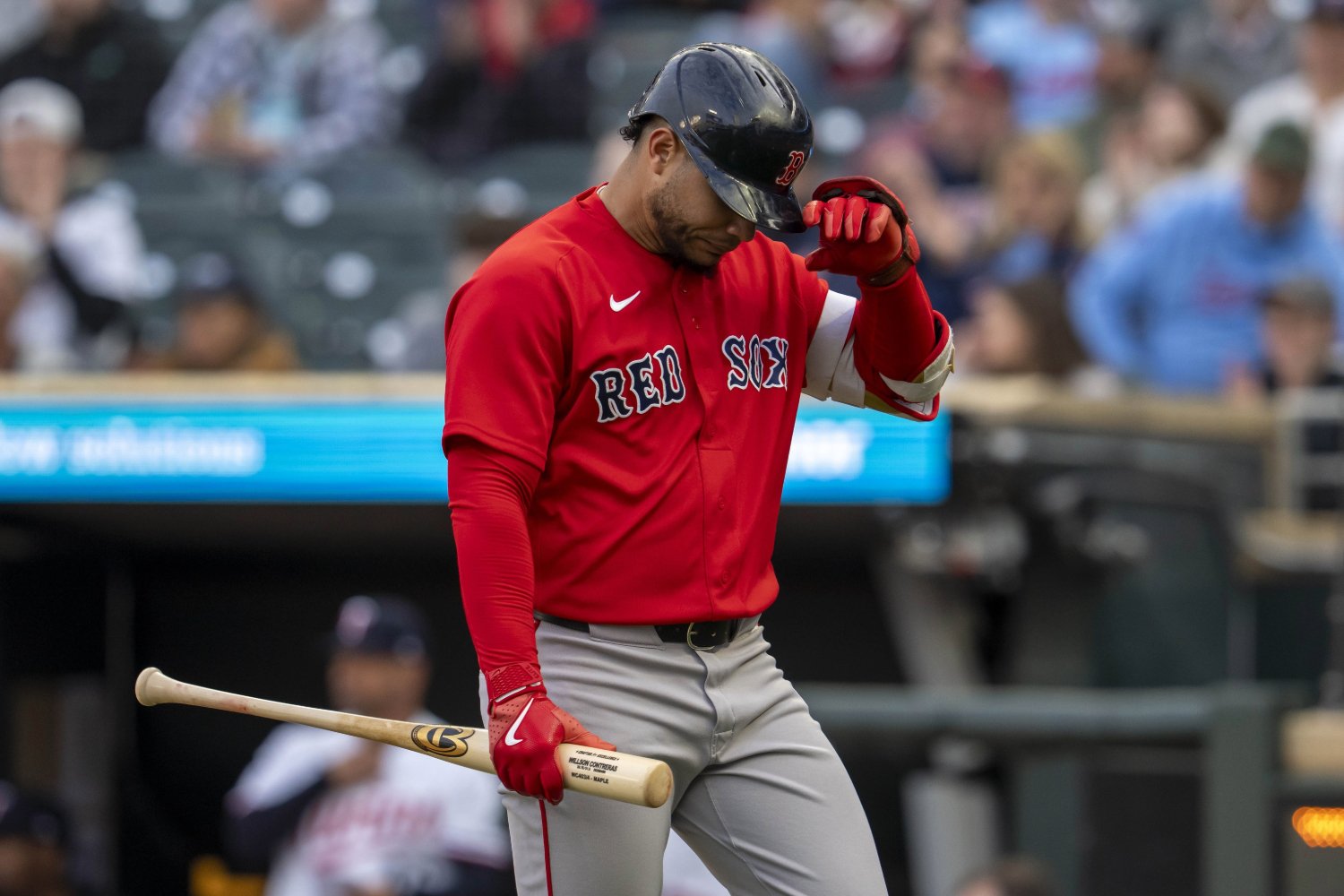 The Boston Red Sox have begun the year ice cold at the plate. A lot has been said about the Red Sox being last in the league in home runs with only 15, tied with the San Francisco Giants. It has felt like a self-fulfilling prophecy of sorts after the noise generated by a lack of 20+ HR projected hitters in the lineup. Despite a WBC surge, the team has done little to silence doubt on the power front. They came into this season with playoff expectations. Now, anyone can see what is going on offensively and understand that it is simply not up to par. This is more like Bryson DeChambeau in the 2026 Masters: they've completely missed the cut. On April 24, the Red Sox had the thirteenth-lowest swing rate. That, combined with a bottom-ten whiff rate and chase rate, creates a bad recipe when seeking to create a run-scoring environment. With their moves in the offseason, it became clear that the Sox had become more focused on mastering the defensive side of the field, as opposed to winning through power. That strategy, when implemented correctly, can work effectively. Exhibit A would be as recent as last season with the Milwaukee Brewers. Despite being in the bottom three in both barrel rate and average exit velocity, the Brewers still finished with 97 wins and the first seed in the National League. How? By minimizing strikeouts (20.3%, 25th), maximizing walks (9.1%, 6th), stealing bases (164, 2nd), along with pitching prowess (3.59 ERA, 2nd). The method, while unorthodox, is effective when executed, and the Brewers did just that. The Red Sox meanwhile, have the 11th-highest strikeout rate (23.3%), are 20th in walk rate (8.8%), are 24th in steals (13), and are 19th in ERA (4.37). But let's move from beyond the overarching view and into diagnosing what is going wrong and if it can be fixed. The Red Sox Can't Hit the Fastball You read that right. The Red Sox cannot hit the most foundational pitch in the sport of baseball. It's often taught that in order to have success at the plate, crushing the fastball is the first step. A four-seam fastball (FF) is far and away the most-used pitch in MLB, with a whopping 30.56 percent usage league-wide, nearly doubling the second-highest used pitch, the sinker, with a 16.78 percent usage (which, in truth, is just another fastball with more movement). Looking at 2025 results, team OPS against four-seam fastballs line up very similarly to wRC+ as a team against any arsenal. As you can see on the table above, there is a strong correlation between offensive potency and a team's ability to drive a fastball, with each team in the top five of OPS vs. fastballs also being top 10 in wRC+ in general. The Red Sox, meanwhile, have the second-worst OPS against fastballs in the majors (.621) and are also 29th in MLB in wRC+ (78). But it goes far deeper than simply an OPS observation. Their plate approach regarding fastballs is abysmal. Of the 288 home runs hit off of fastballs this season, the Red Sox have contributed just one. They beat fastballs into the ground at the fourth-highest rate in the league (38.2%), have the second-lowest xwOBA against four seamers (.296), and strikeout at the ninth-highest rate (23.6%). They struggle just as much before the ball is put in play. They hardly swing at the pitch (44.1% Swing%, 29th), and when they do they whiff 27.3 percent of the time, the 22rd-highest rate in MLB. Let's narrow it down even more to simply pitches that are in the zone and not put in play. Pictured above is every four-seam fastball taken for a strike in their 1-0 victory over the Tigers, which lasted 10 innings. There are four pitches that are effectively on the black, and one that was a strike by maybe a seam, if not the wrong call. The other seven are pitches to jump on, especially as fastballs. In the line of four down on the left side, three of the four were strikes taken in a 0-0 count. I won't pretend to understand the scouting or approaches that the Red Sox are preaching to the team, especially as a professional hitter. What I will say, though, is that an 0-0 fastball in that location is often the best pitch a hitter will see all at-bat or even the entire game. You'd like to see guys jump on a fastball in that location no matter the count. The greater sin of that cluster of four, is a 3-1 take from Caleb Durbin in the bottom of the sixth inning. For a guy going into the series with Orioles hitting an ice-cold .141 at the plate, these are pitches that need to be jumped on. At the minimum, there needs to be a swing. But it's not just Durbin, it's dang near every lineup regular that can't hit a fastball. Here's a look at the starting lineup in the series finale against the Yankees. The stat to the right is batting average against four-seam fastballs. 1. Jarren Duran .133 2. Ceddanne Rafaela .318 3. Masataka Yoshida .250 4. Willson Contreras .143 5. Wilyer Abreu .143 6. Trevor Story .214 7. Marcelo Mayer .400 (!!!) 8. Caleb Durbin .158 9. Carlos Narvaez .063 The numbers tell a grim story throughout the order. Just three players are hitting over .250 against four-seamers. Not a formula for scoring runs, where the Red Sox rank 25th in the league. Bottom line, the offense is lost and I'm not sure there is a magic solution to right the ship in an instant. Approach problems are deeply ingrained within the culture of a team and it will be a long and arduous process to correct. Even if they do, I seriously doubt it will be in time to make a playoff run. The deeper I got into research for this article, the more disappointed I got in the product we've been forced to watch this season. The .500 Red Sox from 2022-2024 were far more exciting than this; I miss those times dearly. The combination of swinging and missing too much AND taking too many strikes is one heck of a hole to put yourself in. I fear we're nearing the point where it's too late to dig themselves out.
 -
The Boston Red Sox have begun the year ice cold at the plate. A lot has been said about the Red Sox being last in the league in home runs with only 15, tied with the San Francisco Giants. It has felt like a self-fulfilling prophecy of sorts after the noise generated by a lack of 20+ HR projected hitters in the lineup. Despite a WBC surge, the team has done little to silence doubt on the power front. They came into this season with playoff expectations. Now, anyone can see what is going on offensively and understand that it is simply not up to par. This is more like Bryson DeChambeau in the 2026 Masters: they've completely missed the cut. On April 24, the Red Sox had the thirteenth-lowest swing rate. That, combined with a bottom-ten whiff rate and chase rate, creates a bad recipe when seeking to create a run-scoring environment. With their moves in the offseason, it became clear that the Sox had become more focused on mastering the defensive side of the field, as opposed to winning through power. That strategy, when implemented correctly, can work effectively. Exhibit A would be as recent as last season with the Milwaukee Brewers. Despite being in the bottom three in both barrel rate and average exit velocity, the Brewers still finished with 97 wins and the first seed in the National League. How? By minimizing strikeouts (20.3%, 25th), maximizing walks (9.1%, 6th), stealing bases (164, 2nd), along with pitching prowess (3.59 ERA, 2nd). The method, while unorthodox, is effective when executed, and the Brewers did just that. The Red Sox meanwhile, have the 11th-highest strikeout rate (23.3%), are 20th in walk rate (8.8%), are 24th in steals (13), and are 19th in ERA (4.37). But let's move from beyond the overarching view and into diagnosing what is going wrong and if it can be fixed. The Red Sox Can't Hit the Fastball You read that right. The Red Sox cannot hit the most foundational pitch in the sport of baseball. It's often taught that in order to have success at the plate, crushing the fastball is the first step. A four-seam fastball (FF) is far and away the most-used pitch in MLB, with a whopping 30.56 percent usage league-wide, nearly doubling the second-highest used pitch, the sinker, with a 16.78 percent usage (which, in truth, is just another fastball with more movement). Looking at 2025 results, team OPS against four-seam fastballs line up very similarly to wRC+ as a team against any arsenal. As you can see on the table above, there is a strong correlation between offensive potency and a team's ability to drive a fastball, with each team in the top five of OPS vs. fastballs also being top 10 in wRC+ in general. The Red Sox, meanwhile, have the second-worst OPS against fastballs in the majors (.621) and are also 29th in MLB in wRC+ (78). But it goes far deeper than simply an OPS observation. Their plate approach regarding fastballs is abysmal. Of the 288 home runs hit off of fastballs this season, the Red Sox have contributed just one. They beat fastballs into the ground at the fourth-highest rate in the league (38.2%), have the second-lowest xwOBA against four seamers (.296), and strikeout at the ninth-highest rate (23.6%). They struggle just as much before the ball is put in play. They hardly swing at the pitch (44.1% Swing%, 29th), and when they do they whiff 27.3 percent of the time, the 22rd-highest rate in MLB. Let's narrow it down even more to simply pitches that are in the zone and not put in play. Pictured above is every four-seam fastball taken for a strike in their 1-0 victory over the Tigers, which lasted 10 innings. There are four pitches that are effectively on the black, and one that was a strike by maybe a seam, if not the wrong call. The other seven are pitches to jump on, especially as fastballs. In the line of four down on the left side, three of the four were strikes taken in a 0-0 count. I won't pretend to understand the scouting or approaches that the Red Sox are preaching to the team, especially as a professional hitter. What I will say, though, is that an 0-0 fastball in that location is often the best pitch a hitter will see all at-bat or even the entire game. You'd like to see guys jump on a fastball in that location no matter the count. The greater sin of that cluster of four, is a 3-1 take from Caleb Durbin in the bottom of the sixth inning. For a guy going into the series with Orioles hitting an ice-cold .141 at the plate, these are pitches that need to be jumped on. At the minimum, there needs to be a swing. But it's not just Durbin, it's dang near every lineup regular that can't hit a fastball. Here's a look at the starting lineup in the series finale against the Yankees. The stat to the right is batting average against four-seam fastballs. 1. Jarren Duran .133 2. Ceddanne Rafaela .318 3. Masataka Yoshida .250 4. Willson Contreras .143 5. Wilyer Abreu .143 6. Trevor Story .214 7. Marcelo Mayer .400 (!!!) 8. Caleb Durbin .158 9. Carlos Narvaez .063 The numbers tell a grim story throughout the order. Just three players are hitting over .250 against four-seamers. Not a formula for scoring runs, where the Red Sox rank 25th in the league. Bottom line, the offense is lost and I'm not sure there is a magic solution to right the ship in an instant. Approach problems are deeply ingrained within the culture of a team and it will be a long and arduous process to correct. Even if they do, I seriously doubt it will be in time to make a playoff run. The deeper I got into research for this article, the more disappointed I got in the product we've been forced to watch this season. The .500 Red Sox from 2022-2024 were far more exciting than this; I miss those times dearly. The combination of swinging and missing too much AND taking too many strikes is one heck of a hole to put yourself in. I fear we're nearing the point where it's too late to dig themselves out. View full article
-
The Boston Red Sox have scuffled at the plate to begin their season, leading to an ugly 2-7 record after the first three series of action in 2026. Marcelo Mayer was oft-discussed this spring, primarily by manager Alex Cora, who never gave a firm answer as to whether or not the young infielder had a spot on the Opening Day roster. Evidently, he earned that spot despite not being the starting second baseman on Opening Day. Cora has given him the nod in all but two games this season, and he has appeared in all nine, making improvements in his swing that warrant real confidence moving forward. While his numbers might not jump off the page, slashing .227/.280/.500 in his first nine games, he has been drilling the ball all over the yard with a 94.8 mph average exit velocity and a 23.1 percent barrel rate. In a small sample, his three doubles rank seventh in the American League, and he sits third on the team in slugging percentage. What he has done to create those changes in quality of contact is alter his attack angle. Statcast defines Attack Angle as: "The vertical direction that the sweet spot of the bat is traveling at the moment it hits the baseball... A higher attack angle, assuming the bat makes square contact with the baseball, is more likely to result in a fly ball. A lower or negative attack angle would be more likely to produce a ground ball." Two of the five players tied for first in average attack angle last season were Eugenio Suárez and Cal Raleigh at 18 degrees, and both ranked top five in fly ball rate as well. The key to hitting is not merely lifting the ball, but doing so consistently and with authority. Mayer has done both. He has increased his attack angle from seven degrees to ten. The results are already visible: his groundball rate has dropped from 49.4 percent to 38.5 percent, while his fly ball rate has jumped from 33.3 percent all the way to 61.5 percent. Small samples demand caution, especially with hitters. A three-for-four afternoon can reshape a season line in an instant. That is precisely why the focus here is on approach and mechanical adjustments rather than the slash line. Swing path and batted ball data are the early indicators that foreshadow a player's trajectory, and on both fronts, Mayer is trending in the right direction. His 23.1 percent barrel rate is also worth trusting more than most early-season numbers, as barrel rate stabilizes faster than batting average, meaning the hard contact he's been producing is not just early season noise. The urgency of that trend is hard to overstate given the state of this offense. Heading into their series finale against the Padres, the Red Sox ranked last in MLB in runs scored with 24, sat 21st in wRC+ at 87, posted the fifth-highest strikeout rate in the league at 28.1 percent, and ranked second-worst in high-leverage situations according to FanGraphs' clutch metric. This lineup desperately needs someone to catch fire. Mayer is hitting like a man who is due. An early spark from him, a player no one penciled in as a catalyst entering the year, could be exactly what this offense needs to find its footing. View full article
-
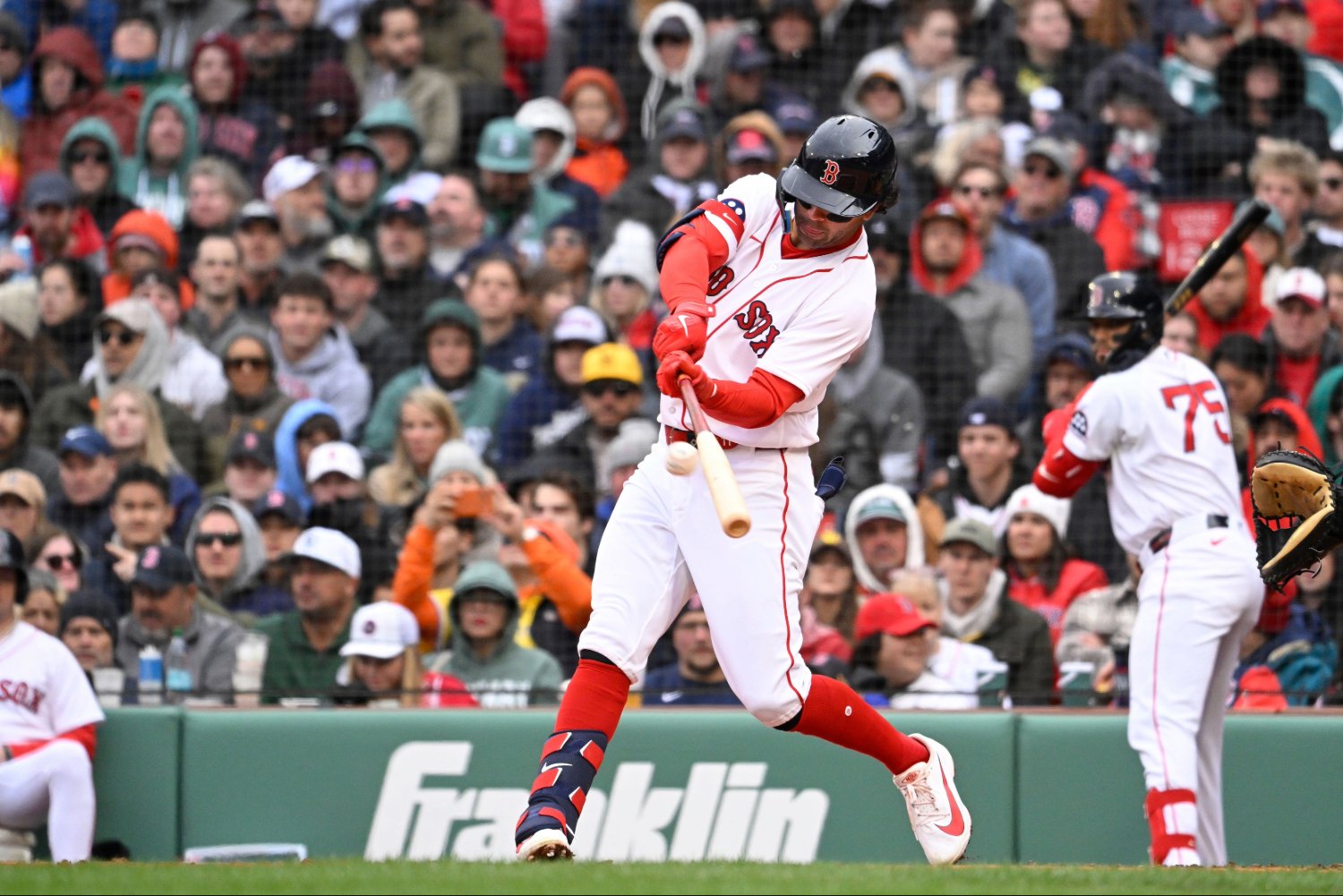 The Boston Red Sox have scuffled at the plate to begin their season, leading to an ugly 2-7 record after the first three series of action in 2026. Marcelo Mayer was oft-discussed this spring, primarily by manager Alex Cora, who never gave a firm answer as to whether or not the young infielder had a spot on the Opening Day roster. Evidently, he earned that spot despite not being the starting second baseman on Opening Day. Cora has given him the nod in all but two games this season, and he has appeared in all nine, making improvements in his swing that warrant real confidence moving forward. While his numbers might not jump off the page, slashing .227/.280/.500 in his first nine games, he has been drilling the ball all over the yard with a 94.8 mph average exit velocity and a 23.1 percent barrel rate. In a small sample, his three doubles rank seventh in the American League, and he sits third on the team in slugging percentage. What he has done to create those changes in quality of contact is alter his attack angle. Statcast defines Attack Angle as: "The vertical direction that the sweet spot of the bat is traveling at the moment it hits the baseball... A higher attack angle, assuming the bat makes square contact with the baseball, is more likely to result in a fly ball. A lower or negative attack angle would be more likely to produce a ground ball." Two of the five players tied for first in average attack angle last season were Eugenio Suárez and Cal Raleigh at 18 degrees, and both ranked top five in fly ball rate as well. The key to hitting is not merely lifting the ball, but doing so consistently and with authority. Mayer has done both. He has increased his attack angle from seven degrees to ten. The results are already visible: his groundball rate has dropped from 49.4 percent to 38.5 percent, while his fly ball rate has jumped from 33.3 percent all the way to 61.5 percent. Small samples demand caution, especially with hitters. A three-for-four afternoon can reshape a season line in an instant. That is precisely why the focus here is on approach and mechanical adjustments rather than the slash line. Swing path and batted ball data are the early indicators that foreshadow a player's trajectory, and on both fronts, Mayer is trending in the right direction. His 23.1 percent barrel rate is also worth trusting more than most early-season numbers, as barrel rate stabilizes faster than batting average, meaning the hard contact he's been producing is not just early season noise. The urgency of that trend is hard to overstate given the state of this offense. Heading into their series finale against the Padres, the Red Sox ranked last in MLB in runs scored with 24, sat 21st in wRC+ at 87, posted the fifth-highest strikeout rate in the league at 28.1 percent, and ranked second-worst in high-leverage situations according to FanGraphs' clutch metric. This lineup desperately needs someone to catch fire. Mayer is hitting like a man who is due. An early spark from him, a player no one penciled in as a catalyst entering the year, could be exactly what this offense needs to find its footing.
 -
Garrett Crochet left all spring-training-related concerns by the wayside on Opening Day, striking out eight while allowing three hits and two walks. Despite a swinging strike rate of only 12.5%, Crochet limited hard-contact throughout the outing with an opponent barrel rate of 7.1% and xAVG of .215. Crochet was reported to have developed a splitter over the offseason that he liked so much, he offered the guy who suggested the change a job in Major League Baseball. While it did catch some attention (as well as some headlines), the pitch never ended up making many waves in the spring. It did not grade out poorly by any stretch, generating a tjStuff+ of 101, but its results on the field did not do enough to garner interest from the Red Sox or Crochet to bring it to regular season action. During spring training, Crochet threw the splitter 11 times. It sat around 88 mph and generated zero whiffs with a below-average zone percentage of 27.3%. Crochet's spring results likely reinforced the "If it ain't broke, don't fix it" mantra. The splitter never generated enough to justify shelving what already works, and what works, as Opening Day reminded us, is plenty. Jen McCaffery of The Athletic asked Crochet about the absence of the splitter in his opening outing, as Crochet had this to say: “Just a lot more strikes, a lot more usage of the three fastballs,” Crochet said. “In spring, toying with the splitter, today it was like, ‘Hey, I’m banging the splitter for the year.’ I’ll just go back to the changeup I was throwing last year, and was able to flash that a couple times but didn’t overuse that or the sweeper, and I just felt like I was attacking with strengths and weaknesses when needed to be.” Crochet only displayed the changeup twice on Thursday, and in 2025, threw it 4.3 percent of the time. Against righties, though, 5.3 percent. Despite its minimal usage, it is a fantastic offering for him, if only to keep opposing hitters guessing. The pitch allowed a .091 SLG and .167 xwOBA along with a ridiculous 71 percent groundball rate. Among all changeups thrown 100 or more times in 2025, Crochet's groundball rate on the pitch was the fifth-highest in baseball. The primary issue with his changeup is that he rarely throws it for a strike. The Ball% (56%) on his changeup is the sixth-highest among changeups thrown at least 100 times. We can never know for sure, but it is likely that Crochet missed off the plate intentionally. Considering he throws the pitch only 5% of the time, it can be a pitch he tunnels with his fastball, forcing opposing hitters to beat it into the ground by swinging over it. Below is his change-up heat map to right-handed hitters: We see a clear, obvious desire to work low and away with his changeup, and his red zone is out of the strike zone, which plausibly explains the high Ball% combined with the high groundball rate. His changeup was plenty effective last season, as was he. While the desire to improve continuously is admirable, recognition of what works and what does not is an equally valuable skill. The splitter experiment is a footnote. What matters now is that Crochet looks every bit like a pitcher in command of his craft — and the rest of the AL is going to feel that all season long. View full article
-
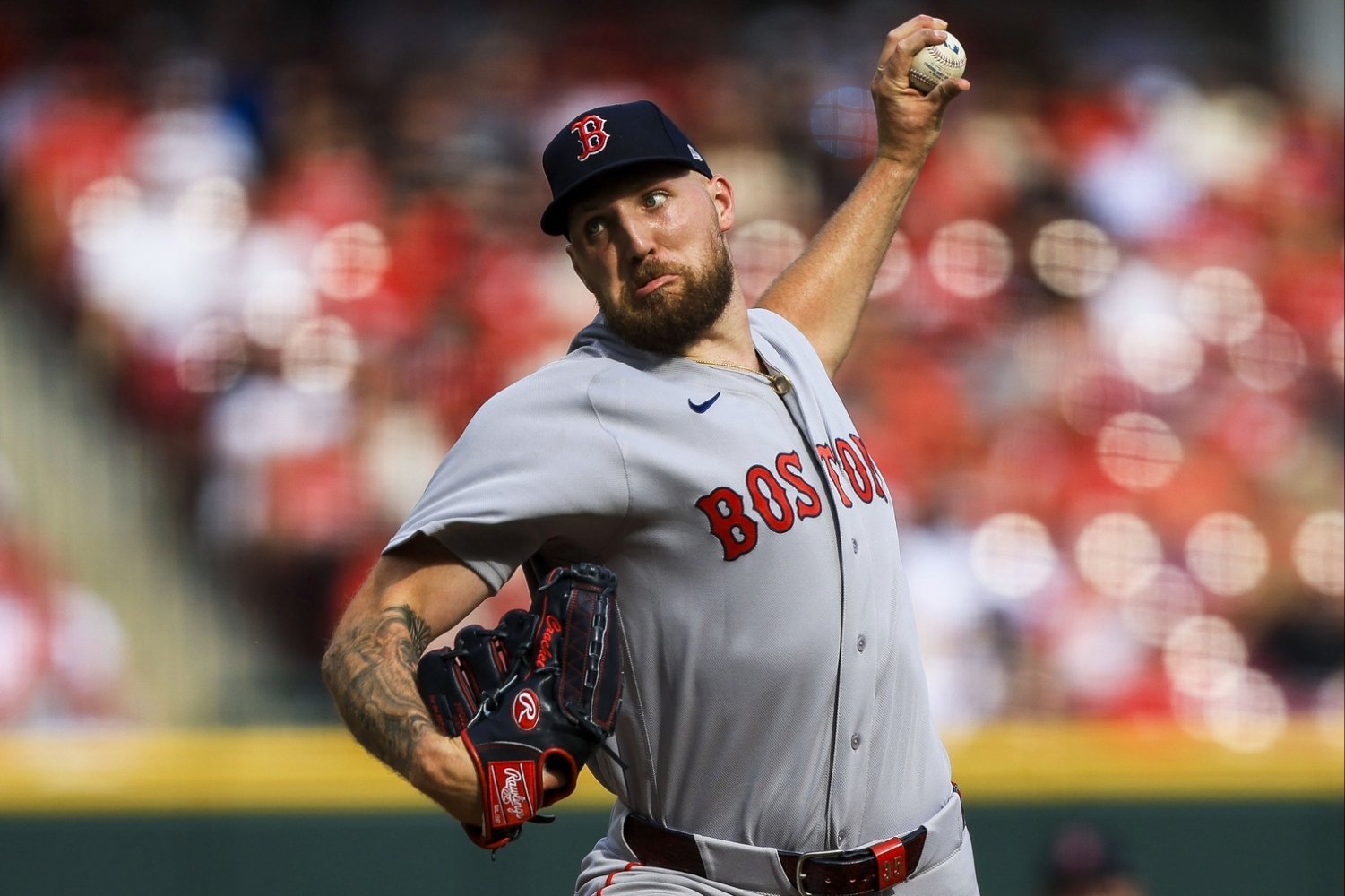 Garrett Crochet left all spring-training-related concerns by the wayside on Opening Day, striking out eight while allowing three hits and two walks. Despite a swinging strike rate of only 12.5%, Crochet limited hard-contact throughout the outing with an opponent barrel rate of 7.1% and xAVG of .215. Crochet was reported to have developed a splitter over the offseason that he liked so much, he offered the guy who suggested the change a job in Major League Baseball. While it did catch some attention (as well as some headlines), the pitch never ended up making many waves in the spring. It did not grade out poorly by any stretch, generating a tjStuff+ of 101, but its results on the field did not do enough to garner interest from the Red Sox or Crochet to bring it to regular season action. During spring training, Crochet threw the splitter 11 times. It sat around 88 mph and generated zero whiffs with a below-average zone percentage of 27.3%. Crochet's spring results likely reinforced the "If it ain't broke, don't fix it" mantra. The splitter never generated enough to justify shelving what already works, and what works, as Opening Day reminded us, is plenty. Jen McCaffery of The Athletic asked Crochet about the absence of the splitter in his opening outing, as Crochet had this to say: “Just a lot more strikes, a lot more usage of the three fastballs,” Crochet said. “In spring, toying with the splitter, today it was like, ‘Hey, I’m banging the splitter for the year.’ I’ll just go back to the changeup I was throwing last year, and was able to flash that a couple times but didn’t overuse that or the sweeper, and I just felt like I was attacking with strengths and weaknesses when needed to be.” Crochet only displayed the changeup twice on Thursday, and in 2025, threw it 4.3 percent of the time. Against righties, though, 5.3 percent. Despite its minimal usage, it is a fantastic offering for him, if only to keep opposing hitters guessing. The pitch allowed a .091 SLG and .167 xwOBA along with a ridiculous 71 percent groundball rate. Among all changeups thrown 100 or more times in 2025, Crochet's groundball rate on the pitch was the fifth-highest in baseball. The primary issue with his changeup is that he rarely throws it for a strike. The Ball% (56%) on his changeup is the sixth-highest among changeups thrown at least 100 times. We can never know for sure, but it is likely that Crochet missed off the plate intentionally. Considering he throws the pitch only 5% of the time, it can be a pitch he tunnels with his fastball, forcing opposing hitters to beat it into the ground by swinging over it. Below is his change-up heat map to right-handed hitters: We see a clear, obvious desire to work low and away with his changeup, and his red zone is out of the strike zone, which plausibly explains the high Ball% combined with the high groundball rate. His changeup was plenty effective last season, as was he. While the desire to improve continuously is admirable, recognition of what works and what does not is an equally valuable skill. The splitter experiment is a footnote. What matters now is that Crochet looks every bit like a pitcher in command of his craft — and the rest of the AL is going to feel that all season long.
 -
Greg Weissert has inserted himself into the conversation for a high-leverage role through his performance this spring as well as his 2025 season. Aroldis Chapman and Garrett Whitlock stand uncontested as the primary options for the eighth and ninth inning spots, but a lack of additions in the bullpen this offseason has left the door open for Weissert to emerge as the other set-up man. His spring outings thus far turned heads, going two innings, striking out two and not giving up a hit in either outing. Now, spring box score results are not worth spending much time on, as some fans might remember someone like Trayce Thompson dominating 2025 spring, hitting home runs seemingly every other at-bat, but not seeing any time with the big league club. For pitchers, looking at new movement profiles, new pitches, or an uptick (or decrease) in velocity can set the table for what to expect in the upcoming season. Pitchers will often over-utilize pitches to get feel for them in game, so while keeping hitters off balance is a plus in the spring, it is rarely an omen for how the season will go. Still, at least from the initial data, it appears Weissert has improved his movement profile on his primary pitches. Weissert's strongest offering his is frisbee-like sweeper, which was put him on the map after the Red Sox as part of the Alex Verdugo deal. His sweeper's -20.1 inches of horizontal break is the most among any qualified pitcher, moving 6.2 inches more than the average sweeper. As if it could get better, Weissert has shown up to Fort Myers, throwing a UFO sweeper with now 22.5 inches of horizontal movement. These two additional inches have moved the pitch from a 113 tjStuff+ to now a 118 mark, making it a pitch that moves 18% better than a league-average sweeper. One interesting note about the pitch is that he has made it his second offering after throwing it as his fourth-most used pitch last season. This could be some experimentation like I had mentioned previously or an indication of a slight change in approach. We can see thanks to the top right graphic that he used it primarily against righties, which makes sense for it's use as a chase pitch. Just look at the swing Javier Baez tried to get off against it. NHlneFBfWGw0TUFRPT1fVXdOWEIxQlhWQUVBRDFZS1hnQUhBZ1ZUQUFNRkFsTUFBMVFFVTFCUlZRc0FCd1ZX.mp4 Nasty. His primary pitch, as with most pitchers, is his fastball, which grades out as below average, mostly due to his low extension and below-average velocity (94.1). While his velocity has not improved thus far, the induced vertical break did, improving from 12.6 iVB to now 13.9, allowing it to stay up longer and fool hitters. To be fair, results wise, it was still a solid pitch last year, generating a minimal .296 xWOBA on contact and an above average 31 percent chase rate, but this tweak should make those results more sustainable. Finally, his changeup has shown massive improvement this spring, going from a 101 tjStuff+ to now a 106 thanks to an extra inch of horizontal break and far more distinct vertical movement. The effectiveness of a changeup is its ability to pair with a fastball for as long as it can before it drops off the table, getting hitters to swing over it for a whiff or beating into the dirt. His change was already effective at the latter, generating the second-highest groundball rate (82.4%) among pitchers who had thrown the pitch at least 75 times. It was not great at generating whiffs, though, sitting at only a 13.5 percent swinging strike rate. An additional inch downward won't hurt his prospects on whiffs, but it likely still won't be a big piece of his arsenal. An additional inch of horizontal run against lefties though, the side he would primarily throw it to, can and will create more problems. Here is perennial MVP candidate Corbin Carroll facing his 2025 changeup: NXkyZ0JfWGw0TUFRPT1fVWxCUVVGWU1BMUFBV3dZS1ZRQUhWQTRGQUFBQVVBQUFVUUZUVmdKUUFGRUJVbE1D.mp4 Weissert shoved last year for one of the quieter sub-3.00 ERA reliever seasons in 2025, posting a 2.82 mark. Improvements in the pitch mix should only help to build on that and hopefully create a three-headed monster starting in the seventh inning. He is largely platoon-proof as well, as neither left-handed nor right-handed hitters managed even a .300 wOBA against him. This Sox team is one that will thrive thanks to its defense and pitching. I expect plenty of close games in the seventh, and if Weissert can use this improved arsenal to set the table for Whitlock and Chapman, opposing teams are going to need to have a lead before they entered the final third of every game. View full article
-
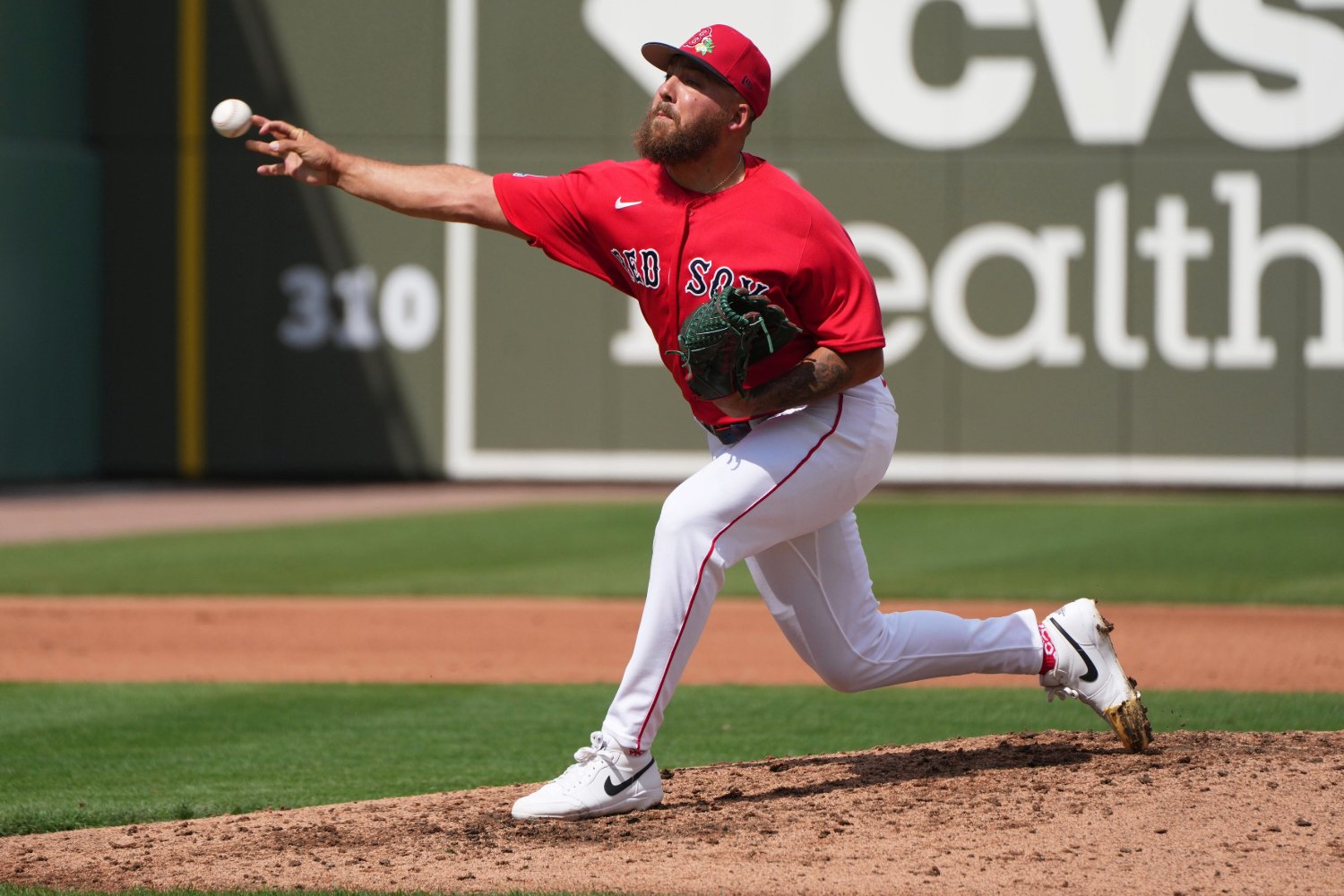 Greg Weissert has inserted himself into the conversation for a high-leverage role through his performance this spring as well as his 2025 season. Aroldis Chapman and Garrett Whitlock stand uncontested as the primary options for the eighth and ninth inning spots, but a lack of additions in the bullpen this offseason has left the door open for Weissert to emerge as the other set-up man. His spring outings thus far turned heads, going two innings, striking out two and not giving up a hit in either outing. Now, spring box score results are not worth spending much time on, as some fans might remember someone like Trayce Thompson dominating 2025 spring, hitting home runs seemingly every other at-bat, but not seeing any time with the big league club. For pitchers, looking at new movement profiles, new pitches, or an uptick (or decrease) in velocity can set the table for what to expect in the upcoming season. Pitchers will often over-utilize pitches to get feel for them in game, so while keeping hitters off balance is a plus in the spring, it is rarely an omen for how the season will go. Still, at least from the initial data, it appears Weissert has improved his movement profile on his primary pitches. Weissert's strongest offering his is frisbee-like sweeper, which was put him on the map after the Red Sox as part of the Alex Verdugo deal. His sweeper's -20.1 inches of horizontal break is the most among any qualified pitcher, moving 6.2 inches more than the average sweeper. As if it could get better, Weissert has shown up to Fort Myers, throwing a UFO sweeper with now 22.5 inches of horizontal movement. These two additional inches have moved the pitch from a 113 tjStuff+ to now a 118 mark, making it a pitch that moves 18% better than a league-average sweeper. One interesting note about the pitch is that he has made it his second offering after throwing it as his fourth-most used pitch last season. This could be some experimentation like I had mentioned previously or an indication of a slight change in approach. We can see thanks to the top right graphic that he used it primarily against righties, which makes sense for it's use as a chase pitch. Just look at the swing Javier Baez tried to get off against it. NHlneFBfWGw0TUFRPT1fVXdOWEIxQlhWQUVBRDFZS1hnQUhBZ1ZUQUFNRkFsTUFBMVFFVTFCUlZRc0FCd1ZX.mp4 Nasty. His primary pitch, as with most pitchers, is his fastball, which grades out as below average, mostly due to his low extension and below-average velocity (94.1). While his velocity has not improved thus far, the induced vertical break did, improving from 12.6 iVB to now 13.9, allowing it to stay up longer and fool hitters. To be fair, results wise, it was still a solid pitch last year, generating a minimal .296 xWOBA on contact and an above average 31 percent chase rate, but this tweak should make those results more sustainable. Finally, his changeup has shown massive improvement this spring, going from a 101 tjStuff+ to now a 106 thanks to an extra inch of horizontal break and far more distinct vertical movement. The effectiveness of a changeup is its ability to pair with a fastball for as long as it can before it drops off the table, getting hitters to swing over it for a whiff or beating into the dirt. His change was already effective at the latter, generating the second-highest groundball rate (82.4%) among pitchers who had thrown the pitch at least 75 times. It was not great at generating whiffs, though, sitting at only a 13.5 percent swinging strike rate. An additional inch downward won't hurt his prospects on whiffs, but it likely still won't be a big piece of his arsenal. An additional inch of horizontal run against lefties though, the side he would primarily throw it to, can and will create more problems. Here is perennial MVP candidate Corbin Carroll facing his 2025 changeup: NXkyZ0JfWGw0TUFRPT1fVWxCUVVGWU1BMUFBV3dZS1ZRQUhWQTRGQUFBQVVBQUFVUUZUVmdKUUFGRUJVbE1D.mp4 Weissert shoved last year for one of the quieter sub-3.00 ERA reliever seasons in 2025, posting a 2.82 mark. Improvements in the pitch mix should only help to build on that and hopefully create a three-headed monster starting in the seventh inning. He is largely platoon-proof as well, as neither left-handed nor right-handed hitters managed even a .300 wOBA against him. This Sox team is one that will thrive thanks to its defense and pitching. I expect plenty of close games in the seventh, and if Weissert can use this improved arsenal to set the table for Whitlock and Chapman, opposing teams are going to need to have a lead before they entered the final third of every game.
 -
The Boston Red Sox offseason has been one of the more contentious among fans in recent memory. Promises of acquiring Pete Alonso and of retaining Alex Bregman went south as soon as the Winter Meetings began. Despite these letdowns, the Red Sox made substantial upgrades to their pitching staff, adding Sonny Gray, Johan Oviedo, and Ranger Suarez while also getting some much needed lineup support in the form of Willson Contreras and Caleb Durbin. Much of the frustration stems from the gap between expectations and reality. Boston failed to add a legitimate 30-plus home run bat, and for a team that finished 22nd in MLB in strikeouts last season, the offense saw little meaningful improvement. There is an argument to be made that swapping out Bregman for Contreras and Durbin is, at best, a lateral move. However, despite the narrative of being a "cheap" big-market ballclub, among their 14 transactions (12 trades, 2 MLB signings), the Red Sox spent roughly $161 million dollars thus far in the offseason, with potential moves still in the works. So, how did the Red Sox do this offseason? Are they a better team than the one that was eliminated by the Yankees in the Wild Card? The answer is unequivocally yes. Grading Every Red Sox Offseason Move Trade: Sonny Gray for Brandon Clarke, Richard Fitts, and PTBNL or cash The Red Sox's first major move of the offseason was acquiring what appeared to be, at the time, their second option in the rotation in Sonny Gray. A model of consistency despite his age, Gray continues to make batters uncomfortable, striking out at least 24% of opposing hitters since 2018, thanks to his deadly sweeper, which continues to grade out as one of the best in baseball. Fans might see his 4.26 ERA in 2025 and be frustrated with the return; his FIP and SIERA both indicate a bout of poor luck relative to his other seasons, but the Cardinals ate some money off his contract in this deal. That makes this deal represent minimal risk. He's one of the best third options in baseball and should thrive in his new environment. Regarding the return, Fitts was able to show what he had in the major leagues and never really excelled despite being an analytics darling. He returned a 12.3% K-BB% and recorded a 5.00 ERA. The real piece in this deal was trading away Brandon Clarke. Some may remember his hot start to the season, posting a 45% strikeout rate in April. After a blister in his hand, he was never really the same, and most prospect analysts tab him as a high-leverage reliever, which is useful in its own right but not someone worth clutching your pearls on if you're in the position the Red Sox are in. He was buried on the pitcher depth chart and had little chance of breaking into the majors in 2026. Trade Grade: B+ Trade: Johan Oviedo, Tyler Sameniego, and Adonys Guzman for Jhostynxon Garcia and Jesus Travieso Johan Oviedo is a classic Red Sox pitching lab play, plain and simple. While his numbers don't jump off the page, he was not acquired for his 2025 ERA, though his 3.57 mark in 40 innings of work is not a reason for discouragement. Oviedo will make his hay due to his unusual release point paired with elite extension. It is a combination that hitters have had a tough time gauging, causing whiffs on his fastball. Coming off Tommy John surgery, Oviedo lowered his release height, causing a new and more elite fastball shape, which clearly intrigued the Red Sox enough to trade one of their top five prospects in Garcia. Garcia also got a cup of coffee in the majors, not doing much with it, but the power is evident. In updated top-100 prospect lists, he appeared toward the bottom or not at all. This is largely due to his poor swing decisions, sporting a 26.1% chase rate and striking out 55% of the time while up with the big league club. While the raw power is real, the discourse all offseason has been about the logjam in the outfield for the Red Sox, and that includes Garcia, who was likely the fifth or sixth option behind the established major leaguers. Ultimately, he was expendable, particularly for a pitcher they believe they can optimize. Regarding the other three prospects, the jury is still out, though none of them cracked either team's top-30 prospect lists. By all accounts, Guzman is a warm body available to catch innings in the low minors. Trade Grade: B+ Trade: Willson Contreras for Hunter Dobbins, Blake Aita, and Yhoiker Fajardo Contreras filled a clear need at first base with Triston Casas' health an enigma, and the Red Sox did not want to force Nick Sogard and Romy Gonzalez to platoon at the position. Their infield defense was also bottom of the league last season. Contreras and his six Outs Above Average will provide a huge help on that front. Contreras, like his Cardinals teammate Sonny Gray, is remarkably consistent. Since 2021, he has hit 20 or more home runs in all but one season and has recorded 2.0 fWAR or more in every season since then. His move to first base last year will help keep him on the field, as he reached 135 games played, his most since 2018. Dobbins is a pitcher who had promise and a potential spot on the roster come Opening Day. He put together 61 solid innings of work in his rookie campaign with a 4.13 ERA and a 6.6% walk rate. The problem lay in his strikeout rate, which came in at a measly 17.6%, which works if you're able to keep the ball on the ground at an elite level. While 48.4% ground ball rate is not bad by any means, it's not enough to warrant full trust in the arm moving forward. I would have liked to see what his season would have looked like had he not torn his ACL in a freak accident while covering first, but that is the world we live in, and it's likely part of the reason the Red Sox felt okay with parting with him. Aita is not much of a loss, but Fajardo is a high-potential arm who profiles as a flamethrower at only 19. Trade Grade: B- Free Agent Signing: Ranger Suarez for 5 Years, $130M After reeling from the loss of Alex Bregman to the Cubs, the Red Sox responded with their first signing of the offseason, bringing in Ranger Suarez. He was not the typical arm the Red Sox targeted this offseason, as he offers minimal height, extension, and velocity. He instead found success forcing soft contact and controlling the strike zone. Suarez returned a 4.0 fWAR last year, a career-high, and a 3.20 ERA, his lowest since 2021. One note of concern is that his fastball velocity has been trending the wrong way over the last three years, starting at 93.4 mph, 92 mph, and then 91.2 mph. Based on results from the Red Sox aforementioned pitching lab, though, I believe that the Red Sox can reverse that trend and get it back up to around 93 mph or so. Nonetheless, the signing officially made the Red Sox one of the scariest rotations in baseball and moved them above everyone in the division except for the Blue Jays. Because of that, I consider this signing a huge success, though the lineup still leaves a lot to be desired. Signing Grade: A- Trade: Caleb Durbin, Andruw Monasterio, Anthony Seigler, and Comp Round B pick for Kyle Harrison, David Hamilton, and Shane Drohan In a wild six-player trade a day before pitchers and catchers reported to camp, the Red Sox got their middle infielder in Caleb Durbin, who can play both third and second base. Durbin does not provide crazy power, something the Red Sox still need. But he is a fantastic contributor in four of the other five tools necessary to be a successful position player. He rarely strikes out (9.9% K%), swiped 18 bags thanks to his 70th-percentile sprint speed, and is an above-average fielder at third (5 DRS, 2 OAA). Monasterio provides similar utility ability to Isiah Kiner-Falefa, playing 10-plus games at 2B, 1B, and SS, while also getting eight games at 3B in 68 games in the majors. He profiles as a platoon hitter against lefties, hitting southpaws to the tune of a 136 wRC+ with a .837 OPS, whereas against righties it was a 96 wRC+ and a .709 OPS. Monasterio's place on the team come Opening Day will be determined by his performance in the spring, but expect him to start in AAA and be one of the first options up. Seigler crushed Triple-A pitching last season, slashing .285/.414/.478 walking 16.9% of the time and stealing 23 bags. He didn't play catcher except for one game in MLB, being stuck behind William Contreras, but he is a potential option to catch this season. The biggest piece that the Red Sox gave up in this deal was Kyle Harrison, as another Devers trade piece was shipped off. Much like the rest of the high-profile pitchers that have been dealt, there was little room for Harrison in the Red Sox's future plans. The emergence of both Payton Tolle and Connelly Early held him back, as Harrison threw only 12 innings for Boston last season. The ceiling is there for Harrison, a former top-25 prospect, though it became clear as the 2025 season wore on that the Red Sox were no longer interested in finding that ceiling. Drohan projects as fringe rotation option/middle relief arm ranking around 15th on most lists on the Red Sox farm system. He sits mid-90s with his fastball and has multiple above-average offerings. His primary issue is the inability to stay healthy which saw his prospect stock drop over the years. Fans are plenty familiar with David Hamilton, a solid glove with plus speed. Beyond that, he mostly just caused headaches for Sox fans when he stepped into the box, hitting .198 in 2025 with a .590 OPS. Trade Grade: A The rest of these moves are not as significant, so I won't cover them as in-depth as the rest, though they still added to (or subtracted from) the future outlook of the 2026 team. Trade: Isaiah Jackson for Vaughn Grissom This was a necessary move as both parties were ready to move on from each other. With the plethora of injuries that decimated the infield over the past few years, one would have assumed that Grissom's time would come at some point, but it just never arrived. They clearly preferred other options over him, and the Kristian Campbell puzzle still needed solving. Lost in the Betts and Devers shuffle, Grissom was acquired for Chris Sale, who would go on to win a Cy Young the season immediately after. A disastrous move all around. Trade: Ryan Watson for Justin Reimer A Rule 5 trade that was largely ignored, Watson provides solid upside for a Triple-A arm, sporting a 28.1% strikeout rate and a 7.1% walk rate last season, which gave him a 21% K-BB% (99th percentile in Triple-A). Watson, standing at 6'5, provides seven feet of extension, making him an obvious fit for the pitching lab. Watson is a name to keep an eye out for if the Sox need some mid-season bullpen help. Trade: Jake Bennett for Luis Perales This was a rare prospect-for-prospect deal. Bennett, similar to Watson, stands at 6'6 with elite velocity and extension. Because he is in Double-A, we have little in the way of advanced metrics, but he fits the mold that the Red Sox sought out this offseason. He is a top-10 prospect in the Red Sox's farm system and cruised last year with a 2.27 ERA and 1.08 WHIP. Perales will be sorely missed, looking like he has the potential to be one of the league's top closers, sitting 97-98 mph and touching 100. Trade: Gage Ziehl and PTBNL for Jordan Hicks, David Sandlin, 2 PTBNL, cash This trade struck a chord with me. For one, the Wicked Witch is gone, as Hicks simply did not mesh with the Red Sox once he was acquired. On the other hand, we salary dumped our salary dump. It all comes back to Rafael Devers, who remains sorely missed on this Red Sox team. The trade is greater than Hicks, who I'm glad is gone, but never should have been on the team in the first place. David Sandlin has been an intriguing prospect for a while now, but he did not seem to cut it as a starter and did not take to his new role in the bullpen. A brutal 6.7% K-BB% won't fly at any level you're at, but sitting close to 97 mph certainly will. I'll be curious to see what the White Sox do with him as his career unfolds. Ziehl, a fourth-round draft pick in 2024, provides some upside, controlling the zone well with average stuff on all of his offerings. The real win here for the Red Sox was getting off the Hicks contract, not the prospect they got in the deal. Free Agent Signing: Isiah Kiner-Falefa for 1 Year, $6 million Not the middle infield signing fans wanted, but Kiner-Falefa fills a hole and opens up things in the lineup for the Red Sox. He is a clear glove-first signing, providing little in the way of power, but has above-average Defensive Runs Saved numbers at 2B, 3B, and SS. His versatility will allow Alex Cora to play more matchups or give guys some needed rest as the season moves forward. As I said in the linked article, regular playing time for Kiner-Falefa means something has gone terribly wrong in 2026. In an eventful offseason full of various moves, it's clear the Red Sox got better. The question is, how much? That will largely be determined as the season unfolds. If I had to give it an overall grade... Final Grade: A- View full article
-
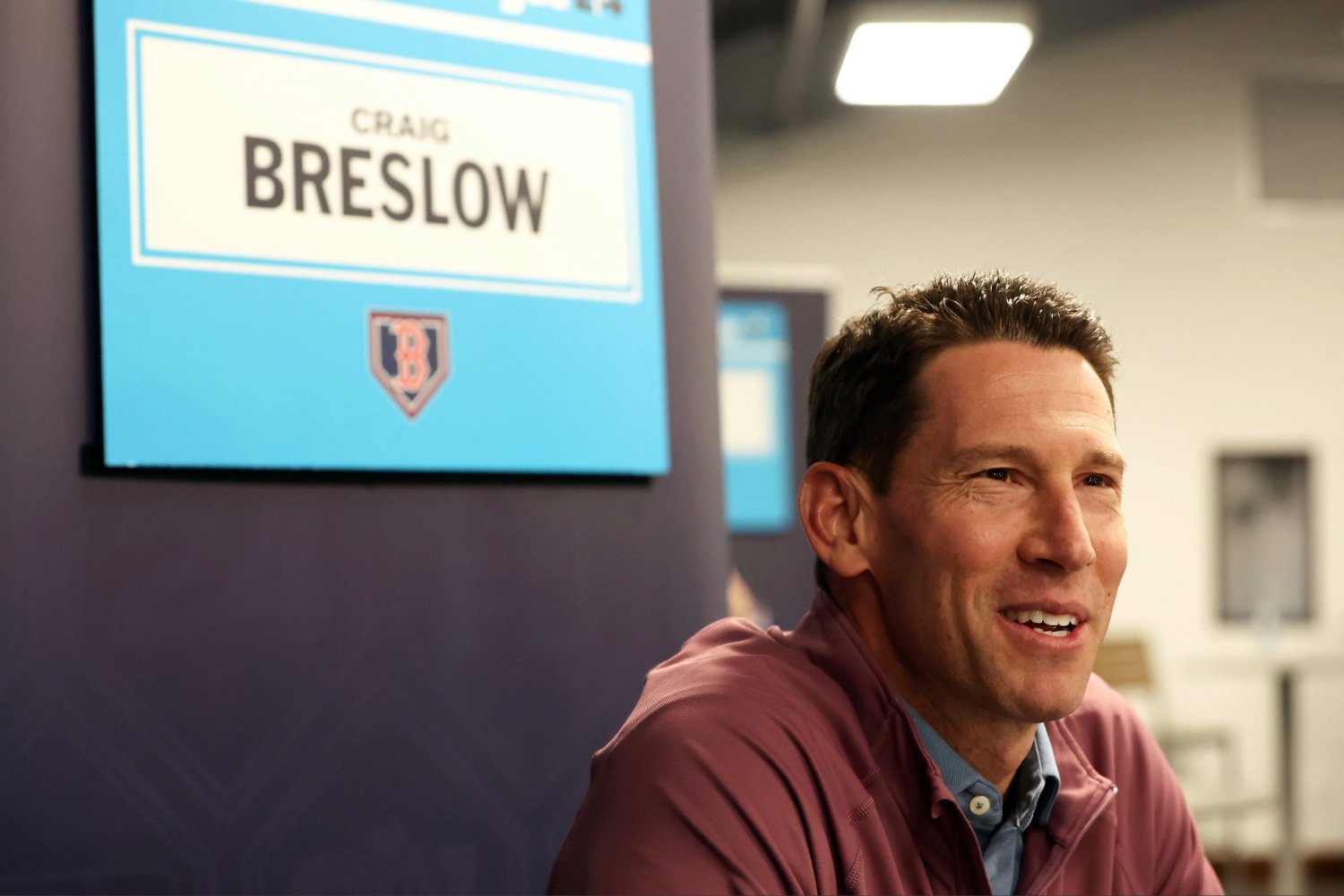 The Boston Red Sox offseason has been one of the more contentious among fans in recent memory. Promises of acquiring Pete Alonso and of retaining Alex Bregman went south as soon as the Winter Meetings began. Despite these letdowns, the Red Sox made substantial upgrades to their pitching staff, adding Sonny Gray, Johan Oviedo, and Ranger Suarez while also getting some much needed lineup support in the form of Willson Contreras and Caleb Durbin. Much of the frustration stems from the gap between expectations and reality. Boston failed to add a legitimate 30-plus home run bat, and for a team that finished 22nd in MLB in strikeouts last season, the offense saw little meaningful improvement. There is an argument to be made that swapping out Bregman for Contreras and Durbin is, at best, a lateral move. However, despite the narrative of being a "cheap" big-market ballclub, among their 14 transactions (12 trades, 2 MLB signings), the Red Sox spent roughly $161 million dollars thus far in the offseason, with potential moves still in the works. So, how did the Red Sox do this offseason? Are they a better team than the one that was eliminated by the Yankees in the Wild Card? The answer is unequivocally yes. Grading Every Red Sox Offseason Move Trade: Sonny Gray for Brandon Clarke, Richard Fitts, and PTBNL or cash The Red Sox's first major move of the offseason was acquiring what appeared to be, at the time, their second option in the rotation in Sonny Gray. A model of consistency despite his age, Gray continues to make batters uncomfortable, striking out at least 24% of opposing hitters since 2018, thanks to his deadly sweeper, which continues to grade out as one of the best in baseball. Fans might see his 4.26 ERA in 2025 and be frustrated with the return; his FIP and SIERA both indicate a bout of poor luck relative to his other seasons, but the Cardinals ate some money off his contract in this deal. That makes this deal represent minimal risk. He's one of the best third options in baseball and should thrive in his new environment. Regarding the return, Fitts was able to show what he had in the major leagues and never really excelled despite being an analytics darling. He returned a 12.3% K-BB% and recorded a 5.00 ERA. The real piece in this deal was trading away Brandon Clarke. Some may remember his hot start to the season, posting a 45% strikeout rate in April. After a blister in his hand, he was never really the same, and most prospect analysts tab him as a high-leverage reliever, which is useful in its own right but not someone worth clutching your pearls on if you're in the position the Red Sox are in. He was buried on the pitcher depth chart and had little chance of breaking into the majors in 2026. Trade Grade: B+ Trade: Johan Oviedo, Tyler Sameniego, and Adonys Guzman for Jhostynxon Garcia and Jesus Travieso Johan Oviedo is a classic Red Sox pitching lab play, plain and simple. While his numbers don't jump off the page, he was not acquired for his 2025 ERA, though his 3.57 mark in 40 innings of work is not a reason for discouragement. Oviedo will make his hay due to his unusual release point paired with elite extension. It is a combination that hitters have had a tough time gauging, causing whiffs on his fastball. Coming off Tommy John surgery, Oviedo lowered his release height, causing a new and more elite fastball shape, which clearly intrigued the Red Sox enough to trade one of their top five prospects in Garcia. Garcia also got a cup of coffee in the majors, not doing much with it, but the power is evident. In updated top-100 prospect lists, he appeared toward the bottom or not at all. This is largely due to his poor swing decisions, sporting a 26.1% chase rate and striking out 55% of the time while up with the big league club. While the raw power is real, the discourse all offseason has been about the logjam in the outfield for the Red Sox, and that includes Garcia, who was likely the fifth or sixth option behind the established major leaguers. Ultimately, he was expendable, particularly for a pitcher they believe they can optimize. Regarding the other three prospects, the jury is still out, though none of them cracked either team's top-30 prospect lists. By all accounts, Guzman is a warm body available to catch innings in the low minors. Trade Grade: B+ Trade: Willson Contreras for Hunter Dobbins, Blake Aita, and Yhoiker Fajardo Contreras filled a clear need at first base with Triston Casas' health an enigma, and the Red Sox did not want to force Nick Sogard and Romy Gonzalez to platoon at the position. Their infield defense was also bottom of the league last season. Contreras and his six Outs Above Average will provide a huge help on that front. Contreras, like his Cardinals teammate Sonny Gray, is remarkably consistent. Since 2021, he has hit 20 or more home runs in all but one season and has recorded 2.0 fWAR or more in every season since then. His move to first base last year will help keep him on the field, as he reached 135 games played, his most since 2018. Dobbins is a pitcher who had promise and a potential spot on the roster come Opening Day. He put together 61 solid innings of work in his rookie campaign with a 4.13 ERA and a 6.6% walk rate. The problem lay in his strikeout rate, which came in at a measly 17.6%, which works if you're able to keep the ball on the ground at an elite level. While 48.4% ground ball rate is not bad by any means, it's not enough to warrant full trust in the arm moving forward. I would have liked to see what his season would have looked like had he not torn his ACL in a freak accident while covering first, but that is the world we live in, and it's likely part of the reason the Red Sox felt okay with parting with him. Aita is not much of a loss, but Fajardo is a high-potential arm who profiles as a flamethrower at only 19. Trade Grade: B- Free Agent Signing: Ranger Suarez for 5 Years, $130M After reeling from the loss of Alex Bregman to the Cubs, the Red Sox responded with their first signing of the offseason, bringing in Ranger Suarez. He was not the typical arm the Red Sox targeted this offseason, as he offers minimal height, extension, and velocity. He instead found success forcing soft contact and controlling the strike zone. Suarez returned a 4.0 fWAR last year, a career-high, and a 3.20 ERA, his lowest since 2021. One note of concern is that his fastball velocity has been trending the wrong way over the last three years, starting at 93.4 mph, 92 mph, and then 91.2 mph. Based on results from the Red Sox aforementioned pitching lab, though, I believe that the Red Sox can reverse that trend and get it back up to around 93 mph or so. Nonetheless, the signing officially made the Red Sox one of the scariest rotations in baseball and moved them above everyone in the division except for the Blue Jays. Because of that, I consider this signing a huge success, though the lineup still leaves a lot to be desired. Signing Grade: A- Trade: Caleb Durbin, Andruw Monasterio, Anthony Seigler, and Comp Round B pick for Kyle Harrison, David Hamilton, and Shane Drohan In a wild six-player trade a day before pitchers and catchers reported to camp, the Red Sox got their middle infielder in Caleb Durbin, who can play both third and second base. Durbin does not provide crazy power, something the Red Sox still need. But he is a fantastic contributor in four of the other five tools necessary to be a successful position player. He rarely strikes out (9.9% K%), swiped 18 bags thanks to his 70th-percentile sprint speed, and is an above-average fielder at third (5 DRS, 2 OAA). Monasterio provides similar utility ability to Isiah Kiner-Falefa, playing 10-plus games at 2B, 1B, and SS, while also getting eight games at 3B in 68 games in the majors. He profiles as a platoon hitter against lefties, hitting southpaws to the tune of a 136 wRC+ with a .837 OPS, whereas against righties it was a 96 wRC+ and a .709 OPS. Monasterio's place on the team come Opening Day will be determined by his performance in the spring, but expect him to start in AAA and be one of the first options up. Seigler crushed Triple-A pitching last season, slashing .285/.414/.478 walking 16.9% of the time and stealing 23 bags. He didn't play catcher except for one game in MLB, being stuck behind William Contreras, but he is a potential option to catch this season. The biggest piece that the Red Sox gave up in this deal was Kyle Harrison, as another Devers trade piece was shipped off. Much like the rest of the high-profile pitchers that have been dealt, there was little room for Harrison in the Red Sox's future plans. The emergence of both Payton Tolle and Connelly Early held him back, as Harrison threw only 12 innings for Boston last season. The ceiling is there for Harrison, a former top-25 prospect, though it became clear as the 2025 season wore on that the Red Sox were no longer interested in finding that ceiling. Drohan projects as fringe rotation option/middle relief arm ranking around 15th on most lists on the Red Sox farm system. He sits mid-90s with his fastball and has multiple above-average offerings. His primary issue is the inability to stay healthy which saw his prospect stock drop over the years. Fans are plenty familiar with David Hamilton, a solid glove with plus speed. Beyond that, he mostly just caused headaches for Sox fans when he stepped into the box, hitting .198 in 2025 with a .590 OPS. Trade Grade: A The rest of these moves are not as significant, so I won't cover them as in-depth as the rest, though they still added to (or subtracted from) the future outlook of the 2026 team. Trade: Isaiah Jackson for Vaughn Grissom This was a necessary move as both parties were ready to move on from each other. With the plethora of injuries that decimated the infield over the past few years, one would have assumed that Grissom's time would come at some point, but it just never arrived. They clearly preferred other options over him, and the Kristian Campbell puzzle still needed solving. Lost in the Betts and Devers shuffle, Grissom was acquired for Chris Sale, who would go on to win a Cy Young the season immediately after. A disastrous move all around. Trade: Ryan Watson for Justin Reimer A Rule 5 trade that was largely ignored, Watson provides solid upside for a Triple-A arm, sporting a 28.1% strikeout rate and a 7.1% walk rate last season, which gave him a 21% K-BB% (99th percentile in Triple-A). Watson, standing at 6'5, provides seven feet of extension, making him an obvious fit for the pitching lab. Watson is a name to keep an eye out for if the Sox need some mid-season bullpen help. Trade: Jake Bennett for Luis Perales This was a rare prospect-for-prospect deal. Bennett, similar to Watson, stands at 6'6 with elite velocity and extension. Because he is in Double-A, we have little in the way of advanced metrics, but he fits the mold that the Red Sox sought out this offseason. He is a top-10 prospect in the Red Sox's farm system and cruised last year with a 2.27 ERA and 1.08 WHIP. Perales will be sorely missed, looking like he has the potential to be one of the league's top closers, sitting 97-98 mph and touching 100. Trade: Gage Ziehl and PTBNL for Jordan Hicks, David Sandlin, 2 PTBNL, cash This trade struck a chord with me. For one, the Wicked Witch is gone, as Hicks simply did not mesh with the Red Sox once he was acquired. On the other hand, we salary dumped our salary dump. It all comes back to Rafael Devers, who remains sorely missed on this Red Sox team. The trade is greater than Hicks, who I'm glad is gone, but never should have been on the team in the first place. David Sandlin has been an intriguing prospect for a while now, but he did not seem to cut it as a starter and did not take to his new role in the bullpen. A brutal 6.7% K-BB% won't fly at any level you're at, but sitting close to 97 mph certainly will. I'll be curious to see what the White Sox do with him as his career unfolds. Ziehl, a fourth-round draft pick in 2024, provides some upside, controlling the zone well with average stuff on all of his offerings. The real win here for the Red Sox was getting off the Hicks contract, not the prospect they got in the deal. Free Agent Signing: Isiah Kiner-Falefa for 1 Year, $6 million Not the middle infield signing fans wanted, but Kiner-Falefa fills a hole and opens up things in the lineup for the Red Sox. He is a clear glove-first signing, providing little in the way of power, but has above-average Defensive Runs Saved numbers at 2B, 3B, and SS. His versatility will allow Alex Cora to play more matchups or give guys some needed rest as the season moves forward. As I said in the linked article, regular playing time for Kiner-Falefa means something has gone terribly wrong in 2026. In an eventful offseason full of various moves, it's clear the Red Sox got better. The question is, how much? That will largely be determined as the season unfolds. If I had to give it an overall grade... Final Grade: A-
 -
The Boston Red Sox found their middle infielder in Caleb Durbin, trading Kyle Harrison, Shane Drohan, and David Hamilton while also acquiring Andruw Monasterio and Anthony Seigler (plus a draft pick) in the process. This is not the flashiest trade by any means, but it is one of the better moves that could be made considering what the Red Sox gave up to get him. Compared to what the Astros wanted for Issac Paredes or the likely exorbitant price tag on Nico Hoerner, it's fair to say the Red Sox came out well on the other side of the quest for an Alex Bregman replacement. Durbin is only 25 years old and will be under club control until 2031. In a problem mostly of their own creation, there was little in the way of free agency help once the calendar hit 2026, and Craig Breslow had to find new ways to upgrade the roster. After months of rumors involving Paredes, Hoerner, Matt Shaw, and Ketel Marte, the Red Sox did what they set out to do after signing Ranger Suarez and bolstered the infield defense. Durbin stands at 5'7", 183 lbs, making him one of nine players in MLB in 2025 to take an at-bat standing at 5'7 or shorter. What he lacks in size and power, he makes up for in the other aspects of what it takes to stick in the majors. Durbin rarely misses when he swings, producing a ridiculous 93.5% Zone-Contact%, good for the 95th percentile among all major league hitters. Along a similar vein to Willson Contreras, Durbin produces a 15.7% PullAir%, which is a skill the Red Sox identified, clearly wanting to utilize the Monster more to their advantage. Alex Cora told Ian Browne of MLB.com, Despite not having the prototypical juice that teams want out of their lineup, the theme is finding more players who pull the ball in the air enough to add some points to their OPS. It's only 310 feet to left field, so while the home run numbers may stagnate or decrease, I expect an increase in doubles thanks to both the monster and his speed. The numbers show that Durbin can handle the inside pitch necessary for him to execute the plans the Red Sox seem to have for him. He finds the ideal launch angle on the inside pitch, but in those same inside zones, his xWOBA gets progressively worse the higher on the inner half you go. xWOBA is primarily a quality of contact metric, so the fact that the metric shows up as blue is no surprise. Durbin's max EV last season was 108.9 mph (14th percentile), and his 90th percentile EV was 100.1 mph (5th percentile), so a massive improvement upon his .312 xWOBA is unlikely. Thanks to his pull tendencies, though, his SLG should go up from its previous .387 number. At only age 25, his ability to put the ball in play is rare for someone so young. Only fellow Rookie of the Year nominee, Jacob Wilson, had a lower strikeout rate at age 25 or lower last season, and since 2010, Durbin had the seventh-lowest strikeout rate among rookies (min. 400 PA). Defensively, Durbin plays well at third base, producing two Outs Above Average and five Defensive Runs Saved. At second, he leaves some more to be desired, though it is not detrimental by any means, with only a -1 OAA and -1 DRS. Similar to Isiah Kiner-Falefa and Andruw Monasterio, Durbin's positional versatility gives the Red Sox even more lineup flexibility to mix and match with platoons and such. Roster Resource currently has Durbin slotted in the seven-hole against both sides, playing second base against righties and filling in for Marcelo Mayer against southpaws. Romy Gonzalez came out on Monday and said that he had a setback recovering from a shoulder injury sustained at the end of last season. He does anticipate being ready for Opening Day, but that's not the right foot to get off on day one of the new season. Gonzalez was one of the options considered as a platoon at second base, but with injury, things were up in the air. Durbin provides relief in that area. More than likely, this is the cherry on top of a busy offseason for the Red Sox. There is still the option to sign a left-handed reliever, but in terms of needle-moving deals, this should be the last one. Durbin fills a need on defense, positionally, and doesn't strike out, an ability the Red Sox sorely needed throughout 2025. MTZxTzNfWGw0TUFRPT1fQWxJQVhGRlFYZ0lBWGxGWFZ3QUhCZ1lEQUZnQ1ZWY0FCUWNEVWdCUUJ3QldBd3BW.mp4 Now all that's left to do is wait for Opening Day. The discussion of the ceiling and floor will begin to be answered in just over a month from now. The sound of cleats walking on concrete and balls smacking into gloves is back, and the Red Sox are the best they have looked top-to-bottom over the last five years. Durbin seems to be one of the final pieces of the 2025-26 offseason. It's wheels up from here on out. View full article
-
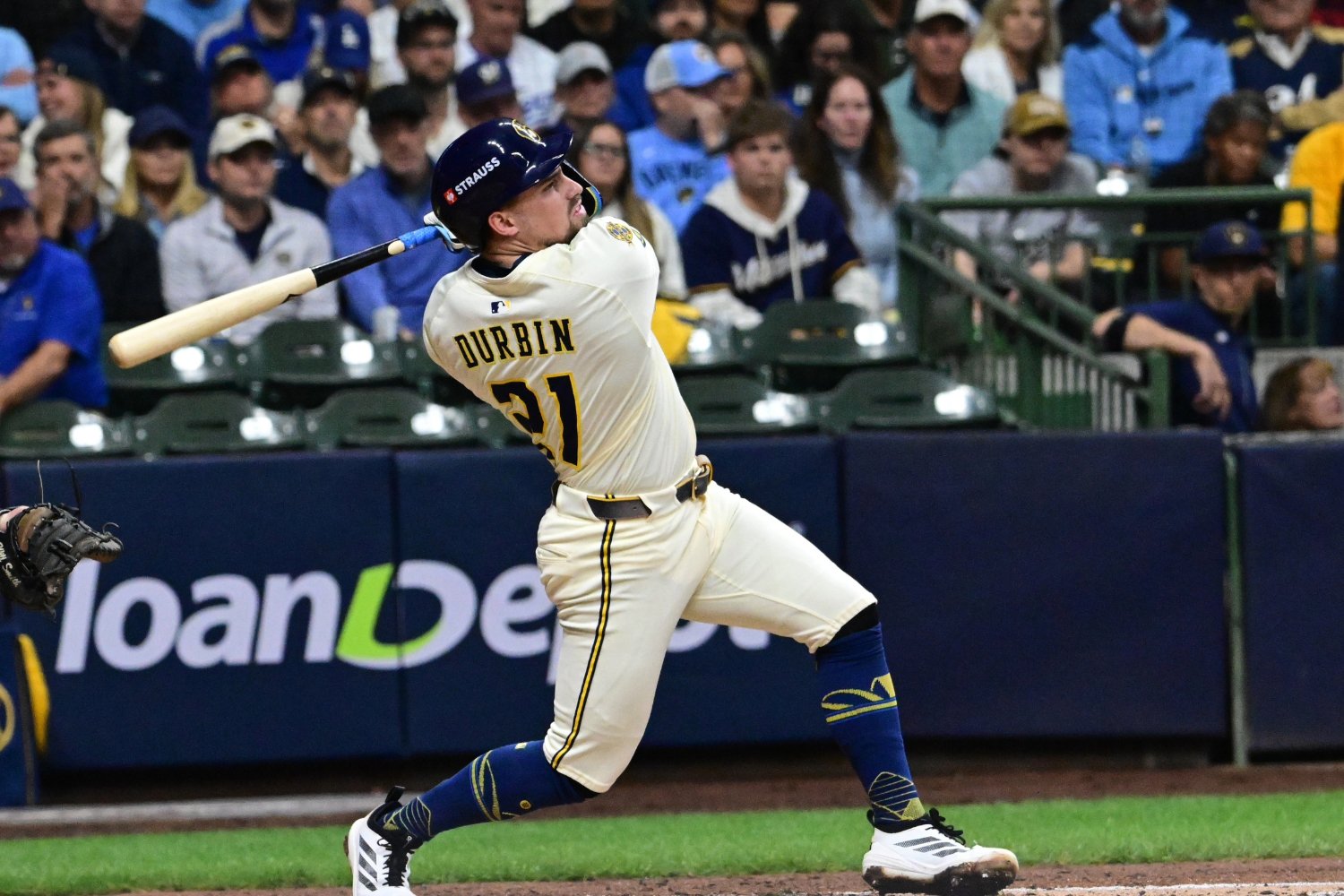 The Boston Red Sox found their middle infielder in Caleb Durbin, trading Kyle Harrison, Shane Drohan, and David Hamilton while also acquiring Andruw Monasterio and Anthony Seigler (plus a draft pick) in the process. This is not the flashiest trade by any means, but it is one of the better moves that could be made considering what the Red Sox gave up to get him. Compared to what the Astros wanted for Issac Paredes or the likely exorbitant price tag on Nico Hoerner, it's fair to say the Red Sox came out well on the other side of the quest for an Alex Bregman replacement. Durbin is only 25 years old and will be under club control until 2031. In a problem mostly of their own creation, there was little in the way of free agency help once the calendar hit 2026, and Craig Breslow had to find new ways to upgrade the roster. After months of rumors involving Paredes, Hoerner, Matt Shaw, and Ketel Marte, the Red Sox did what they set out to do after signing Ranger Suarez and bolstered the infield defense. Durbin stands at 5'7", 183 lbs, making him one of nine players in MLB in 2025 to take an at-bat standing at 5'7 or shorter. What he lacks in size and power, he makes up for in the other aspects of what it takes to stick in the majors. Durbin rarely misses when he swings, producing a ridiculous 93.5% Zone-Contact%, good for the 95th percentile among all major league hitters. Along a similar vein to Willson Contreras, Durbin produces a 15.7% PullAir%, which is a skill the Red Sox identified, clearly wanting to utilize the Monster more to their advantage. Alex Cora told Ian Browne of MLB.com, Despite not having the prototypical juice that teams want out of their lineup, the theme is finding more players who pull the ball in the air enough to add some points to their OPS. It's only 310 feet to left field, so while the home run numbers may stagnate or decrease, I expect an increase in doubles thanks to both the monster and his speed. The numbers show that Durbin can handle the inside pitch necessary for him to execute the plans the Red Sox seem to have for him. He finds the ideal launch angle on the inside pitch, but in those same inside zones, his xWOBA gets progressively worse the higher on the inner half you go. xWOBA is primarily a quality of contact metric, so the fact that the metric shows up as blue is no surprise. Durbin's max EV last season was 108.9 mph (14th percentile), and his 90th percentile EV was 100.1 mph (5th percentile), so a massive improvement upon his .312 xWOBA is unlikely. Thanks to his pull tendencies, though, his SLG should go up from its previous .387 number. At only age 25, his ability to put the ball in play is rare for someone so young. Only fellow Rookie of the Year nominee, Jacob Wilson, had a lower strikeout rate at age 25 or lower last season, and since 2010, Durbin had the seventh-lowest strikeout rate among rookies (min. 400 PA). Defensively, Durbin plays well at third base, producing two Outs Above Average and five Defensive Runs Saved. At second, he leaves some more to be desired, though it is not detrimental by any means, with only a -1 OAA and -1 DRS. Similar to Isiah Kiner-Falefa and Andruw Monasterio, Durbin's positional versatility gives the Red Sox even more lineup flexibility to mix and match with platoons and such. Roster Resource currently has Durbin slotted in the seven-hole against both sides, playing second base against righties and filling in for Marcelo Mayer against southpaws. Romy Gonzalez came out on Monday and said that he had a setback recovering from a shoulder injury sustained at the end of last season. He does anticipate being ready for Opening Day, but that's not the right foot to get off on day one of the new season. Gonzalez was one of the options considered as a platoon at second base, but with injury, things were up in the air. Durbin provides relief in that area. More than likely, this is the cherry on top of a busy offseason for the Red Sox. There is still the option to sign a left-handed reliever, but in terms of needle-moving deals, this should be the last one. Durbin fills a need on defense, positionally, and doesn't strike out, an ability the Red Sox sorely needed throughout 2025. MTZxTzNfWGw0TUFRPT1fQWxJQVhGRlFYZ0lBWGxGWFZ3QUhCZ1lEQUZnQ1ZWY0FCUWNEVWdCUUJ3QldBd3BW.mp4 Now all that's left to do is wait for Opening Day. The discussion of the ceiling and floor will begin to be answered in just over a month from now. The sound of cleats walking on concrete and balls smacking into gloves is back, and the Red Sox are the best they have looked top-to-bottom over the last five years. Durbin seems to be one of the final pieces of the 2025-26 offseason. It's wheels up from here on out.
 -
Well, the Boston Red Sox did get a defensive-minded middle infielder, as promised, signing Isiah Kiner-Falefa for one year and $6 million. Visions of Pete Alonso playing alongside of Alex Bregman have gone by the wayside as the front office has committed to bolstering the infield defense. Kiner-Falefa fills that exact role and almost nothing more. He will be competing with lefty-killer Romy Gonzalez, Nate Eaton, Nick Sogard, and even David Hamilton for the starting second base job this spring. Given the timing and the $6 million price tag just five days before pitchers and catchers report, there is little doubt he will be on the Opening Day roster. The bigger question is how often he cracks the starting lineup, especially with Gonzalez offering the superior bat and Mayer appearing to be the preferred option at third base. Kiner-Falefa is the standard utility infielder manning 2B, SS, and 3B in 2025, playing all of them at an average to an above-average level. Second was where he got the fewest reps, with only 34 attempts on a play, and according to Baseball Savant, he was expected to convert 85% of those chances and did so. For his career, he is a +16 Outs Above Average player, though that's come with some serious regression, with most of it coming from an 11 OAA season in 2019; he posted -1 OAA in 2025. Even still, he is a reliable option, posting solid Defensive Runs Saved numbers with three at 3B, one at SS and one at 2B. This simply shows he might not have the same first step he did as a rookie, limiting his previously outstanding range, but he is reliable at making the plays he should with a consistent arm. A lot of the positive things I have to say regarding Kiner-Falefa end at his fielding. His bat is nothing to boast about, never slugging over .376 in a season. As indicated by the graphic above, he is quite clearly not a power option in any capacity. He's hit eight home runs twice in his career, and that is a career-high, and the underlying metrics show no indication that this season will be any different. A 1.1% barrel rate, a Max EV of 106.1, paired with an 8.1% Pull Air% do not bode well for a sudden power boost. That was never his game, regardless, but if you can't hit the ball hard there needs to be another elite trait to supplement that. Outside of his ability to avoid swinging and missing, that impact skill simply is not there. Kiner-Falefa is coming off a season where he slashed .262/.297/.334 while tallying a 75 wRC+. As much as I want to find the underlying breakout metric in his swing, it is not to be found. In fact, he outperformed all of his expected metrics by a good chunk. The role I envision for him is a late-inning defensive fill-in or a surefire way to get the regular infielders some needed rest, thanks to his defensive flexibility on the infield dirt. He provides the ultimate versatility that teams can never have enough of and something I'm sure Alex Cora will appreciate. In the scenario where Kiner-Falefa gets regular at-bats though, something has either gone horribly wrong or he's having an Abraham Toro-style June heater. In a vacuum, the signing is a smart one thanks to his legitimate utility role, but with a glaring need for some pop in the lineup, it has left many fans, including myself, wanting for more. View full article
-
Isiah Kiner-Falefa Fills A Role, But Not A Void For Red Sox
Jack Lindsay posted an article in Red Sox
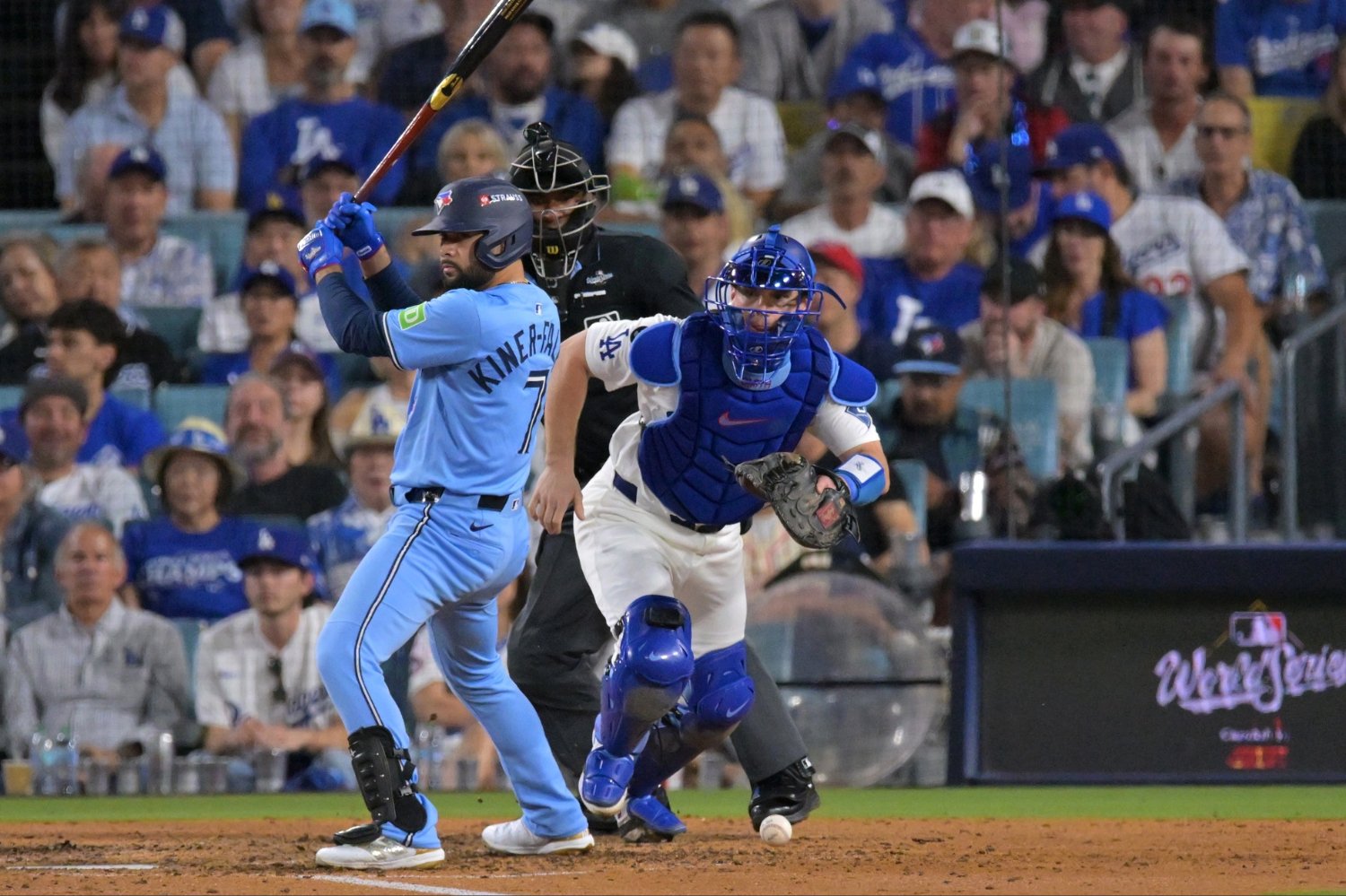 Well, the Boston Red Sox did get a defensive-minded middle infielder, as promised, signing Isiah Kiner-Falefa for one year and $6 million. Visions of Pete Alonso playing alongside of Alex Bregman have gone by the wayside as the front office has committed to bolstering the infield defense. Kiner-Falefa fills that exact role and almost nothing more. He will be competing with lefty-killer Romy Gonzalez, Nate Eaton, Nick Sogard, and even David Hamilton for the starting second base job this spring. Given the timing and the $6 million price tag just five days before pitchers and catchers report, there is little doubt he will be on the Opening Day roster. The bigger question is how often he cracks the starting lineup, especially with Gonzalez offering the superior bat and Mayer appearing to be the preferred option at third base. Kiner-Falefa is the standard utility infielder manning 2B, SS, and 3B in 2025, playing all of them at an average to an above-average level. Second was where he got the fewest reps, with only 34 attempts on a play, and according to Baseball Savant, he was expected to convert 85% of those chances and did so. For his career, he is a +16 Outs Above Average player, though that's come with some serious regression, with most of it coming from an 11 OAA season in 2019; he posted -1 OAA in 2025. Even still, he is a reliable option, posting solid Defensive Runs Saved numbers with three at 3B, one at SS and one at 2B. This simply shows he might not have the same first step he did as a rookie, limiting his previously outstanding range, but he is reliable at making the plays he should with a consistent arm. A lot of the positive things I have to say regarding Kiner-Falefa end at his fielding. His bat is nothing to boast about, never slugging over .376 in a season. As indicated by the graphic above, he is quite clearly not a power option in any capacity. He's hit eight home runs twice in his career, and that is a career-high, and the underlying metrics show no indication that this season will be any different. A 1.1% barrel rate, a Max EV of 106.1, paired with an 8.1% Pull Air% do not bode well for a sudden power boost. That was never his game, regardless, but if you can't hit the ball hard there needs to be another elite trait to supplement that. Outside of his ability to avoid swinging and missing, that impact skill simply is not there. Kiner-Falefa is coming off a season where he slashed .262/.297/.334 while tallying a 75 wRC+. As much as I want to find the underlying breakout metric in his swing, it is not to be found. In fact, he outperformed all of his expected metrics by a good chunk. The role I envision for him is a late-inning defensive fill-in or a surefire way to get the regular infielders some needed rest, thanks to his defensive flexibility on the infield dirt. He provides the ultimate versatility that teams can never have enough of and something I'm sure Alex Cora will appreciate. In the scenario where Kiner-Falefa gets regular at-bats though, something has either gone horribly wrong or he's having an Abraham Toro-style June heater. In a vacuum, the signing is a smart one thanks to his legitimate utility role, but with a glaring need for some pop in the lineup, it has left many fans, including myself, wanting for more.
 -
Pitchers and catchers report next week, and there are still multiple unanswered questions for the Boston Red Sox to answer. There is an overwhelming amount of depth in the outfield and on the bench. As it stands today, the Red Sox have four legitimate outfield options in Roman Anthony, Ceddanne Rafaela, Jarren Duran, and Wilyer Abreu. Ideally, all four of these guys see the field with regularity, as each of them provides strength from either their bat, glove, or both. Those four alone will require a unique rotation of sticking someone at DH while the others fill in in the outfield. Roster Resource currently has Duran at DH versus both righties and lefties, while Anthony fills in at LF, Rafaela at CF, and Abreu in RF. This situation in a vacuum is great. It allows each guy to get rest when they need it, and all four of them play at an above-average level of defense, with Rafaela and Abreu being Gold Glove talents. To stick with the classic cliche, "You can never have too much depth." Well, what if you can? As it stands today, the Red Sox will be paying Masataka Yoshida $18.6 million to sit on the bench and fill in for an injury or a rest day. Jen McCaffrey of The Athletic said: "The Red Sox may still try to trade him this spring. If that doesn't happen, his outfield reps will be limited, and his chances as a designated hitter may be, as well, with Duran and Anthony seeing more time in that spot." Yoshida is a very useful MLB hitter; his problem is that he is not as useful as the four other options. If he were a right-handed hitter, there would be a clear and obvious place for him to slot in against lefties. Unfortunately for him, Rafaela is the only right-handed hitter among the quintet, and his defense is irreplaceable. A clear opening for Yoshida would be a time when Rafaela goes cold or gets hurt. That would move Duran to center and open up a DH spot. Against right-handers, Yoshida shines far brighter than Rafaela. He boasts a career wRC+ of 118, an OPS of .795, and an OBP of .345 against righties. The way to find a spot in the daily lineup for Yoshida is playing the matchups. I'm not talking about what side the pitcher throws from, I'm talking about pitch-type matchups. Yoshida crushes fastballs, hitting .338 off of four-seamers and producing a run value of 4. On the other hand, he struggles mightily against curveballs and cutters. So, the key for him getting in may very well be finding right-handed pitchers who rely heavily on their four-seam fastball for success and avoiding pitchers with high cutter and/or curveball usage in order to maximize Yoshida's skill set. Finally, that leaves Triston Casas, who is unlikely to break camp with the team due to his brutal knee injury that knocked him out for all of 2025. When the Red Sox acquired Willson Contreras, Casas' spot on the team became significantly foggier than before. Who can blame the Red Sox? Beyond his fabled 2023 second half, Casas has not shown up in ways that allowed him to maintain his spot in the lineup. Before his injury, he hit incredibly poorly, posting a 56 wRC+ and a .182 AVG over his first 23 games. With a poor bat and subpar defense, Casas' value comes into question. His staple was elite discipline mixed with pop, and he showed that in his first two full seasons, putting up consecutive .800+ OPS seasons. Then, his walk rate dropped from 12.3% to 9.8%, and his average exit velocity from 90.3 mph to 87.6 mph. That, on top of his injury-riddled career (he's spent 320 games on the IL) makes him an unreliable option day-to-day. Oddly enough, though, he is not exactly your prototypical platoon bat. Casas has a higher OPS against lefties, along with a higher wOBA and wRC+ — albeit, this is a smaller sample size, with 165 PAs vs. lefties as opposed to 651 vs. righties. His reverse splits are surely something the Red Sox will consider when making the lineup once Casas returns. What Should the Red Sox Do? As much as I would love to fit all of these guys into the picture, with how the roster is constructed today, it is simply impossible. Rostering four legitimate outfield options already throws a wrench into the mix. Having a likely infield addition AND all three of the players mentioned being left-handed ensures there is an odd man out. Duran cannot be one of them. He is too valuable off the field and on it, providing more in all facets of the game than either Yoshida or Casas can with his mix of speed and power. That leaves Casas or Yoshida fighting for the last spot, and the choice is clear. Triston Casas sticks around while Yoshida finds greener pastures elsewhere. The ceiling case for Casas is higher than it is with Yoshida at this point in his career. Call me naive, but I'm still clinging to the Casas we saw earlier in his career. The mix of plate discipline along with 70-grade power exists, and it's a profile I am more than willing to chase. Especially with not having the pressure of playing every day, thanks to Contreras, this will allow the Red Sox to place him in positions to succeed. Yoshida will have about a month to prove he belongs and make Craig Breslow's decision with the lineup even more difficult. View full article
-
 Pitchers and catchers report next week, and there are still multiple unanswered questions for the Boston Red Sox to answer. There is an overwhelming amount of depth in the outfield and on the bench. As it stands today, the Red Sox have four legitimate outfield options in Roman Anthony, Ceddanne Rafaela, Jarren Duran, and Wilyer Abreu. Ideally, all four of these guys see the field with regularity, as each of them provides strength from either their bat, glove, or both. Those four alone will require a unique rotation of sticking someone at DH while the others fill in in the outfield. Roster Resource currently has Duran at DH versus both righties and lefties, while Anthony fills in at LF, Rafaela at CF, and Abreu in RF. This situation in a vacuum is great. It allows each guy to get rest when they need it, and all four of them play at an above-average level of defense, with Rafaela and Abreu being Gold Glove talents. To stick with the classic cliche, "You can never have too much depth." Well, what if you can? As it stands today, the Red Sox will be paying Masataka Yoshida $18.6 million to sit on the bench and fill in for an injury or a rest day. Jen McCaffrey of The Athletic said: "The Red Sox may still try to trade him this spring. If that doesn't happen, his outfield reps will be limited, and his chances as a designated hitter may be, as well, with Duran and Anthony seeing more time in that spot." Yoshida is a very useful MLB hitter; his problem is that he is not as useful as the four other options. If he were a right-handed hitter, there would be a clear and obvious place for him to slot in against lefties. Unfortunately for him, Rafaela is the only right-handed hitter among the quintet, and his defense is irreplaceable. A clear opening for Yoshida would be a time when Rafaela goes cold or gets hurt. That would move Duran to center and open up a DH spot. Against right-handers, Yoshida shines far brighter than Rafaela. He boasts a career wRC+ of 118, an OPS of .795, and an OBP of .345 against righties. The way to find a spot in the daily lineup for Yoshida is playing the matchups. I'm not talking about what side the pitcher throws from, I'm talking about pitch-type matchups. Yoshida crushes fastballs, hitting .338 off of four-seamers and producing a run value of 4. On the other hand, he struggles mightily against curveballs and cutters. So, the key for him getting in may very well be finding right-handed pitchers who rely heavily on their four-seam fastball for success and avoiding pitchers with high cutter and/or curveball usage in order to maximize Yoshida's skill set. Finally, that leaves Triston Casas, who is unlikely to break camp with the team due to his brutal knee injury that knocked him out for all of 2025. When the Red Sox acquired Willson Contreras, Casas' spot on the team became significantly foggier than before. Who can blame the Red Sox? Beyond his fabled 2023 second half, Casas has not shown up in ways that allowed him to maintain his spot in the lineup. Before his injury, he hit incredibly poorly, posting a 56 wRC+ and a .182 AVG over his first 23 games. With a poor bat and subpar defense, Casas' value comes into question. His staple was elite discipline mixed with pop, and he showed that in his first two full seasons, putting up consecutive .800+ OPS seasons. Then, his walk rate dropped from 12.3% to 9.8%, and his average exit velocity from 90.3 mph to 87.6 mph. That, on top of his injury-riddled career (he's spent 320 games on the IL) makes him an unreliable option day-to-day. Oddly enough, though, he is not exactly your prototypical platoon bat. Casas has a higher OPS against lefties, along with a higher wOBA and wRC+ — albeit, this is a smaller sample size, with 165 PAs vs. lefties as opposed to 651 vs. righties. His reverse splits are surely something the Red Sox will consider when making the lineup once Casas returns. What Should the Red Sox Do? As much as I would love to fit all of these guys into the picture, with how the roster is constructed today, it is simply impossible. Rostering four legitimate outfield options already throws a wrench into the mix. Having a likely infield addition AND all three of the players mentioned being left-handed ensures there is an odd man out. Duran cannot be one of them. He is too valuable off the field and on it, providing more in all facets of the game than either Yoshida or Casas can with his mix of speed and power. That leaves Casas or Yoshida fighting for the last spot, and the choice is clear. Triston Casas sticks around while Yoshida finds greener pastures elsewhere. The ceiling case for Casas is higher than it is with Yoshida at this point in his career. Call me naive, but I'm still clinging to the Casas we saw earlier in his career. The mix of plate discipline along with 70-grade power exists, and it's a profile I am more than willing to chase. Especially with not having the pressure of playing every day, thanks to Contreras, this will allow the Red Sox to place him in positions to succeed. Yoshida will have about a month to prove he belongs and make Craig Breslow's decision with the lineup even more difficult.
 -
The offseason picture became far clearer over the last few weeks, with four of DiamondCentric's top-10 free agents signing. That still leaves room for additions in Boston, specifically regarding the infield. Other than Eugenio Suarez, Bo Bichette was the only truly enticing infield option remaining. Once the Red Sox signed Ranger Suarez, Bichette was no longer in the picture, so it just became a matter of seeing where he would land. The two primary contenders, the Mets and Phillies, both had intriguing options at third base that could be bought should Bichette have entered the fold. Then, shortly after whiffing on Kyle Tucker, Bichette officially inked his deal with the Mets for three years, $126 million. In doing so, both Brett Baty's and Mark Vientos' place in the lineup became unclear. FanGraph's Mets Roster Resource page currently has Baty slotted at DH, while Vientos has been relegated to being a bench piece versus righties and then playing first against lefties. Baty is likely to be benched against southpaws. Both of these guys are too good to be platooning for each other. With the Bichette signing, the Mets are in a similar predicament at third that the Red Sox are in in the outfield. Even after their Freddy Peralta blockbuster that cost them top prospect Jett Williams, New York clearly has a logjam to sort through. You can probably see where this is going. Issac Paredes has been linked more intensely in recent days to the Red Sox and our own @Brandon Glick outlined how effective he could be at Fenway. But there appears to be more pressure in the Big Apple for the Mets to add and more holes to fill. Along with that, Baty and Vientos hit free agency in 2030, whereas Paredes hits the market in 2028. This will surely make one of Vientos or Baty more expensive than Paredes, but the Red Sox have the pitching and outfield depth necessary to meet the needs of the Mets to get a deal done. Brett Baty (2025): .254/.313/.435, 18 HR, 50 RBI, 1 11 wRC+, 2.3 fWAR The 2025 season was a mini-breakout for Baty, finally unlocking some of his potential in the second half. After posting a pedestrian 92 wRC+ prior to the Midsummer Classic, Baty found his stride, ripping a 135 wRC+ to conclude the season. He increased his average by 65 points, shooting up from .226 to .291, and he increased his walk rate from 6.0 to 9.0 percent while maintaining a 73 percent contact rate and striking out at around the same clip. His xBA indicates that he's somewhere in between both of those totals, sitting at .257. Projection systems are skeptical of his power surge, but allow me to take a moment to push against the computers. The expected regression in the power department is likely due to a previous career high of nine home runs in 2023, fair enough. But a 26-year-old with a max EV of 115.6 mph, a 107 mph 90th percentile EV, and a 90.5 mph average exit velocity has more room to grow. Looking at the above graphic; Baty excels in almost every category that involves mashing the baseball. The issue he runs into is that he hits far too many ground balls. His average launch angle is 5.8 degrees, and his 52.6 percent ground ball rate is the ninth-highest in baseball (min. 300 PA), limiting his power output. So yes, he smokes the baseball, but far too often it's right into the dirt. Despite this, Baty was still an above-league-average bat and set career-highs in most power metrics. Regarding his defense, his Fielding Run Value is 48th percentile, and his Outs Above Average was 69th percentile. He also boasted four Defensive Runs Saved, a five-run improvement over 2024. There is still room to grow in this profile, and if he learns to elevate even a bit more, this is absolutely a 25-plus HR threat waiting to happen. Mark Vientos: .233/.289/.413, 17 HR, 61 RBI, 97 wRC+, 0.4 fWAR Vientos' 2025 was a far cry from his breakout 2024 season, where he slugged 27 home runs, raking to the tune of a .837 OPS. Looking at his 2024 expected stats, regression appeared imminent. Vientos outperformed his xBA, xSLG, and xwOBA all by at least 20 points. Interestingly enough, his 2025 went the exact opposite way, though not to the same extreme. His skills remained largely the same as well, keeping his exit velocity in the upper-third of the league and a nearly identical launch angle. His contact rate improved from 66 to 73 percent, and his strikeout rate fell from 29.7 to 24.8 percent, yet his batting average declined. Assuming those gains hold, he profiles as a better on-base contributor moving forward. Like his third base partner, his second half showed meaningful improvement. The most clear jump was his performance versus lefties. Vientos supported an abysmal 49 wRC+ against southpaws in the first half, and that number jumped up to a 155 wRC+ post-All-Star break. His OPS against lefties likewise saw a dramatic increase, jumping from .547 all the way to .914. Vientos hit the IL on June 3 due to a left hamstring strain, which knocked him out for a month. It's possible that it was a lingering injury that finally sidelined him after trying to play through it. Defensively, he profiles more as a DH than a third baseman, providing -7 Outs Above Average at the hot corner. That could be an issue for the Red Sox, who like to prioritize versatility among their infielders. Which option is better for Red Sox? Vientos' best season is better than Brett Baty's, but I think Baty has a higher ceiling left in his career. He hits the ball harder, plays a better third base, and gets on base with a higher frequency. Both of these options look like they're due for a better 2026 than what their full-season numbers displayed, but Baty showed tangible growth. Vientos stayed largely the same, but the good luck completely turned over on its head. He's a player of the caliber of somewhere in the middle of his 2024 and 2025 seasons, whereas Baty has another gear we have yet to see. cU82Z1FfWGw0TUFRPT1fQlFkWlVBSlFVZ2NBWGxFRUFBQUhVZzlXQUZoWEJsTUFDd1FBVTFjR1VnSlVCUVlF.mp4 A complete offseason involves acquiring an infield bat. Whether that comes from Queens, Houston, or elsewhere remains to be seen, but there are great options available. It's on the Red Sox to go out and get one. View full article
-
When Logjams Create Leverage: Red Sox & Mets Remain Ideal Trade Partners
Jack Lindsay posted an article in Red Sox
 The offseason picture became far clearer over the last few weeks, with four of DiamondCentric's top-10 free agents signing. That still leaves room for additions in Boston, specifically regarding the infield. Other than Eugenio Suarez, Bo Bichette was the only truly enticing infield option remaining. Once the Red Sox signed Ranger Suarez, Bichette was no longer in the picture, so it just became a matter of seeing where he would land. The two primary contenders, the Mets and Phillies, both had intriguing options at third base that could be bought should Bichette have entered the fold. Then, shortly after whiffing on Kyle Tucker, Bichette officially inked his deal with the Mets for three years, $126 million. In doing so, both Brett Baty's and Mark Vientos' place in the lineup became unclear. FanGraph's Mets Roster Resource page currently has Baty slotted at DH, while Vientos has been relegated to being a bench piece versus righties and then playing first against lefties. Baty is likely to be benched against southpaws. Both of these guys are too good to be platooning for each other. With the Bichette signing, the Mets are in a similar predicament at third that the Red Sox are in in the outfield. Even after their Freddy Peralta blockbuster that cost them top prospect Jett Williams, New York clearly has a logjam to sort through. You can probably see where this is going. Issac Paredes has been linked more intensely in recent days to the Red Sox and our own @Brandon Glick outlined how effective he could be at Fenway. But there appears to be more pressure in the Big Apple for the Mets to add and more holes to fill. Along with that, Baty and Vientos hit free agency in 2030, whereas Paredes hits the market in 2028. This will surely make one of Vientos or Baty more expensive than Paredes, but the Red Sox have the pitching and outfield depth necessary to meet the needs of the Mets to get a deal done. Brett Baty (2025): .254/.313/.435, 18 HR, 50 RBI, 1 11 wRC+, 2.3 fWAR The 2025 season was a mini-breakout for Baty, finally unlocking some of his potential in the second half. After posting a pedestrian 92 wRC+ prior to the Midsummer Classic, Baty found his stride, ripping a 135 wRC+ to conclude the season. He increased his average by 65 points, shooting up from .226 to .291, and he increased his walk rate from 6.0 to 9.0 percent while maintaining a 73 percent contact rate and striking out at around the same clip. His xBA indicates that he's somewhere in between both of those totals, sitting at .257. Projection systems are skeptical of his power surge, but allow me to take a moment to push against the computers. The expected regression in the power department is likely due to a previous career high of nine home runs in 2023, fair enough. But a 26-year-old with a max EV of 115.6 mph, a 107 mph 90th percentile EV, and a 90.5 mph average exit velocity has more room to grow. Looking at the above graphic; Baty excels in almost every category that involves mashing the baseball. The issue he runs into is that he hits far too many ground balls. His average launch angle is 5.8 degrees, and his 52.6 percent ground ball rate is the ninth-highest in baseball (min. 300 PA), limiting his power output. So yes, he smokes the baseball, but far too often it's right into the dirt. Despite this, Baty was still an above-league-average bat and set career-highs in most power metrics. Regarding his defense, his Fielding Run Value is 48th percentile, and his Outs Above Average was 69th percentile. He also boasted four Defensive Runs Saved, a five-run improvement over 2024. There is still room to grow in this profile, and if he learns to elevate even a bit more, this is absolutely a 25-plus HR threat waiting to happen. Mark Vientos: .233/.289/.413, 17 HR, 61 RBI, 97 wRC+, 0.4 fWAR Vientos' 2025 was a far cry from his breakout 2024 season, where he slugged 27 home runs, raking to the tune of a .837 OPS. Looking at his 2024 expected stats, regression appeared imminent. Vientos outperformed his xBA, xSLG, and xwOBA all by at least 20 points. Interestingly enough, his 2025 went the exact opposite way, though not to the same extreme. His skills remained largely the same as well, keeping his exit velocity in the upper-third of the league and a nearly identical launch angle. His contact rate improved from 66 to 73 percent, and his strikeout rate fell from 29.7 to 24.8 percent, yet his batting average declined. Assuming those gains hold, he profiles as a better on-base contributor moving forward. Like his third base partner, his second half showed meaningful improvement. The most clear jump was his performance versus lefties. Vientos supported an abysmal 49 wRC+ against southpaws in the first half, and that number jumped up to a 155 wRC+ post-All-Star break. His OPS against lefties likewise saw a dramatic increase, jumping from .547 all the way to .914. Vientos hit the IL on June 3 due to a left hamstring strain, which knocked him out for a month. It's possible that it was a lingering injury that finally sidelined him after trying to play through it. Defensively, he profiles more as a DH than a third baseman, providing -7 Outs Above Average at the hot corner. That could be an issue for the Red Sox, who like to prioritize versatility among their infielders. Which option is better for Red Sox? Vientos' best season is better than Brett Baty's, but I think Baty has a higher ceiling left in his career. He hits the ball harder, plays a better third base, and gets on base with a higher frequency. Both of these options look like they're due for a better 2026 than what their full-season numbers displayed, but Baty showed tangible growth. Vientos stayed largely the same, but the good luck completely turned over on its head. He's a player of the caliber of somewhere in the middle of his 2024 and 2025 seasons, whereas Baty has another gear we have yet to see. cU82Z1FfWGw0TUFRPT1fQlFkWlVBSlFVZ2NBWGxFRUFBQUhVZzlXQUZoWEJsTUFDd1FBVTFjR1VnSlVCUVlF.mp4 A complete offseason involves acquiring an infield bat. Whether that comes from Queens, Houston, or elsewhere remains to be seen, but there are great options available. It's on the Red Sox to go out and get one.
 -
The ice has been broken. After a frustrating series of events regarding Alex Bregman, the Boston Red Sox bounced back, signing LHP Ranger Suarez to a five-year, $130 million deal with no opt-outs and no no-trade clause. In other words, right up Craig Breslow's alley in terms of the contract. Suárez, DiamondCentric's second-highest-ranked starting pitcher remaining on the market, is a great get for the Sox. A team with an already solid rotation gets even stronger, making an argument for the strongest rotation in baseball. Suárez has been a model of consistency over the past five seasons with a 3.25 ERA, ranking 13th amongst all starting pitchers with a minimum of 500 innings pitched in that time frame. It's all backed up by luck stats as well, touting a 3.44 FIP. The newly acquired lefty does not fit the mold of other Craig Breslow moves this offseason. In guys like Johan Oviedo or Jake Bennett, there was a clear trend in extension and height. Suárez does not check off either of those boxes, standing at 6'1 with just 6.2 feet of extension, which ranks in the 29th percentile in MLB. He is also in the 7th percentile in average fastball velocity, sitting at 91.2 mph. He doesn't have the typical mold of a modern starting pitcher, and yet he finds success. In today’s game, pitchers without elite velocity or strikeout rates often struggle to hold rotation spots unless they excel elsewhere. Suárez does exactly that, combining elite control with a well-above-average ability to keep the ball on the ground. Suárez ranked 21st in BB% (5.8%), 16th in ground-ball rate (46.8%), and led the league in Location+ (113). Location+ operates the same way as Stuff+, providing a baseline of 100 based on how well a pitcher can locate in each count relative to the league. Put simply, how well can a pitcher locate along the edge of the zone compared to the rest of the league? Suárez is the best at this, and it's a skill that ages much more gracefully than velocity. His elite location ability allows him to garner elite results in average exit velocity (95th percentile, 86.5) and hard-hit rate (98th percentile, 31.1%). From a pitch-mix standpoint, Suárez leans heavily on his sinker, throwing it 28.5% of the time. The pitch generates an excellent 62.9% ground-ball rate, though it was hit at a moderate clip, allowing a .768 OPS. His best offering, however, is clearly his changeup. Using the pitch, he posted a microscopic 2.8% walk rate and a strong 25.2% strikeout rate. Opponents produced a 48 wRC+ and a .499 OPS, both ranking 16th-lowest in the league. The pitch is rarely thrown in the zone, evidenced by a 30.8% Zone%, yet it generates a massive 43% Chase%. It tunnels effectively off the sinker with a similar horizontal approach angle while dropping an additional two inches, driving swing-and-miss. M3k0eDRfWGw0TUFRPT1fVTFNQVZBQUhWd2NBQUZNRUF3QUhDUUJXQUFBQlYxY0FVd2NCQmdJQ0NBRURDQUVI.mp4 Despite lacking the traditional traits often associated with top-end starters, Suárez fits the bill. With pinpoint command, a lethal two-pitch mix, and a consistent ability to limit hard contact, his skill set projects to age well. None of these strengths rely on upper-echelon velocity, which inevitably declines over time. As a result, the Red Sox’s $26 million annual investment should not become burdensome, even in the later years of the deal. One clear area of need remains. With yet another ground-ball-heavy pitcher added to the rotation, the importance of a reliable infield defense is magnified. Still, after a weekend of significant frustration, it is encouraging to see the front office respond quickly and decisively. This has the makings of one of the best rotations in the sport, where, from Garrett Crochet through Johan Oviedo and beyond, the team should feel competitive every time out. The organizational pitching depth is a clear strength, and it will be fascinating to see where the roster construction goes from here. For now, though, enjoy the moment. The first free agent has landed, and the rotation just got even better. View full article
-
 The ice has been broken. After a frustrating series of events regarding Alex Bregman, the Boston Red Sox bounced back, signing LHP Ranger Suarez to a five-year, $130 million deal with no opt-outs and no no-trade clause. In other words, right up Craig Breslow's alley in terms of the contract. Suárez, DiamondCentric's second-highest-ranked starting pitcher remaining on the market, is a great get for the Sox. A team with an already solid rotation gets even stronger, making an argument for the strongest rotation in baseball. Suárez has been a model of consistency over the past five seasons with a 3.25 ERA, ranking 13th amongst all starting pitchers with a minimum of 500 innings pitched in that time frame. It's all backed up by luck stats as well, touting a 3.44 FIP. The newly acquired lefty does not fit the mold of other Craig Breslow moves this offseason. In guys like Johan Oviedo or Jake Bennett, there was a clear trend in extension and height. Suárez does not check off either of those boxes, standing at 6'1 with just 6.2 feet of extension, which ranks in the 29th percentile in MLB. He is also in the 7th percentile in average fastball velocity, sitting at 91.2 mph. He doesn't have the typical mold of a modern starting pitcher, and yet he finds success. In today’s game, pitchers without elite velocity or strikeout rates often struggle to hold rotation spots unless they excel elsewhere. Suárez does exactly that, combining elite control with a well-above-average ability to keep the ball on the ground. Suárez ranked 21st in BB% (5.8%), 16th in ground-ball rate (46.8%), and led the league in Location+ (113). Location+ operates the same way as Stuff+, providing a baseline of 100 based on how well a pitcher can locate in each count relative to the league. Put simply, how well can a pitcher locate along the edge of the zone compared to the rest of the league? Suárez is the best at this, and it's a skill that ages much more gracefully than velocity. His elite location ability allows him to garner elite results in average exit velocity (95th percentile, 86.5) and hard-hit rate (98th percentile, 31.1%). From a pitch-mix standpoint, Suárez leans heavily on his sinker, throwing it 28.5% of the time. The pitch generates an excellent 62.9% ground-ball rate, though it was hit at a moderate clip, allowing a .768 OPS. His best offering, however, is clearly his changeup. Using the pitch, he posted a microscopic 2.8% walk rate and a strong 25.2% strikeout rate. Opponents produced a 48 wRC+ and a .499 OPS, both ranking 16th-lowest in the league. The pitch is rarely thrown in the zone, evidenced by a 30.8% Zone%, yet it generates a massive 43% Chase%. It tunnels effectively off the sinker with a similar horizontal approach angle while dropping an additional two inches, driving swing-and-miss. M3k0eDRfWGw0TUFRPT1fVTFNQVZBQUhWd2NBQUZNRUF3QUhDUUJXQUFBQlYxY0FVd2NCQmdJQ0NBRURDQUVI.mp4 Despite lacking the traditional traits often associated with top-end starters, Suárez fits the bill. With pinpoint command, a lethal two-pitch mix, and a consistent ability to limit hard contact, his skill set projects to age well. None of these strengths rely on upper-echelon velocity, which inevitably declines over time. As a result, the Red Sox’s $26 million annual investment should not become burdensome, even in the later years of the deal. One clear area of need remains. With yet another ground-ball-heavy pitcher added to the rotation, the importance of a reliable infield defense is magnified. Still, after a weekend of significant frustration, it is encouraging to see the front office respond quickly and decisively. This has the makings of one of the best rotations in the sport, where, from Garrett Crochet through Johan Oviedo and beyond, the team should feel competitive every time out. The organizational pitching depth is a clear strength, and it will be fascinating to see where the roster construction goes from here. For now, though, enjoy the moment. The first free agent has landed, and the rotation just got even better.
 -
Another domino in the Rafael Devers saga has fallen. Alex Bregman has signed with the Cubs for five years and $175 million, with a full no-trade clause to boot. What an unmitigated disaster. Now, this incident on its own is not the problem. Alex Bregman is on the older side, and $35 million per year is a steep price to pay for a player with production that will inevitably decline at a continually steeper rate. Yes, I have said previously that the Red Sox need to reconsider their approach to free agency, and I stand by that. Their unwillingness to go the extra mile is not the issue, but it is certainly the onset of the problem spreading throughout the organization. Patient zero was Mookie Betts. After Roman Anthony's extension, I was convinced that the Sox were headed in the right direction. They had extended Garrett Crochet and Kristian Campbell; they also made a legitimate financial commitment to Alex Bregman in February, and it felt like they were trending upwards. The league echoed that, too. I would always hear something along the line of: The Red Sox have money to spend and prospect capital to boot, a position other front offices are jealous of. And to Craig Breslow's credit, he has made legitimately shrewd moves via trade. Acquiring Sonny Gray, Willson Contreras, and others filled needs. The issue with trades is that now the farm system has lost some key depth, whereas spending money allows them to keep those prospects in-house. Knowing what we do now, I can say confidently that the Red Sox would have been better off never signing Bregman at all. There's absurdity laden in that statement, and it's particularly remarkable considering he and Rafael Devers are two of the league's premier hitting talents. But I'll ask you to stick with me for a little while longer — this is a botch-job that rivals the Betts catastrophe. In an absolute disaster class from Breslow, he managed to alienate Devers and lose Bregman. We learned on Sunday that the Red Sox would not offer a no-trade clause to Bregman, and based on the final number the Red Sox offered compared to the Cubs (roughly $3 million per year less), it's quite clear that this was the piece that tipped the scales. After he witnessed what occurred with Devers just two years into a 10-year contract, why the heck would he not demand a no-trade clause? He's been in the league for nine years and has earned his right to ask for some security, especially knowing how the Red Sox treat their superstars. He has a wife and two kids; stability needs to be a certainty, especially considering this is likely the last major deal he will ever sign. Let's turn our attention back to Breslow. He guaranteed Devers he wouldn't move off third base, or at the very least, gave no indication that Bregman would create a problem in that area. Rightfully so, Devers was upset, and somehow the situation snowballed into Devers being traded. At that exact moment, there can't be a scenario in which Bregman is not on the Red Sox until he retires. As soon as you make that choice, you must commit to it completely. It's a trade that signifies a commitment to Bregman at third over Raffy. The problem is, one guy is a homegrown talent making his organizational debut at age 17, signing a 10-year commitment to the organization. The other is on a glorified one-year, $40 million deal. So, if you choose the latter over the former, he'd better be around for a long time, no matter what the cost is. You'd better be willing to get uncomfortable. The $165M was uncomfortable for Breslow and co., but bending over backwards isn't the same as contorting your body in newfound ways. Instead, we're out a third basemen entirely, stuck with Jordan Hicks, and the "best" piece in the return, Kyle Harrison, is perpetually stuck in AAA behind a loaded up rotation with plenty of depth. Not to mention, we also traded one of the prospects we received in the package, James Tibbs, for Dustin May. I try to maintain a glass-half-full view regarding sports. It makes the viewing experience and general consumption markedly better. Yet, even I must acknowledge that there are zero positives regarding this entire situation. The team's improvement had everything to do with Anthony's debut, the front-end of the rotation getting hot, and a career season from Chapman. It had little to do with the "feelings" that Devers may have hurt in two months. They made the playoffs despite the deal, not because of it. They sorely lacked a middle-of-the-order bat in October, and with Bregman gone, they're out another one. Too often, I have seen that the Red Sox feel they have made an aggressive offer, only to be outbid in a measure that is not obscene to have gone to. It feels like a culture problem that goes deeper than just Craig Breslow. What a massive gut punch on the same day as Fenway Fest. There is hope of a turnaround with Bo Bichette being available, but if he is not the infield acquisition that is made, it will be hard to take them seriously as an AL East title contender. Yes, this is likely still a playoff team with or without another infielder. The aforementioned trades have improved the roster, but spending $0 in free agency and the lack of an additional impact bat are glaring weaknesses. Spring training begins in just over a month, and time is incredibly short. Breslow better be ready to get extremely uncomfortable, otherwise this roster he's so delicately built may find itself missing one key piece when October comes roaring back around. View full article
-
Red Sox Losing Alex Bregman Is A Disaster of Their Own Making
Jack Lindsay posted an article in Red Sox
 Another domino in the Rafael Devers saga has fallen. Alex Bregman has signed with the Cubs for five years and $175 million, with a full no-trade clause to boot. What an unmitigated disaster. Now, this incident on its own is not the problem. Alex Bregman is on the older side, and $35 million per year is a steep price to pay for a player with production that will inevitably decline at a continually steeper rate. Yes, I have said previously that the Red Sox need to reconsider their approach to free agency, and I stand by that. Their unwillingness to go the extra mile is not the issue, but it is certainly the onset of the problem spreading throughout the organization. Patient zero was Mookie Betts. After Roman Anthony's extension, I was convinced that the Sox were headed in the right direction. They had extended Garrett Crochet and Kristian Campbell; they also made a legitimate financial commitment to Alex Bregman in February, and it felt like they were trending upwards. The league echoed that, too. I would always hear something along the line of: The Red Sox have money to spend and prospect capital to boot, a position other front offices are jealous of. And to Craig Breslow's credit, he has made legitimately shrewd moves via trade. Acquiring Sonny Gray, Willson Contreras, and others filled needs. The issue with trades is that now the farm system has lost some key depth, whereas spending money allows them to keep those prospects in-house. Knowing what we do now, I can say confidently that the Red Sox would have been better off never signing Bregman at all. There's absurdity laden in that statement, and it's particularly remarkable considering he and Rafael Devers are two of the league's premier hitting talents. But I'll ask you to stick with me for a little while longer — this is a botch-job that rivals the Betts catastrophe. In an absolute disaster class from Breslow, he managed to alienate Devers and lose Bregman. We learned on Sunday that the Red Sox would not offer a no-trade clause to Bregman, and based on the final number the Red Sox offered compared to the Cubs (roughly $3 million per year less), it's quite clear that this was the piece that tipped the scales. After he witnessed what occurred with Devers just two years into a 10-year contract, why the heck would he not demand a no-trade clause? He's been in the league for nine years and has earned his right to ask for some security, especially knowing how the Red Sox treat their superstars. He has a wife and two kids; stability needs to be a certainty, especially considering this is likely the last major deal he will ever sign. Let's turn our attention back to Breslow. He guaranteed Devers he wouldn't move off third base, or at the very least, gave no indication that Bregman would create a problem in that area. Rightfully so, Devers was upset, and somehow the situation snowballed into Devers being traded. At that exact moment, there can't be a scenario in which Bregman is not on the Red Sox until he retires. As soon as you make that choice, you must commit to it completely. It's a trade that signifies a commitment to Bregman at third over Raffy. The problem is, one guy is a homegrown talent making his organizational debut at age 17, signing a 10-year commitment to the organization. The other is on a glorified one-year, $40 million deal. So, if you choose the latter over the former, he'd better be around for a long time, no matter what the cost is. You'd better be willing to get uncomfortable. The $165M was uncomfortable for Breslow and co., but bending over backwards isn't the same as contorting your body in newfound ways. Instead, we're out a third basemen entirely, stuck with Jordan Hicks, and the "best" piece in the return, Kyle Harrison, is perpetually stuck in AAA behind a loaded up rotation with plenty of depth. Not to mention, we also traded one of the prospects we received in the package, James Tibbs, for Dustin May. I try to maintain a glass-half-full view regarding sports. It makes the viewing experience and general consumption markedly better. Yet, even I must acknowledge that there are zero positives regarding this entire situation. The team's improvement had everything to do with Anthony's debut, the front-end of the rotation getting hot, and a career season from Chapman. It had little to do with the "feelings" that Devers may have hurt in two months. They made the playoffs despite the deal, not because of it. They sorely lacked a middle-of-the-order bat in October, and with Bregman gone, they're out another one. Too often, I have seen that the Red Sox feel they have made an aggressive offer, only to be outbid in a measure that is not obscene to have gone to. It feels like a culture problem that goes deeper than just Craig Breslow. What a massive gut punch on the same day as Fenway Fest. There is hope of a turnaround with Bo Bichette being available, but if he is not the infield acquisition that is made, it will be hard to take them seriously as an AL East title contender. Yes, this is likely still a playoff team with or without another infielder. The aforementioned trades have improved the roster, but spending $0 in free agency and the lack of an additional impact bat are glaring weaknesses. Spring training begins in just over a month, and time is incredibly short. Breslow better be ready to get extremely uncomfortable, otherwise this roster he's so delicately built may find itself missing one key piece when October comes roaring back around.
 -
On a recent episode of the Baseball Isn’t Boring podcast, Alex Cora spoke with Rob Bradford about recruiting Willson Contreras and what the Boston Red Sox hope he can contribute in Boston. Cora mentioned that Contreras needed to be convinced to void his no-trade clause to play for the Red Sox, and the Boston skipper guessed one feature of his new home park helped sway him: “Probably there’s the other part of it, you know, like he has a chance to play for the Red Sox and make an impact and, you know, pull the ball in the air, you know, and hit more homers, and demolish that Monster.” The “pull the ball in the air” phrase caught my attention. Traditional coaching often preaches going up the middle or the opposite way. Hitters are rarely encouraged to pull the ball, even though the data shows it is clearly more beneficial to do so. This is seen in exit velocities and significantly better results for hitters. A stat called PullAir% can help us understand why Breslow may have targeted a hitter like Contreras, who can pull the ball at an above-average level. PullAir% is simply the percentage of baseballs a hitter puts in play that are pulled in the air. A ball pulled in the air, even without factoring in exit velocity or launch angle, has a greater than 50% chance of resulting in a hit. According to Baseball Savant, “From 2022–24, while only 17.5 percent of batted balls were pulled airballs, that subset was responsible for 66 percent of all home runs. Pulled airballs during that span produced a .547 batting average, 1.227 slugging percentage, and .733 wOBA, making them an extremely valuable outcome. Airballs that were not pulled, by comparison, had a .319 average, .527 slugging percentage, and .353 wOBA, making them considerably less valuable.” It is no surprise, then, that league-wide PullAir% has continued to trend upward since the introduction of Baseball Savant in 2015. Table via RotoWire.com A brief look at Willson Contreras’ stats might indicate that pulling the ball, either in the air or on the ground, is no longer part of his game. After all, he ranked 89th out of 145 qualified hitters in Pull% at 39.4. But an essential factor to consider is the environment where Contreras played half of his games, Busch Stadium. The Cardinals’ home park is one of the worst hitting environments in baseball. Statcast's park factors show Busch Stadium ranks 25th in the MLB with a park factor of 97 and a home run factor of 77. This indicates that Busch Stadium suppressed home runs by 23% compared to league expectations, based on exit velocity and launch angle. (Fenway Park, by contrast, has one of the best park factors in baseball at 104, trailing only the notoriously hitter-friendly Coors Field.) The year before signing with the Cardinals, Contreras posted a Pull% of 44.4, a number that dropped by 7% the following season. That may well reflect changes in approach Contreras made in response to playing at Busch. Seasoned veterans like Contreras can quickly adjust their batted-ball approach, especially those with minimal swing-and-miss in their profile. If Contreras can return to his 2022 tendencies, he’s well-positioned to maximize the Green Monster, a right-handed hitter’s dream. NjREa2RfWGw0TUFRPT1fQWdaVFVnY0hWZ01BQVFBQVh3QUFDUUFDQUZoUkFBTUFWMWNNVlFOUUJGSlVVUXRR.mp4 Finally, it’s worth noting that some high PullAir% right-handed candidates are still available this offseason. (Name: PullAir%, rank) Isaac Paredes: 38.5%, 1st Eugenio Suárez: 28.6%, 10th Alex Bregman: 24.4%, 37th Ketel Marte: 23.5%, 53rd Pulling the ball in the air is a skill, not an accident. It is also a skill the Red Sox lacked in 2025, with only four hitters pulling the ball at an above-average rate. Only one of those hitters was a true right-handed hitter, that being Alex Bregman. This contributed to a middle-of-the-pack home run output, as Boston finished 15th in the league with 185 home runs. Contreras provides stability at a corner position, but if he can pull the ball like his golden days in Chicago, he has the potential to be a dynamic and foundational piece of a young, exciting, and more powerful lineup. View full article
-
 On a recent episode of the Baseball Isn’t Boring podcast, Alex Cora spoke with Rob Bradford about recruiting Willson Contreras and what the Boston Red Sox hope he can contribute in Boston. Cora mentioned that Contreras needed to be convinced to void his no-trade clause to play for the Red Sox, and the Boston skipper guessed one feature of his new home park helped sway him: “Probably there’s the other part of it, you know, like he has a chance to play for the Red Sox and make an impact and, you know, pull the ball in the air, you know, and hit more homers, and demolish that Monster.” The “pull the ball in the air” phrase caught my attention. Traditional coaching often preaches going up the middle or the opposite way. Hitters are rarely encouraged to pull the ball, even though the data shows it is clearly more beneficial to do so. This is seen in exit velocities and significantly better results for hitters. A stat called PullAir% can help us understand why Breslow may have targeted a hitter like Contreras, who can pull the ball at an above-average level. PullAir% is simply the percentage of baseballs a hitter puts in play that are pulled in the air. A ball pulled in the air, even without factoring in exit velocity or launch angle, has a greater than 50% chance of resulting in a hit. According to Baseball Savant, “From 2022–24, while only 17.5 percent of batted balls were pulled airballs, that subset was responsible for 66 percent of all home runs. Pulled airballs during that span produced a .547 batting average, 1.227 slugging percentage, and .733 wOBA, making them an extremely valuable outcome. Airballs that were not pulled, by comparison, had a .319 average, .527 slugging percentage, and .353 wOBA, making them considerably less valuable.” It is no surprise, then, that league-wide PullAir% has continued to trend upward since the introduction of Baseball Savant in 2015. Table via RotoWire.com A brief look at Willson Contreras’ stats might indicate that pulling the ball, either in the air or on the ground, is no longer part of his game. After all, he ranked 89th out of 145 qualified hitters in Pull% at 39.4. But an essential factor to consider is the environment where Contreras played half of his games, Busch Stadium. The Cardinals’ home park is one of the worst hitting environments in baseball. Statcast's park factors show Busch Stadium ranks 25th in the MLB with a park factor of 97 and a home run factor of 77. This indicates that Busch Stadium suppressed home runs by 23% compared to league expectations, based on exit velocity and launch angle. (Fenway Park, by contrast, has one of the best park factors in baseball at 104, trailing only the notoriously hitter-friendly Coors Field.) The year before signing with the Cardinals, Contreras posted a Pull% of 44.4, a number that dropped by 7% the following season. That may well reflect changes in approach Contreras made in response to playing at Busch. Seasoned veterans like Contreras can quickly adjust their batted-ball approach, especially those with minimal swing-and-miss in their profile. If Contreras can return to his 2022 tendencies, he’s well-positioned to maximize the Green Monster, a right-handed hitter’s dream. NjREa2RfWGw0TUFRPT1fQWdaVFVnY0hWZ01BQVFBQVh3QUFDUUFDQUZoUkFBTUFWMWNNVlFOUUJGSlVVUXRR.mp4 Finally, it’s worth noting that some high PullAir% right-handed candidates are still available this offseason. (Name: PullAir%, rank) Isaac Paredes: 38.5%, 1st Eugenio Suárez: 28.6%, 10th Alex Bregman: 24.4%, 37th Ketel Marte: 23.5%, 53rd Pulling the ball in the air is a skill, not an accident. It is also a skill the Red Sox lacked in 2025, with only four hitters pulling the ball at an above-average rate. Only one of those hitters was a true right-handed hitter, that being Alex Bregman. This contributed to a middle-of-the-pack home run output, as Boston finished 15th in the league with 185 home runs. Contreras provides stability at a corner position, but if he can pull the ball like his golden days in Chicago, he has the potential to be a dynamic and foundational piece of a young, exciting, and more powerful lineup.
 -
The Boston Red Sox acquired Willson Contreras from Chaim Bloom and the St. Louis Cardinals for Hunter Dobbins, Yhoiker Fajardo, and Blake Aita in the second deal of the offseason between the two clubs. According to Chris Cotillo, the Red Sox will pay Contreras $18 million in 2026 and $17 million in 2027, with a club option for 2028. The initial reaction may be that Contreras is not the bat the Red Sox need, especially when compared to Pete Alonso, a player the team made an offer to earlier this offseason. While Contreras does not provide the 40-plus home run power of Alonso, their production is far more similar than many may realize. Since 2023, Contreras has posted 8.2 fWAR, a 129 wRC+, and an .817 OPS. Alonso, by comparison, has an 8.4 fWAR, a 128 wRC+, and an .827 OPS. The two are hardly far apart in terms of offensive value. Contreras underperformed his expected metrics last season: a .257 BA versus a .260 xBA, a .447 SLG versus a .480 xSLG, and a .344 wOBA versus a .358 xwOBA. His expected numbers were all above average by league standards, with his xwOBA and xSLG ranking in the 87th and 85th percentiles, respectively. More importantly, his defense is among the best in baseball. His Outs Above Average ranked in the 91st percentile, with a total of six, the fourth-highest mark among all first basemen. His Fielding Run Value of four was the third-best at the position. Entering the offseason, the Red Sox had a clear need on the infield corners, with first base arguably the more pressing of the two. While homegrown product Triston Casas offers a strong ceiling due to his plate discipline and ability to barrel the ball, he struggled to stay on the field and got off to a slow start in 2025 before a torn patellar tendon ended his season prematurely. Roster Resource immediately slots Contreras into the three spot against both left-handed and right-handed pitching. He is an above-average hitter against both sides, posting a 142 wRC+ versus lefties and a 117 wRC+ versus righties. Beyond his general offensive prowess, Contreras bats right-handed, something the Red Sox lacked without Bregman in the lineup. Prior to the deal, three of the team’s best hitters—Roman Anthony, Jarren Duran, and Wilyer Abreu—all hit from the left side. Only Anthony was an above-average hitter against left-handed pitching, while Duran and Abreu combined for just four home runs out of their 38 total against lefties. This move opens up the lineup in a significant way. Romy Gonzalez was the likely fill-in at first as Casas rehabbed his way back onto the field, forcing him to play more frequently than his skill-set should allow. Marcelo Mayer can now hit primarily against right-handed pitching, meaning Gonzalez will specialize against lefties as the two rotate (likely) at second base. Manager Alex Cora has long shown an affinity for lineup optimization, and this addition only gives him greater flexibility. Earlier this offseason, I wrote about how the Blue Jays seemingly rose from the ashes to become a World Series contender by prioritizing bat speed. The Red Sox feature top prospects Anthony, Mayer, and Campbell with above-average bat speed, along with the aforementioned Duran and Abreu. Contreras can now be added to that group. His average bat speed in 2025 ranked 23rd in MLB at 76 mph, and 62.1 percent of his swings exceeded 75 mph. Those traits contributed to career highs in 2025 in both barrel rate at 13.8 percent and HardHit rate at 48.9 percent. OHl3bnZfWGw0TUFRPT1fVkZjQUJRVU1WZ0FBQVZWWFZBQUhDRk1IQUFNRFdsY0FWRkJXQWdwVUJ3QlVVZ0VE.mp4 For those wondering, this move does not displace Connor Wong or Carlos Narváez in any way. Contreras was officially declared a first baseman by Cardinals leadership last offseason, and the Red Sox aren’t expected to change that. The Red Sox have not received a two-fWAR season from a first baseman since David Ortiz in 2017, a benchmark Contreras should be capable of surpassing. He also brings much-needed durability, as his first season transitioning away from catching was his healthiest since 2018, as he appeared in 135 games. This move should not deter the Red Sox from continuing their pursuit of Alex Bregman in free agency. Even after this deal, they rank near the middle of the league in offensive projections. This acquisition meaningfully strengthens the lineup, but more offensive help is needed in what figures to be a highly competitive AL East. View full article