


Red Sox Video
Opening Day roster decisions are easy to forget once the games begin. Most of the attention shifts to the stars, the top of the lineup, and the front of the rotation. But the edge of a roster can reveal something more important — it can show how a team plans to survive the games that do not go cleanly.
That is what stood out in the Boston Red Sox’s opening series in Cincinnati.
Boston left town 1-2 (and have since sunk to 1-4), so this is not about declaring the roster validated after one weekend. It is about something more useful than that. The first series started to show what the Red Sox believe they need to be. This looks like a team trying to win on flexibility as much as talent. It wants options. It wants coverage. It wants the ability to manage matchups and protect itself when games drift off script.
That is what made the final roster decisions worth watching in the first place.
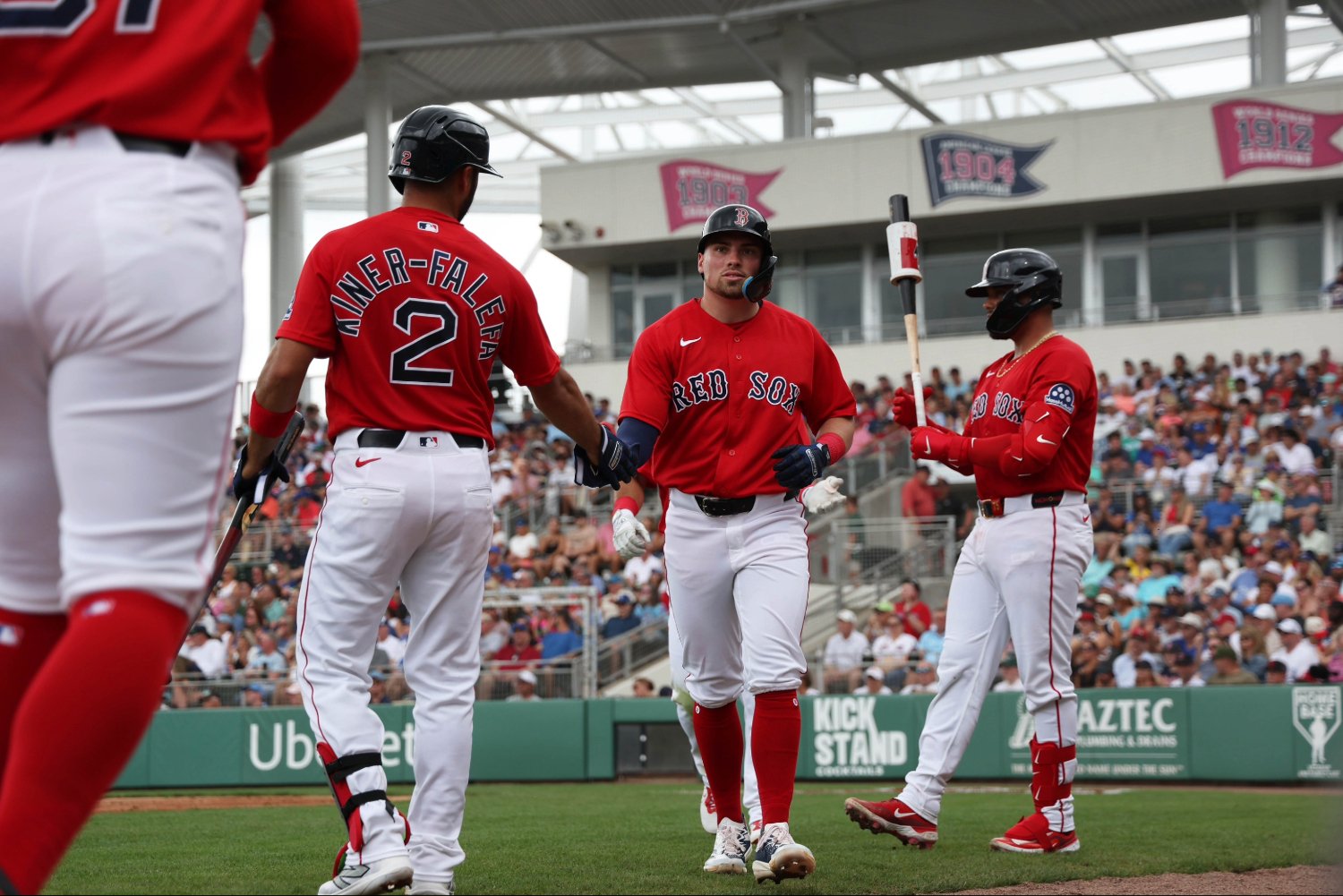
Marcelo Mayer was the most prominent of those calls, and his first series captured the balance Boston seems to want. Alex Cora spent the spring making it clear Mayer had to earn a spot. He did. On Opening Day. he rewarded that trust immediately, coming off the bench to double and score. That was the upside of the bet. Boston trusted the talent and got an instant return.
By the end of the series, the other side of the equation showed up. On Sunday, the Red Sox still managed the position situationally, turning to Andruw Monasterio for a pinch-hit spot and keeping him in defensively at second base. The move gave Boston a right-handed option in the moment with Monasterio and a clean defensive fit afterward. That is what makes Mayer important to this conversation. Boston was willing to reward performance but it was not willing to surrender flexibility to do it. The Red Sox did not treat second base like a symbolic prospect promotion. They treated it like a position they intended to manage to win.
The same idea carried into the bench.
Monasterio did not need a huge series to show why Boston wanted him. He only needed to show why the spot existed. His role was not to fill a bench seat. It was to give Cora another useful piece at the edge of the roster, one that could help him manage matchups and keep the infield covered without losing flexibility elsewhere. That is the kind of player who can look unimportant until the exact moment he is needed.
The same was true on the pitching side, where Ryan Watson’s debut may have said as much about the Red Sox's priorities as any of the late-camp decisions. Watson making the team was easy to frame as a Rule 5 roster obligation. Saturday showed why that was too simple. After the starter exited early and the game stretched deep, Watson gave Boston 2 1/3 scoreless innings in his major-league debut. The three walks showed the usual nerves and rough edges, but the outing still made the point. The Red Sox wanted another arm who could absorb meaningful innings when a game stopped behaving the way it was supposed to. That is not a glamorous roster function, but it is a real one.
Connelly Early fit that same logic. The back of the staff was never just about naming a fifth starter. As reported by MassLive’s Chris Cotillo, Boston’s end-of-camp pitching decisions were shaped in part by the need for extra length while Brayan Bello and Ranger Suárez continued building up after World Baseball Classic duty. That made the decision less about spring hierarchy and more about practical coverage.
Early backed that up Sunday. He gave the Red Sox 5 1/3 innings and left Boston in position to win before the bullpen let the game turn later. While that does not settle anything long term, it does underline the short-term point.
And that is why this series mattered, even in a losing set.
The Red Sox’s late roster bets did not define the weekend but they helped explain the shape of the team. Mayer showed Boston is willing to trust talent without giving up control of the matchup game. Monasterio showed the bench was built for specific utility. Watson showed why innings coverage mattered. Early showed why practical depth at the back of the staff was worth prioritizing.
None of these decisions are permanent. A week from now the picture could shift. A month from now some of these names may be gone.
But the opening series already revealed something real: the Red Sox built the edges of this roster not for decoration, but for the messy, unpredictable stretches that decide games. If that flexible identity holds, those final roster spots will not just matter. They could become difference-makers.
Which team do you dislike the most in the AL East?

Follow Talk Sox For Boston Red Sox News & Analysis



- 4n99brooke, BP32 and prmrins
-
 2
2
-
 1
1


Recommended Comments
There are no comments to display.
Create an account or sign in to comment
You need to be a member in order to leave a comment
Create an account
Sign up for a new account in our community. It's easy!
Register a new accountSign in
Already have an account? Sign in here.
Sign In Now