


Ryan Salvaggio
-
Posts
41 -
Joined
-
Last visited
Content Type
Profiles
Boston Red Sox Videos
2026 Boston Red Sox Top Prospects Ranking
Boston Red Sox Free Agent & Trade Rumors, Notes, & Tidbits
Guides & Resources
2025 Boston Red Sox Draft Pick Tracker
News
2026 Boston Red Sox Draft Tracker: Picks & Bonuses
Forums
Blogs
Events
Store
Downloads
Gallery
Everything posted by Ryan Salvaggio
-
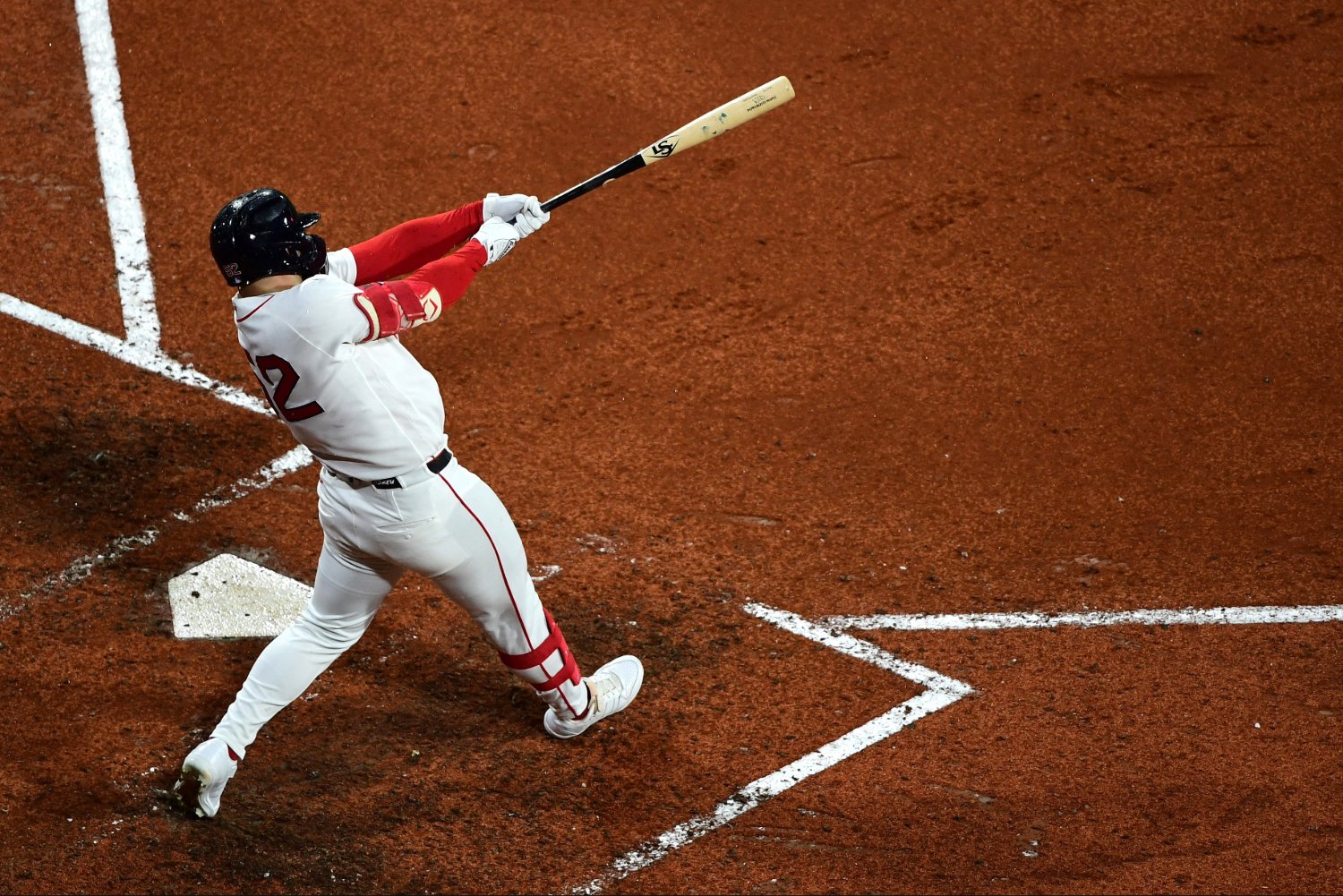 As the old saying goes, “they don’t give out points for style”, and nowhere was that idiom more apparent than the September stretch run for the 2026 Boston Red Sox. After a ferocious July and August saw them go 38-16, good enough for a .704 win percentage and more importantly, a climb back into the postseason picture, Boston spent the past month treading water, still managing to clinch a spot in the playoffs but all the all while playing just .500 baseball at 12-12. While an 87-75 record was good enough for a No. 2 Wild Card finish and an encore matchup with the Yankees in the Bronx (that ended just as poorly as 2025), September also gave way to a number of performances worth building on in 2027 and beyond. Grading Every Red Sox Player In September (2026) Offense There’s ice cold, and then there’s what the Red Sox offense was throughout September. After a two-month stretch that saw the Sox evolve into one of the best and most efficient offenses in baseball, the final month of the regular season saw the reversion back into everything that made awful throughout the spring. The offense concluded September in the bottom third in nearly every statistical category, with American-League-worst finishes in batting average, on-base percentage, OPS, wRC+, runs, hits, WAR, HardHit%, and average with RISP. Now, I’m sure there are some fans who may want to put an asterisk next to that, as it was clear they chose to rest certain players to gear up for the playoffs. The two most obvious cases were Willson Contreras and Ceddanne Rafaela, both of whom played in just five games due to IL stints. Eli White looked to be taking up the mantle of ’Latest Unsung Hero of 2026’ when he posted an .889 OPS and 156 wRC+ to go along with a homer and nine RBIs through eight games before having his season cut short due to an ankle injury. Trevor Story (.725 OPS, 95 wRC+, 2 HR, 7 RBIs) and Roman Anthony (.733 OPS, 101 wRC+, 4 HR, 10 RBIs) continued to put up respectable numbers working back from their own IL stints. Even Adley Rutschman turned his disastrous first month in Boston around tremendously, improving his .499 OPS and 41 wRC+ to .846 and 129 to go along with four home runs and nine RBIs of his own. The problem is that no one really stepped up to become a leader throughout the month, which really hurt with Contreras out of the picture. Lineup staples Wilyer Abreu (.207 AVG, .615 OPS, 71 wRC+), Jarren Duran (.588 OPS, 65 wRC+) and Caleb Durbin (.217/.365/.304, 669 OPS) all struggled to consistently produce, while the depth options Boston had leaned so heavily on to turn things around such as Jahmai Jones (.614 OPS, 68 wRC+), Isiah Kiner-Falefa (.432 OPS, 29 wRC+) and Andruw Monasterio (2-for-27, -45 wRC+) all became borderline nonexistent factors. Even Mickey Gasper saw his herculean run come to an end as he hit just .185 with an OBP of .313 before succumbing to a biceps injury. That tailspin really couldn't have come at a worse time. With the emphasis that is put onto timely hitting in the playoffs, and the Red Sox's lack thereof over the last month, hitting just .163 with RISP and .194 with RISP and two outs—good for 30th and 27th in MLB, respectively—it's no wonder that they barely made a dent against the Yankees' elite pitching staff in the Wild Card Round. Final Grade: F Position Players Name Mar / Apr May June July August September Wilyer Abreu A+ B C+ C A- C- Roman Anthony D N/A N/A N/A A C+ Willson Contreras A A+ B A+ D+ B Jarren Duran F A D- D+ C+ D+ Caleb Durbin D+ D A+ A- B+ C Nate Eaton N/A N/A C+ F N/A C Mickey Gasper N/A A+ D N/A A+ C- Jahmai Jones N/A N/A N/A A+ A+ D+ Isiah Kiner-Falefa D A+ C+ N/A N/A C- Andruw Monasterio C D+ D A+ C- F Ceddanne Rafaela B A A- A+ B+ C Adley Rutschman N/A N/A N/A N/A F B Nick Sogard N/A B- N/A C A- C Trevor Story D- D N/A N/A A A- Eli White N/A N/A N/A N/A C- A+ Connor Wong B- B A C D F Rotation While the offense sputtered through September, the Sox leaned on the trio of Payton Tolle, Sonny Gray, and Ranger Suárez to dominate opposing lineups start after start. Game 1 belonged to Tolle, who more than earned the role thanks to three electrifying starts that not only featured an immaculate inning, but also a season-best 1.53 ERA, 1.23 FIP, and 4.1 BB%. Gray continues to defy Father Time with a four-start stretch that saw him add to his award campaign by holding opposing hitters to a .186 average against to go along with a 2.13 ERA. As for Suárez, he put a disastrous August behind him and locked in to be the big game pitcher Boston paid him to be, not only posting a 3-1 record across four starts with a season-low 1.09 ERA and .182 opponents average, but regaining his usual command as he lowered his August walk rate of 10.3 to 7.3%. When it comes to where the Red Sox's rotation struggled in September, you’d have to look to the writing that had been developing on the wall starting over the summer: Jake Bennett and Patrick Sandoval. Bennett simply never recovered from hitting his rookie wall, posting season worsts in ERA (5.49), opponent average (.325), and FIP (5.14). As for Sandoval, his month started in the rotation, where things went from bad to worse as he lost all four of his starts to go along with a 7.32 ERA, and ended in the bullpen where he posted an equally uninspiring 4.76 ERA across two outings. September also saw the return of two arms to Boston’s rotation who should have a role in the future: Brayan Bello and Tanner Houck. While Bello posted a 2.08 ERA across five outings as a whole for the month, his three starts harkened back to the height of his dominance at times in 2025, allowing just a single earned run over 17 innings to go along with 20 strikeouts and just three walks. Houck, of course, had to wait until game 162 to make his return to the big-league mound, where he allowed three runs over three innings as a final tune up before the playoffs. The rotation wasn't able to do enough to keep the Yankees at bay in the postseason, but this is clearly the main strength of the team heading into the winter, especially when factoring in Garrett Crochet's long-awaited return in the Wild Card Round. Final Grade: B+ Pitchers Name Mar / Apr May June July August September Brayan Bello F B+ F A+ B A+ Jake Bennett N/A C A A+ C C Sonny Gray C+ A+ A+ B+ A A+ Tanner Houck N/A N/A N/A N/A N/A C Patrick Sandoval N/A N/A N/A B C- D- Ranger Suárez B+ B- A+ B- F A+ Payton Tolle B A+ B+ B- A- A+ Bullpen If the July and August stretch saw the Red Sox's offense adhere to the next-man-up approach, then it was the bullpen’s turn to follow suit in September. Even though the 'pen lost Justin Slaten to elbow inflammation, Tyron Guerrero to two separate shoulder injuries, and dealt with Aroldis Chapman managing lat tightness—which in turn caused him to miss four games—the unit as a whole never seemed to miss a beat. The relief corps managed to finish in the top five league-wide in ERA (2.15), left-on-base percentage (84.1%), hits allowed (67), blown saves (1), FIP (3.01), saves (9), strikeout rate (26.7%), and WAR (1.7). It should come as a surprise to no one that Garrett Whitlock was the man leading the way, continuing his season-long dominance with 7.1 shutout innings to go along with a 1.47 FIP. Whitlock wasn’t the only reliever to post scoreless September appearances, though, as Greg Weissert has put his early season struggles in the rearview, tossing nine shutout innings with a .212 average against, and Jovani Morán bounced back from a rough August to toss 7.1 shutout innings of his own while holding hitters to a .160 average. Call-ups Wyatt Olds, Raymond Burgos, and Jedixson Paez all find themselves in the unsung heroes category for their efforts in helping the Sox maneuver through injuries and lightening heavy workloads. Like Morán, Burgos bounced back from an underwhelming August to become an unlikely force for Boston, owning a 2.00 ERA, .182 opponents average, and 0.0 BB% across nine innings. Olds continued his surprising dominance with a 1.86 ERA and .206 average against in eight appearances. And Paez shook off a rocky starter debut to blank the Cubs over five innings of work, allowing just three hits and striking out five en route to his first big league win. If there is one concern to be had here, it comes in the form of Erik Miller. After looking like an absolute steal in August with a 0.79 ERA, .190 average against, and elite strikeout and walk percentages of 41.7% and 6.3%, things quickly fell apart for the big southpaw, as he struggled to a 7.36 ERA. We're not including postseason performances in this report card, but if we were, we might have had to invent a letter grade below "F" for Miller. Final Grade: A Pitchers Name Mar / Apr May June July August September Raymond Burgos N/A N/A N/A N/A C- A+ Aroldis Chapman A A+ D A+ A A Alec Gamboa N/A A A A A+ B- Tyron Guerrero N/A C A+ A+ D A Erik Miller N/A N/A N/A N/A A+ F Jovani Morán A C+ B A D A+ Wyatt Olds N/A N/A N/A N/A A+ A+ Jedixson Paez N/A N/A N/A N/A N/A C Greg Weissert D- C- C A- B+ A+ Garrett Whitlock B+ B A+ A+ A+ A+
 -
As the old saying goes, “they don’t give out points for style”, and nowhere was that idiom more apparent than the September stretch run for the 2026 Boston Red Sox. After a ferocious July and August saw them go 38-16, good enough for a .704 win percentage and more importantly, a climb back into the postseason picture, Boston spent the past month treading water, still managing to clinch a spot in the playoffs but all the all while playing just .500 baseball at 12-12. While an 87-75 record was good enough for a No. 2 Wild Card finish and an encore matchup with the Yankees in the Bronx (that ended just as poorly as 2025), September also gave way to a number of performances worth building on in 2027 and beyond. Grading Every Red Sox Player In September (2026) Offense There’s ice cold, and then there’s what the Red Sox offense was throughout September. After a two-month stretch that saw the Sox evolve into one of the best and most efficient offenses in baseball, the final month of the regular season saw the reversion back into everything that made awful throughout the spring. The offense concluded September in the bottom third in nearly every statistical category, with American-League-worst finishes in batting average, on-base percentage, OPS, wRC+, runs, hits, WAR, HardHit%, and average with RISP. Now, I’m sure there are some fans who may want to put an asterisk next to that, as it was clear they chose to rest certain players to gear up for the playoffs. The two most obvious cases were Willson Contreras and Ceddanne Rafaela, both of whom played in just five games due to IL stints. Eli White looked to be taking up the mantle of ’Latest Unsung Hero of 2026’ when he posted an .889 OPS and 156 wRC+ to go along with a homer and nine RBIs through eight games before having his season cut short due to an ankle injury. Trevor Story (.725 OPS, 95 wRC+, 2 HR, 7 RBIs) and Roman Anthony (.733 OPS, 101 wRC+, 4 HR, 10 RBIs) continued to put up respectable numbers working back from their own IL stints. Even Adley Rutschman turned his disastrous first month in Boston around tremendously, improving his .499 OPS and 41 wRC+ to .846 and 129 to go along with four home runs and nine RBIs of his own. The problem is that no one really stepped up to become a leader throughout the month, which really hurt with Contreras out of the picture. Lineup staples Wilyer Abreu (.207 AVG, .615 OPS, 71 wRC+), Jarren Duran (.588 OPS, 65 wRC+) and Caleb Durbin (.217/.365/.304, 669 OPS) all struggled to consistently produce, while the depth options Boston had leaned so heavily on to turn things around such as Jahmai Jones (.614 OPS, 68 wRC+), Isiah Kiner-Falefa (.432 OPS, 29 wRC+) and Andruw Monasterio (2-for-27, -45 wRC+) all became borderline nonexistent factors. Even Mickey Gasper saw his herculean run come to an end as he hit just .185 with an OBP of .313 before succumbing to a biceps injury. That tailspin really couldn't have come at a worse time. With the emphasis that is put onto timely hitting in the playoffs, and the Red Sox's lack thereof over the last month, hitting just .163 with RISP and .194 with RISP and two outs—good for 30th and 27th in MLB, respectively—it's no wonder that they barely made a dent against the Yankees' elite pitching staff in the Wild Card Round. Final Grade: F Position Players Name Mar / Apr May June July August September Wilyer Abreu A+ B C+ C A- C- Roman Anthony D N/A N/A N/A A C+ Willson Contreras A A+ B A+ D+ B Jarren Duran F A D- D+ C+ D+ Caleb Durbin D+ D A+ A- B+ C Nate Eaton N/A N/A C+ F N/A C Mickey Gasper N/A A+ D N/A A+ C- Jahmai Jones N/A N/A N/A A+ A+ D+ Isiah Kiner-Falefa D A+ C+ N/A N/A C- Andruw Monasterio C D+ D A+ C- F Ceddanne Rafaela B A A- A+ B+ C Adley Rutschman N/A N/A N/A N/A F B Nick Sogard N/A B- N/A C A- C Trevor Story D- D N/A N/A A A- Eli White N/A N/A N/A N/A C- A+ Connor Wong B- B A C D F Rotation While the offense sputtered through September, the Sox leaned on the trio of Payton Tolle, Sonny Gray, and Ranger Suárez to dominate opposing lineups start after start. Game 1 belonged to Tolle, who more than earned the role thanks to three electrifying starts that not only featured an immaculate inning, but also a season-best 1.53 ERA, 1.23 FIP, and 4.1 BB%. Gray continues to defy Father Time with a four-start stretch that saw him add to his award campaign by holding opposing hitters to a .186 average against to go along with a 2.13 ERA. As for Suárez, he put a disastrous August behind him and locked in to be the big game pitcher Boston paid him to be, not only posting a 3-1 record across four starts with a season-low 1.09 ERA and .182 opponents average, but regaining his usual command as he lowered his August walk rate of 10.3 to 7.3%. When it comes to where the Red Sox's rotation struggled in September, you’d have to look to the writing that had been developing on the wall starting over the summer: Jake Bennett and Patrick Sandoval. Bennett simply never recovered from hitting his rookie wall, posting season worsts in ERA (5.49), opponent average (.325), and FIP (5.14). As for Sandoval, his month started in the rotation, where things went from bad to worse as he lost all four of his starts to go along with a 7.32 ERA, and ended in the bullpen where he posted an equally uninspiring 4.76 ERA across two outings. September also saw the return of two arms to Boston’s rotation who should have a role in the future: Brayan Bello and Tanner Houck. While Bello posted a 2.08 ERA across five outings as a whole for the month, his three starts harkened back to the height of his dominance at times in 2025, allowing just a single earned run over 17 innings to go along with 20 strikeouts and just three walks. Houck, of course, had to wait until game 162 to make his return to the big-league mound, where he allowed three runs over three innings as a final tune up before the playoffs. The rotation wasn't able to do enough to keep the Yankees at bay in the postseason, but this is clearly the main strength of the team heading into the winter, especially when factoring in Garrett Crochet's long-awaited return in the Wild Card Round. Final Grade: B+ Pitchers Name Mar / Apr May June July August September Brayan Bello F B+ F A+ B A+ Jake Bennett N/A C A A+ C C Sonny Gray C+ A+ A+ B+ A A+ Tanner Houck N/A N/A N/A N/A N/A C Patrick Sandoval N/A N/A N/A B C- D- Ranger Suárez B+ B- A+ B- F A+ Payton Tolle B A+ B+ B- A- A+ Bullpen If the July and August stretch saw the Red Sox's offense adhere to the next-man-up approach, then it was the bullpen’s turn to follow suit in September. Even though the 'pen lost Justin Slaten to elbow inflammation, Tyron Guerrero to two separate shoulder injuries, and dealt with Aroldis Chapman managing lat tightness—which in turn caused him to miss four games—the unit as a whole never seemed to miss a beat. The relief corps managed to finish in the top five league-wide in ERA (2.15), left-on-base percentage (84.1%), hits allowed (67), blown saves (1), FIP (3.01), saves (9), strikeout rate (26.7%), and WAR (1.7). It should come as a surprise to no one that Garrett Whitlock was the man leading the way, continuing his season-long dominance with 7.1 shutout innings to go along with a 1.47 FIP. Whitlock wasn’t the only reliever to post scoreless September appearances, though, as Greg Weissert has put his early season struggles in the rearview, tossing nine shutout innings with a .212 average against, and Jovani Morán bounced back from a rough August to toss 7.1 shutout innings of his own while holding hitters to a .160 average. Call-ups Wyatt Olds, Raymond Burgos, and Jedixson Paez all find themselves in the unsung heroes category for their efforts in helping the Sox maneuver through injuries and lightening heavy workloads. Like Morán, Burgos bounced back from an underwhelming August to become an unlikely force for Boston, owning a 2.00 ERA, .182 opponents average, and 0.0 BB% across nine innings. Olds continued his surprising dominance with a 1.86 ERA and .206 average against in eight appearances. And Paez shook off a rocky starter debut to blank the Cubs over five innings of work, allowing just three hits and striking out five en route to his first big league win. If there is one concern to be had here, it comes in the form of Erik Miller. After looking like an absolute steal in August with a 0.79 ERA, .190 average against, and elite strikeout and walk percentages of 41.7% and 6.3%, things quickly fell apart for the big southpaw, as he struggled to a 7.36 ERA. We're not including postseason performances in this report card, but if we were, we might have had to invent a letter grade below "F" for Miller. Final Grade: A Pitchers Name Mar / Apr May June July August September Raymond Burgos N/A N/A N/A N/A C- A+ Aroldis Chapman A A+ D A+ A A Alec Gamboa N/A A A A A+ B- Tyron Guerrero N/A C A+ A+ D A Erik Miller N/A N/A N/A N/A A+ F Jovani Morán A C+ B A D A+ Wyatt Olds N/A N/A N/A N/A A+ A+ Jedixson Paez N/A N/A N/A N/A N/A C Greg Weissert D- C- C A- B+ A+ Garrett Whitlock B+ B A+ A+ A+ A+ View full article
-
 August may have been the most confusing month of Boston Red Sox baseball we have witnessed thus far in 2026. After July saw the Sox bludgeon the rest of the league, August started no different, sweeping the heavily favored Los Angeles Dodgers in L.A. and the Chicago White Sox, who are en route to a first-round bye in the MLB playoffs. Then seemingly out of nowhere, just as easily as Boston had rattled off another nine-game win streak, they began racking up losses, which included a five-game losing streak and three straight series losses to the lowly Athletics, Blue Jays, and Pirates. Nowhere was this inconsistent month more on display than the final week in the Bronx, where the Sox squared off with the Yankees in a pivotal four-game set that had all sorts of playoff ramifications on the line. The Sox were sloppy, the Yankees took three of four, and a bitter taste was left in fans' mouths of what could have been as Boston finished the month 17-12. Looking back, there were definitely plenty of eye opening performances, both good and bad across the offense, rotation and bullpen. Let’s dive in to how they each graded out for August. Grading Every Red Sox Player In August Offense For the second month in a row, the Red Sox tried to add some offensive thump to their lineup, and for the second month in a row, it hasn’t seemed to work out. July of course saw the addition of Curtis Mead, only to have him suffer a fractured wrist just two at-bats into his Red Sox tenure. For August, it was the addition of Adley Rutschman who looked to be the missing piece to the puzzle once he returned from a wrist inflammation injury. Once again, though, that wasn’t the case as when he did return, Rutschman posted an unsightly .170 average, .499 OPS, and season high 25.4 K% in 15 games before once again being bit by the injury bug, this time with an elbow hyperextension. Funnily enough the key to unlocking Boston’s offensive outburst came internally, specifically from the reincarnation of Ted Williams, aka ‘The Mick’, aka Mickey Gasper, who went on a month-long tear so prolific he can be spoken in the same breath as Barry Bonds and the aforementioned Williams. To go along with the six home runs, 13 RBIs, and team-high 329 wRC+, Gasper posted a 1.671 OPS, good for the third highest in a calendar month behind Bonds’ 1.828 in April of 2004 and Williams’ 2.314 in September of 1957. Add in a .270/.369/.432/.801 line with three homers, 10 RBIs, and clutch at-bats from Nick Sogard and an even more impressive .474/.600/.684/1.284 from Jahmai Jones, and the “Next Man Up” mentality continued to shine through for the Sox in August. The returns to form for Wilyer Abreu (.971 OPS, 163 wRC+, 7 HR, 17 RBI) and Jarren Duran (.789 OPS, 103 wRC+, 6 HR, 12 RBI) after rough months in July, along with the continued success of Caleb Durbin (.726 OPS, 106 wRC+, 18 RBI) and Ceddanne Rafaela (.276 AVG, 4 HR, 16 RBI), helped to to cover the rough stretches of play from Rutschman and Willson Contreras who produced a season low .217/.330/.386/.715 with a 102 wRC+. August was also capped off by the returns of Roman Anthony and Trevor Story, who quickly silenced any questions of if there would be any rust after missing so much time, combining to go 8-for-16 with three RBIs, doubles, and runs scored. Minus a few hiccups, this was the Red Sox's best offensive performance of the season by far. It’s promising to see they continue to improve as we get deeper into the campaign, so much so that Boston ranked outside of the top-10 league wide in August in just strikeouts, stolen bases, HardHit%, and Barrel%. Diving specifically into their AL rankings, they finished the month first in OBP, SLG, OPS, wRC+, runs, hits, doubles (led all MLB), and WAR, with top-three finishes in AVG, BAbIP, K%, BB%, HRs, triples, and walks as well. With so many elite numbers, it’s pretty easy to determine Boston’s offensive grade for August. Final Grade: A+ Position Players Name Mar / Apr May June July August Wilyer Abreu A+ B C+ C A- Roman Anthony D N/A N/A N/A A Willson Contreras A A+ B A+ D+ Jarren Duran F A D- D+ C+ Caleb Durbin D+ D A+ A- B+ Mickey Gasper N/A A+ D N/A A+ Jahmai Jones N/A N/A N/A A+ A+ Andruw Monasterio C D+ D A+ C- Ceddanne Rafaela B A A- A+ B+ Adley Rutschman N/A N/A N/A N/A F Anthony Seigler N/A N/A A+ C C Nick Sogard N/A B- N/A C A- Trevor Story D- D N/A N/A A Eli White N/A N/A N/A N/A C- Connor Wong B- B A C D Masataka Yoshida B- C+ D A- A Rotation If there was one glaring question coming out of last month’s MLB Trade Deadline it was: Why did the Red Sox not add an additional starter for depth? A perfectly valid question after that lack of depth ended up partly being their undoing in last year’s postseason. As we head into September, that lack of depth could very well be their undoing once again. As has been the case for a while now, Payton Tolle and Sonny Gray continue to carry this rotation. Tolle bounced back from a lackluster July to dominate August to the tune of a 2-0 record with a 3.00 ERA, .225 average against, and impressive 31.2 strikeout and 7.1 walk percentages across 36.0 innings pitched. Gray was just as good, if not better, posting a 2.40 ERA, .250 average against and 3.28 FIP to go along with six- and seven-inning shutout performances over the White Sox and Pirates, respectively. Boston’s rotation problems stem from the lefty trio of Jake Bennett, Patrick Sandoval, and Ranger Suárez. After a brilliant July, it’s clear Bennett has hit a rookie wall, as prior to his bounce back, six-shutout-innings start against the Yankees to close out the month, he had allowed 14 earned runs with a .323 BAbIP in 22.0 innings. Here’s hoping that the Yankees start got him back on track. The same hope goes out to Sandoval, who outside of his one run over 5.1 innings outing in the Bronx, had seen his constant flirting with danger finally catch up to him in his four prior outings, allowing 13 earned runs and a .419 BAbIP while walking 12 in 20.2 innings. The Red Sox's real concern, however, should stem from their $130 million dollar man who’s pitching like anything but recently. Suárez hasn’t looked right since coming off the IL, particularly with his command which was once his biggest strength, now quickly turning to a growing problem. To go along with a season-worst 5.70 ERA and 5.46 FIP, his strikeout percentage plummeted to 13.1%, while his walk percentage ballooned to a glaring 10.3%. Add in the four hit batters in just August alone (he hadn't hit more than two in any month prior) and it may be time to hit the panic button on who was expected to be Boston’s most dependable arm in the big spots down the stretch when he was first signed. While Gray and Tolle dazzled once again, their individual performances can only do so much to keep the rotation grade afloat with how much Bennett, Sandoval, and Suárez struggled. The cause for concern is definitely there with what’s looking like a tired set of arms as we head into September. Final Grade: B- Pitchers Name Mar / Apr May June July August Jake Bennett N/A C A A+ C Sonny Gray C+ A+ A+ B+ A Patrick Sandoval N/A N/A N/A B C- Ranger Suárez B+ B- A+ B- F Payton Tolle B A+ B+ B- A- Bullpen Boston’s rotation isn’t the only area where the cracks are starting to form. After operating as arguably the best in baseball for July, the bullpen has appeared to come back down to earth as well, finishing as a middle of the pack squad with rop-10 league-wide finishes in innings pitched, opponent average, WHIP, FIP, BB%, BABIP, walk rate, and WAR. For context, the bullpen was in the top-10 in every category except strikeouts (11th) in July. The usual suspects were still as dependable as ever, with Aroldis Chapman a perfect 4-for-4 in save opportunities and holding opposing hitters to a .133 average in nine outings, and Garrett Whitlock posting an 1.80 ERA, .050 FIP, and .176 average against in five appearances. Greg Weissert also continued what’s quietly turned into a sneaky solid season, with a 3.24 ERA and .258 opponents average of his own. What Breslow lacks in being able to acquire impact bats, he makes up for in finding impact arms, as he did with Alec Gamboa prior to the season and Erik Miller at the deadline. Gamboa continued his surprising brilliance out of the pen, tossing 11.0 scoreless innings with a .167 average against and 2.5 BB%. As for Miller, he looks like one of the biggest deadline moves league-wide, as he worked to an 0.79 ERA, .190 average against and season-best 41.7 strikeout and 6.3 walk percentages in 11.1 innings. Much like the faltering trio of rotation arms, there are three relievers that should be ringing alarm bells for Boston. Justin Slaten has once again found himself on the injured list with right elbow inflammation, marking not only his second trip to the IL this season, but the second time he’s hit it with right elbow inflammation dating back to 2024 when he missed 36 games with the injury. And if fatigue may be setting in with the likes of Bennett, Sandoval, and Suárez, the same can be said about Jovani Moran and Tyron Guerrero, the latter of which has also found his way to the IL with shoulder inflammation. Both have seem to have taken a page out of Suárez’s book in terms of lack of command, with Moran seeing his K% drop to a season low 20.0% and BB% jump to 15.4%; Guerrero followed suit with a season-worst 12.3 K% and 7.0 BB%. As we head into September and the injuries begin to pile up, the Red Sox will need to tread carefully with a bullpen that is beginning to look overworked. Their depth has been tested thus far to mixed reviews, with Wyatt Olds (0 ER, .167 AVG against in 6.0 innings) looking solid and Raymond Burgos (5.84 ERA, .234 Opp. AVG, 12.1 IP) being okay in spots. Right now, the questions and concerns surrounding the bullpen aren’t as glaring as the ones pertaining to the rotation, leaving the 'pen with a slightly better grade. Final Grade: B Pitchers Name Mar / Apr May June July August Brayan Bello F B+ F A+ B Raymond Burgos N/A N/A N/A N/A C- Aroldis Chapman A A+ D A+ A Alec Gamboa N/A A A A A+ Tyron Guerrero N/A C A+ A+ D Seth Martinez N/A N/A N/A N/A C Erik Miller N/A N/A N/A N/A A+ Jovani Morán A C+ B A D Wyatt Olds N/A N/A N/A N/A A+ Justin Slaten A- B+ D A+ C Greg Weissert D- C- C A- B+ Garrett Whitlock B+ B A+ A+ A+
 -
August may have been the most confusing month of Boston Red Sox baseball we have witnessed thus far in 2026. After July saw the Sox bludgeon the rest of the league, August started no different, sweeping the heavily favored Los Angeles Dodgers in L.A. and the Chicago White Sox, who are en route to a first-round bye in the MLB playoffs. Then seemingly out of nowhere, just as easily as Boston had rattled off another nine-game win streak, they began racking up losses, which included a five-game losing streak and three straight series losses to the lowly Athletics, Blue Jays, and Pirates. Nowhere was this inconsistent month more on display than the final week in the Bronx, where the Sox squared off with the Yankees in a pivotal four-game set that had all sorts of playoff ramifications on the line. The Sox were sloppy, the Yankees took three of four, and a bitter taste was left in fans' mouths of what could have been as Boston finished the month 17-12. Looking back, there were definitely plenty of eye opening performances, both good and bad across the offense, rotation and bullpen. Let’s dive in to how they each graded out for August. Grading Every Red Sox Player In August Offense For the second month in a row, the Red Sox tried to add some offensive thump to their lineup, and for the second month in a row, it hasn’t seemed to work out. July of course saw the addition of Curtis Mead, only to have him suffer a fractured wrist just two at-bats into his Red Sox tenure. For August, it was the addition of Adley Rutschman who looked to be the missing piece to the puzzle once he returned from a wrist inflammation injury. Once again, though, that wasn’t the case as when he did return, Rutschman posted an unsightly .170 average, .499 OPS, and season high 25.4 K% in 15 games before once again being bit by the injury bug, this time with an elbow hyperextension. Funnily enough the key to unlocking Boston’s offensive outburst came internally, specifically from the reincarnation of Ted Williams, aka ‘The Mick’, aka Mickey Gasper, who went on a month-long tear so prolific he can be spoken in the same breath as Barry Bonds and the aforementioned Williams. To go along with the six home runs, 13 RBIs, and team-high 329 wRC+, Gasper posted a 1.671 OPS, good for the third highest in a calendar month behind Bonds’ 1.828 in April of 2004 and Williams’ 2.314 in September of 1957. Add in a .270/.369/.432/.801 line with three homers, 10 RBIs, and clutch at-bats from Nick Sogard and an even more impressive .474/.600/.684/1.284 from Jahmai Jones, and the “Next Man Up” mentality continued to shine through for the Sox in August. The returns to form for Wilyer Abreu (.971 OPS, 163 wRC+, 7 HR, 17 RBI) and Jarren Duran (.789 OPS, 103 wRC+, 6 HR, 12 RBI) after rough months in July, along with the continued success of Caleb Durbin (.726 OPS, 106 wRC+, 18 RBI) and Ceddanne Rafaela (.276 AVG, 4 HR, 16 RBI), helped to to cover the rough stretches of play from Rutschman and Willson Contreras who produced a season low .217/.330/.386/.715 with a 102 wRC+. August was also capped off by the returns of Roman Anthony and Trevor Story, who quickly silenced any questions of if there would be any rust after missing so much time, combining to go 8-for-16 with three RBIs, doubles, and runs scored. Minus a few hiccups, this was the Red Sox's best offensive performance of the season by far. It’s promising to see they continue to improve as we get deeper into the campaign, so much so that Boston ranked outside of the top-10 league wide in August in just strikeouts, stolen bases, HardHit%, and Barrel%. Diving specifically into their AL rankings, they finished the month first in OBP, SLG, OPS, wRC+, runs, hits, doubles (led all MLB), and WAR, with top-three finishes in AVG, BAbIP, K%, BB%, HRs, triples, and walks as well. With so many elite numbers, it’s pretty easy to determine Boston’s offensive grade for August. Final Grade: A+ Position Players Name Mar / Apr May June July August Wilyer Abreu A+ B C+ C A- Roman Anthony D N/A N/A N/A A Willson Contreras A A+ B A+ D+ Jarren Duran F A D- D+ C+ Caleb Durbin D+ D A+ A- B+ Mickey Gasper N/A A+ D N/A A+ Jahmai Jones N/A N/A N/A A+ A+ Andruw Monasterio C D+ D A+ C- Ceddanne Rafaela B A A- A+ B+ Adley Rutschman N/A N/A N/A N/A F Anthony Seigler N/A N/A A+ C C Nick Sogard N/A B- N/A C A- Trevor Story D- D N/A N/A A Eli White N/A N/A N/A N/A C- Connor Wong B- B A C D Masataka Yoshida B- C+ D A- A Rotation If there was one glaring question coming out of last month’s MLB Trade Deadline it was: Why did the Red Sox not add an additional starter for depth? A perfectly valid question after that lack of depth ended up partly being their undoing in last year’s postseason. As we head into September, that lack of depth could very well be their undoing once again. As has been the case for a while now, Payton Tolle and Sonny Gray continue to carry this rotation. Tolle bounced back from a lackluster July to dominate August to the tune of a 2-0 record with a 3.00 ERA, .225 average against, and impressive 31.2 strikeout and 7.1 walk percentages across 36.0 innings pitched. Gray was just as good, if not better, posting a 2.40 ERA, .250 average against and 3.28 FIP to go along with six- and seven-inning shutout performances over the White Sox and Pirates, respectively. Boston’s rotation problems stem from the lefty trio of Jake Bennett, Patrick Sandoval, and Ranger Suárez. After a brilliant July, it’s clear Bennett has hit a rookie wall, as prior to his bounce back, six-shutout-innings start against the Yankees to close out the month, he had allowed 14 earned runs with a .323 BAbIP in 22.0 innings. Here’s hoping that the Yankees start got him back on track. The same hope goes out to Sandoval, who outside of his one run over 5.1 innings outing in the Bronx, had seen his constant flirting with danger finally catch up to him in his four prior outings, allowing 13 earned runs and a .419 BAbIP while walking 12 in 20.2 innings. The Red Sox's real concern, however, should stem from their $130 million dollar man who’s pitching like anything but recently. Suárez hasn’t looked right since coming off the IL, particularly with his command which was once his biggest strength, now quickly turning to a growing problem. To go along with a season-worst 5.70 ERA and 5.46 FIP, his strikeout percentage plummeted to 13.1%, while his walk percentage ballooned to a glaring 10.3%. Add in the four hit batters in just August alone (he hadn't hit more than two in any month prior) and it may be time to hit the panic button on who was expected to be Boston’s most dependable arm in the big spots down the stretch when he was first signed. While Gray and Tolle dazzled once again, their individual performances can only do so much to keep the rotation grade afloat with how much Bennett, Sandoval, and Suárez struggled. The cause for concern is definitely there with what’s looking like a tired set of arms as we head into September. Final Grade: B- Pitchers Name Mar / Apr May June July August Jake Bennett N/A C A A+ C Sonny Gray C+ A+ A+ B+ A Patrick Sandoval N/A N/A N/A B C- Ranger Suárez B+ B- A+ B- F Payton Tolle B A+ B+ B- A- Bullpen Boston’s rotation isn’t the only area where the cracks are starting to form. After operating as arguably the best in baseball for July, the bullpen has appeared to come back down to earth as well, finishing as a middle of the pack squad with rop-10 league-wide finishes in innings pitched, opponent average, WHIP, FIP, BB%, BABIP, walk rate, and WAR. For context, the bullpen was in the top-10 in every category except strikeouts (11th) in July. The usual suspects were still as dependable as ever, with Aroldis Chapman a perfect 4-for-4 in save opportunities and holding opposing hitters to a .133 average in nine outings, and Garrett Whitlock posting an 1.80 ERA, .050 FIP, and .176 average against in five appearances. Greg Weissert also continued what’s quietly turned into a sneaky solid season, with a 3.24 ERA and .258 opponents average of his own. What Breslow lacks in being able to acquire impact bats, he makes up for in finding impact arms, as he did with Alec Gamboa prior to the season and Erik Miller at the deadline. Gamboa continued his surprising brilliance out of the pen, tossing 11.0 scoreless innings with a .167 average against and 2.5 BB%. As for Miller, he looks like one of the biggest deadline moves league-wide, as he worked to an 0.79 ERA, .190 average against and season-best 41.7 strikeout and 6.3 walk percentages in 11.1 innings. Much like the faltering trio of rotation arms, there are three relievers that should be ringing alarm bells for Boston. Justin Slaten has once again found himself on the injured list with right elbow inflammation, marking not only his second trip to the IL this season, but the second time he’s hit it with right elbow inflammation dating back to 2024 when he missed 36 games with the injury. And if fatigue may be setting in with the likes of Bennett, Sandoval, and Suárez, the same can be said about Jovani Moran and Tyron Guerrero, the latter of which has also found his way to the IL with shoulder inflammation. Both have seem to have taken a page out of Suárez’s book in terms of lack of command, with Moran seeing his K% drop to a season low 20.0% and BB% jump to 15.4%; Guerrero followed suit with a season-worst 12.3 K% and 7.0 BB%. As we head into September and the injuries begin to pile up, the Red Sox will need to tread carefully with a bullpen that is beginning to look overworked. Their depth has been tested thus far to mixed reviews, with Wyatt Olds (0 ER, .167 AVG against in 6.0 innings) looking solid and Raymond Burgos (5.84 ERA, .234 Opp. AVG, 12.1 IP) being okay in spots. Right now, the questions and concerns surrounding the bullpen aren’t as glaring as the ones pertaining to the rotation, leaving the 'pen with a slightly better grade. Final Grade: B Pitchers Name Mar / Apr May June July August Brayan Bello F B+ F A+ B Raymond Burgos N/A N/A N/A N/A C- Aroldis Chapman A A+ D A+ A Alec Gamboa N/A A A A A+ Tyron Guerrero N/A C A+ A+ D Seth Martinez N/A N/A N/A N/A C Erik Miller N/A N/A N/A N/A A+ Jovani Morán A C+ B A D Wyatt Olds N/A N/A N/A N/A A+ Justin Slaten A- B+ D A+ C Greg Weissert D- C- C A- B+ Garrett Whitlock B+ B A+ A+ A+ View full article
-
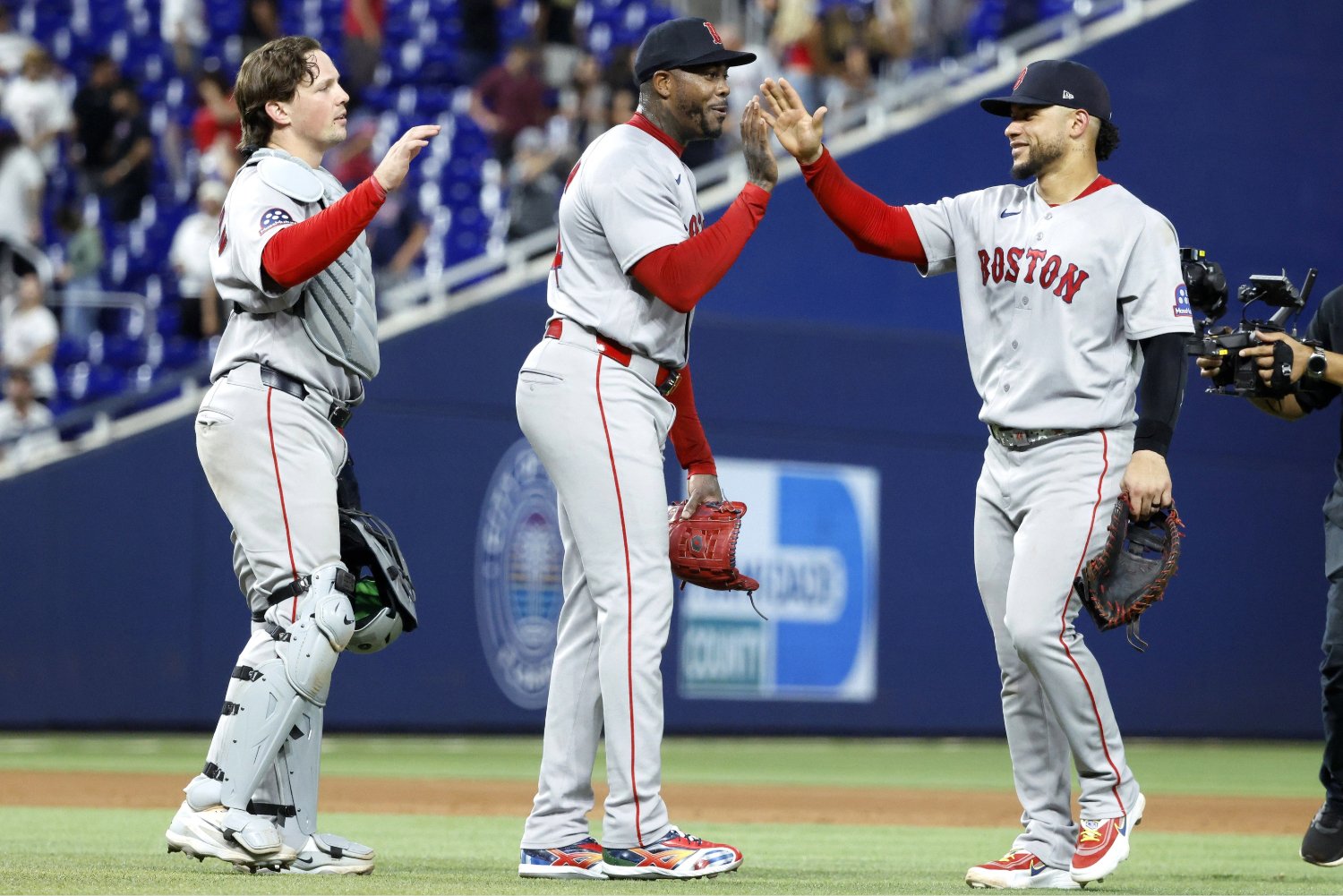 September is right around the corner, and even as the Boston Red Sox continue to rack up series wins and pull off miraculous come -from-behind victories seemingly every other night, there are still plenty of questions that remain about the future of this club. With just over a month to go, here’s a breakdown of the biggest Red Sox storylines to follow before the 2026 campaign comes to a close. Remaining Red Sox Schedule, At A Glance Games Remaining: 31 Home / Road: 15 / 16 Games vs. .500+ Teams: 18 Remaining Strength of Schedule: 18th-easiest in MLB 5 Key Red Sox Storylines in the Final 5 Weeks Will We See Franklin Arias in September? It’s kind of crazy to think that even in the midst of a playoff push, perhaps the number one question on every Red Sox fans’ mind is: Will we see Franklin Arias called up when rosters expand in September? Fans have every right to be excited about Arias as Boston’s top prospect, and the third ranked in all of baseball, has done nothing but rake since his promotion from Double-A Portland to Triple-A Worcester on July 24. In 23 games, Arias has slashed .292/.363/.483/.846 with four homers and 22 RBI to go along with 26 hits and 12 runs scored. What’s been interesting to keep an eye on is how the WooSox have deployed him thus far, playing him 12 games at short (102 innings) and seven at second base (62 innings), which could be an indicator of how the Red Sox may choose to utilize him if he gets the call to join them next month. While there is a lot to love about his game, and he may provide more of a spark than some other options Boston has waiting to come off the IL, a promotion for Arias may not be as easy as some fans hope it to be. While the act of adding him to the 40-man roster won’t be a difficult one, as the Red Sox currently have two open spots, the second guess will stem from the possibility of a lockout next season. If Arias does get added to the roster and the lockout does occur, then he will lose the ability to utilize team facilities, as opposed to being unaffected if he were to stay off and in the minors. As exciting as his talents may be, the Red Sox decision makers must walk a very narrow line when it comes to deciding the developmental future of their next potential star in the making. Where Do Roman Anthony And Garrett Crochet Slot In When They Return? If you told me a couple months ago there was a realistic chance of seeing Roman Anthony or Garrett Crochet again in 2026 I probably would’ve laughed in your face and told you you were insane. As September approaches, however, those pipe dreams seem to be becoming a reality more and more each day based on the latest reports for each player. Anthony has been partaking in a rehab assignment with Portland where in four games he’s 3-for-11 with one home run, three RBIs, and a .994 OPS while splitting time between left field and designated hitter. Hopes are obviously high for a sooner rather than later return for Anthony, as Chad Tracy recently told the media that he’d be re-evaluated on Thursday after his game with the WooSox. It will be curious to see where Tracy chooses to slot Anthony into the lineup when he does return, one that is deeper now with the addition of Adley Rutschman, but could still use a more competitive approach out of its leadoff spot. Red Sox Leadoff Hitter Team Rankings Category Statistic MLB Rank AL Rank AVG .227 27th 13th OBP .310 25th 13th SLG .376 23rd 12th OPS .686 25th 12th Hits 122 25th 12th wRC+ 91 28th 15th wOBA .304 25th 13th BABIP .280 23rd 11th When it comes to Crochet, his return doesn’t seem nearly as close as Anthony’s, but that doesn’t mean there should be any less hope for it to happen. The southpaw started August throwing at 50-60 feet and has since ramped that up to 90 over the last week and had recently told MassLive’s Chris Cotillo that he’d “a million percent” be returning in a bullpen role if he is able to make it back. A quick look at his career numbers as a reliever from 2020-2023 with Chicago (excluding when he missed all of 2022 recovering from Tommy John) should get Sox fans excited at the possibility; in 72 career relief appearances, he owns a 2.71 ERA in 73.0 innings, with a 3.16 FIP, .215 average against, 26.9 K% and 12.7 BB%. How Will Chad Tracy Handle The Infield Logjam Once Trevor Story And Isiah Kiner-Falefa Are Back? In this improbable run the Red Sox have gone on to drag themselves out of the grave, fans who have been following know that it hasn’t just been the club’s star players that have gotten them to where they are. It has been the likes of Andruw Monasterio, Nick Sogard, Anthony Seigler, and Mickey Gasper who have infused the Sox with much needed energy and clutch hitting time and time again. Now as we head toward September and expanded rosters, two of those players' seasons may be in jeopardy with the looming returns of Trevor Story and Isiah Kiner-Falefa. It will ultimately be up to Chad Tracy to decide how Story and Kiner-Falefa factor back into the roster and lineup, but the question a lot of fans have is: should they be factored back in? Are the Red Sox really a better team with either player in the lineup over any of those names who have helped to get them back into the playoff picture? Kiner-Falefa you could maybe make the case for, as he was hitting a respectable .277 with a 101 OPS+ and 100 wRC+ while playing solid defense (7 OAA) and pretty much carrying Boston’s offense on his back through May where he slashed .385/.467/.513/.980 with a wRC+ of 180. Plus, he could easily slot back in as a platoon bench option who could provide some defensive stability late in games or a pinch hit against a lefty if needed. Story’s return is where things get messy. Anyone who has been watching this season, and even his rehab appearances where he’s 4-for-21 with five strikeouts and no walks in six games, knows his bat isn’t an upgrade over any of the Red Sox's current options at short. Those who choose to defend him will most likely try to argue his defense will be an upgrade over the current option of Monasterio. However, a look into their advanced stats shows that may not be a valid claim either. In 49 games played at short this year, Monasterio has made five errors with zero Defensive Runs Saved and -9 Outs Above Average for a .974 Fielding Percentage. Story in ten less games has made six errors with -2 DRS, -3 OAA, and a fielding percentage of .958%. Advantage slightly to Monasterio. Does The Rotation Have Enough In The Tank? What was once looked at as the strength of the team may be starting to show some cracks as we approach the final stretch of the 2026 regular season. Sonny Gray and Payton Tolle have bounced back after some rough patches in July to pitch to nearly identical stat lines in August. The two have combined to go 5-1 over eight starts with a 2.16 ERA in 50 innings of work, striking out 56 and walking 12. The trio of Ranger Suarez, Patrick Sandoval, and Jake Bennett is where things start to get shaky. Bennett has looked like he’s hit his rookie wall, owning a team worst 5.73 ERA in August with an opponents average of .261 and 14 earned runs allowed over 22 innings pitched. Sandoval hasn’t been far behind with a 5.66 ERA and team worst 1.94 WHIP and .341 average against as the consistent flirting with danger he was able to avoid in July has caught up with him in August. As for Suarez, things just haven’t looked right from a command standpoint since he’s come off the IL, pitching to a 4.42 ERA, .250 average against, and 1.42 WHIP with just 12 strikeouts, and uncharacteristically high walks (nine) and hit batters (four). The Red Sox have options if they want to go the opener route to give some of their more overworked arms a breather down the stretch. They may even look to give Brayan Bello another shot at starting in what would almost definitely be a worst-case scenario given his dominance in the bullpen. But it will be interesting to see if the rotations struggles and lack of a bona fide addition at the trade deadline will once again hurt come playoff time. Can The Red Sox Secure A Home Playoff Series? The Red Sox currently sit 6.5 games up on the Cleveland Guardians for the second wild-card spot and seem destined for postseason baseball once again barring any sort of drastic collapse. Now, I’m sure some fans are perfectly content with keeping that pace and just making the playoffs given where this season looked to be heading a few months ago. Being just 2.5 games back of the fourth-seeded Yankees with a four-game series in the Bronx looming on the horizon, however, should make the mindset more aggressive. Let's secure the first wild-card spot and a home playoff series. They say history has a funny way of repeating itself, and we all remember what happened the last time the Red Sox had to go into the Bronx and try to win a playoff series at Yankee Stadium. We should all also remember what happened the last time that scenario was flipped and the Yankees had to come to Boston and try to win a one-game playoff at Fenway. Given the track record of these two teams, the advantage tends to go to the home team. Sticking with the theme of five, over the last five seasons the Red Sox are 19-16 when playing the Yankees at home, and 17-18 when they’ve gone on the road. All things considered, it’s pretty obvious where you should want another potential Yankees-Red Sox playoff series to be played. Getting the postseason back to Fenway will be no easy task for the Red Sox. Of their remaining 31 games, they have a close to even split of 15 at home and 16 on the road. Six of their remaining ten series will come against teams either at or above .500. As for the Yankees, their schedule looks to be the more favorable with 20 of their remaining 32 games coming at home, with just four of ten series being against opponents over .500.
 -
September is right around the corner, and even as the Boston Red Sox continue to rack up series wins and pull off miraculous come -from-behind victories seemingly every other night, there are still plenty of questions that remain about the future of this club. With just over a month to go, here’s a breakdown of the biggest Red Sox storylines to follow before the 2026 campaign comes to a close. Remaining Red Sox Schedule, At A Glance Games Remaining: 31 Home / Road: 15 / 16 Games vs. .500+ Teams: 18 Remaining Strength of Schedule: 18th-easiest in MLB 5 Key Red Sox Storylines in the Final 5 Weeks Will We See Franklin Arias in September? It’s kind of crazy to think that even in the midst of a playoff push, perhaps the number one question on every Red Sox fans’ mind is: Will we see Franklin Arias called up when rosters expand in September? Fans have every right to be excited about Arias as Boston’s top prospect, and the third ranked in all of baseball, has done nothing but rake since his promotion from Double-A Portland to Triple-A Worcester on July 24. In 23 games, Arias has slashed .292/.363/.483/.846 with four homers and 22 RBI to go along with 26 hits and 12 runs scored. What’s been interesting to keep an eye on is how the WooSox have deployed him thus far, playing him 12 games at short (102 innings) and seven at second base (62 innings), which could be an indicator of how the Red Sox may choose to utilize him if he gets the call to join them next month. While there is a lot to love about his game, and he may provide more of a spark than some other options Boston has waiting to come off the IL, a promotion for Arias may not be as easy as some fans hope it to be. While the act of adding him to the 40-man roster won’t be a difficult one, as the Red Sox currently have two open spots, the second guess will stem from the possibility of a lockout next season. If Arias does get added to the roster and the lockout does occur, then he will lose the ability to utilize team facilities, as opposed to being unaffected if he were to stay off and in the minors. As exciting as his talents may be, the Red Sox decision makers must walk a very narrow line when it comes to deciding the developmental future of their next potential star in the making. Where Do Roman Anthony And Garrett Crochet Slot In When They Return? If you told me a couple months ago there was a realistic chance of seeing Roman Anthony or Garrett Crochet again in 2026 I probably would’ve laughed in your face and told you you were insane. As September approaches, however, those pipe dreams seem to be becoming a reality more and more each day based on the latest reports for each player. Anthony has been partaking in a rehab assignment with Portland where in four games he’s 3-for-11 with one home run, three RBIs, and a .994 OPS while splitting time between left field and designated hitter. Hopes are obviously high for a sooner rather than later return for Anthony, as Chad Tracy recently told the media that he’d be re-evaluated on Thursday after his game with the WooSox. It will be curious to see where Tracy chooses to slot Anthony into the lineup when he does return, one that is deeper now with the addition of Adley Rutschman, but could still use a more competitive approach out of its leadoff spot. Red Sox Leadoff Hitter Team Rankings Category Statistic MLB Rank AL Rank AVG .227 27th 13th OBP .310 25th 13th SLG .376 23rd 12th OPS .686 25th 12th Hits 122 25th 12th wRC+ 91 28th 15th wOBA .304 25th 13th BABIP .280 23rd 11th When it comes to Crochet, his return doesn’t seem nearly as close as Anthony’s, but that doesn’t mean there should be any less hope for it to happen. The southpaw started August throwing at 50-60 feet and has since ramped that up to 90 over the last week and had recently told MassLive’s Chris Cotillo that he’d “a million percent” be returning in a bullpen role if he is able to make it back. A quick look at his career numbers as a reliever from 2020-2023 with Chicago (excluding when he missed all of 2022 recovering from Tommy John) should get Sox fans excited at the possibility; in 72 career relief appearances, he owns a 2.71 ERA in 73.0 innings, with a 3.16 FIP, .215 average against, 26.9 K% and 12.7 BB%. How Will Chad Tracy Handle The Infield Logjam Once Trevor Story And Isiah Kiner-Falefa Are Back? In this improbable run the Red Sox have gone on to drag themselves out of the grave, fans who have been following know that it hasn’t just been the club’s star players that have gotten them to where they are. It has been the likes of Andruw Monasterio, Nick Sogard, Anthony Seigler, and Mickey Gasper who have infused the Sox with much needed energy and clutch hitting time and time again. Now as we head toward September and expanded rosters, two of those players' seasons may be in jeopardy with the looming returns of Trevor Story and Isiah Kiner-Falefa. It will ultimately be up to Chad Tracy to decide how Story and Kiner-Falefa factor back into the roster and lineup, but the question a lot of fans have is: should they be factored back in? Are the Red Sox really a better team with either player in the lineup over any of those names who have helped to get them back into the playoff picture? Kiner-Falefa you could maybe make the case for, as he was hitting a respectable .277 with a 101 OPS+ and 100 wRC+ while playing solid defense (7 OAA) and pretty much carrying Boston’s offense on his back through May where he slashed .385/.467/.513/.980 with a wRC+ of 180. Plus, he could easily slot back in as a platoon bench option who could provide some defensive stability late in games or a pinch hit against a lefty if needed. Story’s return is where things get messy. Anyone who has been watching this season, and even his rehab appearances where he’s 4-for-21 with five strikeouts and no walks in six games, knows his bat isn’t an upgrade over any of the Red Sox's current options at short. Those who choose to defend him will most likely try to argue his defense will be an upgrade over the current option of Monasterio. However, a look into their advanced stats shows that may not be a valid claim either. In 49 games played at short this year, Monasterio has made five errors with zero Defensive Runs Saved and -9 Outs Above Average for a .974 Fielding Percentage. Story in ten less games has made six errors with -2 DRS, -3 OAA, and a fielding percentage of .958%. Advantage slightly to Monasterio. Does The Rotation Have Enough In The Tank? What was once looked at as the strength of the team may be starting to show some cracks as we approach the final stretch of the 2026 regular season. Sonny Gray and Payton Tolle have bounced back after some rough patches in July to pitch to nearly identical stat lines in August. The two have combined to go 5-1 over eight starts with a 2.16 ERA in 50 innings of work, striking out 56 and walking 12. The trio of Ranger Suarez, Patrick Sandoval, and Jake Bennett is where things start to get shaky. Bennett has looked like he’s hit his rookie wall, owning a team worst 5.73 ERA in August with an opponents average of .261 and 14 earned runs allowed over 22 innings pitched. Sandoval hasn’t been far behind with a 5.66 ERA and team worst 1.94 WHIP and .341 average against as the consistent flirting with danger he was able to avoid in July has caught up with him in August. As for Suarez, things just haven’t looked right from a command standpoint since he’s come off the IL, pitching to a 4.42 ERA, .250 average against, and 1.42 WHIP with just 12 strikeouts, and uncharacteristically high walks (nine) and hit batters (four). The Red Sox have options if they want to go the opener route to give some of their more overworked arms a breather down the stretch. They may even look to give Brayan Bello another shot at starting in what would almost definitely be a worst-case scenario given his dominance in the bullpen. But it will be interesting to see if the rotations struggles and lack of a bona fide addition at the trade deadline will once again hurt come playoff time. Can The Red Sox Secure A Home Playoff Series? The Red Sox currently sit 6.5 games up on the Cleveland Guardians for the second wild-card spot and seem destined for postseason baseball once again barring any sort of drastic collapse. Now, I’m sure some fans are perfectly content with keeping that pace and just making the playoffs given where this season looked to be heading a few months ago. Being just 2.5 games back of the fourth-seeded Yankees with a four-game series in the Bronx looming on the horizon, however, should make the mindset more aggressive. Let's secure the first wild-card spot and a home playoff series. They say history has a funny way of repeating itself, and we all remember what happened the last time the Red Sox had to go into the Bronx and try to win a playoff series at Yankee Stadium. We should all also remember what happened the last time that scenario was flipped and the Yankees had to come to Boston and try to win a one-game playoff at Fenway. Given the track record of these two teams, the advantage tends to go to the home team. Sticking with the theme of five, over the last five seasons the Red Sox are 19-16 when playing the Yankees at home, and 17-18 when they’ve gone on the road. All things considered, it’s pretty obvious where you should want another potential Yankees-Red Sox playoff series to be played. Getting the postseason back to Fenway will be no easy task for the Red Sox. Of their remaining 31 games, they have a close to even split of 15 at home and 16 on the road. Six of their remaining ten series will come against teams either at or above .500. As for the Yankees, their schedule looks to be the more favorable with 20 of their remaining 32 games coming at home, with just four of ten series being against opponents over .500. View full article
-
The intent wasn't to say the contract itself is bad, I was thrilled to see them be proactive in extending Anthony. It was more to enforce the point that the front office believed in him (and Campbell) so much that they were willing to give them extensions with so little time spent or accomplishments at the big league level. Hence the comment about all of those guys seemingly being untouchable. Campbell's extension is the one I framed as egregious anyways which it has turned out to be, throwing that kind of money at him after only 8 games for it to blow up in their faces soon after.
-
As the dust settled and the final reports came in on what the Boston Red Sox were sending back to the Baltimore Orioles in the jaw-dropping Adley Rutschman trade, the belief seemed to be a consensus one, especially among those who closely follow the prospect side of the game: “Wow did the Red Sox overpay in the deal!” That belief was justifiable with Boston sending their numbers two, four, and five prospects (Anthony Eyanson, Kyson Witherspoon, and Enddy Azocar) along with big leaguer Carlos Narváez, and a Player To Be Named Later who ended up being Harold Rivas, the Sox's No. 13 prospect. They would of course follow that up later in the day by sending out a former number one prospect in Marcelo Mayer to acquire San Francisco Giants lefty reliever Erik Miller. While fans will debate if too much was given up to secure Rutschman, or if the plug was pulled too quickly on Mayer, one question that should without a doubt be on fans minds is this: Did Craig Breslow’s aggressive approach signify a shift in the club’s philosophy to prioritize known commodities rather than banking on prospect potential? If that answer is yes… well then it’s about damn time. If you’ve followed the Red Sox since they drafted Mayer fourth overall in 2021, making him the highest pick in franchise history, there’s a phrase ownership has been preaching that looked to be setting up the foundation of the franchise for years to come: ‘The Core Four.’ That phrase of course refers to Boston’s quartet of highly glamorized prospects including Mayer, Kyle Teel, Roman Anthony, and at first Nick Yorke, but later transitioned to Kristian Campbell after Yorke was dealt to Pittsburgh in 2024. These four prospects were looked at as nearly untouchable early on, so much so that any trade talks involving Mayer were seemingly shut down, Anthony was granted an eight-year, $130 million extension just 46 games into his big-league career, and the Driveline darling that was Campbell earned an even more egregious eight-year, $60 million extension just eight games in. I say "nearly untouchable" because unfortunately for Teel, he was the odd-man out when the Red Sox first bit the bullet on trading prospects; they shipped him along with Braden Montgomery, Chase Meidroth, and Wikelman Gonzalez to the White Sox for Garrett Crochet in the winter of 2024. At the time of the deal, Teel ranked fourth in Boston’s system and 25th in all of baseball (per MLB Pipeline). Montgomery ranked fifth and 54th. Meidroth and Gonzalez were 11th and 14th on the Red Sox's top 30. Surely, another trade that stung at the time for those who prospect watch, but the need of a true ace for the staff was glaring and the addition of Crochet more than filled that hole. Fast-forward two years post-trade and barring the injury to Crochet, it doesn’t seem like a deal that either team has lost sleep over. Crochet pitched to a runner-up finish in the 2025 Cy Young voting and dominated in Boston’s only Wild Card series win in the Bronx versus the Yankees. On the White Sox's side, Teel has been a little difficult to evaluate with just 97 games played in a season-plus. He missed 78 games at the start of this season with a hamstring injury and after just 19 games played, found his way back to the IL where he’s been since July 21 with an ankle sprain. All things considered, when he has been out there he has looked like a promising young player, owning a 110 OPS+, 114 wRC+ and a 21.3% caught stealing percentage. Montgomery, meanwhile, has been on the streakier side since his call-up, which featured a walk-off home run in his debut and not much else of note since with just a .230/.317/.372/.689 line. When it comes to Meidroth, he has been the definition of a solid, league-average player, owning a career .263 average, 4.1 WAR, 97 OPS+ and 100 wRC+ through 235 career games. And as for Gonzalez, while he shined in a relief role in 2025 with a 2.66 ERA, .178 average against, and 28.7 strikeout percentage in 16 appearances, elbow and lat injuries have not only cut into the last two seasons, but may have also been the cause of his surprise DFA by Chicago on August 8. No longer the ‘Core Four’, the focus seemed to shift to who some called the ‘Big Three’ of Mayer, Anthony, and Campbell as the trio that the organization would build around. Ushering in the next golden age of Red Sox baseball, harking back to the memories of other notable young players who became integral pieces of championship clubs like Dustin Pedroia, Jacoby Ellsbury, and Xander Bogaerts. After the trade deadline, however, it may be safe to say that hope of leaning all in on the prospects was a mistake that needed correcting with a philosophy shift more toward known and established commodities. At the start, the returns on Campbell and Anthony looked great. Campbell began his 2025 rookie campaign as one of Boston’s best hitters through March/April slashing .301/.407/.495/.902 with a wRC+ of 150. As for Anthony, he was the spark the Sox rode for the 71 games he played last year, hitting .292 with eight homers, 32 RBI, and wRC+ and OPS+’s of 140. Then, things rapidly fell apart for Campbell, who after that first month plus saw his line drastically fall to .159/.243/.222/.218 with a wRC+ of 30 and strikeout and walk percentages of 28.6% and 7.1%. That earned him a demotion to Worcester, where he has since been buried with no clear shot at a path back to the majors. As for Anthony, injuries have derailed his strong start with 25 games missed last year due to an oblique strain and nearly another 100 and counting missed from a combination of back soreness and a wrist sprain, leading many to question his durability. In the case of Mayer, there never came that moment where things seemed to fully click, leading some to wonder if he’ll go down as one of, if not the, most-overhyped prospects in Red Sox history. In just 114 games, Mayer accumulated a 0.3 WAR, slashed .223/.278/.346/.625 with seven homers, 32 RBI, a 70 wRC+ and career strikeout and walk rates of 23.4% and 6.6%. Along with his offensive woes, his defensive prowess never really hit its projections either, with negative-3 Defensive Runs Saved and only plus-2 Outs Above Average during his time split across third, short, and second. Then of course, there are the much talked about maturity, work ethic, and durability concerns he faced, as he ended up missing 102 games (playoffs included) due to various injuries over the last two seasons—not to mention the number of minor-league stints he had cut short due to injuries as well. Obviously, Red Sox fans will never get the chance to see firsthand if the Eyanson, Witherspoon, Azocar trio lives up to their projected hype, or if they underperform like the last ‘Big Three.' But in a 2026 season where the Sox find themselves in the midst of an epic turnaround and push for a playoff spot, the decision to move their chips into the center of the table and go get a bonafide bat in Rutschman and lockdown southpaw in Miller, as opposed to the waiting-and-seeing approach with Mayer and the kids, has to be looked at as the right one. Like Crochet did before in filling the ace vacancy, Rutschman does the same in providing a bat to deepen the Red Sox’s relatively top-heavy lineup. His career 16.8 WAR, 115 OPS+ and wRC+ and 15.8 strikeout and 11.7 walk rates gives the lineup a professional approach at the plate night after night, and his 24.4% caught stealing rate and 38 DRS gives them an elite option behind the plate. Now I might just be crazy, but those numbers sound like they could be pretty beneficial to the here and now rather than waiting to see what Eyanson, Witherspoon or Azocar have to offer in the 2027 and 2028 ETAs that MLB Pipeline has proposed for them. When it all comes down to it, you’re most likely never going to get the entire fanbase to agree to a consensus on these trades, and that’s okay. It’s more than respectable to be one of the people who wants to build through the draft and produce homegrown talent to try and win that way. It’s also just as respectable to want the organization to not only evaluate the prospects they see as part of the future, but also those who aren’t and act accordingly. Identifying external pieces they believe can help win both now and in the future and jumping at the chance if/when they become available is a part of team-building as well. That is what Craig Breslow did when he acquired Rutschman and Miller. There's no guarantee that this gambit will pay off, but the team's championship hopes over the next few years improved because of it. That's a philosophy shift worth lauding. View full article
-
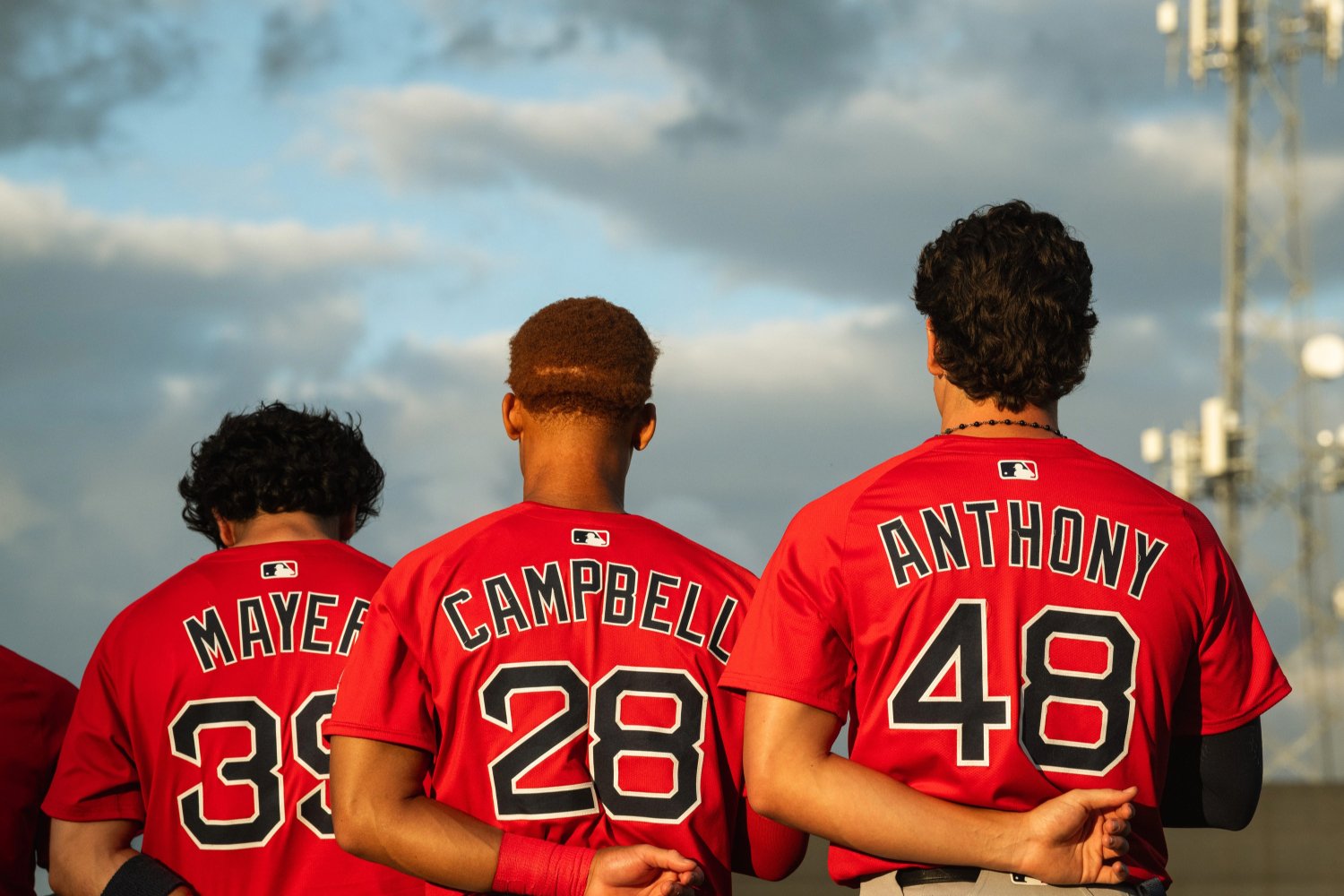 As the dust settled and the final reports came in on what the Boston Red Sox were sending back to the Baltimore Orioles in the jaw-dropping Adley Rutschman trade, the belief seemed to be a consensus one, especially among those who closely follow the prospect side of the game: “Wow did the Red Sox overpay in the deal!” That belief was justifiable with Boston sending their numbers two, four, and five prospects (Anthony Eyanson, Kyson Witherspoon, and Enddy Azocar) along with big leaguer Carlos Narváez, and a Player To Be Named Later who ended up being Harold Rivas, the Sox's No. 13 prospect. They would of course follow that up later in the day by sending out a former number one prospect in Marcelo Mayer to acquire San Francisco Giants lefty reliever Erik Miller. While fans will debate if too much was given up to secure Rutschman, or if the plug was pulled too quickly on Mayer, one question that should without a doubt be on fans minds is this: Did Craig Breslow’s aggressive approach signify a shift in the club’s philosophy to prioritize known commodities rather than banking on prospect potential? If that answer is yes… well then it’s about damn time. If you’ve followed the Red Sox since they drafted Mayer fourth overall in 2021, making him the highest pick in franchise history, there’s a phrase ownership has been preaching that looked to be setting up the foundation of the franchise for years to come: ‘The Core Four.’ That phrase of course refers to Boston’s quartet of highly glamorized prospects including Mayer, Kyle Teel, Roman Anthony, and at first Nick Yorke, but later transitioned to Kristian Campbell after Yorke was dealt to Pittsburgh in 2024. These four prospects were looked at as nearly untouchable early on, so much so that any trade talks involving Mayer were seemingly shut down, Anthony was granted an eight-year, $130 million extension just 46 games into his big-league career, and the Driveline darling that was Campbell earned an even more egregious eight-year, $60 million extension just eight games in. I say "nearly untouchable" because unfortunately for Teel, he was the odd-man out when the Red Sox first bit the bullet on trading prospects; they shipped him along with Braden Montgomery, Chase Meidroth, and Wikelman Gonzalez to the White Sox for Garrett Crochet in the winter of 2024. At the time of the deal, Teel ranked fourth in Boston’s system and 25th in all of baseball (per MLB Pipeline). Montgomery ranked fifth and 54th. Meidroth and Gonzalez were 11th and 14th on the Red Sox's top 30. Surely, another trade that stung at the time for those who prospect watch, but the need of a true ace for the staff was glaring and the addition of Crochet more than filled that hole. Fast-forward two years post-trade and barring the injury to Crochet, it doesn’t seem like a deal that either team has lost sleep over. Crochet pitched to a runner-up finish in the 2025 Cy Young voting and dominated in Boston’s only Wild Card series win in the Bronx versus the Yankees. On the White Sox's side, Teel has been a little difficult to evaluate with just 97 games played in a season-plus. He missed 78 games at the start of this season with a hamstring injury and after just 19 games played, found his way back to the IL where he’s been since July 21 with an ankle sprain. All things considered, when he has been out there he has looked like a promising young player, owning a 110 OPS+, 114 wRC+ and a 21.3% caught stealing percentage. Montgomery, meanwhile, has been on the streakier side since his call-up, which featured a walk-off home run in his debut and not much else of note since with just a .230/.317/.372/.689 line. When it comes to Meidroth, he has been the definition of a solid, league-average player, owning a career .263 average, 4.1 WAR, 97 OPS+ and 100 wRC+ through 235 career games. And as for Gonzalez, while he shined in a relief role in 2025 with a 2.66 ERA, .178 average against, and 28.7 strikeout percentage in 16 appearances, elbow and lat injuries have not only cut into the last two seasons, but may have also been the cause of his surprise DFA by Chicago on August 8. No longer the ‘Core Four’, the focus seemed to shift to who some called the ‘Big Three’ of Mayer, Anthony, and Campbell as the trio that the organization would build around. Ushering in the next golden age of Red Sox baseball, harking back to the memories of other notable young players who became integral pieces of championship clubs like Dustin Pedroia, Jacoby Ellsbury, and Xander Bogaerts. After the trade deadline, however, it may be safe to say that hope of leaning all in on the prospects was a mistake that needed correcting with a philosophy shift more toward known and established commodities. At the start, the returns on Campbell and Anthony looked great. Campbell began his 2025 rookie campaign as one of Boston’s best hitters through March/April slashing .301/.407/.495/.902 with a wRC+ of 150. As for Anthony, he was the spark the Sox rode for the 71 games he played last year, hitting .292 with eight homers, 32 RBI, and wRC+ and OPS+’s of 140. Then, things rapidly fell apart for Campbell, who after that first month plus saw his line drastically fall to .159/.243/.222/.218 with a wRC+ of 30 and strikeout and walk percentages of 28.6% and 7.1%. That earned him a demotion to Worcester, where he has since been buried with no clear shot at a path back to the majors. As for Anthony, injuries have derailed his strong start with 25 games missed last year due to an oblique strain and nearly another 100 and counting missed from a combination of back soreness and a wrist sprain, leading many to question his durability. In the case of Mayer, there never came that moment where things seemed to fully click, leading some to wonder if he’ll go down as one of, if not the, most-overhyped prospects in Red Sox history. In just 114 games, Mayer accumulated a 0.3 WAR, slashed .223/.278/.346/.625 with seven homers, 32 RBI, a 70 wRC+ and career strikeout and walk rates of 23.4% and 6.6%. Along with his offensive woes, his defensive prowess never really hit its projections either, with negative-3 Defensive Runs Saved and only plus-2 Outs Above Average during his time split across third, short, and second. Then of course, there are the much talked about maturity, work ethic, and durability concerns he faced, as he ended up missing 102 games (playoffs included) due to various injuries over the last two seasons—not to mention the number of minor-league stints he had cut short due to injuries as well. Obviously, Red Sox fans will never get the chance to see firsthand if the Eyanson, Witherspoon, Azocar trio lives up to their projected hype, or if they underperform like the last ‘Big Three.' But in a 2026 season where the Sox find themselves in the midst of an epic turnaround and push for a playoff spot, the decision to move their chips into the center of the table and go get a bonafide bat in Rutschman and lockdown southpaw in Miller, as opposed to the waiting-and-seeing approach with Mayer and the kids, has to be looked at as the right one. Like Crochet did before in filling the ace vacancy, Rutschman does the same in providing a bat to deepen the Red Sox’s relatively top-heavy lineup. His career 16.8 WAR, 115 OPS+ and wRC+ and 15.8 strikeout and 11.7 walk rates gives the lineup a professional approach at the plate night after night, and his 24.4% caught stealing rate and 38 DRS gives them an elite option behind the plate. Now I might just be crazy, but those numbers sound like they could be pretty beneficial to the here and now rather than waiting to see what Eyanson, Witherspoon or Azocar have to offer in the 2027 and 2028 ETAs that MLB Pipeline has proposed for them. When it all comes down to it, you’re most likely never going to get the entire fanbase to agree to a consensus on these trades, and that’s okay. It’s more than respectable to be one of the people who wants to build through the draft and produce homegrown talent to try and win that way. It’s also just as respectable to want the organization to not only evaluate the prospects they see as part of the future, but also those who aren’t and act accordingly. Identifying external pieces they believe can help win both now and in the future and jumping at the chance if/when they become available is a part of team-building as well. That is what Craig Breslow did when he acquired Rutschman and Miller. There's no guarantee that this gambit will pay off, but the team's championship hopes over the next few years improved because of it. That's a philosophy shift worth lauding.
 -
Red Sox Report Cards: Team Grades for July
Ryan Salvaggio posted a topic in Talk Sox Front Page News
As the calendar turned to July and the Boston Red Sox boarded a plane heading west to Anaheim, fresh off a series loss at home to the Washington Nationals where they were outscored 18-3 in the final two games, it felt like everyone was ready to pull the plug. The Sox found themselves 11 games under .500, 14.5 games back in the AL East, and 6.5 games out of the third Wild Card spot needing to jump six teams to even sniff a postseason berth. The task seemed daunting and borderline impossible to say the least, but as the age-old saying goes; the rest is history. All Boston proceeded to do since was go on one of, if not the best, runs the club and MLB have ever seen; one that included a 15-game win streak, an .840 win percentage which was the best for a month in franchise history. They became the first team in MLB history to enter a calendar month 10+ games under .500 and leave it 7+ games over .500 via ESPN’s Sarah Langs. Likewise, they became the first team in MLB history to in one month win 20+ games, have a 15+ game winning streak, have 10+ comeback victories, sweep a 9+ game road trip, and have a .900+ road win percentage via OptaStats on X. For a more in-depth look at what has led to the Red Sox’s historic turnaround, let’s dive in to how the offense, rotation, and bullpen graded out for July. Grading Every Red Sox Player In July Offense For months, it’s been well documented that if the Red Sox were to make any noise this season, let alone turn this thing around, it was going to have to be the offense that, outside of Wilyer Abreu, Willson Contreras, and Ceddanne Rafaela, needed to start pulling its weight. July saw just that, as Boston’s offense finished within the top-10 league wide in AVG, OBP, SLG, OPS, wRC+, BABIP, BB%, Runs, Home Runs, Hits, Doubles, WAR, and AVG with RISP w/2 Outs. In other words, it was by far the team's best performance of the season. Perhaps the most surprising, and arguably refreshing, of all of the top-10 finishing stats came from the change in approach at the plate. The Sox ended July first in all of baseball in Sac Bunts with 13, an astonishing note when you realize they had 11 for the entire season prior to. This new “Next Man Up” approach and mentality the team took on not only allowed for the likes of Willson Contreras (1.117 OPS, 208 wRC+, 5 HR, 14 RBI) and Ceddanne Rafaela (.303/.321/.523/.844, 5 HR, 19 RBI) to continue their stellar seasons, but also allowed for the emergence of heroes new and old. If you were to pick an offensive MVP for the month and had to exclude Contreras and Rafaela, the favorite has to be Andruw Monasterio, who has had some hiccups in the field filling in as the full-time shortstop after Tsung-Che Cheng was optioned back to Worcester. And yet, he continued to come up with clutch hit after clutch hit in July, slashing .338/.413/.631/.1.044 with 12 of his 22 hits going for extra bases while also driving in 11. Some love should be thrown Cheng’s way as well while highlighting standout performances, as he managed to accumulate a .740 OPS and 115 wRC+ in just nine games while also making a few game saving plays at short during Boston’s historic 15-game win streak. July also saw Caleb Durbin continue to put his early season struggles behind him as he has quickly become one of the Red Sox's most well-rounded players, finishing the month with an .802 OPS, three homers, and nine runs batted in while factoring in stellar defense at third. Masataka Yoshida once again has started to make his usual second half push after slashing .300/.364/.450/.814 with two home runs and nine runs batted in, providing some stability to the top of Boston’s lineup. And even newcomer Jahmai Jones, whose addition seemed to be heavily questioned when he was brought in from the Tigers, has provided an immediate spark, homering in his first at-bat as a Red Sox en route to a 1.467 OPS and 244 wRC+ to go along with two home runs and five RBI in just nine games. As we move into August, the hope is the offense can continue to succeed with this more small-ball approach. Losing Curtis Mead to a fractured wrist after just two at-bats certainly doesn't help, though Adley Rutschman should provide a huge jolt when healthy. Getting Wilyer Abreu (90 wRC+) and Jarren Duran (40 wRC+) back on track wouldn’t hurt either. In what was a stunning and unprecedented turnaround that nobody could have foreseen happening, Boston’s offense gets its best grade of the season thus far, a well-deserved A-. Position Players Name March / April May June July Wilyer Abreu A+ B C+ C Tsung-Che Cheng N/A N/A C A+ Willson Contreras A A+ B A+ Jarren Duran F A D- D+ Caleb Durbin D+ D A+ A- Nate Eaton N/A N/A C+ F Romy González N/A N/A C D Brett Harris N/A N/A N/A C Jahmai Jones N/A N/A N/A A+ Andruw Monasterio C D+ D A+ Carlos Narváez C- C- F D- Ceddanne Rafaela B A A- A+ Anthony Seigler N/A N/A A+ C Nick Sogard N/A B- N/A C Connor Wong B- B A C Masataka Yoshida B- C+ D A- Rotation If you were to tell me early this season the Red Sox were going to go on an epic win streak that helped save their season and turn them into one of the most dangerous teams in baseball, there's no doubt I would have guessed the rotation had done its best Superman impression. And yet, while this turn through the rotation wasn’t bad by any means, it wasn’t as dominant as we’ve seen in past stretches either, leading to somewhat of a mixed bag of results. Boston’s best starter by far for July may have been its least likeliest, as rookie Jake Bennett burst onto the scene to the tune of a 4-1 record, 2.20 ERA, and .208 average against over a team high 32.2 innings pitched. The same cannot be said about fellow rookie Payton Tolle however, as although his strikeout numbers were still impressive, leading the rotation with a 32.7 K% in 23.2 innings, a six-run blow up over three innings versus the Nationals, a four-run outing over 5.2 against the Orioles, and a shortened 3.2 innings outing against the Mets stemming from an innings limit left Tolle with an uncharacteristically high 4.94 ERA for the month. As for the veterans, Sox fans got their long-awaited look at Patrick Sandoval for the first time, who put up a respectable 3.32 ERA over four starts, but is clearly being eased back into things given his just 19 innings of work. Ranger Suarez was limited to just three starts and 11.1 innings due to a groin strain, finishing with a below-average 4.76 ERA but elite 1.33 FIP. Then there’s the 36-year old Sonny Gray who may be starting to show his age a bit. While his first three starts of July against the Angels, Mets and Rays were excellent, posting a 1.50 ERA while allowing just three earned runs and 14 hits over 18 innings, his final two against the Blue Jays and Athletics were anything but. In those starts, Gray posted a 6.75 ERA over 12 innings, allowing 17 hits and nine earned runs. Add in three rough appearances for Eduardo Rivera (9.45 ERA on 6.2 IP) and the numbers don’t look as great as they have prior on paper. It will be interesting to see how the Red Sox handle the rotation going forward with some clear signs of possible fatigue starting to set in. For now though, the rotation still grades out at a respectable B+. Pitchers Name March / April May June July Jake Bennett N/A C A A+ Sonny Gray C+ A+ A+ B+ Eduardo Rivera A+ N/A N/A F Patrick Sandoval N/A N/A N/A B Ranger Suarez B+ B- A+ B- Payton Tolle B A+ B+ B- Bullpen Much like the offense, I was hard-pressed to find anything the Red Sox bullpen really struggled with for July, leading to top-10 finishes league wide in every statistical category except for strikeouts, where they finished 11th. Of those standout categories were the ones the Sox's 'pen lead all of baseball in, including a 1.75 ERA, 2.94 FIP, 89.2 LOB%, 13 Saves, and 2.1 WAR. The story starts with the fact that the Red Sox have assembled a four-headed behemoth of Tyron Guerrero, Justin Slaten, Garrett Whitlock, and Aroldis Chapman that all spell certain doom for any team having to face them in the later innings. While Guerrero (0.87 ERA, .211 AVG, 5.0 BB%), Whitlock (0.73 ERA, .147 AVG, 0.0 BB%) and Chapman (0.75 ERA, .209 AVG, 34.7 K%) all picked up where their dominance left off in June, the biggest boost to the pen came in Slaten once again finding his nasty side, racking up a 1.08 ERA and .161 average against in 8.1 innings after posting marks of 9.00 and .415 in nine innings in June. July also not only saw the returns to form of Jovani Moran (2.38 ERA, .154 AVG, 11.1 IP) and Greg Weissert, who outside of one three-run blow up versus Toronto managed to have nine scoreless appearances out of his 11 for the month, but the return of Brayan Bello to the big-league club. This time fully working as a reliever, Bello picked up right where he left off in terms of confusing fans and overpowering hitters tossing 13.2 innings out of the 'pen to the results of a 1-0 record, 0.66 ERA and .191 average against in three appearances. While there may be some signs of possible fatigue or slippage in the rotation, the same cannot be said about Boston’s bullpen that only seems to be growing stronger as the season moves forward. With all parties quite literally firing on all cylinders, the Sox's pen earns its best grade of the season by far with a resounding A+. Pitchers Name March / April May June July Brayan Bello F B+ F A+ Aroldis Chapman A A+ D A+ Danny Coulombe F F- A- C Alec Gamboa N/A A A A Tyron Guerrero N/A C A+ A+ Jovani Morán A C+ B A Tyler Samaniego A C- B N/A Justin Slaten A- B+ D A+ Ryan Watson F B- B+ B- Greg Weissert D- C- C A- Garrett Whitlock B+ B A+ A+ View full article -
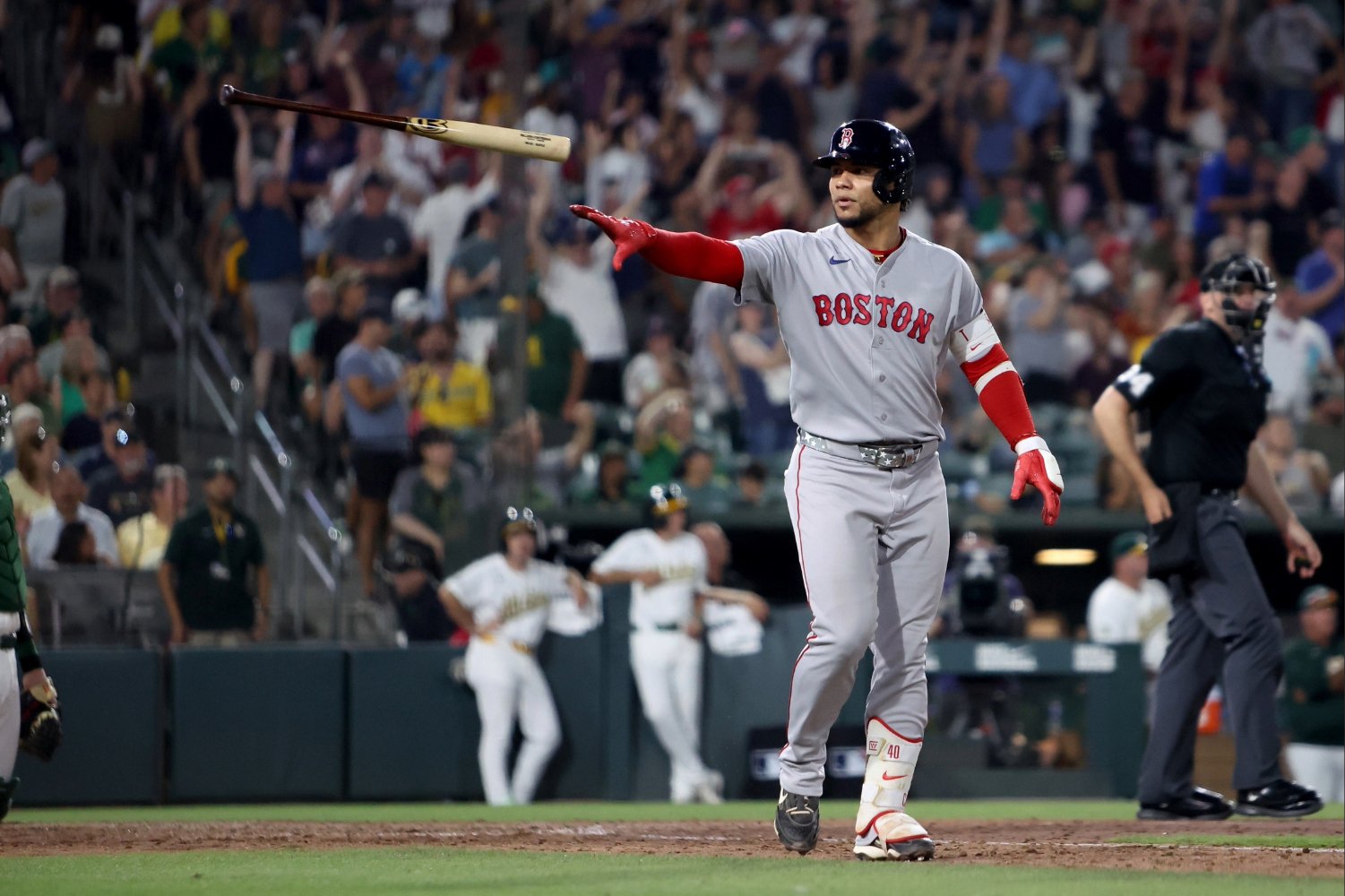 As the calendar turned to July and the Boston Red Sox boarded a plane heading west to Anaheim, fresh off a series loss at home to the Washington Nationals where they were outscored 18-3 in the final two games, it felt like everyone was ready to pull the plug. The Sox found themselves 11 games under .500, 14.5 games back in the AL East, and 6.5 games out of the third Wild Card spot needing to jump six teams to even sniff a postseason berth. The task seemed daunting and borderline impossible to say the least, but as the age-old saying goes; the rest is history. All Boston proceeded to do since was go on one of, if not the best, runs the club and MLB have ever seen; one that included a 15-game win streak, an .840 win percentage which was the best for a month in franchise history. They became the first team in MLB history to enter a calendar month 10+ games under .500 and leave it 7+ games over .500 via ESPN’s Sarah Langs. Likewise, they became the first team in MLB history to in one month win 20+ games, have a 15+ game winning streak, have 10+ comeback victories, sweep a 9+ game road trip, and have a .900+ road win percentage via OptaStats on X. For a more in-depth look at what has led to the Red Sox’s historic turnaround, let’s dive in to how the offense, rotation, and bullpen graded out for July. Grading Every Red Sox Player In July Offense For months, it’s been well documented that if the Red Sox were to make any noise this season, let alone turn this thing around, it was going to have to be the offense that, outside of Wilyer Abreu, Willson Contreras, and Ceddanne Rafaela, needed to start pulling its weight. July saw just that, as Boston’s offense finished within the top-10 league wide in AVG, OBP, SLG, OPS, wRC+, BABIP, BB%, Runs, Home Runs, Hits, Doubles, WAR, and AVG with RISP w/2 Outs. In other words, it was by far the team's best performance of the season. Perhaps the most surprising, and arguably refreshing, of all of the top-10 finishing stats came from the change in approach at the plate. The Sox ended July first in all of baseball in Sac Bunts with 13, an astonishing note when you realize they had 11 for the entire season prior to. This new “Next Man Up” approach and mentality the team took on not only allowed for the likes of Willson Contreras (1.117 OPS, 208 wRC+, 5 HR, 14 RBI) and Ceddanne Rafaela (.303/.321/.523/.844, 5 HR, 19 RBI) to continue their stellar seasons, but also allowed for the emergence of heroes new and old. If you were to pick an offensive MVP for the month and had to exclude Contreras and Rafaela, the favorite has to be Andruw Monasterio, who has had some hiccups in the field filling in as the full-time shortstop after Tsung-Che Cheng was optioned back to Worcester. And yet, he continued to come up with clutch hit after clutch hit in July, slashing .338/.413/.631/.1.044 with 12 of his 22 hits going for extra bases while also driving in 11. Some love should be thrown Cheng’s way as well while highlighting standout performances, as he managed to accumulate a .740 OPS and 115 wRC+ in just nine games while also making a few game saving plays at short during Boston’s historic 15-game win streak. July also saw Caleb Durbin continue to put his early season struggles behind him as he has quickly become one of the Red Sox's most well-rounded players, finishing the month with an .802 OPS, three homers, and nine runs batted in while factoring in stellar defense at third. Masataka Yoshida once again has started to make his usual second half push after slashing .300/.364/.450/.814 with two home runs and nine runs batted in, providing some stability to the top of Boston’s lineup. And even newcomer Jahmai Jones, whose addition seemed to be heavily questioned when he was brought in from the Tigers, has provided an immediate spark, homering in his first at-bat as a Red Sox en route to a 1.467 OPS and 244 wRC+ to go along with two home runs and five RBI in just nine games. As we move into August, the hope is the offense can continue to succeed with this more small-ball approach. Losing Curtis Mead to a fractured wrist after just two at-bats certainly doesn't help, though Adley Rutschman should provide a huge jolt when healthy. Getting Wilyer Abreu (90 wRC+) and Jarren Duran (40 wRC+) back on track wouldn’t hurt either. In what was a stunning and unprecedented turnaround that nobody could have foreseen happening, Boston’s offense gets its best grade of the season thus far, a well-deserved A-. Position Players Name March / April May June July Wilyer Abreu A+ B C+ C Tsung-Che Cheng N/A N/A C A+ Willson Contreras A A+ B A+ Jarren Duran F A D- D+ Caleb Durbin D+ D A+ A- Nate Eaton N/A N/A C+ F Romy González N/A N/A C D Brett Harris N/A N/A N/A C Jahmai Jones N/A N/A N/A A+ Andruw Monasterio C D+ D A+ Carlos Narváez C- C- F D- Ceddanne Rafaela B A A- A+ Anthony Seigler N/A N/A A+ C Nick Sogard N/A B- N/A C Connor Wong B- B A C Masataka Yoshida B- C+ D A- Rotation If you were to tell me early this season the Red Sox were going to go on an epic win streak that helped save their season and turn them into one of the most dangerous teams in baseball, there's no doubt I would have guessed the rotation had done its best Superman impression. And yet, while this turn through the rotation wasn’t bad by any means, it wasn’t as dominant as we’ve seen in past stretches either, leading to somewhat of a mixed bag of results. Boston’s best starter by far for July may have been its least likeliest, as rookie Jake Bennett burst onto the scene to the tune of a 4-1 record, 2.20 ERA, and .208 average against over a team high 32.2 innings pitched. The same cannot be said about fellow rookie Payton Tolle however, as although his strikeout numbers were still impressive, leading the rotation with a 32.7 K% in 23.2 innings, a six-run blow up over three innings versus the Nationals, a four-run outing over 5.2 against the Orioles, and a shortened 3.2 innings outing against the Mets stemming from an innings limit left Tolle with an uncharacteristically high 4.94 ERA for the month. As for the veterans, Sox fans got their long-awaited look at Patrick Sandoval for the first time, who put up a respectable 3.32 ERA over four starts, but is clearly being eased back into things given his just 19 innings of work. Ranger Suarez was limited to just three starts and 11.1 innings due to a groin strain, finishing with a below-average 4.76 ERA but elite 1.33 FIP. Then there’s the 36-year old Sonny Gray who may be starting to show his age a bit. While his first three starts of July against the Angels, Mets and Rays were excellent, posting a 1.50 ERA while allowing just three earned runs and 14 hits over 18 innings, his final two against the Blue Jays and Athletics were anything but. In those starts, Gray posted a 6.75 ERA over 12 innings, allowing 17 hits and nine earned runs. Add in three rough appearances for Eduardo Rivera (9.45 ERA on 6.2 IP) and the numbers don’t look as great as they have prior on paper. It will be interesting to see how the Red Sox handle the rotation going forward with some clear signs of possible fatigue starting to set in. For now though, the rotation still grades out at a respectable B+. Pitchers Name March / April May June July Jake Bennett N/A C A A+ Sonny Gray C+ A+ A+ B+ Eduardo Rivera A+ N/A N/A F Patrick Sandoval N/A N/A N/A B Ranger Suarez B+ B- A+ B- Payton Tolle B A+ B+ B- Bullpen Much like the offense, I was hard-pressed to find anything the Red Sox bullpen really struggled with for July, leading to top-10 finishes league wide in every statistical category except for strikeouts, where they finished 11th. Of those standout categories were the ones the Sox's 'pen lead all of baseball in, including a 1.75 ERA, 2.94 FIP, 89.2 LOB%, 13 Saves, and 2.1 WAR. The story starts with the fact that the Red Sox have assembled a four-headed behemoth of Tyron Guerrero, Justin Slaten, Garrett Whitlock, and Aroldis Chapman that all spell certain doom for any team having to face them in the later innings. While Guerrero (0.87 ERA, .211 AVG, 5.0 BB%), Whitlock (0.73 ERA, .147 AVG, 0.0 BB%) and Chapman (0.75 ERA, .209 AVG, 34.7 K%) all picked up where their dominance left off in June, the biggest boost to the pen came in Slaten once again finding his nasty side, racking up a 1.08 ERA and .161 average against in 8.1 innings after posting marks of 9.00 and .415 in nine innings in June. July also not only saw the returns to form of Jovani Moran (2.38 ERA, .154 AVG, 11.1 IP) and Greg Weissert, who outside of one three-run blow up versus Toronto managed to have nine scoreless appearances out of his 11 for the month, but the return of Brayan Bello to the big-league club. This time fully working as a reliever, Bello picked up right where he left off in terms of confusing fans and overpowering hitters tossing 13.2 innings out of the 'pen to the results of a 1-0 record, 0.66 ERA and .191 average against in three appearances. While there may be some signs of possible fatigue or slippage in the rotation, the same cannot be said about Boston’s bullpen that only seems to be growing stronger as the season moves forward. With all parties quite literally firing on all cylinders, the Sox's pen earns its best grade of the season by far with a resounding A+. Pitchers Name March / April May June July Brayan Bello F B+ F A+ Aroldis Chapman A A+ D A+ Danny Coulombe F F- A- C Alec Gamboa N/A A A A Tyron Guerrero N/A C A+ A+ Jovani Morán A C+ B A Tyler Samaniego A C- B N/A Justin Slaten A- B+ D A+ Ryan Watson F B- B+ B- Greg Weissert D- C- C A- Garrett Whitlock B+ B A+ A+
 -
Agreed. His all around skillset makes him a better candidate than Jones, although he's been solid too. And although I like Nate Eaton and wouldn't mind seeing him as the 4th OFer, White obviously has more of a pedigree and is another veteran voice in the clubhouse with plenty of experience
-
In a trade deadline that featured former first overall pick Adley Rutschman and lockdown southpaw Erik Miller being dealt to the Boston Red Sox, one might argue Craig Breslow’s most surprising deal of the day came when he acquired veteran right-handed hitting outfielder Eli White from the Atlanta Braves. At first glance, the move doesn’t look like it makes a ton of sense, as Boston chipped away at more of its pitching depth, sending 27-year old Tyler Uberstine back to the Braves. In return, they got a player that seems counterintuitive to have on the roster, given the outfield and designated hitter options that are already on the roster in the form of Wilyer Abreu, Jarren Duran, Nate Eaton, Romy Gonzalez, Jahmai Jones, Ceddanne Rafaela, and Masataka Yoshida. A more in-depth look at what White brings to the table, however, shows that he could turn out to be one of the more undervalued moves of the entire deadline. Who Eli White Is Replacing In Boston Before Tuesday night’s series opener against the White Sox, we learned that White would be activated and take the place of Gonzalez, who was subsequently being optioned to Worcester. For anyone who hasn’t been following since his return from the injured list, recovering from left shoulder surgery that caused him to miss all of spring training and 81 games this season, it’s been anything but smooth sailing. During his struggles at the major-league level, there was a growing belief Gonzalez may have needed a longer rehab stint, in which he only tallied 18 at-bats between Double-A Portland and Triple-A Worcester, leading to a .111/.238/.278/.516 line. Gonzalez most likely wanted to get back sooner rather than later to help Boston’s lineup that could’ve greatly benefitted from his right-handed bat that put up career numbers in 2025. While the desire to get back for his teammates and help the club anyway he could was a commendable one, it also may have been what led to his option back to the minors as things never clicked for Gonzalez, who outside of an occasional clutch pinch-hit performance, looked continuously overmatched at the plate. He posted a ghastly .185 average, .572 OPS, 33.8 Whiff%, and a 37.8 Hard-Hit%, a far cry from his 57.3% in 2025 that had him sitting in the 99th percentile. The move from Gonzalez to White may make more sense when you look at it from a versatility standpoint as well. While White has primarily featured as an outfielder throughout his career, accumulating 1945.1 innings in 297 games across all three positions, he does have four games played at both second and first base, with 28 innings played at second and nine at first. The Red Sox will more than likely look to Nick Sogard and Anthony Seigler to man those positions with Gonzalez no longer on the roster, but it’s good to know White has the experience to be slotted into either spot if he is desperately needed. Eli White Might Actually Be A Solution To Red Sox's Outfield Logjam Speaking of the outfield, one would think a big reason why White was brought onboard is to give both Abreu and Rafaela some breathers down the stretch as the Red Sox continue their postseason push. In the case of Rafaela, while he continues to be Boston’s most consistent hitter not named Willson Contreras, you would have to image the coaching staff will be keeping a close eye on him as the second half progresses to avoid another late season nosedive like he had in 2025. Last year, he went from a pre-All-Star-Break line of .271/.314/.483/.797 with 14 HR, 48 RBI, and a wRC+ of 115, to slashing .218/.268/.319/.587 with just two homers, 15 RBI, and a 59 wRC+. As for Abreu, he may already be in the midst of his own 2025 Rafaela-esque drop off. While he has shown no signs of slowing down in the power department, with a .571 SLG, .853 OPS, and .371 ISO in the second half as opposed to his .428, .759, and .167 showings in the first, he has seen a massive decline in his batting average (.261 to .200), on base percentage (.332 to .282), BABIP (.306 to .136) and an increase in his K% (20.5% to 23.1%). Now, while the decrease in production from Abreu isn’t as drastic as Rafaela’s was a season ago, there have been numerous games where he just hasn’t looked right at the plate—borderline tired when looking for a word to use to describe it—even prompting NESN’s Lou Merloni to call for an occasional off day here and there. The addition of White gives the Red Sox a better option to do that with than they had prior to the trade. Nothing against either Jones or Yoshida, but with White bringing eight defensive runs saved (five in RF) and two outs above average as opposed to Yoshida’s negative three in both and Jones’ negative one defensive runs saved and negative two outs above average. There is a clear and obvious choice as to who should be patrolling right when Abreu needs a breather. Eli White's True Value: A Menace on the Basepaths For the third and final reason Eli White is on this roster, let me ask Red Sox fans to remember the names Dave Roberts and Quintin Berry, although one of those is probably easier to remember than the other. That of course being Roberts, who during the 2004 playoffs appeared in three games for the Sox as a pinch runner, scored two runs, and stole maybe the most famous theft of second in MLB history, helping the Sox end their 86-year championship drought. As for Berry, he too appeared in three playoff games and stole three bases en route to the franchise’s eighth World Series title in 2013. All of this is a long-winded way to say Eli White could very well be on this team come playoff time if the Sox can get there, as a professional pinch runner thanks to a 30.3 mph sprint speed that has him in the 99th percentile. This is a role that some wondered if spring training standout Braiden Ward might be able to fill if he ended up as a September call-up that the Red Sox turned to. The idea doesn’t sound so far-fetched when you remember just this season, Ward broke the spring training record for the most steals in a campaign with 19 and also realize that he has stolen 50 bases at least in four of the last five seasons in the minors. Of course, there may be some who are weary to trust Ward in that spot given his lack of major-league experience, leading to the question of if Nate Eaton could just handle that job. However, in the case of Eaton, it may just come down to the fact that White has been a better, more dependable bat this year, with a .231/.283/.403/.686 line and 21.4 K% as opposed to Eaton’s .125/.282/.281/.563 line and 30.8 K%. It will be interesting to see how the Red Sox deploy White, and how often they plan to do so as the reports of returns for Trevor Story, Roman Anthony, Curtis Mead, and Isiah Kiner-Falefa begin to ramp up. For now, though, they will surely benefit from the age-old adage that it never hurts to have too much depth. View full article
-
The Curious Case of Eli White: Why Exactly Is He In Boston?
Ryan Salvaggio posted an article in Red Sox
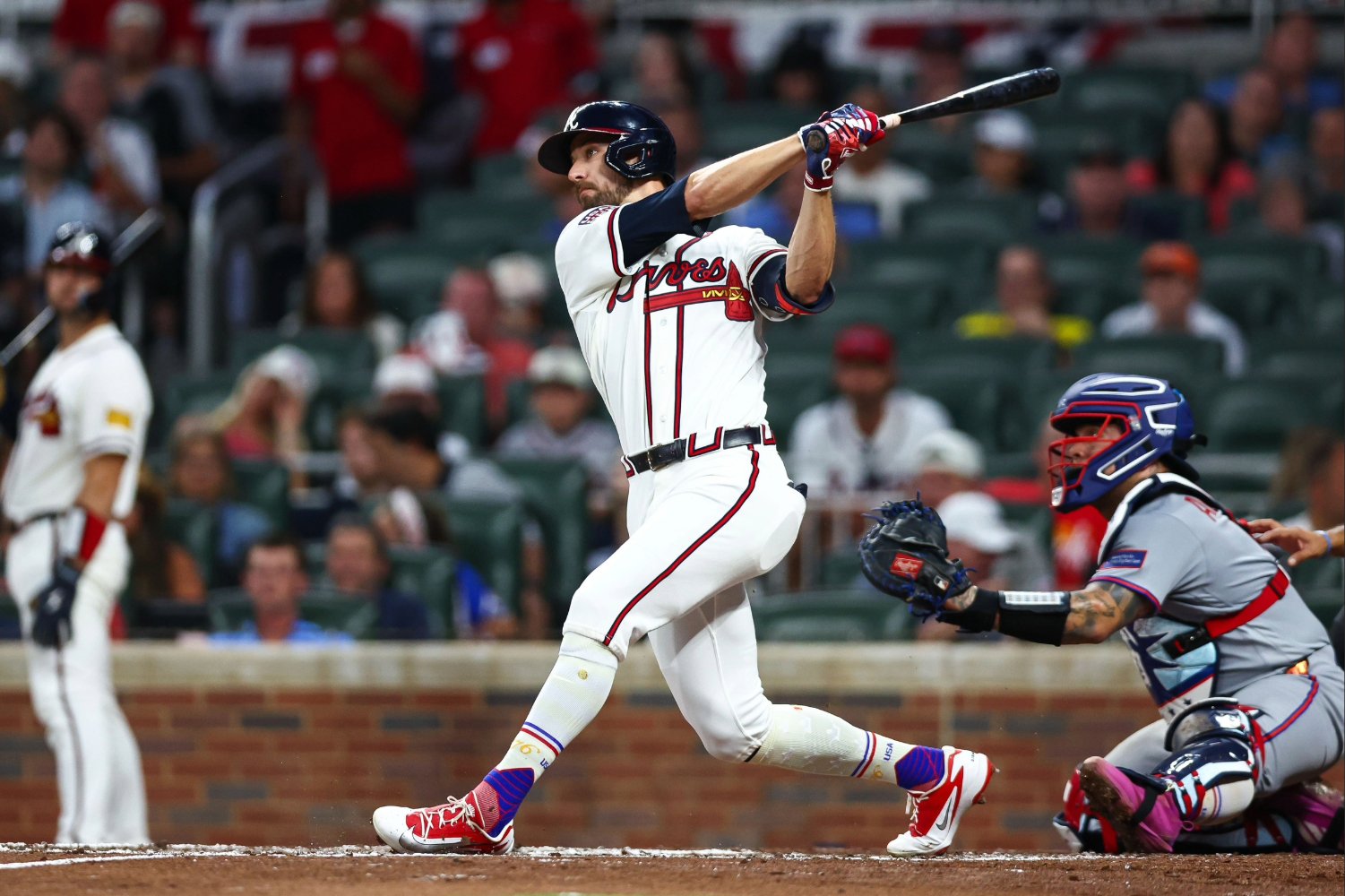 In a trade deadline that featured former first overall pick Adley Rutschman and lockdown southpaw Erik Miller being dealt to the Boston Red Sox, one might argue Craig Breslow’s most surprising deal of the day came when he acquired veteran right-handed hitting outfielder Eli White from the Atlanta Braves. At first glance, the move doesn’t look like it makes a ton of sense, as Boston chipped away at more of its pitching depth, sending 27-year old Tyler Uberstine back to the Braves. In return, they got a player that seems counterintuitive to have on the roster, given the outfield and designated hitter options that are already on the roster in the form of Wilyer Abreu, Jarren Duran, Nate Eaton, Romy Gonzalez, Jahmai Jones, Ceddanne Rafaela, and Masataka Yoshida. A more in-depth look at what White brings to the table, however, shows that he could turn out to be one of the more undervalued moves of the entire deadline. Who Eli White Is Replacing In Boston Before Tuesday night’s series opener against the White Sox, we learned that White would be activated and take the place of Gonzalez, who was subsequently being optioned to Worcester. For anyone who hasn’t been following since his return from the injured list, recovering from left shoulder surgery that caused him to miss all of spring training and 81 games this season, it’s been anything but smooth sailing. During his struggles at the major-league level, there was a growing belief Gonzalez may have needed a longer rehab stint, in which he only tallied 18 at-bats between Double-A Portland and Triple-A Worcester, leading to a .111/.238/.278/.516 line. Gonzalez most likely wanted to get back sooner rather than later to help Boston’s lineup that could’ve greatly benefitted from his right-handed bat that put up career numbers in 2025. While the desire to get back for his teammates and help the club anyway he could was a commendable one, it also may have been what led to his option back to the minors as things never clicked for Gonzalez, who outside of an occasional clutch pinch-hit performance, looked continuously overmatched at the plate. He posted a ghastly .185 average, .572 OPS, 33.8 Whiff%, and a 37.8 Hard-Hit%, a far cry from his 57.3% in 2025 that had him sitting in the 99th percentile. The move from Gonzalez to White may make more sense when you look at it from a versatility standpoint as well. While White has primarily featured as an outfielder throughout his career, accumulating 1945.1 innings in 297 games across all three positions, he does have four games played at both second and first base, with 28 innings played at second and nine at first. The Red Sox will more than likely look to Nick Sogard and Anthony Seigler to man those positions with Gonzalez no longer on the roster, but it’s good to know White has the experience to be slotted into either spot if he is desperately needed. Eli White Might Actually Be A Solution To Red Sox's Outfield Logjam Speaking of the outfield, one would think a big reason why White was brought onboard is to give both Abreu and Rafaela some breathers down the stretch as the Red Sox continue their postseason push. In the case of Rafaela, while he continues to be Boston’s most consistent hitter not named Willson Contreras, you would have to image the coaching staff will be keeping a close eye on him as the second half progresses to avoid another late season nosedive like he had in 2025. Last year, he went from a pre-All-Star-Break line of .271/.314/.483/.797 with 14 HR, 48 RBI, and a wRC+ of 115, to slashing .218/.268/.319/.587 with just two homers, 15 RBI, and a 59 wRC+. As for Abreu, he may already be in the midst of his own 2025 Rafaela-esque drop off. While he has shown no signs of slowing down in the power department, with a .571 SLG, .853 OPS, and .371 ISO in the second half as opposed to his .428, .759, and .167 showings in the first, he has seen a massive decline in his batting average (.261 to .200), on base percentage (.332 to .282), BABIP (.306 to .136) and an increase in his K% (20.5% to 23.1%). Now, while the decrease in production from Abreu isn’t as drastic as Rafaela’s was a season ago, there have been numerous games where he just hasn’t looked right at the plate—borderline tired when looking for a word to use to describe it—even prompting NESN’s Lou Merloni to call for an occasional off day here and there. The addition of White gives the Red Sox a better option to do that with than they had prior to the trade. Nothing against either Jones or Yoshida, but with White bringing eight defensive runs saved (five in RF) and two outs above average as opposed to Yoshida’s negative three in both and Jones’ negative one defensive runs saved and negative two outs above average. There is a clear and obvious choice as to who should be patrolling right when Abreu needs a breather. Eli White's True Value: A Menace on the Basepaths For the third and final reason Eli White is on this roster, let me ask Red Sox fans to remember the names Dave Roberts and Quintin Berry, although one of those is probably easier to remember than the other. That of course being Roberts, who during the 2004 playoffs appeared in three games for the Sox as a pinch runner, scored two runs, and stole maybe the most famous theft of second in MLB history, helping the Sox end their 86-year championship drought. As for Berry, he too appeared in three playoff games and stole three bases en route to the franchise’s eighth World Series title in 2013. All of this is a long-winded way to say Eli White could very well be on this team come playoff time if the Sox can get there, as a professional pinch runner thanks to a 30.3 mph sprint speed that has him in the 99th percentile. This is a role that some wondered if spring training standout Braiden Ward might be able to fill if he ended up as a September call-up that the Red Sox turned to. The idea doesn’t sound so far-fetched when you remember just this season, Ward broke the spring training record for the most steals in a campaign with 19 and also realize that he has stolen 50 bases at least in four of the last five seasons in the minors. Of course, there may be some who are weary to trust Ward in that spot given his lack of major-league experience, leading to the question of if Nate Eaton could just handle that job. However, in the case of Eaton, it may just come down to the fact that White has been a better, more dependable bat this year, with a .231/.283/.403/.686 line and 21.4 K% as opposed to Eaton’s .125/.282/.281/.563 line and 30.8 K%. It will be interesting to see how the Red Sox deploy White, and how often they plan to do so as the reports of returns for Trevor Story, Roman Anthony, Curtis Mead, and Isiah Kiner-Falefa begin to ramp up. For now, though, they will surely benefit from the age-old adage that it never hurts to have too much depth.
 -
Yeah in the moment it was incredibly frustrating they couldn't get him, especially for those 30-45 seconds it was tweeted out they did and no one knew what was going on. But now that it's come out that their offer was Tolle AND Arias I'm glad Minnesota was stupid and declined
-
 When The Police said they were “sending out an SOS to the world” their hope was that someone would get their message in a bottle. The message I’m sending out to Craig Breslow on behalf of all Boston Red Sox fans in the form of an SOS is a simple one: "Secure One Starter." After witnessing the Red Sox end up with Dustin May in the dying seconds of the MLB trade deadline last year, it was refreshing to see Craig Breslow take a more proactive approach in addressing one of the club’s biggest needs this season, acquiring right-handed power bat Curtis Mead from the Nationals in exchange for left-handed starter Connelly Early. While a risky one given that this is Mead’s first true breakout season and Early had quickly developed into a fan-favorite pitcher, the move showed Breslow was willing to be more on the attack rather than waiting around for the perfect deal to develop only to end up with scraps when it’s all said and done. [Though, of course, injury news regarding both players has sent that deal into baseball purgatory.] As fans and reporters now speculate what could be coming next for the Sox, both Jeff Passan and Alex Speier have given some insights into their next target, with Passan taking to X to answer a fan trade question with a somewhat vague “there will be more”, and Speier joining the NESN booth during Monday night’s game versus the Athletics to inform viewers that the team is interested in pitching, specifically rotation depth, which they were already looking into before trading Early. The idea of adding to the bullpen for some needed depth was also brought up in the discussion between Speier and NESN’s Mike Monaco and Lou Merloni, prompting Merloni to agree and remind viewers that you can never have too many bullpen arms. And while that statement does ring true and is a definite area the Sox should look to add to, their next pivotal addition should come via adding another arm to the starting rotation. While some fans may think that a group that has featured arguably the best five-man attack in baseball in Sonny Gray, Ranger Suarez, Payton Tolle, Jake Bennett, and Patrick Sandoval doesn’t need to be the primary focus over adding another bat— specifically at the shortstop or catcher positions—or taking some stress off the likes of Aroldis Chapman and Garrett Whitlock with an acquisition for the back-end of the bullpen, it never hurts to have more pitching. There are plenty of examples to point to as to why Breslow’s next move should come via adding another arm, preferably of the solidified veteran variety, to said rotation. For starters (no pun intended), it would be in the club’s best interest to avoid another situation like 2025, where the Red Sox were in need of rotation depth and Breslow, after balking at adding Joe Ryan or Merrill Kelly, had to settle for the disaster that was Dustin May. Sure it gave the Sox depth, but once he was injured, joining the likes of Richard Fitts, Hunter Dobbins, Tanner Houck, and eventually Lucas Giolito, it left Boston heading into their playoff series against the Yankees with Garrett Crochet and a prayer. This time around, the options are definitely better equipped in terms of experience, with Ranger Suarez (42.2 postseason innings) and Sonny Gray (30.1 innings) better suited to ease in postseason newcomers Tolle, Sandoval, and Bennett, who have one-third of an inning pitched in the playoffs between the three. With age comes experience, and an additional rotation arm can ease the workload of Gray, something that Chad Tracy and Andrew Bailey will surely like to do for the 36-year old who has been a workhorse thus far, tallying 106.2 innings over 19 starts. When it comes to Suarez, his concerns lie in the health department, an area where the Red Sox have already felt the impact with uncertain futures for Tanner Houck, Kutter Crawford, Johan Oviedo, and most importantly Crochet, who Speier says could come back and pitch out of the bullpen toward the end of the season, if he comes back at all. Suarez has already been on two IL trips thanks to hamstring and groin injuries, so much like Gray, he could benefit from a smaller workload to stay fresh for the postseason push. There's also the impending threat of an innings limit for most of the young contingent in the rotation, all of whom have already surpassed or are close to resetting their career high in terms of workload. When it comes to evaluating and ultimately choosing the arm he best thinks suits Boston’s rotation, Breslow necessarily doesn’t need to hit a massive home run and mortgage the future for a ‘1C’ type to replace Crochet and supplement Gray and Suarez. However, he also can’t once again panic or settle for a May type that ends up not helping the club in any capacity either. How adequately the front office performs that balancing act could determine the fate of the 2026 season.
 -
When The Police said they were “sending out an SOS to the world” their hope was that someone would get their message in a bottle. The message I’m sending out to Craig Breslow on behalf of all Boston Red Sox fans in the form of an SOS is a simple one: "Secure One Starter." After witnessing the Red Sox end up with Dustin May in the dying seconds of the MLB trade deadline last year, it was refreshing to see Craig Breslow take a more proactive approach in addressing one of the club’s biggest needs this season, acquiring right-handed power bat Curtis Mead from the Nationals in exchange for left-handed starter Connelly Early. While a risky one given that this is Mead’s first true breakout season and Early had quickly developed into a fan-favorite pitcher, the move showed Breslow was willing to be more on the attack rather than waiting around for the perfect deal to develop only to end up with scraps when it’s all said and done. [Though, of course, injury news regarding both players has sent that deal into baseball purgatory.] As fans and reporters now speculate what could be coming next for the Sox, both Jeff Passan and Alex Speier have given some insights into their next target, with Passan taking to X to answer a fan trade question with a somewhat vague “there will be more”, and Speier joining the NESN booth during Monday night’s game versus the Athletics to inform viewers that the team is interested in pitching, specifically rotation depth, which they were already looking into before trading Early. The idea of adding to the bullpen for some needed depth was also brought up in the discussion between Speier and NESN’s Mike Monaco and Lou Merloni, prompting Merloni to agree and remind viewers that you can never have too many bullpen arms. And while that statement does ring true and is a definite area the Sox should look to add to, their next pivotal addition should come via adding another arm to the starting rotation. While some fans may think that a group that has featured arguably the best five-man attack in baseball in Sonny Gray, Ranger Suarez, Payton Tolle, Jake Bennett, and Patrick Sandoval doesn’t need to be the primary focus over adding another bat— specifically at the shortstop or catcher positions—or taking some stress off the likes of Aroldis Chapman and Garrett Whitlock with an acquisition for the back-end of the bullpen, it never hurts to have more pitching. There are plenty of examples to point to as to why Breslow’s next move should come via adding another arm, preferably of the solidified veteran variety, to said rotation. For starters (no pun intended), it would be in the club’s best interest to avoid another situation like 2025, where the Red Sox were in need of rotation depth and Breslow, after balking at adding Joe Ryan or Merrill Kelly, had to settle for the disaster that was Dustin May. Sure it gave the Sox depth, but once he was injured, joining the likes of Richard Fitts, Hunter Dobbins, Tanner Houck, and eventually Lucas Giolito, it left Boston heading into their playoff series against the Yankees with Garrett Crochet and a prayer. This time around, the options are definitely better equipped in terms of experience, with Ranger Suarez (42.2 postseason innings) and Sonny Gray (30.1 innings) better suited to ease in postseason newcomers Tolle, Sandoval, and Bennett, who have one-third of an inning pitched in the playoffs between the three. With age comes experience, and an additional rotation arm can ease the workload of Gray, something that Chad Tracy and Andrew Bailey will surely like to do for the 36-year old who has been a workhorse thus far, tallying 106.2 innings over 19 starts. When it comes to Suarez, his concerns lie in the health department, an area where the Red Sox have already felt the impact with uncertain futures for Tanner Houck, Kutter Crawford, Johan Oviedo, and most importantly Crochet, who Speier says could come back and pitch out of the bullpen toward the end of the season, if he comes back at all. Suarez has already been on two IL trips thanks to hamstring and groin injuries, so much like Gray, he could benefit from a smaller workload to stay fresh for the postseason push. There's also the impending threat of an innings limit for most of the young contingent in the rotation, all of whom have already surpassed or are close to resetting their career high in terms of workload. When it comes to evaluating and ultimately choosing the arm he best thinks suits Boston’s rotation, Breslow necessarily doesn’t need to hit a massive home run and mortgage the future for a ‘1C’ type to replace Crochet and supplement Gray and Suarez. However, he also can’t once again panic or settle for a May type that ends up not helping the club in any capacity either. How adequately the front office performs that balancing act could determine the fate of the 2026 season. View full article
-
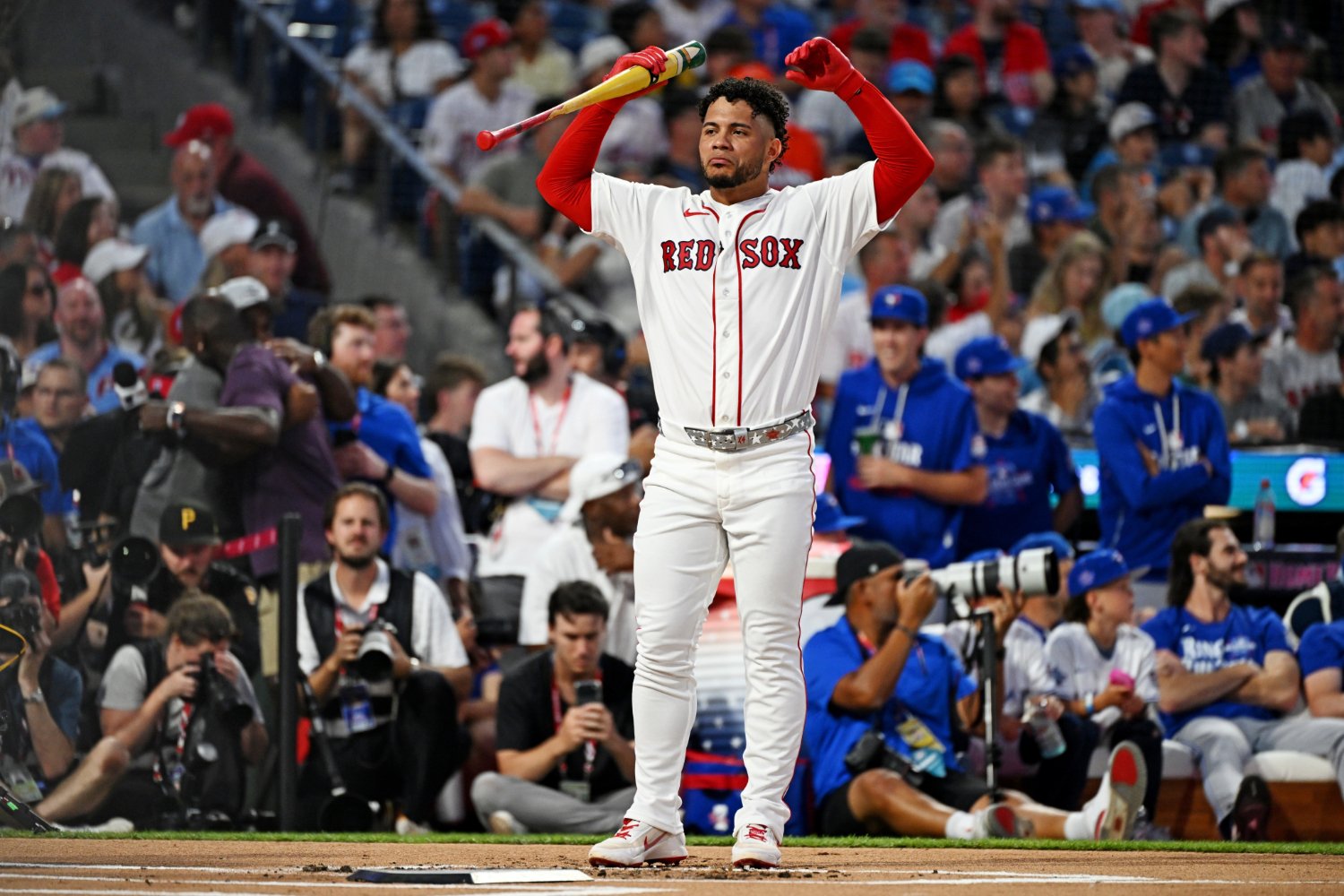 Major League Baseball’s All-Star festivities have come and gone, and while the game itself may have been a bit of a snooze-fest to those who prefer offensive slugfests to a pitching-and-defense clinic, one thing we all can agree is that the removal of the clock in the Home Run Derby was one of the smartest decisions the league has made in recent years. This coming from someone who may be in the minority of actually liking the clock when it was first implemented way back in 2015, leading to one of the most electric and entertaining derby finishes in league history when Todd Frazier knocked off Joc Pederson with a homer in the final seconds to win the title. After watching Jordan Walker’s six home runs at sudden death to quite literally walk-off with the win over hometown favorite Kyle Schwarber though, I have no doubt saying that performance triumphs the Frazier one by a mile. Clock or no clock, Red Sox fans had plenty of reasons to tune in regardless with the inclusion of Willson Contreras, the first Boston participant since 2011 when Adrian Gonzalez and reigning derby champ David Ortiz both took part in the event. Contreras did not disappoint, as not only did he start the event off with a literal bang — hitting 13 homers with three being the longest of the first round, including a 490-foot bomb that fell short to only Junior Caminero’s 491-footer in round two — but also embracing his villain role so much as to almost knock off the clear fan favorite Schwarber in the second round, falling 9-8 to the Phillies and former Red Sox superstar. With Contreras’ inclusion, there will surely be fans that are convinced his swing is now “messed up” and his production will take a dip in the second half thanks to the alleged “Home Run Derby Curse.” The question is though, is that “curse” just a myth? Or is there actually some merit behind it that fans should be wary of for a player who has been, and will continue to need to be the driving force of getting Boston to a playoff spot? Second Half Spotlights: Do Previous Participants Give Any Insights into a ‘Derby Curse?’ When looking into the question of “Does the Home Run Derby ruin swings and cause second half slumps?”, it’s important to note that the “second half” of the baseball season doesn’t even technically exist. Take this year's Red Sox schedule for example; the true halfway mark occurred on Saturday, June 27 with their 4-1 win over the Yankees, a date that put them exactly at the 81-game mark. When the Sox return from the break on Friday, July 17, there will be 68 games remaining as opposed to the 94 that already took place. Take a step back to last year, and the Red Sox first and second halves had a 98/64 game split. In 2024, it was a 96/66 split, and if you want to go all the way back to 2011 when they had their last two participants in Gonzalez and Ortiz, that season saw a little bit of a better distribution of 90 first-half games to 72 second-half ones, but that's still not a truly even 81-81 game split. That means samples are smaller in the second half, and the opportunity to total big home run and extra-base hits numbers is lower. Below is a summary of the 2025 and 2024 Home Run Derby participants along with their first and second half splits, and any noteworthy injuries, absences, and or storylines that may have occurred: 2025 Derby Participants Looking at the 2025 derby participants, a few noticeable trends emerge. For starters, while Cal Raleigh’s numbers do drop off compared to his first half ones, the 22 homers, .526 slug, .297 ISO and 140 wRC+ don’t indicate any sort of slump or curse by any means. Keep in mind at that time, Raleigh was also attempting to (and did) break the all-time single season home run records for a catcher, switch-hitter, and Mariners player, adding a more psychological factor/pressure into the equation as well. Then there are the cases of Matt Olson and Junior Caminero, who not only continued to put up consistent numbers half to half, but were actually better statistically when it came to their average, on-base, slugging, ISO, and wRC+ totals, showing no signs of any sort of HR Derby fatigue. Brent Rooker is really the only player you could make the case for when it comes to the derby affecting his second half performance with how his numbers dropped off. As for the dip in Oneil Cruz’s, Byron Buxton’s, and James Wood’s production, all three can be attributed to injuries that were suffered during the second half rather than in the derby itself, as Cruz missed 13 games due to head (11) and ankle (2) injuries, Buxton 14 to side (13) and knee (1) ailments, and Wood, who although didn’t miss any significant time, is on record for saying nagging knee and quadriceps soreness helped factor into his rough second half. 2024 Derby Participants A review of the 2024 derby participants shows a similar trend of no player really being all that affected by any sort of derby curse. Teoscar Hernandez, Bobby Witt Jr., Jose Ramirez and Pete Alonso all followed similar paths to Caminero and Olson in using the derby to springboard better performances across multiple stats rather than just home runs and RBIs. Adolis Garcia and Gunnar Henderson may have seen significant drops in their home run numbers, indicating a bit of a power outage, but again showed solid enough numbers to not raise any red flags of a definitive curse. As for Alec Bohm, he falls into the same category of 2025’s Buxton and Cruz, missing 14 games throughout August and September with a hand injury that significantly hampered his second-half production. Recent Red Sox Participants For a look that hits closer to home in terms of any sort of curse affecting the Red Sox, you of course have to start with that infamous 2011 season for the most recent example — one that may actually help those who argue the derby does mess with players’ swings and production. In the midst of everything else that went wrong that year, two key contributors to that collapse were the falloffs in home run and RBI production from David Ortiz and derby runner-up Adrian Gonzalez. The argument for any sort of curse quickly falls apart, though, when you factor in that Ortiz was dealing with fatigue, soreness, and back spasms during that second half along with the fact that both players numbers didn’t completely fall off a cliff. Ortiz still managed to slash .315/.409/.527 with a wRC+ of 150 and Gonzalez posted a 137 wRC+ with a line of .317/.404/.489. Those are elite numbers. Not to mention once again that everything that could go wrong, did go wrong with that team, leaving some to wonder if the whole team had been cursed rather than just two derby participants. In terms of Ortiz, who took part in the event four times prior, including a victory in 2010, his second half production had never really taken a dip and was actually more consistent and at times better than any other player that’s been looked at thus far (which may be an unfair comparison to make given the level of hitter Ortiz was throughout his illustrious Hall of Fame career). What’s in Store for Willson Contreras in the Second Half? By now it seems pretty clear that the answer to the question of “Does the Home Run Derby ruin a player's swing?” is a resounding "no," meaning Red Sox fans should have nothing to worry about when it comes to Willson Contreras’ production at the plate. However, that isn’t where the concerns with Contreras should lay given his history in the league. In the 10 years he spent prior to Boston, excluding the 2020 pandemic-shortened year where there was no second half to the season, Contreras has missed a total of 180 games (not factoring in regular off-days). The makeup of these games missed include: 174 due to an injury, five due to suspension, and one from an undisclosed circumstance last season with St. Louis. Looking at his splits year-to-year, Contreras has proven to be a pretty consistent player all things considered, with the only two really glaring drop-offs occurring in 2018 and 2019 with the Cubs where his wRC+ figures plummeted from 123 to 63 and 139 to 90. As great as Contreras may be, his Achilles heel comes in the age-old saying: “The best ability is availability.” When the Sox return to action on Friday, kicking off the second half with a doubleheader against the Tampa Bay Rays, Contreras will be using the first to serve the fifth and final game of his reduced suspension stemming from his benches-clearing incident with Nationals starter Cade Cavalli. Once he is officially back, the All-Star slugger will look to make good on his comments of loving Boston and wanting to finish his career here trying to build off a superb first half that saw him finish just four home runs and 19 RBIs shy of his career highs.
 -
Major League Baseball’s All-Star festivities have come and gone, and while the game itself may have been a bit of a snooze-fest to those who prefer offensive slugfests to a pitching-and-defense clinic, one thing we all can agree is that the removal of the clock in the Home Run Derby was one of the smartest decisions the league has made in recent years. This coming from someone who may be in the minority of actually liking the clock when it was first implemented way back in 2015, leading to one of the most electric and entertaining derby finishes in league history when Todd Frazier knocked off Joc Pederson with a homer in the final seconds to win the title. After watching Jordan Walker’s six home runs at sudden death to quite literally walk-off with the win over hometown favorite Kyle Schwarber though, I have no doubt saying that performance triumphs the Frazier one by a mile. Clock or no clock, Red Sox fans had plenty of reasons to tune in regardless with the inclusion of Willson Contreras, the first Boston participant since 2011 when Adrian Gonzalez and reigning derby champ David Ortiz both took part in the event. Contreras did not disappoint, as not only did he start the event off with a literal bang — hitting 13 homers with three being the longest of the first round, including a 490-foot bomb that fell short to only Junior Caminero’s 491-footer in round two — but also embracing his villain role so much as to almost knock off the clear fan favorite Schwarber in the second round, falling 9-8 to the Phillies and former Red Sox superstar. With Contreras’ inclusion, there will surely be fans that are convinced his swing is now “messed up” and his production will take a dip in the second half thanks to the alleged “Home Run Derby Curse.” The question is though, is that “curse” just a myth? Or is there actually some merit behind it that fans should be wary of for a player who has been, and will continue to need to be the driving force of getting Boston to a playoff spot? Second Half Spotlights: Do Previous Participants Give Any Insights into a ‘Derby Curse?’ When looking into the question of “Does the Home Run Derby ruin swings and cause second half slumps?”, it’s important to note that the “second half” of the baseball season doesn’t even technically exist. Take this year's Red Sox schedule for example; the true halfway mark occurred on Saturday, June 27 with their 4-1 win over the Yankees, a date that put them exactly at the 81-game mark. When the Sox return from the break on Friday, July 17, there will be 68 games remaining as opposed to the 94 that already took place. Take a step back to last year, and the Red Sox first and second halves had a 98/64 game split. In 2024, it was a 96/66 split, and if you want to go all the way back to 2011 when they had their last two participants in Gonzalez and Ortiz, that season saw a little bit of a better distribution of 90 first-half games to 72 second-half ones, but that's still not a truly even 81-81 game split. That means samples are smaller in the second half, and the opportunity to total big home run and extra-base hits numbers is lower. Below is a summary of the 2025 and 2024 Home Run Derby participants along with their first and second half splits, and any noteworthy injuries, absences, and or storylines that may have occurred: 2025 Derby Participants Looking at the 2025 derby participants, a few noticeable trends emerge. For starters, while Cal Raleigh’s numbers do drop off compared to his first half ones, the 22 homers, .526 slug, .297 ISO and 140 wRC+ don’t indicate any sort of slump or curse by any means. Keep in mind at that time, Raleigh was also attempting to (and did) break the all-time single season home run records for a catcher, switch-hitter, and Mariners player, adding a more psychological factor/pressure into the equation as well. Then there are the cases of Matt Olson and Junior Caminero, who not only continued to put up consistent numbers half to half, but were actually better statistically when it came to their average, on-base, slugging, ISO, and wRC+ totals, showing no signs of any sort of HR Derby fatigue. Brent Rooker is really the only player you could make the case for when it comes to the derby affecting his second half performance with how his numbers dropped off. As for the dip in Oneil Cruz’s, Byron Buxton’s, and James Wood’s production, all three can be attributed to injuries that were suffered during the second half rather than in the derby itself, as Cruz missed 13 games due to head (11) and ankle (2) injuries, Buxton 14 to side (13) and knee (1) ailments, and Wood, who although didn’t miss any significant time, is on record for saying nagging knee and quadriceps soreness helped factor into his rough second half. 2024 Derby Participants A review of the 2024 derby participants shows a similar trend of no player really being all that affected by any sort of derby curse. Teoscar Hernandez, Bobby Witt Jr., Jose Ramirez and Pete Alonso all followed similar paths to Caminero and Olson in using the derby to springboard better performances across multiple stats rather than just home runs and RBIs. Adolis Garcia and Gunnar Henderson may have seen significant drops in their home run numbers, indicating a bit of a power outage, but again showed solid enough numbers to not raise any red flags of a definitive curse. As for Alec Bohm, he falls into the same category of 2025’s Buxton and Cruz, missing 14 games throughout August and September with a hand injury that significantly hampered his second-half production. Recent Red Sox Participants For a look that hits closer to home in terms of any sort of curse affecting the Red Sox, you of course have to start with that infamous 2011 season for the most recent example — one that may actually help those who argue the derby does mess with players’ swings and production. In the midst of everything else that went wrong that year, two key contributors to that collapse were the falloffs in home run and RBI production from David Ortiz and derby runner-up Adrian Gonzalez. The argument for any sort of curse quickly falls apart, though, when you factor in that Ortiz was dealing with fatigue, soreness, and back spasms during that second half along with the fact that both players numbers didn’t completely fall off a cliff. Ortiz still managed to slash .315/.409/.527 with a wRC+ of 150 and Gonzalez posted a 137 wRC+ with a line of .317/.404/.489. Those are elite numbers. Not to mention once again that everything that could go wrong, did go wrong with that team, leaving some to wonder if the whole team had been cursed rather than just two derby participants. In terms of Ortiz, who took part in the event four times prior, including a victory in 2010, his second half production had never really taken a dip and was actually more consistent and at times better than any other player that’s been looked at thus far (which may be an unfair comparison to make given the level of hitter Ortiz was throughout his illustrious Hall of Fame career). What’s in Store for Willson Contreras in the Second Half? By now it seems pretty clear that the answer to the question of “Does the Home Run Derby ruin a player's swing?” is a resounding "no," meaning Red Sox fans should have nothing to worry about when it comes to Willson Contreras’ production at the plate. However, that isn’t where the concerns with Contreras should lay given his history in the league. In the 10 years he spent prior to Boston, excluding the 2020 pandemic-shortened year where there was no second half to the season, Contreras has missed a total of 180 games (not factoring in regular off-days). The makeup of these games missed include: 174 due to an injury, five due to suspension, and one from an undisclosed circumstance last season with St. Louis. Looking at his splits year-to-year, Contreras has proven to be a pretty consistent player all things considered, with the only two really glaring drop-offs occurring in 2018 and 2019 with the Cubs where his wRC+ figures plummeted from 123 to 63 and 139 to 90. As great as Contreras may be, his Achilles heel comes in the age-old saying: “The best ability is availability.” When the Sox return to action on Friday, kicking off the second half with a doubleheader against the Tampa Bay Rays, Contreras will be using the first to serve the fifth and final game of his reduced suspension stemming from his benches-clearing incident with Nationals starter Cade Cavalli. Once he is officially back, the All-Star slugger will look to make good on his comments of loving Boston and wanting to finish his career here trying to build off a superb first half that saw him finish just four home runs and 19 RBIs shy of his career highs. View full article
-
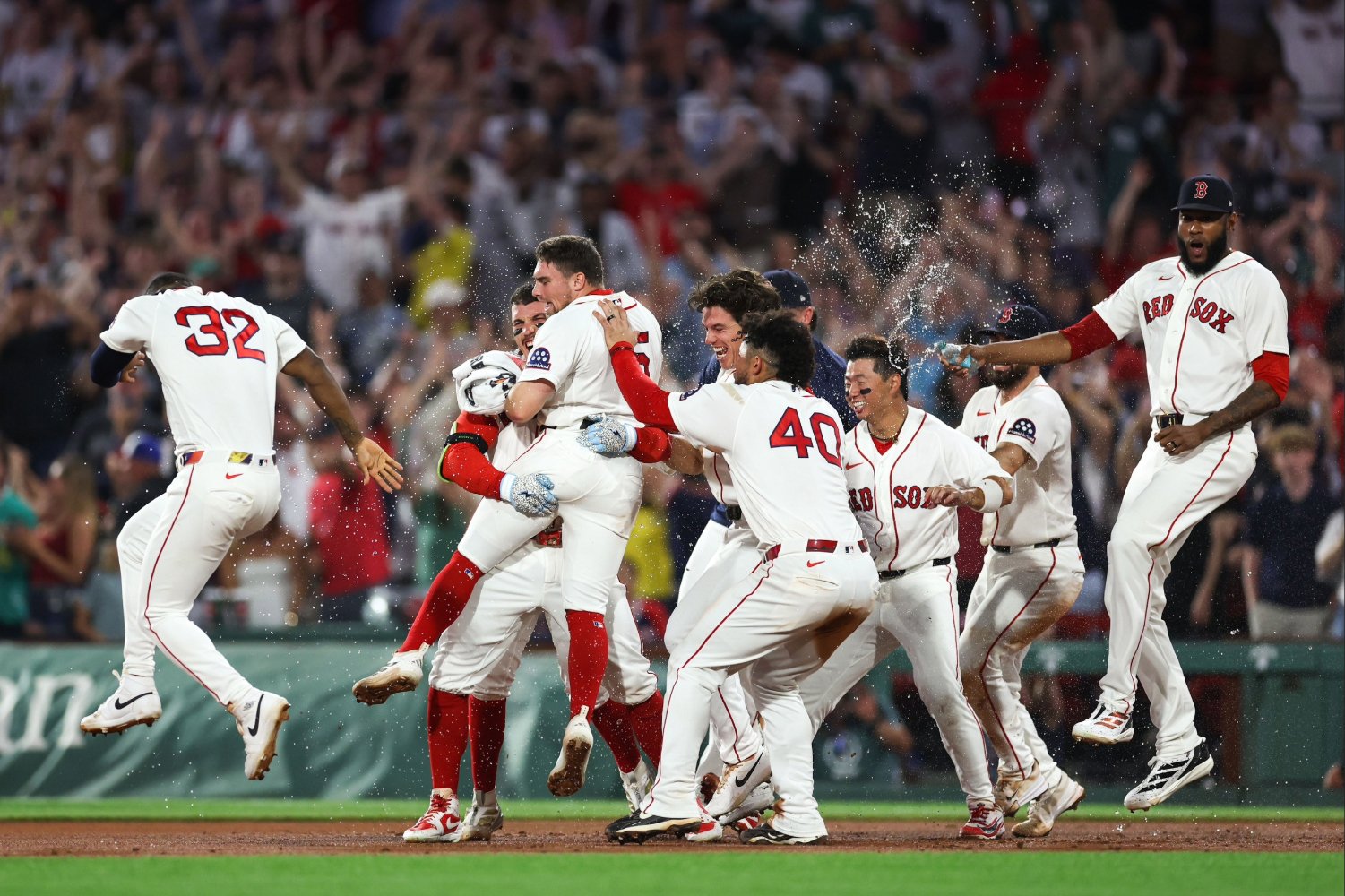 With June now in the rearview mirror, it’s safe to say there may not be another month this season that perfectly represents the 2026 Boston Red Sox. This was a team that, going into the year, was expected to win on their pitching and defense, and possibly struggle at times to score runs due to a lackluster and questionable lineup. Another inconsistent month saw the highs of finally winning a series at Fenway Park for the first time since April 6-8 vs. Milwaukee, when the Sox took two out of three from the Rangers, a west-coast trip that got off to a great start when they took two out of three from the first-place Mariners, and a shocking four-game sweep of the Yankees that led some fans to [foolishly] believe that they were finally turning a corner heading for the dog days of summer. That being said, June also saw the lows of the Red Sox continuing to be allergic to momentum, being swept by Toronto and losing two out of three to the Rockies and Nationals immediately after those aforementioned series wins against Texas, Seattle, and New York, plus an additional sweep at the hands of the Rays, and a 6-9 record against the AL East that was only propped up by that Yankees sweep. Add in the fact that there still doesn’t seem to be a timetable for the returns of Roman Anthony and Garrett Crochet, injuries have begun piling up to the likes of Isiah Kiner-Falefa, Marcelo Mayer, and Connelly Early, and a suspension that could be looming for Willson Contreras and what looked like an already grueling summer stretch could be getting a lot worse very quickly. Before we get to that point though, let’s dive back into June to see how the offense, rotation and bullpen all graded out: Grading Every Red Sox Player in June Offense One month ago, the Red Sox offense looked like it was maybe starting to branch out from the projections that worried fans and media members prior to the 2026 season. While they still had their inefficiencies at hitting with RISP and striking out more than you’d like to see, their surprise top-10 finishes league wide in AVG, OBP, SLG, OPS, hits, doubles, triples, WAR, and BABIP positioned them as a middle-of-the-pack offense league-wide. Add in some standout performances from Wilyer Abreu, Willson Contreras, and a power-surge from Jarren Duran, and there was a dim light at the end of the tunnel that with a few more hitters getting hot, and a better performance in clutch spots, that things might take a turn for the better. Taking a look at Boston’s offensive numbers post-June, it's easy to see that reality won out. While they have improved on hitting with RISP, up from .227 (23rd in MLB / 11th in AL) in May to .232 (21st / 10th) and hitting with RISP with two outs, up from .178 (24th / 11th) to .253 (11th / 7th), their numbers in every other offensive category have taken a nosedive. When it comes to player highlights for the month, Willson Contreras (7 HR, 20 RBI, .933 OPS) and Ceddanne Rafaela (2 HR, 12 RBI, .288 AVG) have continued their strong seasons, but saw noticeable drop-offs in performance, with Contreras falling victim to a 5-for-38 with 14 strikeouts stretch, and Rafaela reverting back to his old ways of chasing, leading to an OPS drop from .826 to .735 and third-worst BB% (1.9%) in all of baseball. Then there’s the case of Duran, who instead of building off a strong May, proceeded to put up a historically bad June, finishing with not only the third-worst OPS for a single month in team history, but a league-worst finish for the month in AVG, OBP, wOBA, WAR (-0.8). He was also the only qualified player in the majors to finish with a negative wRC+ of -1. Fatigue may also be setting in, as the usually consistent Wilyer Abreu had his worst month of the season in terms of average (.228) and K% (20.8%). In trying to find some positives, the obvious answer is at the hot corner in Caleb Durbin, who was without a doubt Boston’s best hitter in the month, slashing a team-best .326/.359/.605/.964 with six home runs, 13 RBI, and a 160 wRC+ while continuing to give the Sox solid defense at third and some much-needed timely hitting. While the catching situation has been a tumultuous one to say the least, with Carlos Narvaez’s consistent offensive woes (.097, -33 wRC+, 38.9 K%), and Mickey Gasper coming back down to earth and being optioned back to Worcester, Connor Wong has continued to quietly put up solid numbers, slashing .333/.441/.444/.885 with a 150 wRC+ and second best 14.7 BB% for June. To go along with Durbin, June also saw the emergence of another player featured in that trade, that being Anthony Seigler who has been excellent covering for injuries to Kiner-Falefa and Mayer, slashing .350/.409/.550/.959 with a team=best 164 wRC+ in 13 games. These positives, however, can’t outweigh the negatives that made Boston’s offense one of the worst in baseball for the month of June. It's what continues to keep them from building any true momentum, earning them a lowly D grade as a unit. Position Player Name March / April May June Wilyer Abreu A+ B C+ Roman Anthony C+ C+ N/A Tsung-Che Cheng N/A N/A C Willson Contreras A A+ B Jarren Duran F A D- Caleb Durbin D+ D A+ Nate Eaton N/A N/A C+ Mickey Gasper N/A A+ D Romy Gonzalez N/A N/A C Isiah Kiner-Falefa D A+ C+ Marcelo Mayer B- D+ D Andruw Monasterio C D+ D Carlos Narvaez C- C- F Ceddanne Rafaela B A A- Anthony Seigler N/A N/A A+ Nick Sogard N/A B- N/A Trevor Story D- D N/A Connor Wong B- B A Masataka Yoshida B- C+ D Rotation Just when you thought the rotation couldn’t get any better than they did a month ago when they obtained an A- grade, they proceeded to double down and basically carry the Red Sox through June with a stretch of dominance that included a streak of 12 consecutive quality starts. Sonny Gray should be firmly cemented in the Cy Young race with another stellar run that saw him not only once again go undefeated at 3-0 in five starts with a 2.14 ERA and .211 average against in 33.2 innings pitched, but also come within five outs of no-hitting the Yankees in his final start of June. Fellow veteran Ranger Suarez was arguably just as good if not better, pitching to a 2-0 record with a 2.10 ERA, .219 average against, and 1.91 FIP in five starts, helping to create one of the most unhittable one-two punches in baseball over the last two months. As for the kids, it was a bit of a mixed bag. Jake Bennett got off to a slow start, allowing six earned runs over 10.1 innings pitched with a .323 BABIP in his first two starts, but turned things around in his final two, with just one earned over 12.1 with a .207 BABIP. Payton Tolle was the opposite, sandwiching three rough starts (17.0 IP, 10 ER, 11 K, 5 BB) in between two phenomenal shutout performances that saw him combine for 13.0 innings pitched with 12 strikeouts and four walks. And then there’s Connelly Early, whose bag was the most mixed of the bunch, allowing 15 earned runs and a season high six home runs in the month while striking out 36 over 30.2 IP to go along with a 4.87 FIP and .338 BABIP. Outside of a few hiccups along the way — and one very bad Brayan Bello start that was answered with a demotion to Worcester— the Sox rotation continues to be the least of their problems. Another month of both top-5 finishes in the American League and top-10 finishes in MLB grants the Red Sox rotation an A grade for June. Pitcher Name March / April May June Brayan Bello F- B+ F- Jake Bennett N/A C A Connelly Early B+ B+ C+ Sonny Gray C+ A+ A+ Ranger Suarez B+ B- A+ Payton Tolle B A+ B+ Bullpen Boston’s bullpen was a bit of a tricky one to grade out for June. On the side of positives, Garrett Whitlock bounced back after a bit of a shaky May to pitch to a 1.13 ERA, 24.1 K% and zero walks in eight appearances. Ryan Watson has continued to improve each month, holding opposing hitters to a .182 average against and racking up his lowest BB% of the season thus far at 6.3% over 12 innings pitched. Danny Coulombe has even brought himself back from the grave, pitching to a 2.08 ERA and holding opponents to a .200 average against in 11 appearances. And a new flame-throwing weapon has emerged in Tyron Guerrero, who was the Sox's best reliever, owning a 0.96 ERA and .194 average against while striking out a dozen and walking zero over 10 appearances. As for the negatives, and glaring ones at that, two of the most important bullpen pieces Aroldis Chapman and Justin Slaten may be broken. Starting with Slaten, his June was incredibly confusing as he made 11 appearances, seven of which where he did not allow a run, four where he did, and three of those where he allowed two or more runs, including a four-run blow up in the Bronx. All of that factors into his 9.00 ERA and unsightly .536 BABIP. When it comes to Chapman, his month was anything but smooth sailing, as along with struggling to even get into games (he made just seven appearances), he was reportedly dealing with a hamstring injury when he did pitch. These two factors could be the reasons for his struggles, as he entered the month with just one run allowed for the season and finished with five earned and a 7.50 ERA for June alone with most (if not all) of his saves coming of the nail-biting variety. While Boston’s bullpen may have been up there as one of the better groups in baseball for May, regressions across the board were clearly visible for June, leading to average to below-average finishes for numerous league-wide stats and a very pedestrian C grade. Pitcher Name March / April May June Aroldis Chapman A A+ D Danny Coulombe F F- A- Alec Gamboa N/A A A Tyron Guerrero N/A C A+ Tommy Kahnle N/A N/A F Joe La Sorsa N/A N/A F- Jovani Moran A C+ B Tyler Samaniego A C- B Justin Slaten A- B+ D Ryan Watson F B- B+ Greg Weissert D- C- C Garrett Whitlock B+ B A+
 -
With June now in the rearview mirror, it’s safe to say there may not be another month this season that perfectly represents the 2026 Boston Red Sox. This was a team that, going into the year, was expected to win on their pitching and defense, and possibly struggle at times to score runs due to a lackluster and questionable lineup. Another inconsistent month saw the highs of finally winning a series at Fenway Park for the first time since April 6-8 vs. Milwaukee, when the Sox took two out of three from the Rangers, a west-coast trip that got off to a great start when they took two out of three from the first-place Mariners, and a shocking four-game sweep of the Yankees that led some fans to [foolishly] believe that they were finally turning a corner heading for the dog days of summer. That being said, June also saw the lows of the Red Sox continuing to be allergic to momentum, being swept by Toronto and losing two out of three to the Rockies and Nationals immediately after those aforementioned series wins against Texas, Seattle, and New York, plus an additional sweep at the hands of the Rays, and a 6-9 record against the AL East that was only propped up by that Yankees sweep. Add in the fact that there still doesn’t seem to be a timetable for the returns of Roman Anthony and Garrett Crochet, injuries have begun piling up to the likes of Isiah Kiner-Falefa, Marcelo Mayer, and Connelly Early, and a suspension that could be looming for Willson Contreras and what looked like an already grueling summer stretch could be getting a lot worse very quickly. Before we get to that point though, let’s dive back into June to see how the offense, rotation and bullpen all graded out: Grading Every Red Sox Player in June Offense One month ago, the Red Sox offense looked like it was maybe starting to branch out from the projections that worried fans and media members prior to the 2026 season. While they still had their inefficiencies at hitting with RISP and striking out more than you’d like to see, their surprise top-10 finishes league wide in AVG, OBP, SLG, OPS, hits, doubles, triples, WAR, and BABIP positioned them as a middle-of-the-pack offense league-wide. Add in some standout performances from Wilyer Abreu, Willson Contreras, and a power-surge from Jarren Duran, and there was a dim light at the end of the tunnel that with a few more hitters getting hot, and a better performance in clutch spots, that things might take a turn for the better. Taking a look at Boston’s offensive numbers post-June, it's easy to see that reality won out. While they have improved on hitting with RISP, up from .227 (23rd in MLB / 11th in AL) in May to .232 (21st / 10th) and hitting with RISP with two outs, up from .178 (24th / 11th) to .253 (11th / 7th), their numbers in every other offensive category have taken a nosedive. When it comes to player highlights for the month, Willson Contreras (7 HR, 20 RBI, .933 OPS) and Ceddanne Rafaela (2 HR, 12 RBI, .288 AVG) have continued their strong seasons, but saw noticeable drop-offs in performance, with Contreras falling victim to a 5-for-38 with 14 strikeouts stretch, and Rafaela reverting back to his old ways of chasing, leading to an OPS drop from .826 to .735 and third-worst BB% (1.9%) in all of baseball. Then there’s the case of Duran, who instead of building off a strong May, proceeded to put up a historically bad June, finishing with not only the third-worst OPS for a single month in team history, but a league-worst finish for the month in AVG, OBP, wOBA, WAR (-0.8). He was also the only qualified player in the majors to finish with a negative wRC+ of -1. Fatigue may also be setting in, as the usually consistent Wilyer Abreu had his worst month of the season in terms of average (.228) and K% (20.8%). In trying to find some positives, the obvious answer is at the hot corner in Caleb Durbin, who was without a doubt Boston’s best hitter in the month, slashing a team-best .326/.359/.605/.964 with six home runs, 13 RBI, and a 160 wRC+ while continuing to give the Sox solid defense at third and some much-needed timely hitting. While the catching situation has been a tumultuous one to say the least, with Carlos Narvaez’s consistent offensive woes (.097, -33 wRC+, 38.9 K%), and Mickey Gasper coming back down to earth and being optioned back to Worcester, Connor Wong has continued to quietly put up solid numbers, slashing .333/.441/.444/.885 with a 150 wRC+ and second best 14.7 BB% for June. To go along with Durbin, June also saw the emergence of another player featured in that trade, that being Anthony Seigler who has been excellent covering for injuries to Kiner-Falefa and Mayer, slashing .350/.409/.550/.959 with a team=best 164 wRC+ in 13 games. These positives, however, can’t outweigh the negatives that made Boston’s offense one of the worst in baseball for the month of June. It's what continues to keep them from building any true momentum, earning them a lowly D grade as a unit. Position Player Name March / April May June Wilyer Abreu A+ B C+ Roman Anthony C+ C+ N/A Tsung-Che Cheng N/A N/A C Willson Contreras A A+ B Jarren Duran F A D- Caleb Durbin D+ D A+ Nate Eaton N/A N/A C+ Mickey Gasper N/A A+ D Romy Gonzalez N/A N/A C Isiah Kiner-Falefa D A+ C+ Marcelo Mayer B- D+ D Andruw Monasterio C D+ D Carlos Narvaez C- C- F Ceddanne Rafaela B A A- Anthony Seigler N/A N/A A+ Nick Sogard N/A B- N/A Trevor Story D- D N/A Connor Wong B- B A Masataka Yoshida B- C+ D Rotation Just when you thought the rotation couldn’t get any better than they did a month ago when they obtained an A- grade, they proceeded to double down and basically carry the Red Sox through June with a stretch of dominance that included a streak of 12 consecutive quality starts. Sonny Gray should be firmly cemented in the Cy Young race with another stellar run that saw him not only once again go undefeated at 3-0 in five starts with a 2.14 ERA and .211 average against in 33.2 innings pitched, but also come within five outs of no-hitting the Yankees in his final start of June. Fellow veteran Ranger Suarez was arguably just as good if not better, pitching to a 2-0 record with a 2.10 ERA, .219 average against, and 1.91 FIP in five starts, helping to create one of the most unhittable one-two punches in baseball over the last two months. As for the kids, it was a bit of a mixed bag. Jake Bennett got off to a slow start, allowing six earned runs over 10.1 innings pitched with a .323 BABIP in his first two starts, but turned things around in his final two, with just one earned over 12.1 with a .207 BABIP. Payton Tolle was the opposite, sandwiching three rough starts (17.0 IP, 10 ER, 11 K, 5 BB) in between two phenomenal shutout performances that saw him combine for 13.0 innings pitched with 12 strikeouts and four walks. And then there’s Connelly Early, whose bag was the most mixed of the bunch, allowing 15 earned runs and a season high six home runs in the month while striking out 36 over 30.2 IP to go along with a 4.87 FIP and .338 BABIP. Outside of a few hiccups along the way — and one very bad Brayan Bello start that was answered with a demotion to Worcester— the Sox rotation continues to be the least of their problems. Another month of both top-5 finishes in the American League and top-10 finishes in MLB grants the Red Sox rotation an A grade for June. Pitcher Name March / April May June Brayan Bello F- B+ F- Jake Bennett N/A C A Connelly Early B+ B+ C+ Sonny Gray C+ A+ A+ Ranger Suarez B+ B- A+ Payton Tolle B A+ B+ Bullpen Boston’s bullpen was a bit of a tricky one to grade out for June. On the side of positives, Garrett Whitlock bounced back after a bit of a shaky May to pitch to a 1.13 ERA, 24.1 K% and zero walks in eight appearances. Ryan Watson has continued to improve each month, holding opposing hitters to a .182 average against and racking up his lowest BB% of the season thus far at 6.3% over 12 innings pitched. Danny Coulombe has even brought himself back from the grave, pitching to a 2.08 ERA and holding opponents to a .200 average against in 11 appearances. And a new flame-throwing weapon has emerged in Tyron Guerrero, who was the Sox's best reliever, owning a 0.96 ERA and .194 average against while striking out a dozen and walking zero over 10 appearances. As for the negatives, and glaring ones at that, two of the most important bullpen pieces Aroldis Chapman and Justin Slaten may be broken. Starting with Slaten, his June was incredibly confusing as he made 11 appearances, seven of which where he did not allow a run, four where he did, and three of those where he allowed two or more runs, including a four-run blow up in the Bronx. All of that factors into his 9.00 ERA and unsightly .536 BABIP. When it comes to Chapman, his month was anything but smooth sailing, as along with struggling to even get into games (he made just seven appearances), he was reportedly dealing with a hamstring injury when he did pitch. These two factors could be the reasons for his struggles, as he entered the month with just one run allowed for the season and finished with five earned and a 7.50 ERA for June alone with most (if not all) of his saves coming of the nail-biting variety. While Boston’s bullpen may have been up there as one of the better groups in baseball for May, regressions across the board were clearly visible for June, leading to average to below-average finishes for numerous league-wide stats and a very pedestrian C grade. Pitcher Name March / April May June Aroldis Chapman A A+ D Danny Coulombe F F- A- Alec Gamboa N/A A A Tyron Guerrero N/A C A+ Tommy Kahnle N/A N/A F Joe La Sorsa N/A N/A F- Jovani Moran A C+ B Tyler Samaniego A C- B Justin Slaten A- B+ D Ryan Watson F B- B+ Greg Weissert D- C- C Garrett Whitlock B+ B A+ View full article
- 1 reply
-
- 1
-

-
Re-Grading Red Sox's 2025 Trade Deadline Performance One Year Later
Ryan Salvaggio posted an article in Red Sox
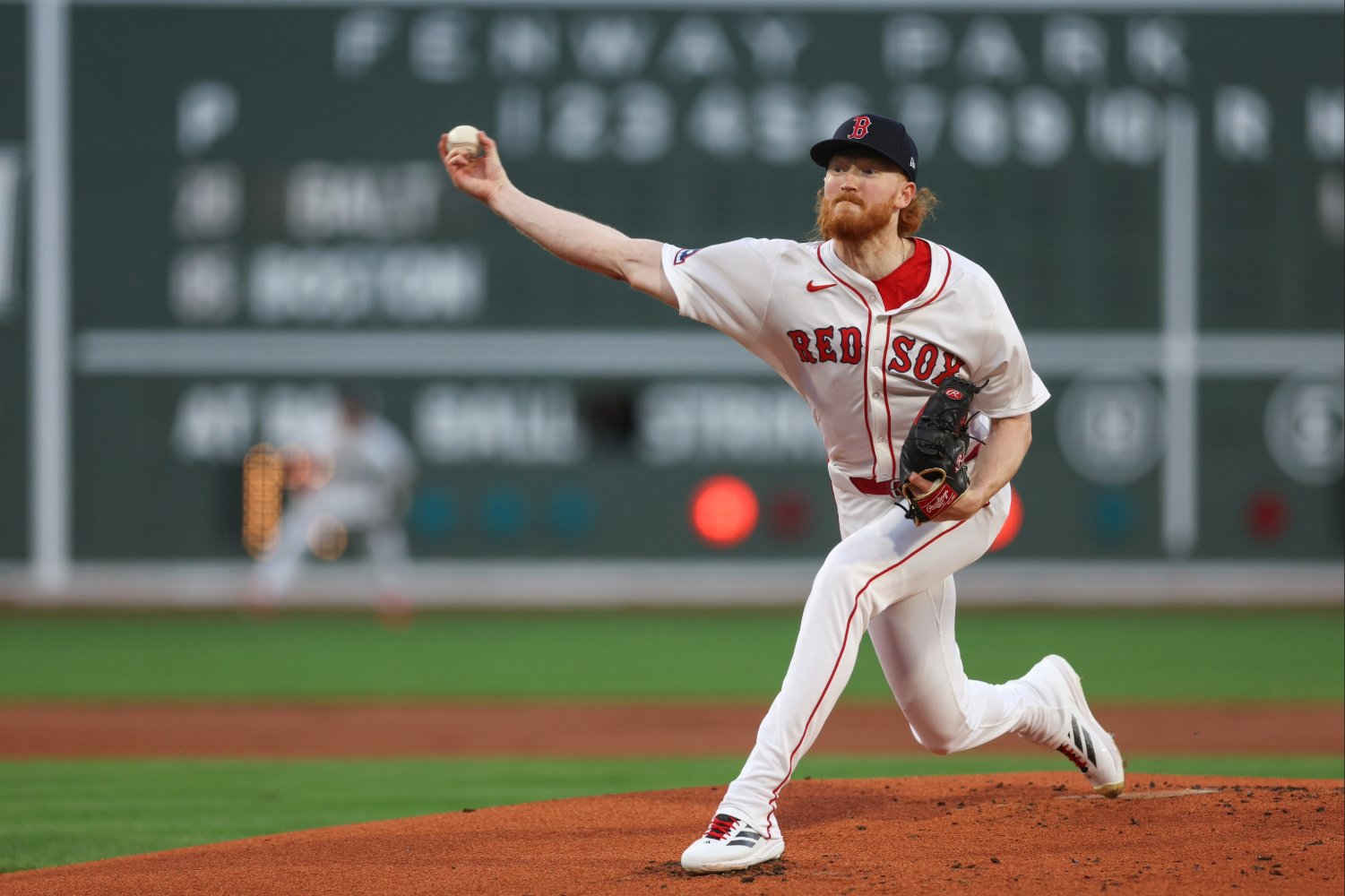 When the Boston Red Sox finally reach the 2026 trade deadline, they’ll be in a different spot than they were a year ago when Craig Breslow put together a performance that could only be described as “underwhelming.” With the Red Sox sitting at 59-51, good for third in the American League East and second in the AL Wild Card (both five games back coincidentally), the goals seemed obvious enough: acquire some help for the rotation and potentially another late-inning arm to help solidify the back-end of what was an impressively strong bullpen. Of course, we know Breslow answered those questions by acquiring left-handed reliever Steven Matz from the now-frequent trade partner St. Louis Cardinals, and right-handed starter Dustin May from the Los Angeles Dodgers, who should probably find themselves on the same “Do Not Trade With” list as the Milwaukee Brewers, given their consistent ability to seemingly send the Red Sox a lesser piece/pieces than what the Sox are sending them. Our managing editor, Brandon Glick, graded out these deals when they occurred, which you can find here. But now almost a full year removed, with neither player on the current iteration of this Red Sox roster, it’s time to take a big picture look back and re-grade Boston’s 2025 deadline acquisitions. Trade #1: Red Sox acquire LHP Steven Matz from the Cardinals for 1B/3B Blaze Jordan When the Red Sox entered the 2025 deadline, most people assumed that if they were going to acquire some sort of bullpen help, it would be of the late-inning, right-handed variety to not only ease the workloads of arms like Garrett Whitlock, Greg Weissert, and Justin Slaten, but to also make up for the failure that was Jordan Hicks. Instead, Breslow opted to acquire veteran lefty Steven Matz, a move that was surprising to say the least and met with some skepticism due to the fact the bullpen already featured four southpaws in Aroldis Chapman, Justin Wilson, Brennan Bernardino, and Chris Murphy. In return, they sent the Cardinals No. 19th-ranked infield prospect Blaze Jordan, who was tearing up Triple-A Worcester at the time, slashing .298/.341/.480 with six home runs and 25 RBIs in 44 games. However, he seemed to be locked out of any infield position given the team's glut of options at the corners. Almost a year later, and this deal is definitely the harder of the two to put a grade on. Initially, it garnered a ‘C’ and was justifiably labeled a “nothing-burger move” by Glick. As previously mentioned, Jordan looked like an easily expendable prospect and Matz came in sporting a respectable 3.44 ERA, 2.92 FIP, and 20.7 K% in 55 innings pitched with St. Louis. With the Red Sox though, Matz was borderline dominant with a 2.08 ERA, .218 average against, and 2.4 BB% in 21 regular season appearances to go along with two scoreless outings in Boston’s Wild Card series loss versus the Yankees. He ended up only being a gun-for-hire though, as he signed with the Rays on a two-year, $15 million deal this past winter with the opportunity to once again work as a starter. The move hasn't really panned out for Tampa Bay as he currently owns a 5.65 ERA and 5.55 FIP across 14 outings split between the rotation (10) and bullpen (4). As for Blaze Jordan, this is where the old “hindsight is 20/20” saying comes into play. After slugging .313 with a .921 OPS, 11 home runs and 35 RBIs in 57 games for Triple-A Memphis, the Cardinals called him up to make his major league debut on June 12 and he’s done nothing but hit since, slashing .286/.306/.486 with one home run, seven RBIs and an impressive 11.1 K% and 16.7 Whiff% in just nine games. That's production I’m sure disgruntled Red Sox fans don’t want to see given the team’s continued offensive woes. While Jordan’s production could definitely be used in this abysmal Red Sox lineup, the fact still stands he probably wouldn’t have a spot on this club at first or third base with the additions of Willson Contreras and Caleb Durbin (or even designated hitter, which has constantly been used to try and solve Boston’s outfield logjam situation). When it comes to Matz, the Red Sox got exactly what they needed from him as a shutdown arm a year ago and seem to have dodged a bullet given his struggles this year opting to not bring him back. Grade: B+ Trade #2: Red Sox acquire RHP Dustin May from the Dodgers for OF James Tibbs III and OF Zach Ehrhard When it comes to the second of Boston’s two 2025 deadline acquisitions I want to put this as lightly as I can… everything about this trade was an abject failure. Let’s start with the lead up to it. By now, everyone knows this ended up being a panic move by Craig Breslow, a deal that was one of those that trickled in after the deadline came and went, after numerous failed attempts throughout the afternoon to acquire a more dependable and solidified arm like Merrill Kelly and the tease that was Joe Ryan, who the Sox had consistently been linked to. Now to the player himself. Upon being dealt to Boston, May was the owner of a 4.85 ERA, 4.74 FIP, and 44.4% hard-hit rate across 16 games (15 starts) and looking like he was about to fall out of L.A's crowded rotation. With the Red Sox, things took a turn for the worse, as his numbers imploded to a 5.40 ERA, 5.39 FIP, even worse 45.6% hard-hit rate, and career-worst .307 average against in just six games (five starts) before having his short-lived Sox tenure end due to a right elbow neuritis injury. He, like Matz, would end up leaving Boston in the offseason for St. Louis where he has pitched to a pedestrian 4.30 ERA in 15 starts. And just when you think things couldn’t get any worse, we turn to the two prospects Boston sent the Dodgers’ way: James Tibbs III (No. 10 prospect via MLB’s rankings) and Zach Ehrhard (No. 17). Upon getting to the Dodgers organization, both reported to Double-A Tulsa and performed relatively well, with Tibbs hitting .269 with a .900 OPS, and seven homers to go along with 32 RBIs in 36 games and Ehrhard hitting for .282 with an .857 OPS, five homers, and 20 RBIs in 30 games. As for this season, where they both currently reside at Triple-A Oklahoma City, this is where Red Sox fans who haven’t been paying attention might want to avert their eyes. Starting with the latter, in 67 games Ehrhard is slashing .288/.394/.490/.884 with 11 home runs, 53 RBIs and 29 extra-base hits. As for Tibbs III, he not only has racked up a line of .291/.415/.585/1.000 with 20 homers and 62 RBIs, but also leads all PCL hitters in home runs, walks (57), extra-base hits (39), total bases (161) and runs (64), per of OKC Comets Communications & Broadcast Assistant Logan Bourandas on X). When Glick first graded this trade, he put a caveat on it that it would be a ‘B+’ if May was re-signed and a ‘D+’ if he wasn’t, which made sense given the price the Red Sox were giving up to get him but the flashes of potential and ability May had shown in the past to hopefully be a solid middle of the rotation arm. Given the absolute train-wreck that ensued everywhere you look with how this trade shaped up, I think it’s pretty obvious what this deal deserves. Grade: F- Final Verdict and Grade With almost a full calendar year to now look back on those who described the 2025 Red Sox trade deadline as “underwhelming” seemingly hit the nail on the head. Steven Matz gave them exactly what was needed, and while the Blaze Jordan departure doesn’t look ideal on paper right now, there was no true path to him contributing like he has on the Cardinals. On the flip side, at the time it was believed Dustin May wasn’t the right move for the rotation and that could not have been more of the truth; that trade not only hurt the Sox in-season with his horrendous performance and an injury that left the rotational depth weakened heading into the playoffs, but could come back to haunt them in a major way if Tibbs and/or Ehrhard grow into contributing big leaguers. Overall Grade: C-
 -
When the Boston Red Sox finally reach the 2026 trade deadline, they’ll be in a different spot than they were a year ago when Craig Breslow put together a performance that could only be described as “underwhelming.” With the Red Sox sitting at 59-51, good for third in the American League East and second in the AL Wild Card (both five games back coincidentally), the goals seemed obvious enough: acquire some help for the rotation and potentially another late-inning arm to help solidify the back-end of what was an impressively strong bullpen. Of course, we know Breslow answered those questions by acquiring left-handed reliever Steven Matz from the now-frequent trade partner St. Louis Cardinals, and right-handed starter Dustin May from the Los Angeles Dodgers, who should probably find themselves on the same “Do Not Trade With” list as the Milwaukee Brewers, given their consistent ability to seemingly send the Red Sox a lesser piece/pieces than what the Sox are sending them. Our managing editor, Brandon Glick, graded out these deals when they occurred, which you can find here. But now almost a full year removed, with neither player on the current iteration of this Red Sox roster, it’s time to take a big picture look back and re-grade Boston’s 2025 deadline acquisitions. Trade #1: Red Sox acquire LHP Steven Matz from the Cardinals for 1B/3B Blaze Jordan When the Red Sox entered the 2025 deadline, most people assumed that if they were going to acquire some sort of bullpen help, it would be of the late-inning, right-handed variety to not only ease the workloads of arms like Garrett Whitlock, Greg Weissert, and Justin Slaten, but to also make up for the failure that was Jordan Hicks. Instead, Breslow opted to acquire veteran lefty Steven Matz, a move that was surprising to say the least and met with some skepticism due to the fact the bullpen already featured four southpaws in Aroldis Chapman, Justin Wilson, Brennan Bernardino, and Chris Murphy. In return, they sent the Cardinals No. 19th-ranked infield prospect Blaze Jordan, who was tearing up Triple-A Worcester at the time, slashing .298/.341/.480 with six home runs and 25 RBIs in 44 games. However, he seemed to be locked out of any infield position given the team's glut of options at the corners. Almost a year later, and this deal is definitely the harder of the two to put a grade on. Initially, it garnered a ‘C’ and was justifiably labeled a “nothing-burger move” by Glick. As previously mentioned, Jordan looked like an easily expendable prospect and Matz came in sporting a respectable 3.44 ERA, 2.92 FIP, and 20.7 K% in 55 innings pitched with St. Louis. With the Red Sox though, Matz was borderline dominant with a 2.08 ERA, .218 average against, and 2.4 BB% in 21 regular season appearances to go along with two scoreless outings in Boston’s Wild Card series loss versus the Yankees. He ended up only being a gun-for-hire though, as he signed with the Rays on a two-year, $15 million deal this past winter with the opportunity to once again work as a starter. The move hasn't really panned out for Tampa Bay as he currently owns a 5.65 ERA and 5.55 FIP across 14 outings split between the rotation (10) and bullpen (4). As for Blaze Jordan, this is where the old “hindsight is 20/20” saying comes into play. After slugging .313 with a .921 OPS, 11 home runs and 35 RBIs in 57 games for Triple-A Memphis, the Cardinals called him up to make his major league debut on June 12 and he’s done nothing but hit since, slashing .286/.306/.486 with one home run, seven RBIs and an impressive 11.1 K% and 16.7 Whiff% in just nine games. That's production I’m sure disgruntled Red Sox fans don’t want to see given the team’s continued offensive woes. While Jordan’s production could definitely be used in this abysmal Red Sox lineup, the fact still stands he probably wouldn’t have a spot on this club at first or third base with the additions of Willson Contreras and Caleb Durbin (or even designated hitter, which has constantly been used to try and solve Boston’s outfield logjam situation). When it comes to Matz, the Red Sox got exactly what they needed from him as a shutdown arm a year ago and seem to have dodged a bullet given his struggles this year opting to not bring him back. Grade: B+ Trade #2: Red Sox acquire RHP Dustin May from the Dodgers for OF James Tibbs III and OF Zach Ehrhard When it comes to the second of Boston’s two 2025 deadline acquisitions I want to put this as lightly as I can… everything about this trade was an abject failure. Let’s start with the lead up to it. By now, everyone knows this ended up being a panic move by Craig Breslow, a deal that was one of those that trickled in after the deadline came and went, after numerous failed attempts throughout the afternoon to acquire a more dependable and solidified arm like Merrill Kelly and the tease that was Joe Ryan, who the Sox had consistently been linked to. Now to the player himself. Upon being dealt to Boston, May was the owner of a 4.85 ERA, 4.74 FIP, and 44.4% hard-hit rate across 16 games (15 starts) and looking like he was about to fall out of L.A's crowded rotation. With the Red Sox, things took a turn for the worse, as his numbers imploded to a 5.40 ERA, 5.39 FIP, even worse 45.6% hard-hit rate, and career-worst .307 average against in just six games (five starts) before having his short-lived Sox tenure end due to a right elbow neuritis injury. He, like Matz, would end up leaving Boston in the offseason for St. Louis where he has pitched to a pedestrian 4.30 ERA in 15 starts. And just when you think things couldn’t get any worse, we turn to the two prospects Boston sent the Dodgers’ way: James Tibbs III (No. 10 prospect via MLB’s rankings) and Zach Ehrhard (No. 17). Upon getting to the Dodgers organization, both reported to Double-A Tulsa and performed relatively well, with Tibbs hitting .269 with a .900 OPS, and seven homers to go along with 32 RBIs in 36 games and Ehrhard hitting for .282 with an .857 OPS, five homers, and 20 RBIs in 30 games. As for this season, where they both currently reside at Triple-A Oklahoma City, this is where Red Sox fans who haven’t been paying attention might want to avert their eyes. Starting with the latter, in 67 games Ehrhard is slashing .288/.394/.490/.884 with 11 home runs, 53 RBIs and 29 extra-base hits. As for Tibbs III, he not only has racked up a line of .291/.415/.585/1.000 with 20 homers and 62 RBIs, but also leads all PCL hitters in home runs, walks (57), extra-base hits (39), total bases (161) and runs (64), per of OKC Comets Communications & Broadcast Assistant Logan Bourandas on X). When Glick first graded this trade, he put a caveat on it that it would be a ‘B+’ if May was re-signed and a ‘D+’ if he wasn’t, which made sense given the price the Red Sox were giving up to get him but the flashes of potential and ability May had shown in the past to hopefully be a solid middle of the rotation arm. Given the absolute train-wreck that ensued everywhere you look with how this trade shaped up, I think it’s pretty obvious what this deal deserves. Grade: F- Final Verdict and Grade With almost a full calendar year to now look back on those who described the 2025 Red Sox trade deadline as “underwhelming” seemingly hit the nail on the head. Steven Matz gave them exactly what was needed, and while the Blaze Jordan departure doesn’t look ideal on paper right now, there was no true path to him contributing like he has on the Cardinals. On the flip side, at the time it was believed Dustin May wasn’t the right move for the rotation and that could not have been more of the truth; that trade not only hurt the Sox in-season with his horrendous performance and an injury that left the rotational depth weakened heading into the playoffs, but could come back to haunt them in a major way if Tibbs and/or Ehrhard grow into contributing big leaguers. Overall Grade: C- View full article
-
The Major League Baseball calendar has turned to June and as the Boston Red Sox prepare for the summer heat, they may be starting to feel like a crossroad is coming their way in terms of how to approach this year’s trade deadline, which occurs later than usual on August 3. On one hand, you have the fact that the American League still stinks, with just five teams over .500 at the time of writing this, one of whom is the Chicago White Sox. After that, the 27-36 Red Sox find themselves just four games back of the final playoff spot, currently held by the sub-.500 Texas Rangers. Boston, of course, would also have to leapfrog the Astros, Twins, Orioles, and Athletics to get there, but the task isn't as surmountable as you may believe. On the other hand, though, they have still struggled to gain any momentum in the crowded AL playoff picture thanks to consistent sub-.500 play as a whole, including a league worst 10-21 record at home, and 13-19 record against teams above .500. If this play continues as we inch closer to the trade deadline, and no ground can be gained on any of the aforementioned teams the Red Sox are chasing, it would be a borderline disservice not moving on from the following names. Ranking Red Sox's 3 Best Trade Pieces Aroldis Chapman 20 G, 0-1, 0.46 ERA, 19.2 IP, 26/9 K/BB, 1.99 FIP, .134 AVG, 13 Saves, 0.8 fWAR Maybe the most obvious name on the list of players the Red Sox should be looking to deal if they are sellers is their All-Star closer Aroldis Chapman. Chapman is currently on a one-year, $13.3 million contract with a conditional mutual option for 2027, which becomes guaranteed with 40 IP in 2026 plus a passed end-of-year physical. The deal also comes with a $300,000 buyout, and he has already begun garnering interest as USA Today Sports’ Bob Nightengale reported last month that the “San Diego Padres are eyeing the veteran reliever on the trade market.” While it would without a doubt be tough to see Chapman go and probably signal the waving of the white flag on 2026, his dominant performance and expiring contract makes him a chip the Red Sox must cash in on if they find themselves out of the playoff race come August. Chapman himself is no stranger to a deadline move, as fans will recall he was dealt at the 2016 trade deadline from the Yankees to the Cubs in exchange for RHP Adam Warren, outfielders Billy McKinney (ranked No. 5, in the Cubs system), and Rashad Crawford, and a 19-year-old shortstop by the name of Gleyber Torres who was not only Chicago’s top prospect, but the No. 24 prospect in all of baseball. Now, even though the Yankees were shipping out a 28-year-old version at the time as opposed to the 38-year-old one that the Red Sox would be moving on from, his production this season isn’t all that far off from where it was back then as Chapman finished 2016 with a K% of 40.5%, a whiff% of 36.8%, and a chase% of 32.5%. Fast-forward 10 years and outside of an understandable drop in average fastball velocity from 101.1 to 97.4 mph, his K% (34.7%), whiff% (33.3%) and chase% (32.2%) all still register as great to elite. If the Red Sox are serious about moving Chapman, then the asking price, even with his age and contract situation, should still be high. If the Padres are the team to come calling for instance, then one of their top two prospects -- catcher Ethan Salas (No. 51 in MLB) or left-handed pitcher Kruz Schoolcraft (No. 90) -- would be a great prize, As for a potential framework to go off of from last year’s deadline, while more upper-echelon arms closer to Chapman’s stature like Jhoan Duran and Mason Miller were moved, the deal to look at that fits a similar situation, i.e. a big arm on an expiring deal, is the Ryan Helsley trade. The Mets acquired Helsley, who had a 3.00 ERA and 41 strikeouts over 36 innings from the Cardinals for two top-20 prospects according to MLB Pipeline in infielder Jesus Baez (No. 8) and right-handed pitcher Nate Dohm (No. 14), as well as right-hander Frank Elissalt. If he does in fact become available, teams will be lining up for Chapman’s services and the Red Sox would be foolish to come away with anything other than a king’s ransom if a bidding war breaks out. Sonny Gray 11 G, 7-1, 3.20 ERA, 56.1 IP, 44/16 K/BB, 3.94 FIP, .252 AVG, 0.8 fWAR The second of Boston’s expiring contracts that makes the most sense to move on from is veteran starter Sonny Gray. Much like Chapman, there is a mutual option for 2027 with a luxury tax cap hit of $25 million and buyout of $10 million that gets forfeited if the Red Sox exercise the option but Gray opts out. While he hasn’t been the strikeout pitcher he was advertised to be when the Sox acquired him from St. Louis this offseason, seeing his K% drop from 26.7% to 19.9%, he’s seemingly reinvented himself as a pitch-to-contact pitcher who’s excelled at avoiding hard contact with a Hard-Hit% of 33.8%, good for the 76th percentile and a far cry from his 40.7% and 48th percentile finish in 2025. Also similarly to Chapman, Gray is no stranger to being dealt at the trade deadline. Back in 2017, a 27-year-old Gray was traded from the Athletics to the Yankees for outfielder Dustin Fowler (No. 4 in the Yankees system), infielder Jorge Mateo (No. 8) and right-hander James Kaprielian (No. 12), none of whom were considered Top-100 prospects in MLB Pipeline’s eyes, but were each able to put together seasons in the big leagues throughout their careers, with Mateo seeing the most success and longevity. When it comes to moving Gray and what to realistically expect to get back, the Red Sox can use their own framework from what they gave up to get him: Young, controllable arms with big league experience like Richard Fitts, and those with upside potential like Brandon Clarke (No. 5 in the system). They could also look to a deal from last year’s deadline, when the Rangers acquired fellow veteran right-hander on an expiring contract, Merrill Kelly, from the Diamondbacks. Kelly, who owned a 3.22 ERA over 22 starts at the time, was sent south for left-handed pitchers Kohl Drake (No. 5 in the Rangers system), and Mitch Bratt (No. 9), along with right-handed pitcher David Hagaman (No. 13). If a team comes calling offering up three top-20 prospects for the services of Sonny Gray, or a similar package that includes a young player who can help the Red Sox now, Craig Breslow should jump at the opportunity to collect on a veteran arm with no long-term future in Boston. Isiah Kiner-Falefa 31 G, .267/.327/.333, 85 wRC+, 4 SB, +5 OAA, 0.7 fWAR This final trade piece may come as a surprise to those looking to see Jarren Duran or Willson Contreras on this list. While those deals would make sense -- a Duran trade would finally put an end to the outfield logjam if and when Roman Anthony returns, and you could possibly get a haul the way Contreras is producing -- don't expect the front office to blow up the foundation they built over the last few years just because of one bad half of baseball. Enter an alternative option on another expiring contract who has had trade deadline experience before: Isiah Kiner-Falefa. Such a trade may have seemed like a laughable proposal coming out of a March/April run that saw him hit just .229 with an OPS+ of 44 and wRC+ of 38, but the man who said he was fighting for his career found a way to drastically turn things around in May, slashing .385/.467/.513/.979 with one home run and eight RBIs. He forced his way into a lineup starving for production and may get some looks from contenders after all. When Kiner-Falefa was brought in on his one-year, $6 million deal by the Red Sox, the belief was he’d be a solid utility infield option that also possessed a strong veteran leadership presence and postseason experience fresh off a trip to the World Series with the Toronto Blue Jays. Look around the current playoff landscape as of today and you’ll see plenty of young or inexperienced teams such as the Cardinals (26.7 years old on average), White Sox (27.4), Pirates (27.5), and Athletics (27.5), all in the top 10 of the youngest teams in the league, volleying for playoff positioning and potentially looking for a veteran who knows what it takes to win in the postseason. Factor in some of the more experienced squads like the Dodgers, Braves, and Padres who may just look to fill out their rosters with an additional piece, and Kiner-Falefa could be a name that surprisingly works for a lot of teams. In terms of what he could bring the Red Sox back in return, the Blue Jays and Pirates may have painted the picture back in 2024, when he was dealt from Toronto to Pittsburgh for minor-league utility man Charles McAdoo, who since the deal has turned into a top-30 prospect with the Jays (No. 25). If Boston truly does fall out of contention as we approach the August 3 trade deadline, it is imperative they identify which players they see as long-term pieces that can help the club’s future and which ones, especially these three listed, they should move on from in order to set themselves up for the most success moving forward. View full article
-
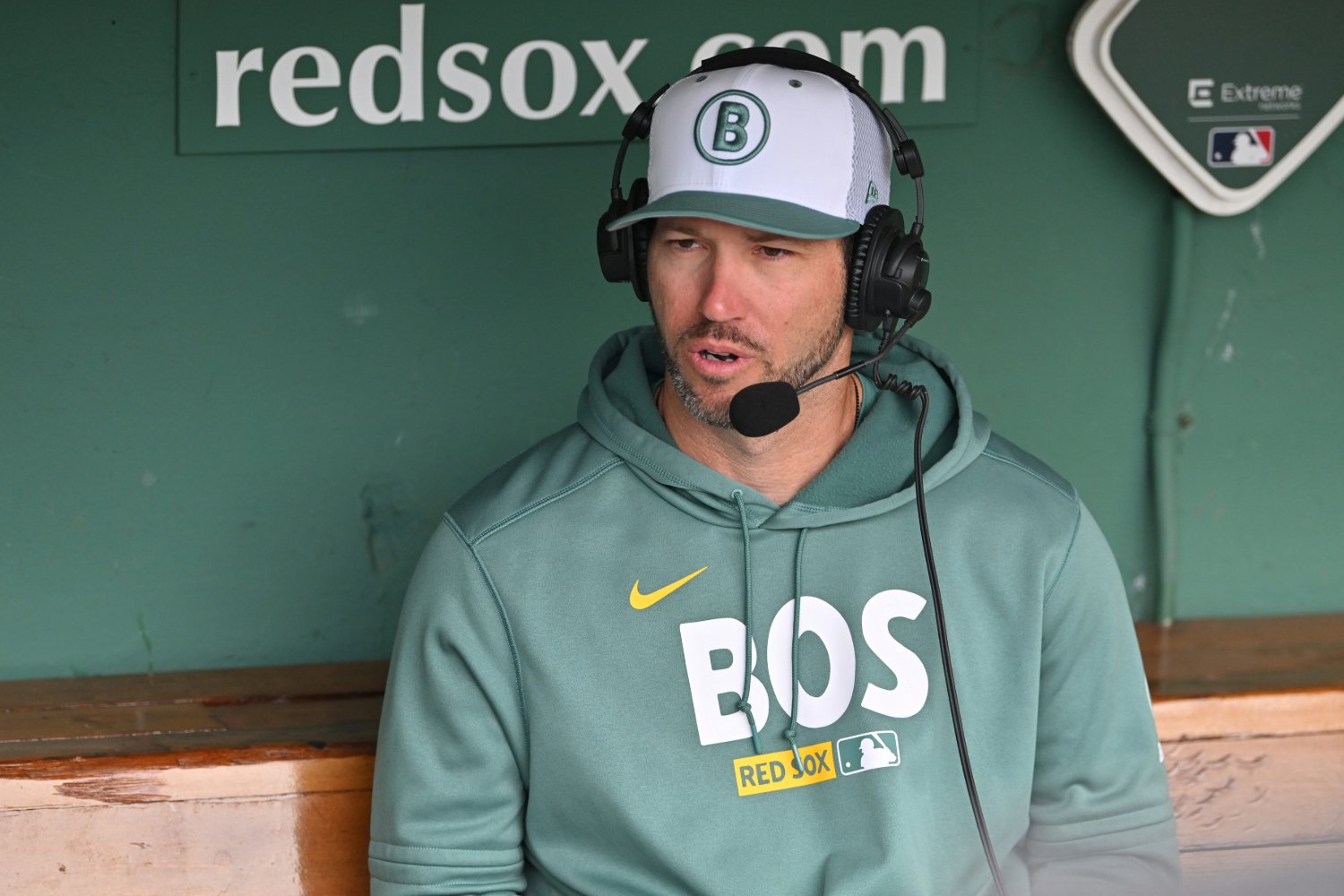 The Major League Baseball calendar has turned to June and as the Boston Red Sox prepare for the summer heat, they may be starting to feel like a crossroad is coming their way in terms of how to approach this year’s trade deadline, which occurs later than usual on August 3. On one hand, you have the fact that the American League still stinks, with just five teams over .500 at the time of writing this, one of whom is the Chicago White Sox. After that, the 27-36 Red Sox find themselves just four games back of the final playoff spot, currently held by the sub-.500 Texas Rangers. Boston, of course, would also have to leapfrog the Astros, Twins, Orioles, and Athletics to get there, but the task isn't as surmountable as you may believe. On the other hand, though, they have still struggled to gain any momentum in the crowded AL playoff picture thanks to consistent sub-.500 play as a whole, including a league worst 10-21 record at home, and 13-19 record against teams above .500. If this play continues as we inch closer to the trade deadline, and no ground can be gained on any of the aforementioned teams the Red Sox are chasing, it would be a borderline disservice not moving on from the following names. Ranking Red Sox's 3 Best Trade Pieces Aroldis Chapman 20 G, 0-1, 0.46 ERA, 19.2 IP, 26/9 K/BB, 1.99 FIP, .134 AVG, 13 Saves, 0.8 fWAR Maybe the most obvious name on the list of players the Red Sox should be looking to deal if they are sellers is their All-Star closer Aroldis Chapman. Chapman is currently on a one-year, $13.3 million contract with a conditional mutual option for 2027, which becomes guaranteed with 40 IP in 2026 plus a passed end-of-year physical. The deal also comes with a $300,000 buyout, and he has already begun garnering interest as USA Today Sports’ Bob Nightengale reported last month that the “San Diego Padres are eyeing the veteran reliever on the trade market.” While it would without a doubt be tough to see Chapman go and probably signal the waving of the white flag on 2026, his dominant performance and expiring contract makes him a chip the Red Sox must cash in on if they find themselves out of the playoff race come August. Chapman himself is no stranger to a deadline move, as fans will recall he was dealt at the 2016 trade deadline from the Yankees to the Cubs in exchange for RHP Adam Warren, outfielders Billy McKinney (ranked No. 5, in the Cubs system), and Rashad Crawford, and a 19-year-old shortstop by the name of Gleyber Torres who was not only Chicago’s top prospect, but the No. 24 prospect in all of baseball. Now, even though the Yankees were shipping out a 28-year-old version at the time as opposed to the 38-year-old one that the Red Sox would be moving on from, his production this season isn’t all that far off from where it was back then as Chapman finished 2016 with a K% of 40.5%, a whiff% of 36.8%, and a chase% of 32.5%. Fast-forward 10 years and outside of an understandable drop in average fastball velocity from 101.1 to 97.4 mph, his K% (34.7%), whiff% (33.3%) and chase% (32.2%) all still register as great to elite. If the Red Sox are serious about moving Chapman, then the asking price, even with his age and contract situation, should still be high. If the Padres are the team to come calling for instance, then one of their top two prospects -- catcher Ethan Salas (No. 51 in MLB) or left-handed pitcher Kruz Schoolcraft (No. 90) -- would be a great prize, As for a potential framework to go off of from last year’s deadline, while more upper-echelon arms closer to Chapman’s stature like Jhoan Duran and Mason Miller were moved, the deal to look at that fits a similar situation, i.e. a big arm on an expiring deal, is the Ryan Helsley trade. The Mets acquired Helsley, who had a 3.00 ERA and 41 strikeouts over 36 innings from the Cardinals for two top-20 prospects according to MLB Pipeline in infielder Jesus Baez (No. 8) and right-handed pitcher Nate Dohm (No. 14), as well as right-hander Frank Elissalt. If he does in fact become available, teams will be lining up for Chapman’s services and the Red Sox would be foolish to come away with anything other than a king’s ransom if a bidding war breaks out. Sonny Gray 11 G, 7-1, 3.20 ERA, 56.1 IP, 44/16 K/BB, 3.94 FIP, .252 AVG, 0.8 fWAR The second of Boston’s expiring contracts that makes the most sense to move on from is veteran starter Sonny Gray. Much like Chapman, there is a mutual option for 2027 with a luxury tax cap hit of $25 million and buyout of $10 million that gets forfeited if the Red Sox exercise the option but Gray opts out. While he hasn’t been the strikeout pitcher he was advertised to be when the Sox acquired him from St. Louis this offseason, seeing his K% drop from 26.7% to 19.9%, he’s seemingly reinvented himself as a pitch-to-contact pitcher who’s excelled at avoiding hard contact with a Hard-Hit% of 33.8%, good for the 76th percentile and a far cry from his 40.7% and 48th percentile finish in 2025. Also similarly to Chapman, Gray is no stranger to being dealt at the trade deadline. Back in 2017, a 27-year-old Gray was traded from the Athletics to the Yankees for outfielder Dustin Fowler (No. 4 in the Yankees system), infielder Jorge Mateo (No. 8) and right-hander James Kaprielian (No. 12), none of whom were considered Top-100 prospects in MLB Pipeline’s eyes, but were each able to put together seasons in the big leagues throughout their careers, with Mateo seeing the most success and longevity. When it comes to moving Gray and what to realistically expect to get back, the Red Sox can use their own framework from what they gave up to get him: Young, controllable arms with big league experience like Richard Fitts, and those with upside potential like Brandon Clarke (No. 5 in the system). They could also look to a deal from last year’s deadline, when the Rangers acquired fellow veteran right-hander on an expiring contract, Merrill Kelly, from the Diamondbacks. Kelly, who owned a 3.22 ERA over 22 starts at the time, was sent south for left-handed pitchers Kohl Drake (No. 5 in the Rangers system), and Mitch Bratt (No. 9), along with right-handed pitcher David Hagaman (No. 13). If a team comes calling offering up three top-20 prospects for the services of Sonny Gray, or a similar package that includes a young player who can help the Red Sox now, Craig Breslow should jump at the opportunity to collect on a veteran arm with no long-term future in Boston. Isiah Kiner-Falefa 31 G, .267/.327/.333, 85 wRC+, 4 SB, +5 OAA, 0.7 fWAR This final trade piece may come as a surprise to those looking to see Jarren Duran or Willson Contreras on this list. While those deals would make sense -- a Duran trade would finally put an end to the outfield logjam if and when Roman Anthony returns, and you could possibly get a haul the way Contreras is producing -- don't expect the front office to blow up the foundation they built over the last few years just because of one bad half of baseball. Enter an alternative option on another expiring contract who has had trade deadline experience before: Isiah Kiner-Falefa. Such a trade may have seemed like a laughable proposal coming out of a March/April run that saw him hit just .229 with an OPS+ of 44 and wRC+ of 38, but the man who said he was fighting for his career found a way to drastically turn things around in May, slashing .385/.467/.513/.979 with one home run and eight RBIs. He forced his way into a lineup starving for production and may get some looks from contenders after all. When Kiner-Falefa was brought in on his one-year, $6 million deal by the Red Sox, the belief was he’d be a solid utility infield option that also possessed a strong veteran leadership presence and postseason experience fresh off a trip to the World Series with the Toronto Blue Jays. Look around the current playoff landscape as of today and you’ll see plenty of young or inexperienced teams such as the Cardinals (26.7 years old on average), White Sox (27.4), Pirates (27.5), and Athletics (27.5), all in the top 10 of the youngest teams in the league, volleying for playoff positioning and potentially looking for a veteran who knows what it takes to win in the postseason. Factor in some of the more experienced squads like the Dodgers, Braves, and Padres who may just look to fill out their rosters with an additional piece, and Kiner-Falefa could be a name that surprisingly works for a lot of teams. In terms of what he could bring the Red Sox back in return, the Blue Jays and Pirates may have painted the picture back in 2024, when he was dealt from Toronto to Pittsburgh for minor-league utility man Charles McAdoo, who since the deal has turned into a top-30 prospect with the Jays (No. 25). If Boston truly does fall out of contention as we approach the August 3 trade deadline, it is imperative they identify which players they see as long-term pieces that can help the club’s future and which ones, especially these three listed, they should move on from in order to set themselves up for the most success moving forward.
