


Billy Mock
-
Posts
56 -
Joined
-
Last visited
Content Type
Profiles
Boston Red Sox Videos
2026 Boston Red Sox Top Prospects Ranking
Boston Red Sox Free Agent & Trade Rumors, Notes, & Tidbits
Guides & Resources
2025 Boston Red Sox Draft Pick Tracker
News
2026 Boston Red Sox Draft Tracker: Picks & Bonuses
Forums
Blogs
Events
Store
Downloads
Gallery
Everything posted by Billy Mock
-
While the Boston Red Sox's season just ended, the minor league season has been completed for quite some time. As such, it's time to recognize the top players across the Red Sox organization. Within the Minor Leagues, the Red Sox had a number of excellent performers that solidified themselves as legitimate prospects within their system. Among those top performers, a few pitchers such as Connelly Early, Brandon Clarke, and Yhoiker Fajardo, among others, emerged as top pitching prospects. However, it was Payton Tolle who undoubtedly had the best season among any Red Sox minor league pitcher as he made his MLB debut in the same season in which he made his MiLB debut. Tolle didn't spend a whole lot of time at any level of the minors this year, as he dominated every step of the way. A second-round draft pick out of Texas Christian a year ago, Tolle made made his professional debut on April 8 with High-A Greenville, where his season ironically got off to a poor start due to a performance in which he gave up six runs on six hits in just 1 2/3 innings. Fortunately for the big lefty, he turned things around rather quickly, as he made nine more starts for Greenville prior to his promotion to Double-A Portland. High-A would be where he spent most of his time in the minors, delivering 49 2/3 innings across 10 starts and 11 total appearances. He finished the level with a 38.3% strikeout rate, which ranked third among all High-A pitchers with at least 40 innings in 2025, while his 31.6% strikeout minus walk rate ranked the highest. Tolle went on to dominate at Double-A Portland where he really started to gain the attention of mainstream baseball media. He made only six appearances at the level, but didn't give up more than one earned run in any game. In 27 total innings, Tolle posted a 1.67 ERA, 2.40 FIP, 0.74 WHIP, .143 batting average against, and a 30.3% strikeout minus walk rate. Each mark ranked within the top three among all Red Sox pitchers with at least 20 innings in Double-A this year. His strikeout minus walk rate ranked fifth among all Double-A pitchers with at least 20 innings. Tolle was then promoted to Triple-A Worcester, where he made his first start on August 10. His stint at Triple-A would be even shorter than his Double-A stint, as he went on to make just two more starts prior to getting the call to the big leagues. In his three starts for the WooSox, he gave up six earned runs across 15 innings, good for a 3.60 ERA along with a 3.36 FIP, 0.87 WHIP, and a .193 batting average against. He also only issued two walks behind a 70% strike rate, which only confirmed his control and command of the strike zone was major-league-ready. In fact, he didn't yield a walk rate over 7.1% at any of his three stops in the minors. Tolle's command was likely the factor that dictated how fast he moved through the system, given that he already had MLB-ready stuff. With the positive returns, there was no reason not to give him a shot in The Show after the big league team designated Walker Buehler for assignment, opening up a spot in the rotation for Tolle. Tolle finished the campaign with 91 2/3 innings in the minors with a 3.04 ERA, 2.75 FIP, 0.99 WHIP, .201 batting average against, and a 30.2 strikeout minus walk rate. Among the 48 Red Sox Minor league pitchers with at least 50 innings pitched, Tolle held the best WHIP, strikeout rate, and strikeout minus walk rate, while his FIP ranked fourth overall. Tolle's stellar 2025 season continued into his MLB debut, as he dueled with Paul Skenes of the Pirates on August 29 at Fenway Park, delivering 5 1/3 innings while allowing two earned runs and notching eight strikeouts. He made two more starts before transitioning to the bullpen. His final MLB stat line wasn't pretty, as he finished with a 6.06 ERA across 16 1/3 innings, but he certainly showed flashes of what we can expect from him at the big league level moving forward. View full article
-
Boston Red Sox Minor League Pitcher of the Year (2025)
Billy Mock posted an article in Minor Leagues
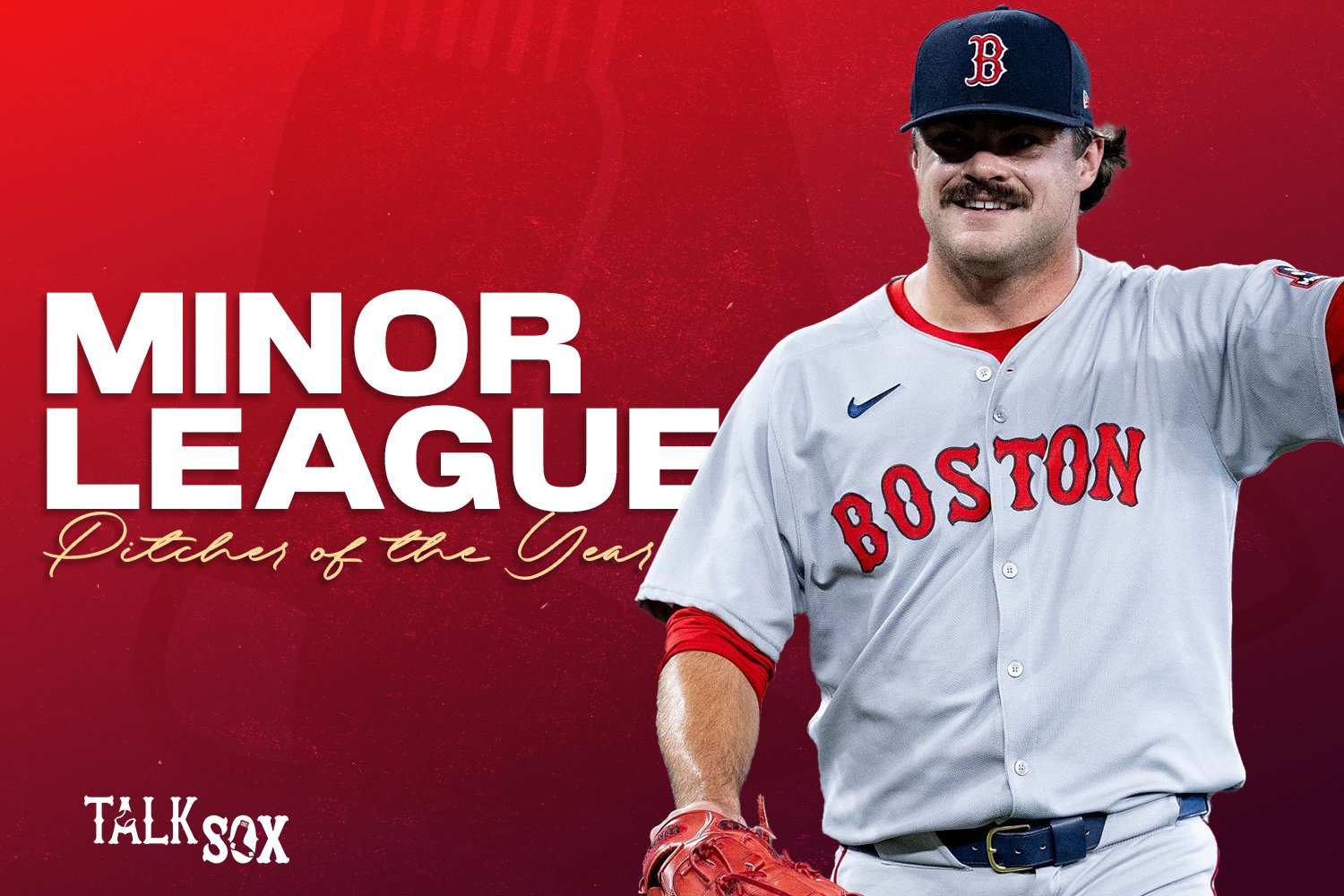 While the Boston Red Sox's season just ended, the minor league season has been completed for quite some time. As such, it's time to recognize the top players across the Red Sox organization. Within the Minor Leagues, the Red Sox had a number of excellent performers that solidified themselves as legitimate prospects within their system. Among those top performers, a few pitchers such as Connelly Early, Brandon Clarke, and Yhoiker Fajardo, among others, emerged as top pitching prospects. However, it was Payton Tolle who undoubtedly had the best season among any Red Sox minor league pitcher as he made his MLB debut in the same season in which he made his MiLB debut. Tolle didn't spend a whole lot of time at any level of the minors this year, as he dominated every step of the way. A second-round draft pick out of Texas Christian a year ago, Tolle made made his professional debut on April 8 with High-A Greenville, where his season ironically got off to a poor start due to a performance in which he gave up six runs on six hits in just 1 2/3 innings. Fortunately for the big lefty, he turned things around rather quickly, as he made nine more starts for Greenville prior to his promotion to Double-A Portland. High-A would be where he spent most of his time in the minors, delivering 49 2/3 innings across 10 starts and 11 total appearances. He finished the level with a 38.3% strikeout rate, which ranked third among all High-A pitchers with at least 40 innings in 2025, while his 31.6% strikeout minus walk rate ranked the highest. Tolle went on to dominate at Double-A Portland where he really started to gain the attention of mainstream baseball media. He made only six appearances at the level, but didn't give up more than one earned run in any game. In 27 total innings, Tolle posted a 1.67 ERA, 2.40 FIP, 0.74 WHIP, .143 batting average against, and a 30.3% strikeout minus walk rate. Each mark ranked within the top three among all Red Sox pitchers with at least 20 innings in Double-A this year. His strikeout minus walk rate ranked fifth among all Double-A pitchers with at least 20 innings. Tolle was then promoted to Triple-A Worcester, where he made his first start on August 10. His stint at Triple-A would be even shorter than his Double-A stint, as he went on to make just two more starts prior to getting the call to the big leagues. In his three starts for the WooSox, he gave up six earned runs across 15 innings, good for a 3.60 ERA along with a 3.36 FIP, 0.87 WHIP, and a .193 batting average against. He also only issued two walks behind a 70% strike rate, which only confirmed his control and command of the strike zone was major-league-ready. In fact, he didn't yield a walk rate over 7.1% at any of his three stops in the minors. Tolle's command was likely the factor that dictated how fast he moved through the system, given that he already had MLB-ready stuff. With the positive returns, there was no reason not to give him a shot in The Show after the big league team designated Walker Buehler for assignment, opening up a spot in the rotation for Tolle. Tolle finished the campaign with 91 2/3 innings in the minors with a 3.04 ERA, 2.75 FIP, 0.99 WHIP, .201 batting average against, and a 30.2 strikeout minus walk rate. Among the 48 Red Sox Minor league pitchers with at least 50 innings pitched, Tolle held the best WHIP, strikeout rate, and strikeout minus walk rate, while his FIP ranked fourth overall. Tolle's stellar 2025 season continued into his MLB debut, as he dueled with Paul Skenes of the Pirates on August 29 at Fenway Park, delivering 5 1/3 innings while allowing two earned runs and notching eight strikeouts. He made two more starts before transitioning to the bullpen. His final MLB stat line wasn't pretty, as he finished with a 6.06 ERA across 16 1/3 innings, but he certainly showed flashes of what we can expect from him at the big league level moving forward.
 -
Five Red Sox Prospects Who Underperformed Expectations in 2025
Billy Mock posted an article in Minor Leagues
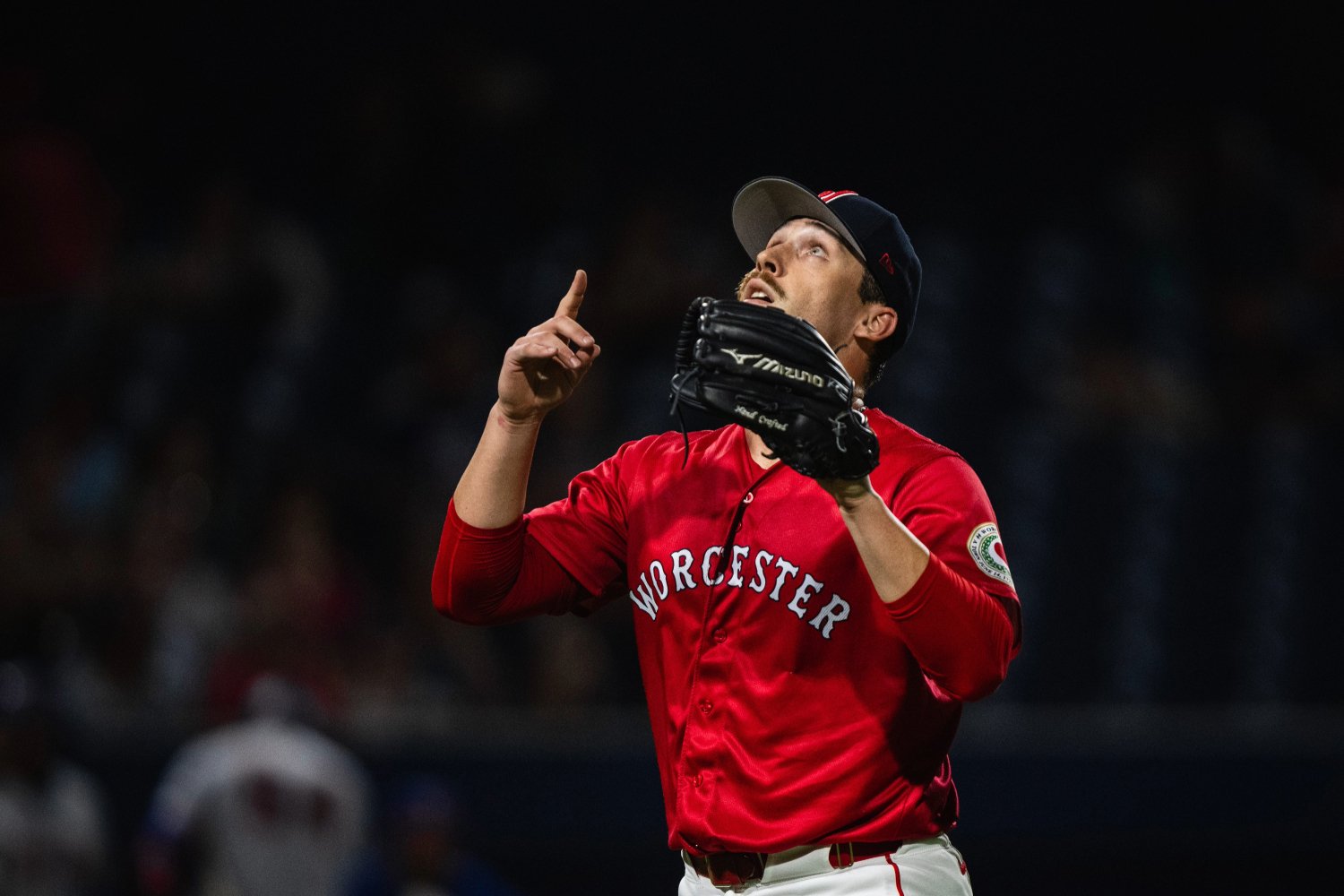 With the 2025 Red Sox minor league season coming to a close, it's time to take a look back on the performance of some of the top prospects in the organization. Coming into the season, these five prospects brought some high expectations with them, but didn't quite live up to them. This is not to say they no longer project as valuable big league ball players, but rather that the team may need to pump the brakes and reassess what 2026 and beyond might look like for them now that we have a better picture of what they could be. After all, how a player responds to a down year is just as important as what they bring to the table at their best. Yophery Rodriguez Yophery Rodriguez entered Boston's farm system earlier this year as the return in a trade that sent pitcher Quinn Priester to the Brewers. Initially, this looked like a steal for the Red Sox—and still could be in the long run. However, Rodriguez's production didn't quite match his 2024 performance. When it is expected that a young, toolsy prospect like Rodriguez should in fact take a step forward in his second year of full-season ball, it's easy to feel let down by his performance in Boston's system. Rodriguez was the top signee in Milwaukee's 2023 international signing class, and after tearing up the Dominican Summer League that year, he posted a solid season with Low-A Carolina. In 484 plate appearances at just the age of 18, Rodriguez hit seven home runs on his way to a 112 wRC+. In 2025, he played just three games in Milwaukee's system before being traded to Boston. In those 101 games he spent with the Red Sox at High-A Greenville, he hit five home runs with a .642 OPS and a 92 wRC+. The good news for Rodriguez is there is still a lot of promise for the young outfield prospect. Despite the drop in overall production, he managed to decrease his strikeout rate while maintaining his walk rate from last year thanks to his mature approach for his age. He has also proven to be a positive base runner and defender, which is where he is likely to accrue a lot of his value. It's also important to note that he doesn't turn 20 until the end of this year, so there's still plenty of leash for Rodriguez. However, given that he was acquired for an MLB-ready pitcher, a tough campaign at the plate following the trade isn't super encouraging. Conrad Cason While there is still plenty of hype around Conrad Cason, the young, two-way player makes this list due to the fact that we weren't able to see what he is capable of because of injury. An eighth-round draft pick out of high school a year ago, Cason signed with the Red Sox for one million dollars over his slot value. Scouts across baseball preferred Cason as a pitcher, but the Red Sox went ahead and signed him as a two-way player to give him a shot at doing both in the lower levels of the minors. Unfortunately for the now-19-year-old Cason, he only appeared in one game as a pitcher and two games as a hitter in 2025. Arm fatigue plagued him for the majority of the year before his season ended in August, as he underwent Tommy John surgery. While Cason doesn't necessarily fit the mold of an "underperforming" prospect simply because he was barely on the field in 2025, it's still disappointing to have not seen what he can do in the pro ranks yet, given the Red Sox's belief in his two-way ability. It was always expected that Cason was going to eventually transition to pitching full-time if his bat wasn't showing any significant production. While returning from Tommy John surgery as a pitcher is definitely still in the cards for Cason, there is a lot more uncertainty around what his future looks like moving forward. David Sandlin David Sandlin was an acquisition via trade prior to the 2024 season after he was drafted in the 11th round by the Royals in 2022. Since entering Boston's system, Sandlin has shown promise as one of the top pitching prospects in the organization, but it has yet to really show up in his production. Sandlin opened with the Red Sox in Double-A Portland, where he spent half of 2024. His performance did improve from 2024 to 2025, with his ERA dropping by two runs, going from 5.61 to 3.61. While his strikeout and walk numbers trended in opposite directions, he did manage to limit home runs at a much better pace, with his HR/9 at Double-A going from 2.45 in 2024 to 0.77 in 2025. His solid start to the season led to a promotion to Triple-A Worcester later on, but he found nowhere near the amount of success as he did in Double-A. Sandlin transitioned nearly full-time to the bullpen, making one start for Worcester while appearing in 14 games in a relief role. In 23 2/3 innings of work, Sandlin posted a 7.61 ERA, 5.27 FIP, and a 2.03 WHIP. On top of those numbers, his strikeout rate on the season dropped nearly ten percent from what it was last year, going from 33.2% to 23.4%. The adjustment needed for transitioning to a bullpen role can likely be attributed to these numbers, but it's not very promising regardless considering Sandlin is set to turn 25 before the 2026 campaign. There are still plenty of characteristics in his profile that can lead to future success in the big leagues, but there are some obvious concerns that need to be addressed beforehand. Yoeilin Cespedes As did Yophery Rodriguez, Yoeilin Cespedes received the highest signing bonus from his respective team during the 2023 international signing period. Upon his entrance into Boston's system, Cespedes tore up short-season ball. As an undersized 17-year-old in the Dominican Summer League, he hit six home runs on his way to a .953 OPS and a 146 wRC+ across 209 plate appearances. Injuries shortened his 2024 campaign in the Florida Complex League, but in the 25 games he did appear in, he continued to hit at a high level, blasting five home runs with a 1.015 OPS and a 155 wRC+. Entering his age-19 season and first year of full-season ball with Low-A Salem, Cespedes came into 2025 with a lot of hype. However, he didn't quite live up to it. He did stay healthy, but only mustered up a .668 OPS and an 88 wRC+. The jump from short-season to full-season ball is a common difficulty spike for young, international prospects like Cespedes, so there isn't too much to worry about. However, given what we saw from him in the DSL and FCL, there was hope he'd make it to High-A before the year was out. Having just turned 20 earlier in September, Cespedes certainly has a lot of time to figure it out at the lower levels of the minors, but he'll need to learn a lot from this year to get back on track. Antonio Anderson Antonio Anderson is another prospect that the Red Sox would have liked to see take a substantial step forward given that 2025 was his second year of full-season ball. Anderson was a third-round draft pick in 2023, and while players drafted out of high school are more of a risk than college players, there is still an expectation for them to be able to handle the lower levels of the minors with some ease. That hasn't quite been the case for Anderson, and his promotion to High-A Greenville earlier this season certainly showed that. He struggled at Low-A Salem a year ago, where he hit five home runs while slugging just .270 on his way to a .581 OPS and a 77 wRC+ in 482 plate appearances. He managed to right the ship in 2025 in Salem, posting a .924 OPS and a 162 wRC+ in 101 plate appearances before his promotion to Greenville. Following his promotion, his slugging percentage dropped back down below .300 as he hit just two home runs, while his strikeout rate jumped up to 34.5%, a career high to this point. Anderson doesn't necessarily have a standout tool that is going to carry him through the minors. With that being said, it would have been great for either his hit or power tool to develop further. He is a switch hitter, but has struggled a lot against right-handed pitching to this point in his career, so there isn't a whole lot to dream on with his ability to hit from both sides of the plate. The 2026 season will be a pivotal year for the development of his bat, given that he isn't a plus runner and is an average defender at third base.
 -
With the 2025 Red Sox minor league season coming to a close, it's time to take a look back on the performance of some of the top prospects in the organization. Coming into the season, these five prospects brought some high expectations with them, but didn't quite live up to them. This is not to say they no longer project as valuable big league ball players, but rather that the team may need to pump the brakes and reassess what 2026 and beyond might look like for them now that we have a better picture of what they could be. After all, how a player responds to a down year is just as important as what they bring to the table at their best. Yophery Rodriguez Yophery Rodriguez entered Boston's farm system earlier this year as the return in a trade that sent pitcher Quinn Priester to the Brewers. Initially, this looked like a steal for the Red Sox—and still could be in the long run. However, Rodriguez's production didn't quite match his 2024 performance. When it is expected that a young, toolsy prospect like Rodriguez should in fact take a step forward in his second year of full-season ball, it's easy to feel let down by his performance in Boston's system. Rodriguez was the top signee in Milwaukee's 2023 international signing class, and after tearing up the Dominican Summer League that year, he posted a solid season with Low-A Carolina. In 484 plate appearances at just the age of 18, Rodriguez hit seven home runs on his way to a 112 wRC+. In 2025, he played just three games in Milwaukee's system before being traded to Boston. In those 101 games he spent with the Red Sox at High-A Greenville, he hit five home runs with a .642 OPS and a 92 wRC+. The good news for Rodriguez is there is still a lot of promise for the young outfield prospect. Despite the drop in overall production, he managed to decrease his strikeout rate while maintaining his walk rate from last year thanks to his mature approach for his age. He has also proven to be a positive base runner and defender, which is where he is likely to accrue a lot of his value. It's also important to note that he doesn't turn 20 until the end of this year, so there's still plenty of leash for Rodriguez. However, given that he was acquired for an MLB-ready pitcher, a tough campaign at the plate following the trade isn't super encouraging. Conrad Cason While there is still plenty of hype around Conrad Cason, the young, two-way player makes this list due to the fact that we weren't able to see what he is capable of because of injury. An eighth-round draft pick out of high school a year ago, Cason signed with the Red Sox for one million dollars over his slot value. Scouts across baseball preferred Cason as a pitcher, but the Red Sox went ahead and signed him as a two-way player to give him a shot at doing both in the lower levels of the minors. Unfortunately for the now-19-year-old Cason, he only appeared in one game as a pitcher and two games as a hitter in 2025. Arm fatigue plagued him for the majority of the year before his season ended in August, as he underwent Tommy John surgery. While Cason doesn't necessarily fit the mold of an "underperforming" prospect simply because he was barely on the field in 2025, it's still disappointing to have not seen what he can do in the pro ranks yet, given the Red Sox's belief in his two-way ability. It was always expected that Cason was going to eventually transition to pitching full-time if his bat wasn't showing any significant production. While returning from Tommy John surgery as a pitcher is definitely still in the cards for Cason, there is a lot more uncertainty around what his future looks like moving forward. David Sandlin David Sandlin was an acquisition via trade prior to the 2024 season after he was drafted in the 11th round by the Royals in 2022. Since entering Boston's system, Sandlin has shown promise as one of the top pitching prospects in the organization, but it has yet to really show up in his production. Sandlin opened with the Red Sox in Double-A Portland, where he spent half of 2024. His performance did improve from 2024 to 2025, with his ERA dropping by two runs, going from 5.61 to 3.61. While his strikeout and walk numbers trended in opposite directions, he did manage to limit home runs at a much better pace, with his HR/9 at Double-A going from 2.45 in 2024 to 0.77 in 2025. His solid start to the season led to a promotion to Triple-A Worcester later on, but he found nowhere near the amount of success as he did in Double-A. Sandlin transitioned nearly full-time to the bullpen, making one start for Worcester while appearing in 14 games in a relief role. In 23 2/3 innings of work, Sandlin posted a 7.61 ERA, 5.27 FIP, and a 2.03 WHIP. On top of those numbers, his strikeout rate on the season dropped nearly ten percent from what it was last year, going from 33.2% to 23.4%. The adjustment needed for transitioning to a bullpen role can likely be attributed to these numbers, but it's not very promising regardless considering Sandlin is set to turn 25 before the 2026 campaign. There are still plenty of characteristics in his profile that can lead to future success in the big leagues, but there are some obvious concerns that need to be addressed beforehand. Yoeilin Cespedes As did Yophery Rodriguez, Yoeilin Cespedes received the highest signing bonus from his respective team during the 2023 international signing period. Upon his entrance into Boston's system, Cespedes tore up short-season ball. As an undersized 17-year-old in the Dominican Summer League, he hit six home runs on his way to a .953 OPS and a 146 wRC+ across 209 plate appearances. Injuries shortened his 2024 campaign in the Florida Complex League, but in the 25 games he did appear in, he continued to hit at a high level, blasting five home runs with a 1.015 OPS and a 155 wRC+. Entering his age-19 season and first year of full-season ball with Low-A Salem, Cespedes came into 2025 with a lot of hype. However, he didn't quite live up to it. He did stay healthy, but only mustered up a .668 OPS and an 88 wRC+. The jump from short-season to full-season ball is a common difficulty spike for young, international prospects like Cespedes, so there isn't too much to worry about. However, given what we saw from him in the DSL and FCL, there was hope he'd make it to High-A before the year was out. Having just turned 20 earlier in September, Cespedes certainly has a lot of time to figure it out at the lower levels of the minors, but he'll need to learn a lot from this year to get back on track. Antonio Anderson Antonio Anderson is another prospect that the Red Sox would have liked to see take a substantial step forward given that 2025 was his second year of full-season ball. Anderson was a third-round draft pick in 2023, and while players drafted out of high school are more of a risk than college players, there is still an expectation for them to be able to handle the lower levels of the minors with some ease. That hasn't quite been the case for Anderson, and his promotion to High-A Greenville earlier this season certainly showed that. He struggled at Low-A Salem a year ago, where he hit five home runs while slugging just .270 on his way to a .581 OPS and a 77 wRC+ in 482 plate appearances. He managed to right the ship in 2025 in Salem, posting a .924 OPS and a 162 wRC+ in 101 plate appearances before his promotion to Greenville. Following his promotion, his slugging percentage dropped back down below .300 as he hit just two home runs, while his strikeout rate jumped up to 34.5%, a career high to this point. Anderson doesn't necessarily have a standout tool that is going to carry him through the minors. With that being said, it would have been great for either his hit or power tool to develop further. He is a switch hitter, but has struggled a lot against right-handed pitching to this point in his career, so there isn't a whole lot to dream on with his ability to hit from both sides of the plate. The 2026 season will be a pivotal year for the development of his bat, given that he isn't a plus runner and is an average defender at third base. View full article
-
Franklin AriasPayton TolleKyson WitherspoonJhostynxon GarciaBrandon ClarkeLuis PeralesConnelly EarlyJames Tibbs IIIMikey RomeroJuan ValeraHunter DobbinsDavid SandlinDorian SotoJustin GonzalesAnthony EyansonJohanfran GarciaRichard FittsMarcus PhillipsMiguel BleisBlaze Jordan
-
Franklin AriasPayton TolleKyson WitherspoonJhostynxon GarciaBrandon ClarkeLuis PeralesConnelly EarlyJames Tibbs IIIMikey RomeroJuan ValeraHunter DobbinsDavid SandlinDorian SotoJustin GonzalesAnthony EyansonJohanfran GarciaRichard FittsMarcus PhillipsMiguel BleisBlaze Jordan
-
 It felt like it took forever for the 2025 MLB Draft to finally come around, but in the blink of an eye, it is already behind us. Following four selections on Sunday for the Red Sox, they packed in 17 more on Monday and now have 21 new prospects to introduce to the system (if they all sign). It was Craig Breslow's second year at the helm of the ship for the draft, and if the last two drafts have told us anything, it's that he has a specific strategy. In each of the last two drafts, the Red Sox have selected more pitchers than position players, and on an even more extreme level here in 2025. Last year, 13 of their 20 selections were pitchers, while 15 of their 21 selections this year were pitchers as well. On a more specific level, the Red Sox have shown they love college pitchers. Of the 28 pitchers selected in the last two drafts, only one of them was a prep—that being Conrad Cason, who is a two-way player, so his situation is different. Prior to Breslow taking over, there was more of a lean towards position players, and a lot more were taken from the prep class than there was here in 2025. In fact, the Red Sox only selected one prep prospect this year and it wasn't until the 19th round when they took Fabian Bonilla, an outfielder from Puerto Rico. The strategy seems to be establishing a high-floor for the class by taking more established college guys, and then elevating something in their game that stands out. For example, Maximus Martin was the Red Sox's 10th-round pick out of Kansas State. Nothing about Martin's game really jumps off the page, except for his power. His hit tool and glove are fringy, but at least good enough to help him stick around in the lower levels of the minors. However, if the power really clicks at the next level and the Red Sox can get the most out of it, that can certainly be a carrying tool for him. Christian Foutch is another name that stands out in this regard. He was selected in the fifth round out of Arkansas where he was primarily a reliever. Relievers obviously don't come with the same kind of long-term value that a starter does, but he has the makings of a really good reliever. If the Red Sox can really tap into his pitch mix and develop him further, you could be looking back at him as the team's best selection from this draft. There are plenty of profiles with a similar story in this class. While there was an emphasis on pitching in this draft, as was the case last year, there was an even more specific type of pitcher the Red Sox were looking for. First of all, the first six pitchers selected came from the SEC. Four more in the back half came from the conference as well. That goes back to the idea of setting a high floor for the class. They got a number of players that have played in the highest level of amateur baseball for at least the last two seasons. On top of that, they also targeted pitchers with big frames built for higher workloads. They only had two pitchers come in at less than 200 pounds, and all of them were at least 6'2". Marcus Phillips, their comp round-A pick out of Tennessee, came in as the biggest pitcher, standing in at 6'4" and 246 pounds. That certainly set the standard for what they were looking for moving forward as a handful of guys came in at around the same size. Once again, they're checking off important boxes before they even enter the system so they can focus on really refining their games and adding polish. It's a great strategy for the draft if you're using the international signing market to land more of your high-upside position players, which the Red Sox have done as well. While there are a number of players down the board that could be potential steals, I still think the biggest steal comes from their selection of Kyson Witherspoon in the first round. While the consensus had Witherspoon right outside of the top tier of pitchers which consisted of Kade Anderson, Jamie Arnold, Liam Doyle, and Seth Hernandez, I felt like Witherspoon belonged in the same conversation. I personally believed he was the fourth best pitcher in this draft, but he was the sixth one selected. Kade Anderson was the only pitcher selected that I felt came with less risk than Witherspoon. Given the Red Sox's ability to get the most out of their pitchers at the minor league level, we could be looking at this pick as one of the franchise's best first round picks in recent memory. With the draft now being said and done, I'm not sure you can point to any of these selections as "bad picks". When you take a deeper look at each player, there's something in every profile that suggests there's some big league upside somewhere in it. Of course, not all of these players will make the big leagues with the Red Sox, but I do feel confident that we can look back on this class as one with a higher success rate than most organizations.
 -
It felt like it took forever for the 2025 MLB Draft to finally come around, but in the blink of an eye, it is already behind us. Following four selections on Sunday for the Red Sox, they packed in 17 more on Monday and now have 21 new prospects to introduce to the system (if they all sign). It was Craig Breslow's second year at the helm of the ship for the draft, and if the last two drafts have told us anything, it's that he has a specific strategy. In each of the last two drafts, the Red Sox have selected more pitchers than position players, and on an even more extreme level here in 2025. Last year, 13 of their 20 selections were pitchers, while 15 of their 21 selections this year were pitchers as well. On a more specific level, the Red Sox have shown they love college pitchers. Of the 28 pitchers selected in the last two drafts, only one of them was a prep—that being Conrad Cason, who is a two-way player, so his situation is different. Prior to Breslow taking over, there was more of a lean towards position players, and a lot more were taken from the prep class than there was here in 2025. In fact, the Red Sox only selected one prep prospect this year and it wasn't until the 19th round when they took Fabian Bonilla, an outfielder from Puerto Rico. The strategy seems to be establishing a high-floor for the class by taking more established college guys, and then elevating something in their game that stands out. For example, Maximus Martin was the Red Sox's 10th-round pick out of Kansas State. Nothing about Martin's game really jumps off the page, except for his power. His hit tool and glove are fringy, but at least good enough to help him stick around in the lower levels of the minors. However, if the power really clicks at the next level and the Red Sox can get the most out of it, that can certainly be a carrying tool for him. Christian Foutch is another name that stands out in this regard. He was selected in the fifth round out of Arkansas where he was primarily a reliever. Relievers obviously don't come with the same kind of long-term value that a starter does, but he has the makings of a really good reliever. If the Red Sox can really tap into his pitch mix and develop him further, you could be looking back at him as the team's best selection from this draft. There are plenty of profiles with a similar story in this class. While there was an emphasis on pitching in this draft, as was the case last year, there was an even more specific type of pitcher the Red Sox were looking for. First of all, the first six pitchers selected came from the SEC. Four more in the back half came from the conference as well. That goes back to the idea of setting a high floor for the class. They got a number of players that have played in the highest level of amateur baseball for at least the last two seasons. On top of that, they also targeted pitchers with big frames built for higher workloads. They only had two pitchers come in at less than 200 pounds, and all of them were at least 6'2". Marcus Phillips, their comp round-A pick out of Tennessee, came in as the biggest pitcher, standing in at 6'4" and 246 pounds. That certainly set the standard for what they were looking for moving forward as a handful of guys came in at around the same size. Once again, they're checking off important boxes before they even enter the system so they can focus on really refining their games and adding polish. It's a great strategy for the draft if you're using the international signing market to land more of your high-upside position players, which the Red Sox have done as well. While there are a number of players down the board that could be potential steals, I still think the biggest steal comes from their selection of Kyson Witherspoon in the first round. While the consensus had Witherspoon right outside of the top tier of pitchers which consisted of Kade Anderson, Jamie Arnold, Liam Doyle, and Seth Hernandez, I felt like Witherspoon belonged in the same conversation. I personally believed he was the fourth best pitcher in this draft, but he was the sixth one selected. Kade Anderson was the only pitcher selected that I felt came with less risk than Witherspoon. Given the Red Sox's ability to get the most out of their pitchers at the minor league level, we could be looking at this pick as one of the franchise's best first round picks in recent memory. With the draft now being said and done, I'm not sure you can point to any of these selections as "bad picks". When you take a deeper look at each player, there's something in every profile that suggests there's some big league upside somewhere in it. Of course, not all of these players will make the big leagues with the Red Sox, but I do feel confident that we can look back on this class as one with a higher success rate than most organizations. View full article
-
Boston Red Sox 2025 MLB Draft Day Two Recap: College Pitchers Galore
Billy Mock posted an article in MLB Draft
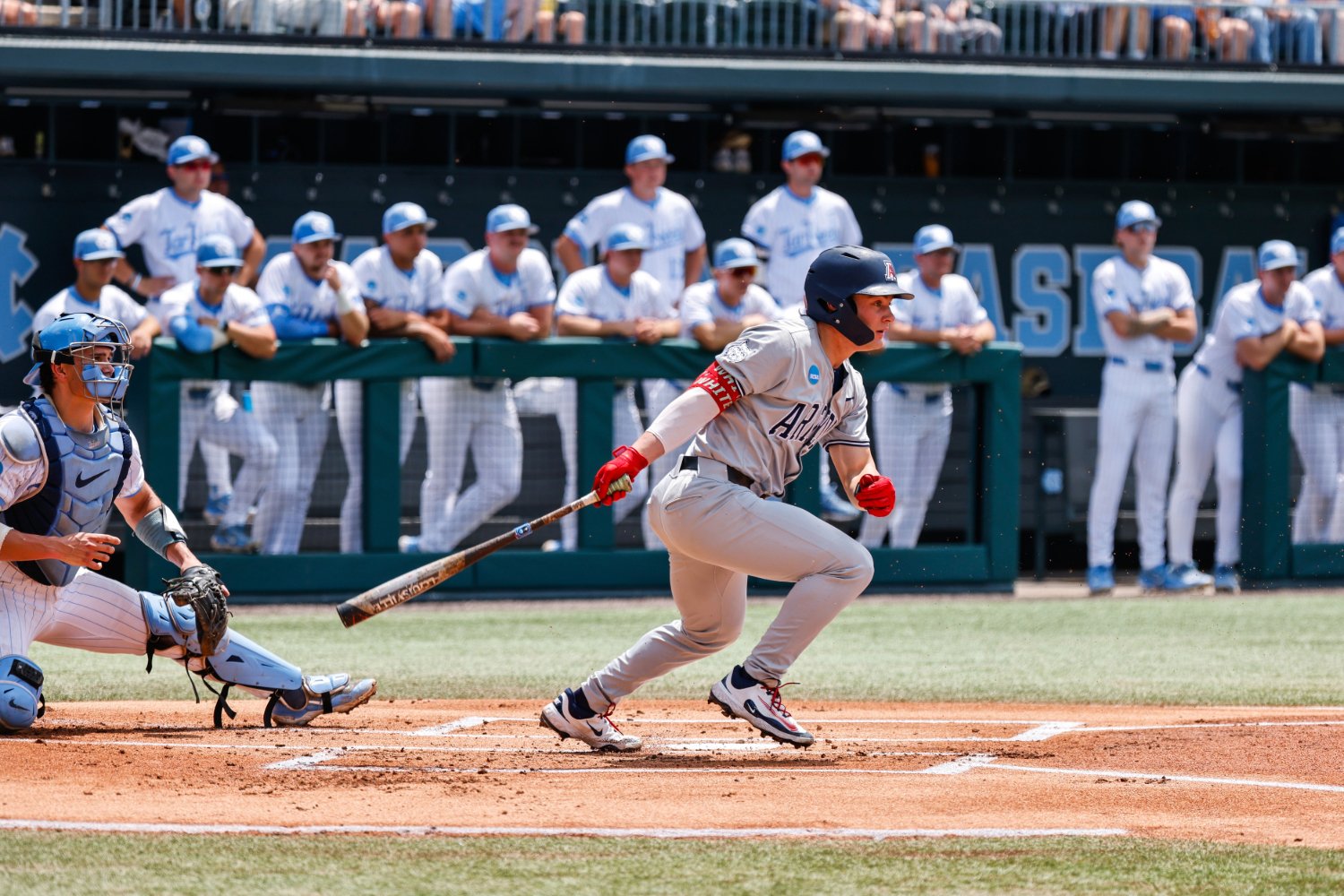 The Boston Red Sox have made all of their picks for the 2025 draft, and suffice to say, it's a pitcher-heavy class for Craig Breslow and company. We'll have a recap of all their Day Two picks below, and you can use the following links to see our prior analysis and in-depth reviews of their previous picks. Round 1 Recap Round 1-A Recap Round 2-C Recap Round 3 Recap Day One Recap Picks 6-10 Recap Without further ado, the full list of Day Two selections for the Boston Red Sox during the 2025 MLB Draft: Round 4, 118th overall: Mason White, SS, Arizona Mason White is a 21-year-old junior, standing in at 5'11" and 178 pounds. He played shortstop for Arizona this year where he posted a .327/.412/.689 slash line, good for a 1.101 OPS with 20 home runs from the left side of the plate. He could stick at shortstop but might profile better at second base. Round 5, 148th overall: Christian Foutch, RHP Arkansas Another 21-year-old junior, Foutch pitched exclusively out of the bullpen for the Razorbacks for the entirety of his college career. In 21 appearances this spring, he logged a 4.09 ERA while striking out 31 hitters and allowing just a .182 batting average against. His upper-90s fastball paired with an advanced splitter stand out here. Round 6, 178th overall: Leighton Finley, RHP, Georgia Finley is a big right-hander, standing in at 6'6" and 225 pounds. A weekend starter for the Bulldogs, he posted a 4.85 ERA across 68 2/3 innings. He throws a mid-to-upper-90s fastball with a deceptive delivery and a wider pitch mix that features a few offerings with some promise. Round 7, 208th overall: Myles Patton, LHP, Texas A&M Patton is a strike-throwing lefty with a starter's frame. He made 15 starts for Texas A&M this spring, posting a 5.26 ERA across 77 innings with 82 strikeouts. He throws a low-90s fastball that plays up due to his release traits, along with a tight slider. He has flashed a few more pitches that can be developed further at the next level. Round 8, 238th overall: Dylan Brown, LHP, Old Dominion Brown is a big, physical lefty standing in at 6'5" and 230 pounds. He threw 82 innings across 15 starts for Old Dominion this spring, posting a 4.06 ERA while striking out 102. He has a three-pitch mix, featuring an above-average slider and changeup along with a mediocre low-90s fastball. His advanced feel and command stands out. Round 9, 268th overall: Jacob Mayers, RHP, LSU Mayers certainly stands out in this draft class having one of the most unique fastballs. He has ran it up as high as 102 mph, averaging 23 inches of induced vertical break. However, he's way too reliant on it and has yet to really develop any secondaries. He made 17 appearances out of the bullpen for the Tigers this year, posting a 4.80 ERA in 15 innings with 26 strikeouts. Round 10, 298th overall: Maximus Martin, SS, Kansas State In 243 plate appearances with Kansas State this spring, Martin hit 14 home runs with a 1.031 OPS. He has some of the best raw power in the class but has some holes in his hit tool and approach at the plate. His defensive home is also a question mark as he probably ends up as a second baseman or corner outfielder. Round 11, 328th overall: Barrett Morgan, RHP, Cowley County Community College Morgan is the one and only JUCO product for the Red Sox in this year's class. He's another big pitcher, standing in at 6'5" and 230 pounds and just turned 20. He pitched exclusively out of the bullpen in his two seasons with Cowley County, posting a 0.42 ERA while striking out 40 in 21 1/3 innings this spring. Round 12, 358th overall: Ethan Walker, LHP Kentucky Walker just turned 21 and is slightly undersized as a starting pitcher at 6'2" and 195 pounds. He served as both a starter and a reliever this spring with Kentucky. In 46 1/3 innings across 14 appearances, Walker posted a 4.08 ERA while striking out 49. The Red Sox are betting on their ability to develop his lefty frame. Round 13, 388th overall: Jack Winnay, 3B Wake Forest Winnay primarily played first base this spring for Wake Forest, but was announced as a third baseman when selected. In 282 plate appearances, he hit 15 home runs with a .296/.416/.571 slash line, good for a .987 OPS which was actually down from his 1.042 OPS as a sophomore. They likely are looking to get more out of the glove here with the expectation his bat won't quite play at first base. Round 14, 418th overall: Carter Rasmussen, RHP, Wofford Rasmussen is another big, physical college arm, standing in at 6'5" and 235 pounds. He pitched primarily out of the bullpen for the entirety of his college career. In 19 appearances this spring, he threw 47 2/3 innings to the tune of a 3.21 ERA with 63 strikeouts. Round 15, 448th overall: Skylar King, OF, West Virginia King is a 21-year-old junior that spent his entire college career at West Virginia. He's a glove-first center fielder with speed but minimal offensive production. In 259 plate appearances this spring, he hit just three home runs with an .813 OPS. His glove will keep him around if he can produce at a baseline level at the plate. Round 16, 478th overall: Jason Gilman, LHP, Kean University Gilman is the only college senior taken by the Red Sox in this class, and the only Division 3 player as well. Although undersized for a starter, Gilman got quite the work load under his belt this spring, throwing 112 1/3 innings across 14 starts. He posted a 2.08 ERA with 150 strikeouts with four complete games as well. It's never a bad idea to bet on a throwback starter this late in the draft. Round 17, 508th overall: Patrick Galle, RHP, Ole Miss Galle is a draft-eligible sophomore that just turned 21. He has a short track record at Ole Miss, appearing in just 14 games out of the bullpen while posting an 8.18 ERA. However, this is an upside play for the Red Sox, as he features an upper-90s fastball and a cutter that misses a lot of bats. Round 18, 538th overall: Cade Fisher, LHP, Auburn Fisher is a junior on the older side of the class, as he turns 22 in September. He spent two seasons with Florida before transferring to Auburn, where pitched as both a starter and a reliever. In 42 1/3 innings across 14 appearances this spring, he posted 4.68 ERA and struck out 54. Round 19, 568th overall: Fabian Bonilla, OF, Christian Military Academy (P.R.) Bonilla is the lone high school player to be selected by the Red Sox in this class. The Puerto Rican product just turned 18, so he's young for the class. He already has the frame of a big league hitter and has flashed some solid athleticism as well. He plays outfield and both corner infield spots, so he projects as a bat-first corner player. Round 20, 598th overall: Garrison Sumner, RHP, BYU Sumner is the final pick for the Red Sox this year. He's a 21-year-old junior that posted an 8.32 ERA across 14 appearances this spring with BYU. His fastball sits in the low-90s without much intrigue, but the secondaries stand out as offerings that miss bats at a high rate. He's a lottery ticket, but in the last round of the draft, a guy just needs one skill to get a team to bet on him. What do you think of the Red Sox's Day Two haul? Let us know in the comments!
- 1 comment
-
- 1
-

-
- 2025 mlb draft
- mason white
- (and 1 more)
-
The Boston Red Sox have made all of their picks for the 2025 draft, and suffice to say, it's a pitcher-heavy class for Craig Breslow and company. We'll have a recap of all their Day Two picks below, and you can use the following links to see our prior analysis and in-depth reviews of their previous picks. Round 1 Recap Round 1-A Recap Round 2-C Recap Round 3 Recap Day One Recap Picks 6-10 Recap Without further ado, the full list of Day Two selections for the Boston Red Sox during the 2025 MLB Draft: Round 4, 118th overall: Mason White, SS, Arizona Mason White is a 21-year-old junior, standing in at 5'11" and 178 pounds. He played shortstop for Arizona this year where he posted a .327/.412/.689 slash line, good for a 1.101 OPS with 20 home runs from the left side of the plate. He could stick at shortstop but might profile better at second base. Round 5, 148th overall: Christian Foutch, RHP Arkansas Another 21-year-old junior, Foutch pitched exclusively out of the bullpen for the Razorbacks for the entirety of his college career. In 21 appearances this spring, he logged a 4.09 ERA while striking out 31 hitters and allowing just a .182 batting average against. His upper-90s fastball paired with an advanced splitter stand out here. Round 6, 178th overall: Leighton Finley, RHP, Georgia Finley is a big right-hander, standing in at 6'6" and 225 pounds. A weekend starter for the Bulldogs, he posted a 4.85 ERA across 68 2/3 innings. He throws a mid-to-upper-90s fastball with a deceptive delivery and a wider pitch mix that features a few offerings with some promise. Round 7, 208th overall: Myles Patton, LHP, Texas A&M Patton is a strike-throwing lefty with a starter's frame. He made 15 starts for Texas A&M this spring, posting a 5.26 ERA across 77 innings with 82 strikeouts. He throws a low-90s fastball that plays up due to his release traits, along with a tight slider. He has flashed a few more pitches that can be developed further at the next level. Round 8, 238th overall: Dylan Brown, LHP, Old Dominion Brown is a big, physical lefty standing in at 6'5" and 230 pounds. He threw 82 innings across 15 starts for Old Dominion this spring, posting a 4.06 ERA while striking out 102. He has a three-pitch mix, featuring an above-average slider and changeup along with a mediocre low-90s fastball. His advanced feel and command stands out. Round 9, 268th overall: Jacob Mayers, RHP, LSU Mayers certainly stands out in this draft class having one of the most unique fastballs. He has ran it up as high as 102 mph, averaging 23 inches of induced vertical break. However, he's way too reliant on it and has yet to really develop any secondaries. He made 17 appearances out of the bullpen for the Tigers this year, posting a 4.80 ERA in 15 innings with 26 strikeouts. Round 10, 298th overall: Maximus Martin, SS, Kansas State In 243 plate appearances with Kansas State this spring, Martin hit 14 home runs with a 1.031 OPS. He has some of the best raw power in the class but has some holes in his hit tool and approach at the plate. His defensive home is also a question mark as he probably ends up as a second baseman or corner outfielder. Round 11, 328th overall: Barrett Morgan, RHP, Cowley County Community College Morgan is the one and only JUCO product for the Red Sox in this year's class. He's another big pitcher, standing in at 6'5" and 230 pounds and just turned 20. He pitched exclusively out of the bullpen in his two seasons with Cowley County, posting a 0.42 ERA while striking out 40 in 21 1/3 innings this spring. Round 12, 358th overall: Ethan Walker, LHP Kentucky Walker just turned 21 and is slightly undersized as a starting pitcher at 6'2" and 195 pounds. He served as both a starter and a reliever this spring with Kentucky. In 46 1/3 innings across 14 appearances, Walker posted a 4.08 ERA while striking out 49. The Red Sox are betting on their ability to develop his lefty frame. Round 13, 388th overall: Jack Winnay, 3B Wake Forest Winnay primarily played first base this spring for Wake Forest, but was announced as a third baseman when selected. In 282 plate appearances, he hit 15 home runs with a .296/.416/.571 slash line, good for a .987 OPS which was actually down from his 1.042 OPS as a sophomore. They likely are looking to get more out of the glove here with the expectation his bat won't quite play at first base. Round 14, 418th overall: Carter Rasmussen, RHP, Wofford Rasmussen is another big, physical college arm, standing in at 6'5" and 235 pounds. He pitched primarily out of the bullpen for the entirety of his college career. In 19 appearances this spring, he threw 47 2/3 innings to the tune of a 3.21 ERA with 63 strikeouts. Round 15, 448th overall: Skylar King, OF, West Virginia King is a 21-year-old junior that spent his entire college career at West Virginia. He's a glove-first center fielder with speed but minimal offensive production. In 259 plate appearances this spring, he hit just three home runs with an .813 OPS. His glove will keep him around if he can produce at a baseline level at the plate. Round 16, 478th overall: Jason Gilman, LHP, Kean University Gilman is the only college senior taken by the Red Sox in this class, and the only Division 3 player as well. Although undersized for a starter, Gilman got quite the work load under his belt this spring, throwing 112 1/3 innings across 14 starts. He posted a 2.08 ERA with 150 strikeouts with four complete games as well. It's never a bad idea to bet on a throwback starter this late in the draft. Round 17, 508th overall: Patrick Galle, RHP, Ole Miss Galle is a draft-eligible sophomore that just turned 21. He has a short track record at Ole Miss, appearing in just 14 games out of the bullpen while posting an 8.18 ERA. However, this is an upside play for the Red Sox, as he features an upper-90s fastball and a cutter that misses a lot of bats. Round 18, 538th overall: Cade Fisher, LHP, Auburn Fisher is a junior on the older side of the class, as he turns 22 in September. He spent two seasons with Florida before transferring to Auburn, where pitched as both a starter and a reliever. In 42 1/3 innings across 14 appearances this spring, he posted 4.68 ERA and struck out 54. Round 19, 568th overall: Fabian Bonilla, OF, Christian Military Academy (P.R.) Bonilla is the lone high school player to be selected by the Red Sox in this class. The Puerto Rican product just turned 18, so he's young for the class. He already has the frame of a big league hitter and has flashed some solid athleticism as well. He plays outfield and both corner infield spots, so he projects as a bat-first corner player. Round 20, 598th overall: Garrison Sumner, RHP, BYU Sumner is the final pick for the Red Sox this year. He's a 21-year-old junior that posted an 8.32 ERA across 14 appearances this spring with BYU. His fastball sits in the low-90s without much intrigue, but the secondaries stand out as offerings that miss bats at a high rate. He's a lottery ticket, but in the last round of the draft, a guy just needs one skill to get a team to bet on him. What do you think of the Red Sox's Day Two haul? Let us know in the comments! View full article
- 1 reply
-
- 1
-
-
- 2025 mlb draft
- mason white
- (and 1 more)
-
You can see a full recap of the Red Sox's Day One selections here. They selected Kyson Witherspoon (Round 1), Marcus Phillips (Round 1 - CBA), Henry Godbout (Round 2 - Compensatory), and Anthony Eyanson (Round 3). You can check out our write-ups on Round 4 pick Mason White and Round 5 pick Christian Foutch here, and in the rumors and notes section of the site. In the "middle" rounds of the second day of the draft, the Red Sox opted to go for a quintet of college players, four of whom are pitchers, following the general trend from Day One. You can find analyses of each of their five picks from Rounds 6-10 below. And, as a reminder, you can find the full list of Red Sox picks, signing status, and bios right here on our Red Sox draft tracker. Round 6, 178th overall: Leighton Finley, RHP, Georgia Finley is a physical college right-hander, standing in at 6'6" and 225 pounds. He was a weekend starter for the Bulldogs, logging 14 starts and posting a 4.85 ERA over 68 2/3 innings. He ranked 357th on Baseball America's draft board. Finley's deceptive delivery stands out as an outlier, and he also added some velocity this year as he continued to physically mature. The fastball lived in the mid-90s this year, reaching 98 mph. He has flashed some feel for multiple secondaries as well, throwing a low-80s slider and a mid-70s curveball while also mixing in a sinker and a changeup from time to time. He has a back-end starter ceiling with his likely outcome being a middle reliever. Round 7, 208th overall: Myles Patton, LHP, Texas A&M The Red Sox continue their run of taking SEC pitchers by selecting the 21-year-old lefty out of Texas A&M. Patton emerged from the prep ranks in California, where he stuck around for college ball as he attended Long Beach State for his freshman and sophomore years. Upon transferring to Texas A&M, Patton was a weekend starter for the Aggies this spring, making 14 starts. Patton's ability to fill the strike zone stands out as he only walked 5.1% of the batters he faced this spring. His arsenal consists of a low-90s fastball and a low-80s tight slider. The fastball plays up because of the elite extension he creates and his ability to locate it at the top of the zone. The slider is a big chase pitch and get some in-zone whiff as well. He mixes in a changeup against right-handers while flashing a cutter and a curveball, so there's a lot to work with here. Round 8, 238th overall: Dylan Brown, LHP, Old Dominion While it's not an SEC arm, the Red Sox stay in the college pitcher demographic to select Dylan Brown out of Old Dominion. Brown ranked 226th on Baseball America's draft board following an impressive season for the Monarchs. The 21-year-old lefty delivered 82 innings across 15 starts this year with a 4.06 ERA while striking out 102. This could be the Red Sox's 2025 version of Payton Tolle a year ago. Brown is a big lefty, standing in at 6'5" and 230 pounds, and features a delivery and release traits similar to Tolle's. It's a three pitch-mix right now. He throws a low-90s fastball that is dependent on location, but Brown is another pitcher with above-average command, so he utilizes it well. It will be interesting to see the Red Sox's plan with that pitch. His slider is his best pitch, and is very similar to Patton's, so there might be a trend in what they're looking for in secondaries this year. The changeup has also produced excellent results and should be a go-to offering against right-handed hitters at the next level. Round 9, 268th overall: Jacob Mayers, RHP, LSU The Red Sox did their due diligence at LSU this spring, as Mayers is the second LSU pitcher to be selected by the Red Sox. A Louisiana native, Mayers spent his first two college seasons at Nicholls State before transferring to LSU for his junior year. While he was a starter for Nicholls State, he transitioned to a full-time relief role for the Tigers where he projects to remain long-term. He appeared in 17 games out of the bullpen this year, striking out 36.1% of the batters he faced with a 4.80 ERA. He's the first primary reliever taken by the Red Sox this year. Mayers nearly walked as many batters he struck out this year, so "fringy" doesn't do the lack of command any justice. However, he has really loud stuff which makes him a fun project in this system. His mid to upper-90s fastball that topped out at 102 mph this spring averaged 23 inches of induced vertical break. That's averaged, not topped out at. It's a true outlier fastball that can be special with the necessary polish. He threw it 73.4% of the time this year, rarely mixing in an upper-80s slider and a low-90s splitter. A lot of work to be done here, but he could be really interesting soon. Round 10, 298th overall: Maximus Martin, SS, Kansas State Maximus Martin is just the third position player selected by the Red Sox thus far in the draft, and is the third college shortstop taken in as many picks. Martin bounced between Rutgers and Georgia State in his freshman and sophomore years before landing with Kansas State in his junior year and breaking out as a legitimate prospect. In 243 plate appearances this spring, he posted a 1.031 OPS with 14 home runs. Martin ranked 223rd on MLB Pipeline's draft rankings and 184th on Baseball America's. The power is the carrying tool here, as Martin has posted some of the best raw power numbers in his class dating back to his high school days. However, there are some questions around the hit tool, as he's a bit too aggressive and doesn't have the bat-to-ball skills to make up for it. He's a fringy defender at shortstop and is expected to move to either second base or a corner outfield role at the next level. What do you think of the Red Sox's first batch of selections from Day Two of the 2025 MLB Draft? Let us know in the comments! View full article
-
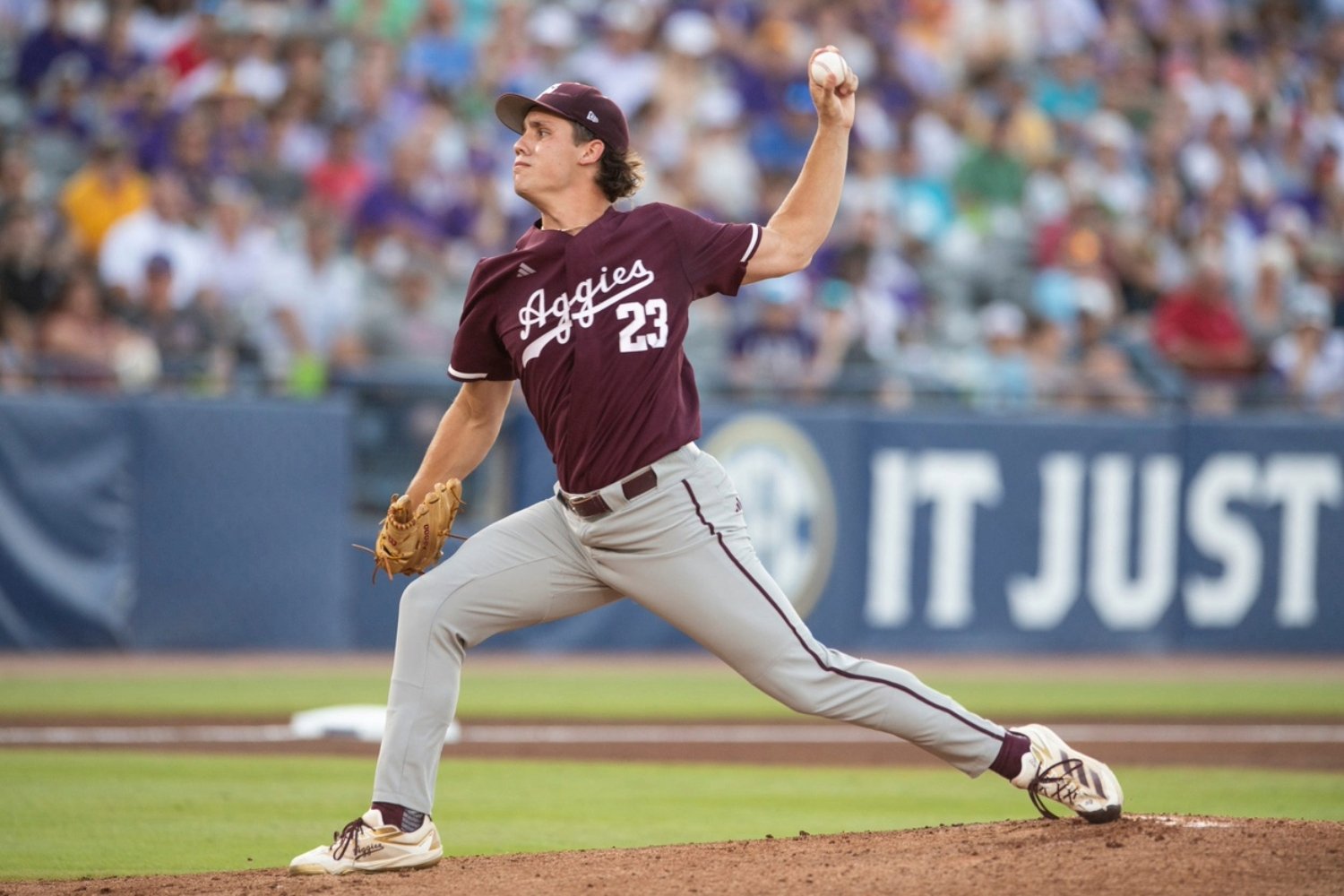 You can see a full recap of the Red Sox's Day One selections here. They selected Kyson Witherspoon (Round 1), Marcus Phillips (Round 1 - CBA), Henry Godbout (Round 2 - Compensatory), and Anthony Eyanson (Round 3). You can check out our write-ups on Round 4 pick Mason White and Round 5 pick Christian Foutch here, and in the rumors and notes section of the site. In the "middle" rounds of the second day of the draft, the Red Sox opted to go for a quintet of college players, four of whom are pitchers, following the general trend from Day One. You can find analyses of each of their five picks from Rounds 6-10 below. And, as a reminder, you can find the full list of Red Sox picks, signing status, and bios right here on our Red Sox draft tracker. Round 6, 178th overall: Leighton Finley, RHP, Georgia Finley is a physical college right-hander, standing in at 6'6" and 225 pounds. He was a weekend starter for the Bulldogs, logging 14 starts and posting a 4.85 ERA over 68 2/3 innings. He ranked 357th on Baseball America's draft board. Finley's deceptive delivery stands out as an outlier, and he also added some velocity this year as he continued to physically mature. The fastball lived in the mid-90s this year, reaching 98 mph. He has flashed some feel for multiple secondaries as well, throwing a low-80s slider and a mid-70s curveball while also mixing in a sinker and a changeup from time to time. He has a back-end starter ceiling with his likely outcome being a middle reliever. Round 7, 208th overall: Myles Patton, LHP, Texas A&M The Red Sox continue their run of taking SEC pitchers by selecting the 21-year-old lefty out of Texas A&M. Patton emerged from the prep ranks in California, where he stuck around for college ball as he attended Long Beach State for his freshman and sophomore years. Upon transferring to Texas A&M, Patton was a weekend starter for the Aggies this spring, making 14 starts. Patton's ability to fill the strike zone stands out as he only walked 5.1% of the batters he faced this spring. His arsenal consists of a low-90s fastball and a low-80s tight slider. The fastball plays up because of the elite extension he creates and his ability to locate it at the top of the zone. The slider is a big chase pitch and get some in-zone whiff as well. He mixes in a changeup against right-handers while flashing a cutter and a curveball, so there's a lot to work with here. Round 8, 238th overall: Dylan Brown, LHP, Old Dominion While it's not an SEC arm, the Red Sox stay in the college pitcher demographic to select Dylan Brown out of Old Dominion. Brown ranked 226th on Baseball America's draft board following an impressive season for the Monarchs. The 21-year-old lefty delivered 82 innings across 15 starts this year with a 4.06 ERA while striking out 102. This could be the Red Sox's 2025 version of Payton Tolle a year ago. Brown is a big lefty, standing in at 6'5" and 230 pounds, and features a delivery and release traits similar to Tolle's. It's a three pitch-mix right now. He throws a low-90s fastball that is dependent on location, but Brown is another pitcher with above-average command, so he utilizes it well. It will be interesting to see the Red Sox's plan with that pitch. His slider is his best pitch, and is very similar to Patton's, so there might be a trend in what they're looking for in secondaries this year. The changeup has also produced excellent results and should be a go-to offering against right-handed hitters at the next level. Round 9, 268th overall: Jacob Mayers, RHP, LSU The Red Sox did their due diligence at LSU this spring, as Mayers is the second LSU pitcher to be selected by the Red Sox. A Louisiana native, Mayers spent his first two college seasons at Nicholls State before transferring to LSU for his junior year. While he was a starter for Nicholls State, he transitioned to a full-time relief role for the Tigers where he projects to remain long-term. He appeared in 17 games out of the bullpen this year, striking out 36.1% of the batters he faced with a 4.80 ERA. He's the first primary reliever taken by the Red Sox this year. Mayers nearly walked as many batters he struck out this year, so "fringy" doesn't do the lack of command any justice. However, he has really loud stuff which makes him a fun project in this system. His mid to upper-90s fastball that topped out at 102 mph this spring averaged 23 inches of induced vertical break. That's averaged, not topped out at. It's a true outlier fastball that can be special with the necessary polish. He threw it 73.4% of the time this year, rarely mixing in an upper-80s slider and a low-90s splitter. A lot of work to be done here, but he could be really interesting soon. Round 10, 298th overall: Maximus Martin, SS, Kansas State Maximus Martin is just the third position player selected by the Red Sox thus far in the draft, and is the third college shortstop taken in as many picks. Martin bounced between Rutgers and Georgia State in his freshman and sophomore years before landing with Kansas State in his junior year and breaking out as a legitimate prospect. In 243 plate appearances this spring, he posted a 1.031 OPS with 14 home runs. Martin ranked 223rd on MLB Pipeline's draft rankings and 184th on Baseball America's. The power is the carrying tool here, as Martin has posted some of the best raw power numbers in his class dating back to his high school days. However, there are some questions around the hit tool, as he's a bit too aggressive and doesn't have the bat-to-ball skills to make up for it. He's a fringy defender at shortstop and is expected to move to either second base or a corner outfield role at the next level. What do you think of the Red Sox's first batch of selections from Day Two of the 2025 MLB Draft? Let us know in the comments!
 -
Day one of the 2025 MLB Draft is in the books, and it's hard not to coin the Red Sox as early winners of the draft. The draft has become more relevant for Red Sox fans as the organization has become one of the premier organizations in baseball when it comes to identifying and developing home grown talent. They've produced some of the most exciting prospects in baseball over the last couple of years, and the draft is another opportunity to add even more talent to a pipeline that is one of the best in baseball. They leaned heavily on the college class early today, specifically with pitchers. They had four picks, and opened their draft with the ace out of the University of Oklahoma. 15th overall: Kyson Witherspoon, RHP, Oklahoma The Red Sox arguably got one of the steals of the draft as Kyson Witherspoon fell to them with the 15th overall pick. While the Angels made a big splash, taking Tyler Bremner second overall, Witherspoon is still the consensus top right-handed college pitcher in this class. The understanding was that the Sox were targeting a college bat or a prep shortstop at this point in the class, with the expectation that the top arms in the class would likely be off the board. Coming into the season, Witherspoon looked like a lock to land in the first round, but elevated himself into the top ten conversation with a strong start to his junior campaign. When it was all said and done, he posted a 2.56 ERA while striking out 124 batters to just 23 walks in 95 innings across 16 starts. The intrigue with Witherspoon compared to the rest of the class is the polished arsenal. He throws an upper-90s fastball with excellent traits, two different slider shapes, and has shown feel for both a curveball and a changeup. The Red Sox love cutters and high-spin breaking balls. Witherspoon throws both and the fastball is also good enough to remain as an above-average offering at the next level. Witherspoon is also an elite athlete, another trait pitching development values with their arms. Take a look at a number of their recent picks at pitchers, and a lot of them move around like they can hold their own as a center fielder. Witherspoon has some of the highest upside as an athlete which allows him to repeat his mechanics with ease and suggests his above-average command may project as plus to elite. Witherspoon nearly checks every box as a starter which is exactly what you want from your first round pick in the draft. The less you have to worry about developing at the next level, the less pressure on the player to perform. With that being said, Witherspoon could be one of the fastest movers we’ve seen in the Red Sox farm system. 33rd overall: Marcus Phillips, RHP, Tennessee Sticking with right-handed SEC arms, the Red Sox selected Marcus Phillips with their first round competitive balance pick via the Brewers in the Quinn Priester trade. Phillips was one of the wild cards among the top pitchers in this class, but he'll be in good hands as he enters the Red Sox farm system. He was projected to land somewhere in the second round, so it looks like the Red Sox could be cutting a deal with him as the 33rd overall pick. The slot-value for this pick is $2.898 million. Phillips had some of the most electric stuff in college baseball this year, but comes with some risk as well. He has grabbed triple digits with his fastball and features a hard slider that sits in the high-80s. He primarily used those two pitches this year and was dominant with them, striking out 98 hitters in 83 innings. He has shown advanced feel for a changeup but didn't use it much at Tennessee. The risk comes from the fact that Phillips’s third offering isn’t established yet regardless of the results it has gotten in a small sample size. The command has been fringy at best as well, and you typically want to see average to above-average command from pitchers coming from the college ranks. However, this isn’t the first time the Red Sox are taking a pitcher with control question marks, and it won’t be the last. You’re betting on the stuff here, and the 6’4” 250 pound frame suggests he already has the ability to handle a starter’s workload. This pick reminds me of their selections of Brandon Clarke a year ago. Both are big, physical athletes that were primarily two-pitch pitchers at the college level. The difference between Phillips and Clarke is that Phillips had a more proven track record at the college level. Given the early success Clarke has found in the lower levels of the minors, I would imagine the front office has a similar plan for Phillips moving forward. 75th overall: Henry Godbout, SS, Virginia With their third pick on day one, the Red Sox selected their first position player. The Sox are no strangers to doing business with the University of Virginia as Kyle Teel, their first round pick in 2023, came from the same program. Given the depth of the prep position players in this class, it may have come as a surprise that the Red Sox didn't pull from that group with either of their first three picks. This is Craig Breslow's second draft as the Chief Baseball Officer in Boston, and there seems to have been a strategy you can point to in each of the last two drafts. They have targeted high-floor college prospects, and Virginia churns out those types of players year in and year out. Henry Godbout is yet another to add to the list. An interesting note on this pick is that Godbout played most of his college career at second base and was listed as a second baseman headed into the draft. However, the Red Sox selected him as a shortstop. His production at the plate took a step back in his junior year, as his OPS went from 1.117 to .895, so perhaps player development believes they can unlock something in him defensively to turn him into a glove-first middle infielder as there doesn’t appear to be a lot of remaining upside in the bat. With more plate appearances in 2025, Godbout struck out less than he did in 2024, so the hit tool took a step forward while there was a significant drop in his power production, even after adding some size in the offseason. With all of that being said, Godbout could be an interesting development project moving forward as it seems the Red Sox could take a number of different approaches with him upon his entrance into the system. 87th overall: Anthony Eyanson, RHP, LSU The scouting department obviously spent a lot of time in the SEC this spring as they selected their third SEC right-hander in just four picks. Eyanson was a draft-eligible sophomore that was projected closer to the top 50, so it will be interesting to see what the signing bonus will be here. I would imagine this ends up being an over-slot deal considering the three picks ahead of him have the makings of an under-slot deal. Eyanson is no stranger to the big moment. If you watched the College World Series, you might remember him starting the clinching game for LSU in the final against Coastal Carolina. He appeared in a total of 20 games this year for the Tigers, pitching to the tune of a 3.00 ERA while striking out 152 over 108 innings. Eyanson’s pitch-mix fits in well with what the Red Sox have done in recent years. He can really spin the ball as his slider stands out with a lot of sweep and depth. Given his feel for spinning the ball, he’s a great candidate for ditching the traditional 4-seam fastball for a cutter. His fastball is heavily reliant on location as the velocity doesn’t stand out and it doesn’t have a particularly outstanding movement profile. You typically need one of those things to hold on to a 4-seam fastball with the Red Sox. A cutter fits in well to an arsenal that features multiple breaking balls with a lot of glove-side movement. Eyanson has a decent work load under his belt already, so he could be a pitcher that slots right into High-A as an effective starter after he signs. How do you think the Red Sox fared on Day One of the draft? Let us know in the comments! View full article
-
Boston Red Sox 2025 MLB Draft Day One Recap: Lots of College Pitchers
Billy Mock posted an article in MLB Draft
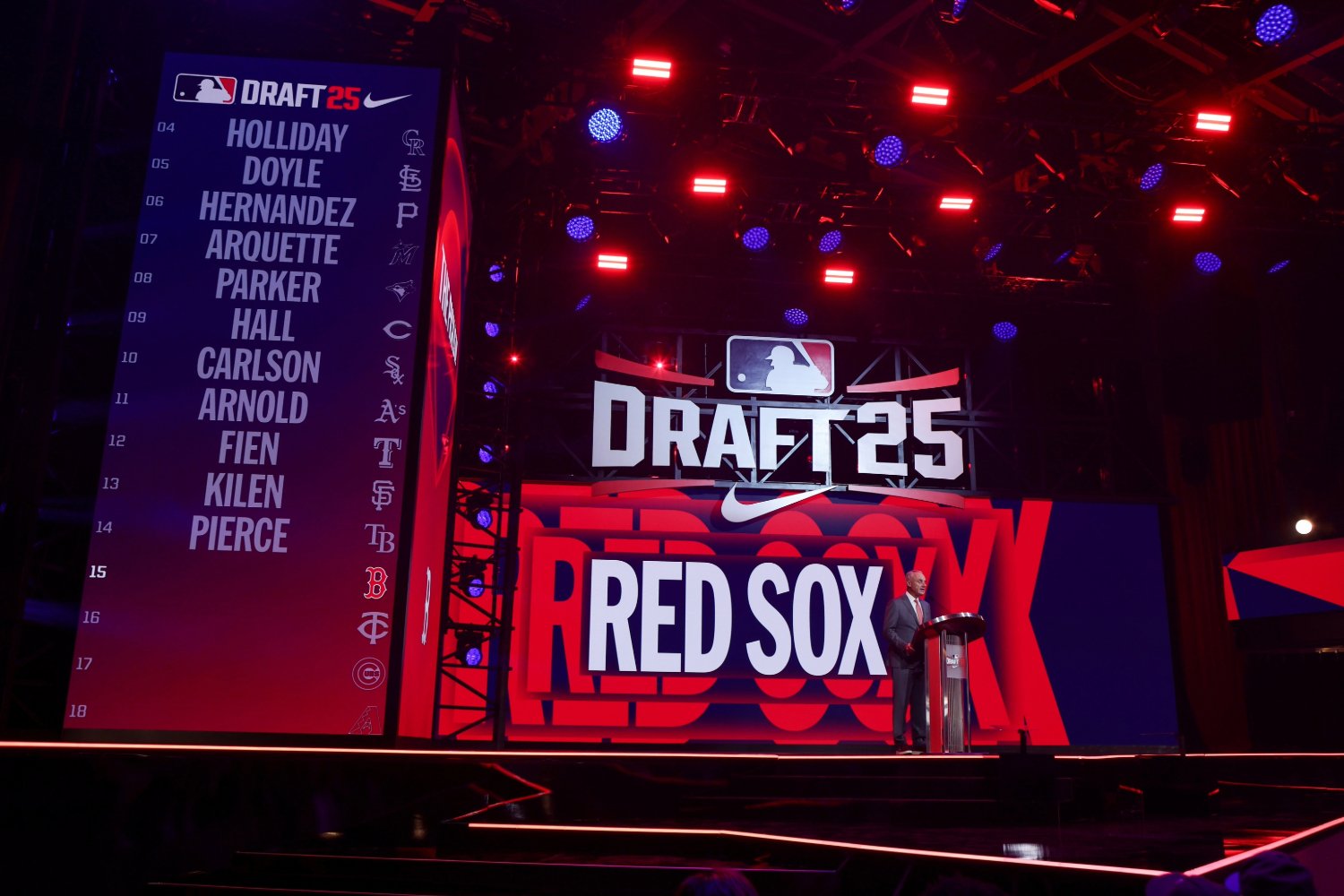 Day one of the 2025 MLB Draft is in the books, and it's hard not to coin the Red Sox as early winners of the draft. The draft has become more relevant for Red Sox fans as the organization has become one of the premier organizations in baseball when it comes to identifying and developing home grown talent. They've produced some of the most exciting prospects in baseball over the last couple of years, and the draft is another opportunity to add even more talent to a pipeline that is one of the best in baseball. They leaned heavily on the college class early today, specifically with pitchers. They had four picks, and opened their draft with the ace out of the University of Oklahoma. 15th overall: Kyson Witherspoon, RHP, Oklahoma The Red Sox arguably got one of the steals of the draft as Kyson Witherspoon fell to them with the 15th overall pick. While the Angels made a big splash, taking Tyler Bremner second overall, Witherspoon is still the consensus top right-handed college pitcher in this class. The understanding was that the Sox were targeting a college bat or a prep shortstop at this point in the class, with the expectation that the top arms in the class would likely be off the board. Coming into the season, Witherspoon looked like a lock to land in the first round, but elevated himself into the top ten conversation with a strong start to his junior campaign. When it was all said and done, he posted a 2.56 ERA while striking out 124 batters to just 23 walks in 95 innings across 16 starts. The intrigue with Witherspoon compared to the rest of the class is the polished arsenal. He throws an upper-90s fastball with excellent traits, two different slider shapes, and has shown feel for both a curveball and a changeup. The Red Sox love cutters and high-spin breaking balls. Witherspoon throws both and the fastball is also good enough to remain as an above-average offering at the next level. Witherspoon is also an elite athlete, another trait pitching development values with their arms. Take a look at a number of their recent picks at pitchers, and a lot of them move around like they can hold their own as a center fielder. Witherspoon has some of the highest upside as an athlete which allows him to repeat his mechanics with ease and suggests his above-average command may project as plus to elite. Witherspoon nearly checks every box as a starter which is exactly what you want from your first round pick in the draft. The less you have to worry about developing at the next level, the less pressure on the player to perform. With that being said, Witherspoon could be one of the fastest movers we’ve seen in the Red Sox farm system. 33rd overall: Marcus Phillips, RHP, Tennessee Sticking with right-handed SEC arms, the Red Sox selected Marcus Phillips with their first round competitive balance pick via the Brewers in the Quinn Priester trade. Phillips was one of the wild cards among the top pitchers in this class, but he'll be in good hands as he enters the Red Sox farm system. He was projected to land somewhere in the second round, so it looks like the Red Sox could be cutting a deal with him as the 33rd overall pick. The slot-value for this pick is $2.898 million. Phillips had some of the most electric stuff in college baseball this year, but comes with some risk as well. He has grabbed triple digits with his fastball and features a hard slider that sits in the high-80s. He primarily used those two pitches this year and was dominant with them, striking out 98 hitters in 83 innings. He has shown advanced feel for a changeup but didn't use it much at Tennessee. The risk comes from the fact that Phillips’s third offering isn’t established yet regardless of the results it has gotten in a small sample size. The command has been fringy at best as well, and you typically want to see average to above-average command from pitchers coming from the college ranks. However, this isn’t the first time the Red Sox are taking a pitcher with control question marks, and it won’t be the last. You’re betting on the stuff here, and the 6’4” 250 pound frame suggests he already has the ability to handle a starter’s workload. This pick reminds me of their selections of Brandon Clarke a year ago. Both are big, physical athletes that were primarily two-pitch pitchers at the college level. The difference between Phillips and Clarke is that Phillips had a more proven track record at the college level. Given the early success Clarke has found in the lower levels of the minors, I would imagine the front office has a similar plan for Phillips moving forward. 75th overall: Henry Godbout, SS, Virginia With their third pick on day one, the Red Sox selected their first position player. The Sox are no strangers to doing business with the University of Virginia as Kyle Teel, their first round pick in 2023, came from the same program. Given the depth of the prep position players in this class, it may have come as a surprise that the Red Sox didn't pull from that group with either of their first three picks. This is Craig Breslow's second draft as the Chief Baseball Officer in Boston, and there seems to have been a strategy you can point to in each of the last two drafts. They have targeted high-floor college prospects, and Virginia churns out those types of players year in and year out. Henry Godbout is yet another to add to the list. An interesting note on this pick is that Godbout played most of his college career at second base and was listed as a second baseman headed into the draft. However, the Red Sox selected him as a shortstop. His production at the plate took a step back in his junior year, as his OPS went from 1.117 to .895, so perhaps player development believes they can unlock something in him defensively to turn him into a glove-first middle infielder as there doesn’t appear to be a lot of remaining upside in the bat. With more plate appearances in 2025, Godbout struck out less than he did in 2024, so the hit tool took a step forward while there was a significant drop in his power production, even after adding some size in the offseason. With all of that being said, Godbout could be an interesting development project moving forward as it seems the Red Sox could take a number of different approaches with him upon his entrance into the system. 87th overall: Anthony Eyanson, RHP, LSU The scouting department obviously spent a lot of time in the SEC this spring as they selected their third SEC right-hander in just four picks. Eyanson was a draft-eligible sophomore that was projected closer to the top 50, so it will be interesting to see what the signing bonus will be here. I would imagine this ends up being an over-slot deal considering the three picks ahead of him have the makings of an under-slot deal. Eyanson is no stranger to the big moment. If you watched the College World Series, you might remember him starting the clinching game for LSU in the final against Coastal Carolina. He appeared in a total of 20 games this year for the Tigers, pitching to the tune of a 3.00 ERA while striking out 152 over 108 innings. Eyanson’s pitch-mix fits in well with what the Red Sox have done in recent years. He can really spin the ball as his slider stands out with a lot of sweep and depth. Given his feel for spinning the ball, he’s a great candidate for ditching the traditional 4-seam fastball for a cutter. His fastball is heavily reliant on location as the velocity doesn’t stand out and it doesn’t have a particularly outstanding movement profile. You typically need one of those things to hold on to a 4-seam fastball with the Red Sox. A cutter fits in well to an arsenal that features multiple breaking balls with a lot of glove-side movement. Eyanson has a decent work load under his belt already, so he could be a pitcher that slots right into High-A as an effective starter after he signs. How do you think the Red Sox fared on Day One of the draft? Let us know in the comments!
 -
The Red Sox selected Kyson Witherspoon with the 15th overall pick in the MLB Draft. Witherspoon was ranked 10th overall on the TalkSox draft board. Witherspoon is in his second season at Oklahoma after transferring from JC prior to the 2024 season and looks to be in the midst of a major breakout. The stuff has always been loud. It's a plus fastball that sits 95-97 mph but he can run it up close to triple digits at times. It's complemented by a tight slider and an emerging changeup that produced plenty of miss in 2024. Prior to the 2025 season, there was speculation about reliever risk with Witherspoon. Early in the season through the opening weekend of conference play, he's doubled his strikeout rate and halved his walk rate. Tougher tests are ahead, but a continuation of this sort of performance will have him creeping up boards and in the mix for college SP3. When it was all said and done, Witherspoon ripped off 95 IP and maintained a sparkling 2.86 FIP, a 31.8 K%, and a 5.9 BB%. Almost every aspect of his performance took a significant step forwards in 2025 and he'll be just 20 on draft day. As the Red Sox did in 2024 with Braden Montgomery, a high-upside college prospect fell in their laps. Witherspoon was a projected top ten pick on a number of draft boards. With the understanding that all of the tier-one pitchers would be off the board by the time the Sox pick came around, there were rumors that they had their focus on a number of college bats. With that being said, the Red Sox get some great value here with Witherspoon and can likely sign him under the pick's $5.1 million slot value to target a high-upside prep with their next first round pick at 33rd overall in the competitive balance round. You have to go back in time all the way to 2017 when the Sox took Tanner Houck to find the last time they selected a pitcher with their first round pick. With former pitcher Craig Breslow at the helm of the front office now, perhaps this doesn't come as much of a surprise. The farm system has become a pitching factory over the past couple of years, so the Red Sox might offer Witherspoon one of the better shots among every other organization at reaching his ceiling. Witherspoon worked hard at developing both a curveball and a cutter this spring which I would imagine stands out to the front office in Boston. The Sox pitching development has moved away from fastball usage, so the diverse arsenal should fit in well in the organization. Although they have placed less of a priority on fastball usage, they still value really good fastballs. They typically can average fastballs, and it's safe to say Witherspoon's is well above-average. I could see him turning him into a right-handed version of Garrett Crochet with a split-mix between his cutter and four-seam while turning his slider into more of a sweeper and keeping the curveball in the back pocket. Witherspoon's combination of athleticism, command of the strike zone, and deep pitch-mix make him a potential prospect to move fairly quickly through the system. While the Red Sox haven't typically taken that approach with prospects (unless they have a guy like Kristian Campbell absolutely tearing up the minors), this is a pitcher I can see them pushing a bit as the rest of the league is starting to shift towards that approach as well. Regardless of the presence of the other high-end college pitchers in this draft class, I still think Witherspoon can come out on the other side in ten years as the best arm to come from the class. View full article
-
Red Sox Select Kyson Witherspoon 15th Overall in the 2025 MLB Draft
Billy Mock posted an article in MLB Draft
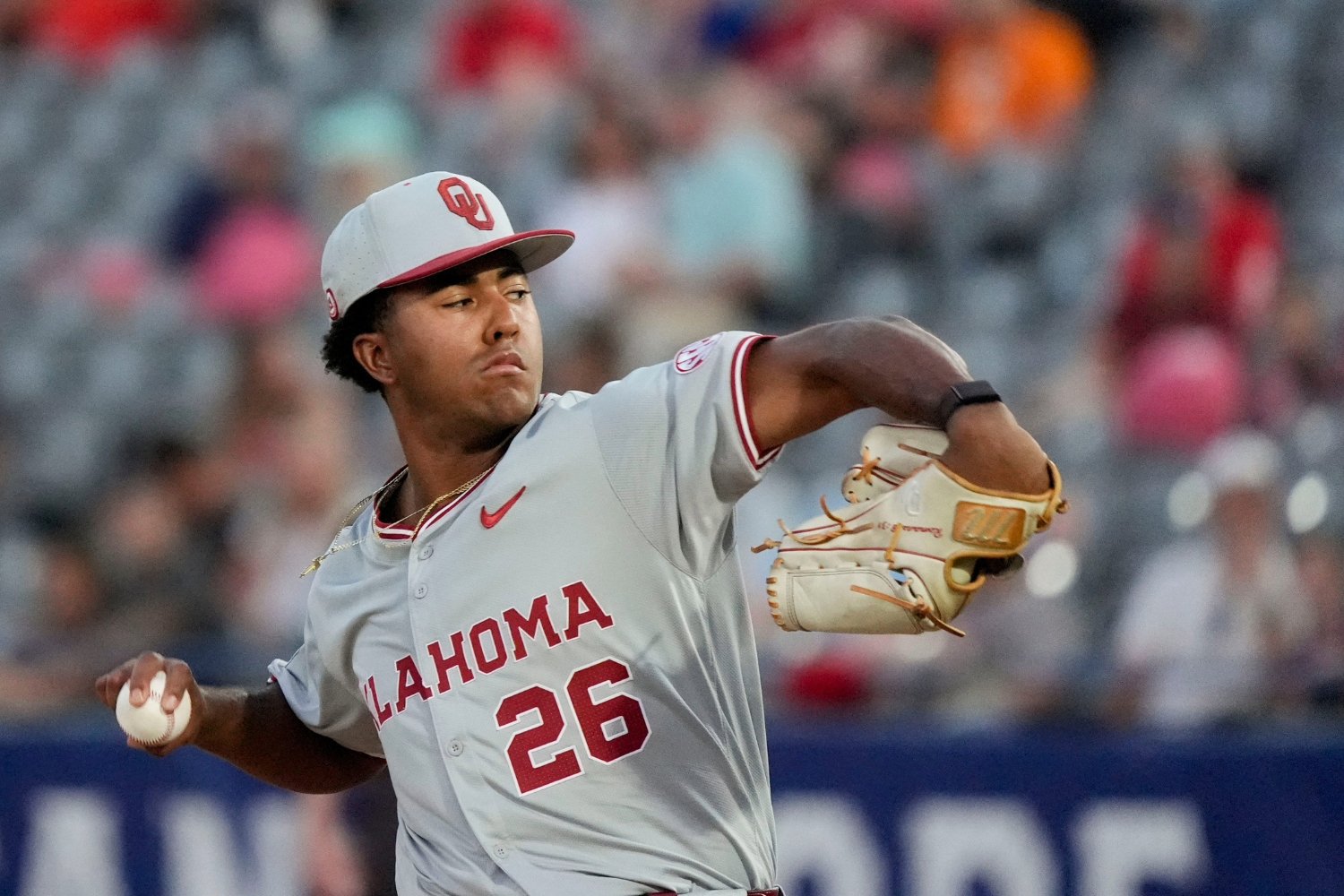 The Red Sox selected Kyson Witherspoon with the 15th overall pick in the MLB Draft. Witherspoon was ranked 10th overall on the TalkSox draft board. Witherspoon is in his second season at Oklahoma after transferring from JC prior to the 2024 season and looks to be in the midst of a major breakout. The stuff has always been loud. It's a plus fastball that sits 95-97 mph but he can run it up close to triple digits at times. It's complemented by a tight slider and an emerging changeup that produced plenty of miss in 2024. Prior to the 2025 season, there was speculation about reliever risk with Witherspoon. Early in the season through the opening weekend of conference play, he's doubled his strikeout rate and halved his walk rate. Tougher tests are ahead, but a continuation of this sort of performance will have him creeping up boards and in the mix for college SP3. When it was all said and done, Witherspoon ripped off 95 IP and maintained a sparkling 2.86 FIP, a 31.8 K%, and a 5.9 BB%. Almost every aspect of his performance took a significant step forwards in 2025 and he'll be just 20 on draft day. As the Red Sox did in 2024 with Braden Montgomery, a high-upside college prospect fell in their laps. Witherspoon was a projected top ten pick on a number of draft boards. With the understanding that all of the tier-one pitchers would be off the board by the time the Sox pick came around, there were rumors that they had their focus on a number of college bats. With that being said, the Red Sox get some great value here with Witherspoon and can likely sign him under the pick's $5.1 million slot value to target a high-upside prep with their next first round pick at 33rd overall in the competitive balance round. You have to go back in time all the way to 2017 when the Sox took Tanner Houck to find the last time they selected a pitcher with their first round pick. With former pitcher Craig Breslow at the helm of the front office now, perhaps this doesn't come as much of a surprise. The farm system has become a pitching factory over the past couple of years, so the Red Sox might offer Witherspoon one of the better shots among every other organization at reaching his ceiling. Witherspoon worked hard at developing both a curveball and a cutter this spring which I would imagine stands out to the front office in Boston. The Sox pitching development has moved away from fastball usage, so the diverse arsenal should fit in well in the organization. Although they have placed less of a priority on fastball usage, they still value really good fastballs. They typically can average fastballs, and it's safe to say Witherspoon's is well above-average. I could see him turning him into a right-handed version of Garrett Crochet with a split-mix between his cutter and four-seam while turning his slider into more of a sweeper and keeping the curveball in the back pocket. Witherspoon's combination of athleticism, command of the strike zone, and deep pitch-mix make him a potential prospect to move fairly quickly through the system. While the Red Sox haven't typically taken that approach with prospects (unless they have a guy like Kristian Campbell absolutely tearing up the minors), this is a pitcher I can see them pushing a bit as the rest of the league is starting to shift towards that approach as well. Regardless of the presence of the other high-end college pitchers in this draft class, I still think Witherspoon can come out on the other side in ten years as the best arm to come from the class.
 -
Really appreciate your feedback! To answer your question about catchers - this piece solely focuses on what the Red Sox could get in return in a scenario where they are really selling off talent to re-stock the farm. We don't know if they plan to buy or sell at the deadline, so they certainly could pursue an established catcher if they wanted to. However, there isn't really a catcher market at the deadline this year. A deal for Adley Rutschman would probably be the closest thing to what you're looking for and nothing suggests Baltimore is looking to move him (although I'm sure they would field offers). I definitely agree with you that Breslow should target an established catcher in either the free agent or trade market if they truly believe they're in a win-now window, but adding a high-end catching prospect to a farm that is already one of the best in baseball would create some solid flexibility. Bateman is a really fun prospect despite his short track record. I think he has the upside to be the top high school pitcher to come from the 2024 draft class. In a sense, he's an outlier for a pitcher his size because of how well he moves. I wouldn't be worried about his size. Yes, he's probably maxed out when it comes to physical projection, but he'd also be at the hands of one of the best player development departments that will know how to get the most out of his body type (why I compared him to Tolle). The days of "overweight" pitchers are over, organizations are in the business of developing true athletes nowadays.
-
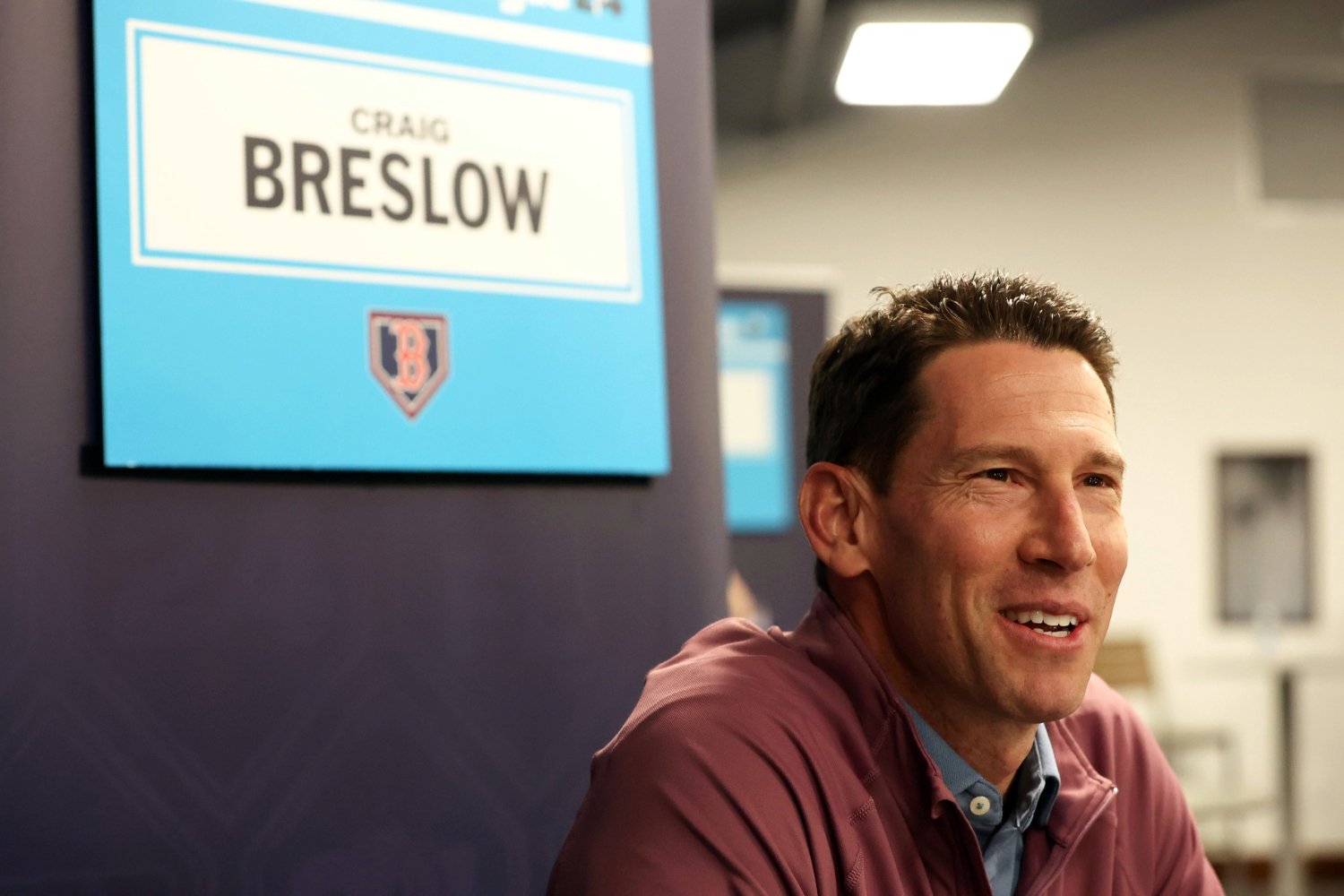 The stove should be heating up soon for the Red Sox as the trade deadline approaches. At 46-45 heading into Monday's game against the hapless Rockies, the Sox are in an interesting situation this year where they could be either buyers or sellers come the end of July, and likely could do a little bit of both. Despite the fact that their high-end prospects will soon be graduating, this is still one of the top farm systems in all of baseball. They have plenty of assets in the farm to acquire some talent at the deadline, but at the same time, adding depth to the farm is never a bad thing, either. My job today is identifying five prospects across the league from teams looking to buy at the deadline that would fit in the Red Sox system. Moises Ballesteros, C, Cubs #2 prospect, MLB #53 It's no secret that the Cubs are looking to buy at the trade deadline in the midst of the race for the NL Central crown. Among this year's group of contenders, they have one of the best farm systems to make a trade from. Of their four prospects ranked in MLB Pipeline's top 100, three are near MLB-ready (or have already debuted for a brief stint in Ballesteros' case) but are blocked for the foreseeable future. With that being said, the Cubs are more than likely going to have to deal one of these guys, especially in what feels like a make-or-break year for them. Outside of Carlos Narvaez, who has been quite the pleasant surprise for the Sox, there is a true lack of catching depth in Boston. It seems likely they will be moving on from Connor Wong pretty soon, and beyond him, there isn't a whole lot of options in the farm that move the needle. Johanfran Garcia is the best catching prospect in the system, but is obviously a few years away from making any sort of impact. A trade for Ballesteros could help answer that problem for the Red Sox. He has been one of the top hitting catchers in the minors dating back to 2023 and is the fifth-ranked catching prospect in baseball right now. In a full season across Double-A Knoxville and Triple-A Iowa, the 21-year-old hit 19 home runs while posting an .826 OPS and a 123 wRC+. He has kept pace thus far in 2025 with an .886 OPS and a 127 wRC+. The premier tool for Ballesteros, and what will likely make him a big league regular, is the hit tool. He has consistently kept his strikeout rate around 15% at each of his stops in the minors despite a pretty aggressive approach. He does a good job of hitting the ball on a line or in the air at a high rate, and has flashed pop to all fields. He does have a bumpy track record when it comes to hitting lefties, so there is some platoon risk with him. However, he could pair well with Carlos Narvaez behind the dish. Narvaez is excellent defensively, but is likely not going to hit this well long-term, and while Ballesteros is not going to turn heads with his glove by any means, he projects as an above-average big league hitter. The bat should warrant Ballesteros at least a platoon role if he were to be traded to the Sox, and he has also gotten reps at first base throughout his minor league career, another obvious need for the roster. He doesn't quite have multi-time All-Star upside (at least until he displays a much better glove behind the dish or more over-the-fence pop), but he at least looks like a very reliable depth piece on a contending team for years to come. It seems like the Red Sox are looking to re-tool rather than completely rebuild, so Ballesteros makes a lot of sense in a trade. Harry Ford, C, Mariners #5 prospect, MLB #56 Keeping up with theme of top catching prospects, we have Harry Ford, the top catching prospect in the Mariners system who also happens to rank right behind Ballesteros overall. In a similar fashion to the Cubs' situation, the Mariners need to acquire some talent at the trade deadline to make a postseason push, and have the assets to do so. And not to mention, Ford is also blocked by the best catcher in the league, Cal Raleigh. Adding Ford to the system would grant them one of the more dynamic catchers in the minors. He was the 12th overall pick to the Mariners in the 2021 draft, one of just four high school catchers drafted in the first round dating back to 2021. With that being said, he entered pro ball with high expectations, and for the most part, he has delivered. He's a very mature hitter at the plate, making excellent swing decisions which has helped him achieve a pretty high floor as a hitter. He swings at pitches outside the zone at a well below-average rate while swinging at pitches in the zone at roughly a league-average rate. The approach has led to a 16.5% walk rate and a .407 on-base percentage for his career. His power production took a dip last year at Double-A Arkansas, but because he was still able to get on base at a high rate, he still clocked a 130 wRC+ on the season which ranked third among all catchers at Double-A last year. While his power has yet to really take off (career-high 15 home runs at High-A Everett), there is another element to Ford's game offensively that makes him an interesting prospect. Despite being behind the plate for the majority of his pro career, Ford is comfortably a 60-grade runner, and should still grade out as above-average even after he has sustained the wear and tear of a few big league seasons. He stole 35 bases at Double-A in 2024, which is the most in a single season by a minor league primary catcher dating all the way back to the early 2000s. At the rate Ford gets on base, his athleticism will be another layer to his game that should help him become an above-average big league catcher. Whether or not he continues to steal bases, he has a good foundation as a solid mover behind the plate. He has recently gotten some reps in the outfield as well, so he should have some flexibility if he's not to stick as a catcher long-term. If he were to move to an outfield role full-time, you could see the bat play up more while he can also really lean into his athleticism. The addition of Ford could be a very low-risk play for the Red Sox if they have what the Mariners are looking for. Boston Bateman, LHP, Padres #5 prospect You can never have enough pitching depth in a farm system, so arms should always be near the top of your list when identifying prospects you want to acquire in a selling period. The Red Sox have become one of the premier organizations when it comes to developing young pitchers, and this deadline may be a chance to add future major league arms to the pitching pipeline. For Boston Bateman, it's not just the name that could be appealing to the Red Sox, but the full profile as well. Bateman was one of the top prep arms to come from last year's draft and was selected 52nd overall in the second round by the Padres. Red Sox fans have begun getting familiar with a minor league arm in their system by the name of Payton Tolle who draws a lot of similarities to Bateman. In fact, Tolle was selected just two spots ahead of Bateman in the same draft as the 50th overall pick. Not only were Tolle and Bateman nearly draft neighbors, but they are nearly the same pitcher. That might excite the front office considering the early returns they've gotten from Tolle. At only 19 years old, Bateman stands in at a massive 6'8" and 240 pounds and moves well for his size. Nearly a whole three years younger than Tolle, there could be a lot more to dream on when it comes to polishing his game. Although Bateman entered San Diego's system last year, he didn't debut until this spring and has spent the entirety of 2025 with Low-A Lake Elsinore. in 60 2/3 innings across 13 starts, he owns a 3.41 ERA and a 27% strikeout rate. The appeal obviously comes from the physicality and his ability to handle larger workloads, but he also creates additional intrigue through his deceptive delivery that features some cross-fire action along with a lower arm angle that helps his fastball play up. The fastball has ticked up this spring, sitting in the mid-90s and has been an excellent table-setter in his arsenal. His big curveball was his go-to secondary out of the draft without true feel for any other offerings, but has developed a slider this spring that has found a lot of success. The addition of another arm-side offering would really complete his pitch-mix as a starter, and a changeup is in the works. It's an interesting pitch and looks a lot like the trendy "kick-change" that pitchers are throwing now, and almost mirrors his slider in terms of shape. The development of his command seems to be ahead of schedule as well as he has turned in an 8.3% walk rate and a 63.4% strike rate thus far in 2025. While the Red Sox likely will be looking for more prospects closer to MLB-ready, Bateman is certainly a pitcher that bulks up your pitching depth and can slot into a lot of organizations as a top-five pitching prospect. Of the five players discussed here, this could be the player most likely to land with the Red Sox considering their ties to the Padres as trade partners for the last couple of weeks. Eduardo Quintero, OF, Dodgers #5 prospect Considering the Dodgers are always looking to add at the trade deadline, it was hard not to take a look at their farm system. A name that jumps off the page but has still managed to fly under the radar despite a breakout season is Eduardo Quintero. A 19-year-old outfielder that signed with the Dodgers out of Venezuela in 2023, Quintero has emerged as one of the better outfield prospects in the lower levels of the minors. Young international prospects typically come with a lot of variance and are very hard to project, so they're often referred to as "lottery tickets" when brought up in trade talks. However, in Quintero's case, he has established a solid foundation of success for himself moving forward in his first year of full-season ball. In 345 plate appearances thus far for Low-A Rancho, he has hit 13 home runs and stole 33 bases, while owning a .963 OPS and a 159 wRC+. Among all qualified full-season hitters 19 years old or younger, he has hit the most home runs and owns the highest OPS while his wRC+ ranks third. The power has certainly taken quite the leap this year for Quintero. In his minor league career leading up to this year, he hit only eight home runs across 557 plate appearances. While the power has shown a lot of promise, it all starts with the hit tool and athleticism for Quintero. He makes consistent hard contact to all fields while chasing pitches outside of the zone at a well below-average rate. At the Dominican Summer League and the Arizona Complex League where strikeout rates are usually inflated for young international prospects, he kept his rates below 20%. Because of the patient approach, he has been able to walk over 15% of the time as well. With the growing power and speed on the bases, there is certainly a lot to like about him as a prospect moving forward. Quintero spent a lot of time catching in Venezuela, so center field is still fairly new to him. He has spent some time in right field where his arm plays well, but he looks like he can be a plus defender in center field long-term with more experience. When you add that element to his game, you're then talking about one of the highest ceilings in the minors. With that being said, Quintero's rising stock may mean that a trade requires a one-for-one swap rather than receiving him in a prospect haul. Regardless, he's looking like a prospect worth betting on in that scenario. Khal Stephen, RHP, Blue Jays #9 prospect To add another pitcher to the mix, we travel across the border to Toronto where the Blue Jays should be in play as buyers at the trade deadline. The Blue Jays did really well in last year's draft, adding Trey Yesavage and Khal Stephen with their first two picks, both of whom are pitchers that came from the college ranks. Given the pressure on the Blue Jays to win this year, one of, if not both, could be trade bait. Stephen is the likelier option considering Yesavage is the best pitcher in the system and could make an impact on the big league squad as early as this year. That's not to say Stephen can't do the same, as he's also looking like a fast mover that can be a big league pitcher sooner rather than later, something the Red Sox would obviously value highly. A Mississippi State product, Stephen opened the season with Low-A Dunedin where he threw 39 1/3 innings across eight starts. He logged a 2.06 ERA and struck out 31.4% of the batters he faced, earning a quick promotion to High-A Vancouver where he has been even better. In 42 1/3 innings across eight starts thus far, he owns a 1.49 ERA and a 0.90 WHIP, while batters are hitting only .184 off of him. For the entire season, Stephen's ERA sits at 1.76 in 81 2/3 innings, a mark that ranks third among all qualified full-season minor league pitchers. The success for Stephen starts with his above-average command. That was his calling card coming out of college as he walked only 5.5% of hitters in his junior year at Mississippi State. He has maintained that level of success in pro ball, walking hitters at a 5.4% clip while striking out hitters at a higher rate than he did in college. He's primarily throwing a fastball and a changeup which are thrown for strikes more often on average than breaking balls, so you could see an adjustment period as he starts to factor in his curveball and slider more often in the upper levels. He stands in at 6'4" and 215 pounds, so while he's not the physical specimen that Boston Bateman is, Stephen does have a big league starter's body. He already has a large enough workload under his belt dating back to his amateur days that suggests he can handle 150+ innings at the next level. Paired with his ability to command the strike zone well, the physical profile suggests Stephen already has the floor of a back-end starter.
 -
The stove should be heating up soon for the Red Sox as the trade deadline approaches. At 46-45 heading into Monday's game against the hapless Rockies, the Sox are in an interesting situation this year where they could be either buyers or sellers come the end of July, and likely could do a little bit of both. Despite the fact that their high-end prospects will soon be graduating, this is still one of the top farm systems in all of baseball. They have plenty of assets in the farm to acquire some talent at the deadline, but at the same time, adding depth to the farm is never a bad thing, either. My job today is identifying five prospects across the league from teams looking to buy at the deadline that would fit in the Red Sox system. Moises Ballesteros, C, Cubs #2 prospect, MLB #53 It's no secret that the Cubs are looking to buy at the trade deadline in the midst of the race for the NL Central crown. Among this year's group of contenders, they have one of the best farm systems to make a trade from. Of their four prospects ranked in MLB Pipeline's top 100, three are near MLB-ready (or have already debuted for a brief stint in Ballesteros' case) but are blocked for the foreseeable future. With that being said, the Cubs are more than likely going to have to deal one of these guys, especially in what feels like a make-or-break year for them. Outside of Carlos Narvaez, who has been quite the pleasant surprise for the Sox, there is a true lack of catching depth in Boston. It seems likely they will be moving on from Connor Wong pretty soon, and beyond him, there isn't a whole lot of options in the farm that move the needle. Johanfran Garcia is the best catching prospect in the system, but is obviously a few years away from making any sort of impact. A trade for Ballesteros could help answer that problem for the Red Sox. He has been one of the top hitting catchers in the minors dating back to 2023 and is the fifth-ranked catching prospect in baseball right now. In a full season across Double-A Knoxville and Triple-A Iowa, the 21-year-old hit 19 home runs while posting an .826 OPS and a 123 wRC+. He has kept pace thus far in 2025 with an .886 OPS and a 127 wRC+. The premier tool for Ballesteros, and what will likely make him a big league regular, is the hit tool. He has consistently kept his strikeout rate around 15% at each of his stops in the minors despite a pretty aggressive approach. He does a good job of hitting the ball on a line or in the air at a high rate, and has flashed pop to all fields. He does have a bumpy track record when it comes to hitting lefties, so there is some platoon risk with him. However, he could pair well with Carlos Narvaez behind the dish. Narvaez is excellent defensively, but is likely not going to hit this well long-term, and while Ballesteros is not going to turn heads with his glove by any means, he projects as an above-average big league hitter. The bat should warrant Ballesteros at least a platoon role if he were to be traded to the Sox, and he has also gotten reps at first base throughout his minor league career, another obvious need for the roster. He doesn't quite have multi-time All-Star upside (at least until he displays a much better glove behind the dish or more over-the-fence pop), but he at least looks like a very reliable depth piece on a contending team for years to come. It seems like the Red Sox are looking to re-tool rather than completely rebuild, so Ballesteros makes a lot of sense in a trade. Harry Ford, C, Mariners #5 prospect, MLB #56 Keeping up with theme of top catching prospects, we have Harry Ford, the top catching prospect in the Mariners system who also happens to rank right behind Ballesteros overall. In a similar fashion to the Cubs' situation, the Mariners need to acquire some talent at the trade deadline to make a postseason push, and have the assets to do so. And not to mention, Ford is also blocked by the best catcher in the league, Cal Raleigh. Adding Ford to the system would grant them one of the more dynamic catchers in the minors. He was the 12th overall pick to the Mariners in the 2021 draft, one of just four high school catchers drafted in the first round dating back to 2021. With that being said, he entered pro ball with high expectations, and for the most part, he has delivered. He's a very mature hitter at the plate, making excellent swing decisions which has helped him achieve a pretty high floor as a hitter. He swings at pitches outside the zone at a well below-average rate while swinging at pitches in the zone at roughly a league-average rate. The approach has led to a 16.5% walk rate and a .407 on-base percentage for his career. His power production took a dip last year at Double-A Arkansas, but because he was still able to get on base at a high rate, he still clocked a 130 wRC+ on the season which ranked third among all catchers at Double-A last year. While his power has yet to really take off (career-high 15 home runs at High-A Everett), there is another element to Ford's game offensively that makes him an interesting prospect. Despite being behind the plate for the majority of his pro career, Ford is comfortably a 60-grade runner, and should still grade out as above-average even after he has sustained the wear and tear of a few big league seasons. He stole 35 bases at Double-A in 2024, which is the most in a single season by a minor league primary catcher dating all the way back to the early 2000s. At the rate Ford gets on base, his athleticism will be another layer to his game that should help him become an above-average big league catcher. Whether or not he continues to steal bases, he has a good foundation as a solid mover behind the plate. He has recently gotten some reps in the outfield as well, so he should have some flexibility if he's not to stick as a catcher long-term. If he were to move to an outfield role full-time, you could see the bat play up more while he can also really lean into his athleticism. The addition of Ford could be a very low-risk play for the Red Sox if they have what the Mariners are looking for. Boston Bateman, LHP, Padres #5 prospect You can never have enough pitching depth in a farm system, so arms should always be near the top of your list when identifying prospects you want to acquire in a selling period. The Red Sox have become one of the premier organizations when it comes to developing young pitchers, and this deadline may be a chance to add future major league arms to the pitching pipeline. For Boston Bateman, it's not just the name that could be appealing to the Red Sox, but the full profile as well. Bateman was one of the top prep arms to come from last year's draft and was selected 52nd overall in the second round by the Padres. Red Sox fans have begun getting familiar with a minor league arm in their system by the name of Payton Tolle who draws a lot of similarities to Bateman. In fact, Tolle was selected just two spots ahead of Bateman in the same draft as the 50th overall pick. Not only were Tolle and Bateman nearly draft neighbors, but they are nearly the same pitcher. That might excite the front office considering the early returns they've gotten from Tolle. At only 19 years old, Bateman stands in at a massive 6'8" and 240 pounds and moves well for his size. Nearly a whole three years younger than Tolle, there could be a lot more to dream on when it comes to polishing his game. Although Bateman entered San Diego's system last year, he didn't debut until this spring and has spent the entirety of 2025 with Low-A Lake Elsinore. in 60 2/3 innings across 13 starts, he owns a 3.41 ERA and a 27% strikeout rate. The appeal obviously comes from the physicality and his ability to handle larger workloads, but he also creates additional intrigue through his deceptive delivery that features some cross-fire action along with a lower arm angle that helps his fastball play up. The fastball has ticked up this spring, sitting in the mid-90s and has been an excellent table-setter in his arsenal. His big curveball was his go-to secondary out of the draft without true feel for any other offerings, but has developed a slider this spring that has found a lot of success. The addition of another arm-side offering would really complete his pitch-mix as a starter, and a changeup is in the works. It's an interesting pitch and looks a lot like the trendy "kick-change" that pitchers are throwing now, and almost mirrors his slider in terms of shape. The development of his command seems to be ahead of schedule as well as he has turned in an 8.3% walk rate and a 63.4% strike rate thus far in 2025. While the Red Sox likely will be looking for more prospects closer to MLB-ready, Bateman is certainly a pitcher that bulks up your pitching depth and can slot into a lot of organizations as a top-five pitching prospect. Of the five players discussed here, this could be the player most likely to land with the Red Sox considering their ties to the Padres as trade partners for the last couple of weeks. Eduardo Quintero, OF, Dodgers #5 prospect Considering the Dodgers are always looking to add at the trade deadline, it was hard not to take a look at their farm system. A name that jumps off the page but has still managed to fly under the radar despite a breakout season is Eduardo Quintero. A 19-year-old outfielder that signed with the Dodgers out of Venezuela in 2023, Quintero has emerged as one of the better outfield prospects in the lower levels of the minors. Young international prospects typically come with a lot of variance and are very hard to project, so they're often referred to as "lottery tickets" when brought up in trade talks. However, in Quintero's case, he has established a solid foundation of success for himself moving forward in his first year of full-season ball. In 345 plate appearances thus far for Low-A Rancho, he has hit 13 home runs and stole 33 bases, while owning a .963 OPS and a 159 wRC+. Among all qualified full-season hitters 19 years old or younger, he has hit the most home runs and owns the highest OPS while his wRC+ ranks third. The power has certainly taken quite the leap this year for Quintero. In his minor league career leading up to this year, he hit only eight home runs across 557 plate appearances. While the power has shown a lot of promise, it all starts with the hit tool and athleticism for Quintero. He makes consistent hard contact to all fields while chasing pitches outside of the zone at a well below-average rate. At the Dominican Summer League and the Arizona Complex League where strikeout rates are usually inflated for young international prospects, he kept his rates below 20%. Because of the patient approach, he has been able to walk over 15% of the time as well. With the growing power and speed on the bases, there is certainly a lot to like about him as a prospect moving forward. Quintero spent a lot of time catching in Venezuela, so center field is still fairly new to him. He has spent some time in right field where his arm plays well, but he looks like he can be a plus defender in center field long-term with more experience. When you add that element to his game, you're then talking about one of the highest ceilings in the minors. With that being said, Quintero's rising stock may mean that a trade requires a one-for-one swap rather than receiving him in a prospect haul. Regardless, he's looking like a prospect worth betting on in that scenario. Khal Stephen, RHP, Blue Jays #9 prospect To add another pitcher to the mix, we travel across the border to Toronto where the Blue Jays should be in play as buyers at the trade deadline. The Blue Jays did really well in last year's draft, adding Trey Yesavage and Khal Stephen with their first two picks, both of whom are pitchers that came from the college ranks. Given the pressure on the Blue Jays to win this year, one of, if not both, could be trade bait. Stephen is the likelier option considering Yesavage is the best pitcher in the system and could make an impact on the big league squad as early as this year. That's not to say Stephen can't do the same, as he's also looking like a fast mover that can be a big league pitcher sooner rather than later, something the Red Sox would obviously value highly. A Mississippi State product, Stephen opened the season with Low-A Dunedin where he threw 39 1/3 innings across eight starts. He logged a 2.06 ERA and struck out 31.4% of the batters he faced, earning a quick promotion to High-A Vancouver where he has been even better. In 42 1/3 innings across eight starts thus far, he owns a 1.49 ERA and a 0.90 WHIP, while batters are hitting only .184 off of him. For the entire season, Stephen's ERA sits at 1.76 in 81 2/3 innings, a mark that ranks third among all qualified full-season minor league pitchers. The success for Stephen starts with his above-average command. That was his calling card coming out of college as he walked only 5.5% of hitters in his junior year at Mississippi State. He has maintained that level of success in pro ball, walking hitters at a 5.4% clip while striking out hitters at a higher rate than he did in college. He's primarily throwing a fastball and a changeup which are thrown for strikes more often on average than breaking balls, so you could see an adjustment period as he starts to factor in his curveball and slider more often in the upper levels. He stands in at 6'4" and 215 pounds, so while he's not the physical specimen that Boston Bateman is, Stephen does have a big league starter's body. He already has a large enough workload under his belt dating back to his amateur days that suggests he can handle 150+ innings at the next level. Paired with his ability to command the strike zone well, the physical profile suggests Stephen already has the floor of a back-end starter. View full article
-
Boston Red Sox Minor League Pitchers of the Month - June 2025
Billy Mock posted an article in Minor Leagues
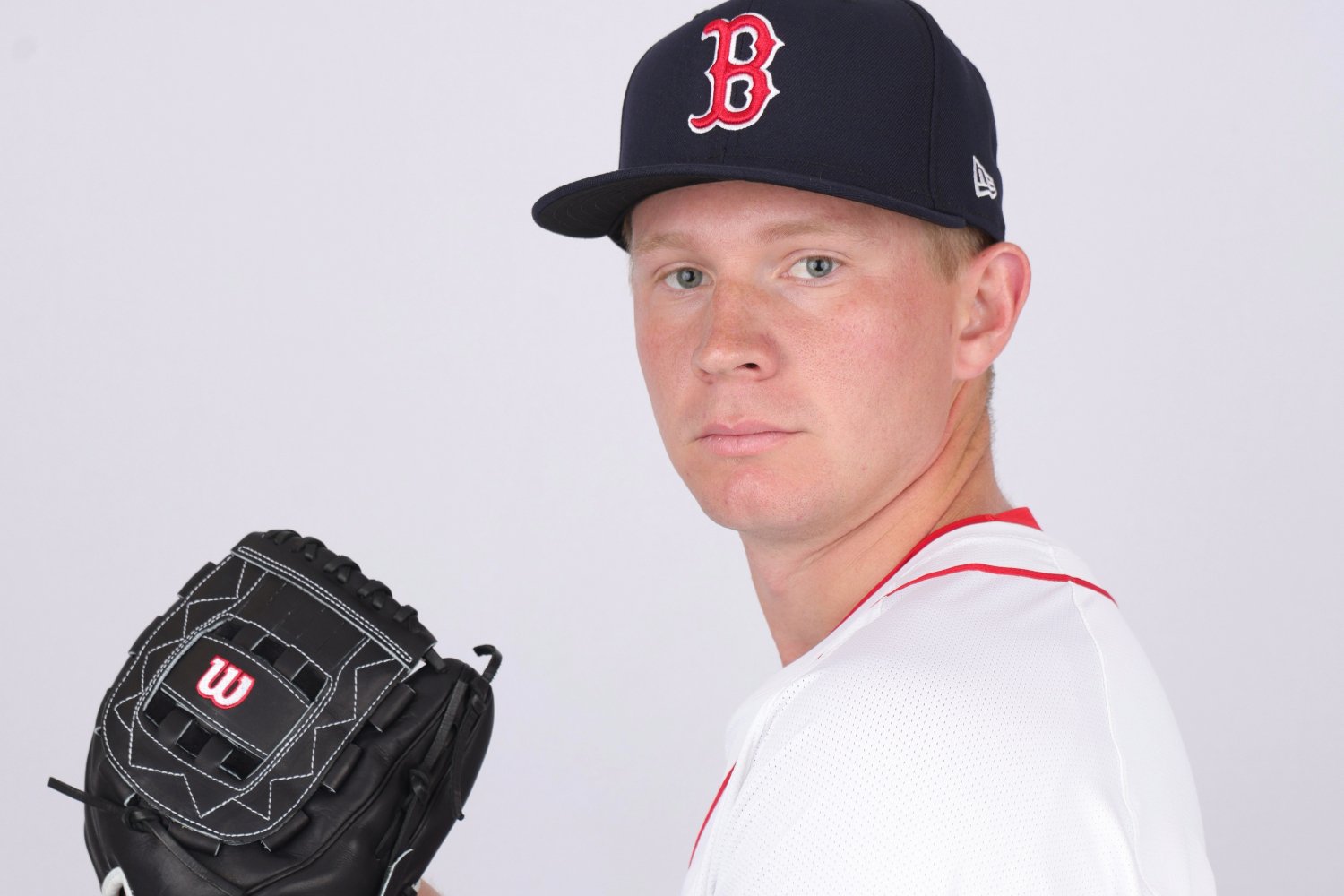 With June in the books, it's time to look at some of the top performances in the Red Sox's farm system. A lot of pitchers posted impressive results, but two in particular — one starter and one reliever — stood out amongst the crowd. Starting Pitcher - Jesus Travieso (FCL) We're going all the way down to Fort Myers, Florida where the Red Sox's complex league team plays to find our top starting pitcher of the month. Jesus Travieso is an 18-year-old right-handed pitcher out of Venezuela who signed with the Red Sox a year ago as part of the 2024 international signing class. Despite his youth, his career has gotten off to an excellent start, and the month of June might have been his best month of pro ball to date. Travieso logged 21 innings across five starts for the FCL Red Sox in the month of June. He made four appearances in May, but only threw 10 innings, so he has started to ramp up the work load a bit. He threw at least three innings in all five starts, and as many as five in back-to-back starts in the middle of the month. In his 21 innings of work, Travieso managed to allow just two earned runs, and had three outings in which he allowed no runs. His innings pitched was tied for second in the FCL, while his 0.86 ERA ranked fourth among FCL pitchers with at least 15 innings. He struck out 31 batters in the month of June, which not only led all Complex League pitchers across the Florida and Arizona league, but also led all Red Sox minor league pitchers. Hitters only recorded 12 hits off of Travieso, which was good for a .174 batting average against that also led all Red Sox minor league pitchers. The only blemish on Travieso's line for the month was that he allowed 15 walks. He has great strikeout stuff but will certainly need to hone in on his command as he eventually advances into full-season ball. Command issues are typical for prospects his age and are pretty common for newly-acquired international free agents, so there shouldn't be too much to worry about as he matures. He has definitely established himself as a young arm to keep an eye on moving forward. Relief Pitcher - Alex Hoppe (Triple-A Worcester) At the other end of the Red Sox farm system is Alex Hoppe, who just registered an excellent month of June for Triple-A Worcester out of the bullpen. A 26-year-old right-hander, Hoppe is in his third season of professional baseball in the Red Sox system. He was a sixth-round pick by Boston in the 2022 draft out of UNC-Greensboro, where he dominated as a high-leverage reliever in his senior season. Fast forward to 2025, he recently got the call to Triple-A after spending roughly a year and a half with Double-A Portland. Hoppe delivered 11 2/3 innings for Worcester across nine appearances, and added two saves in two chances as well. He allowed just two earned runs, which was good for a 1.54 ERA and ranked second among the eleven WooSox pitchers that threw at least 10 innings. He got off to a rough start upon his call up to Triple-A, as he allowed eight earned runs in eight innings in the month of May, but his impressive month of June managed to bring his ERA with Worcester down to a respectable 4.59. He struck out 15 batters during the month, which ranked second among all Red Sox minor league relievers, and only issued four walks in the process. The walk total was an encouraging sign, as he allowed nine in the month of April and eight in May, so his command appears to be improving, which is certainly something you want to see from a pitcher that is now on the doorstep of the big leagues. What do you think of our picks? Are there any other minor league starters you'd like to see celebrated for their June performance? Let us know in the comments!
 -
With June in the books, it's time to look at some of the top performances in the Red Sox's farm system. A lot of pitchers posted impressive results, but two in particular — one starter and one reliever — stood out amongst the crowd. Starting Pitcher - Jesus Travieso (FCL) We're going all the way down to Fort Myers, Florida where the Red Sox's complex league team plays to find our top starting pitcher of the month. Jesus Travieso is an 18-year-old right-handed pitcher out of Venezuela who signed with the Red Sox a year ago as part of the 2024 international signing class. Despite his youth, his career has gotten off to an excellent start, and the month of June might have been his best month of pro ball to date. Travieso logged 21 innings across five starts for the FCL Red Sox in the month of June. He made four appearances in May, but only threw 10 innings, so he has started to ramp up the work load a bit. He threw at least three innings in all five starts, and as many as five in back-to-back starts in the middle of the month. In his 21 innings of work, Travieso managed to allow just two earned runs, and had three outings in which he allowed no runs. His innings pitched was tied for second in the FCL, while his 0.86 ERA ranked fourth among FCL pitchers with at least 15 innings. He struck out 31 batters in the month of June, which not only led all Complex League pitchers across the Florida and Arizona league, but also led all Red Sox minor league pitchers. Hitters only recorded 12 hits off of Travieso, which was good for a .174 batting average against that also led all Red Sox minor league pitchers. The only blemish on Travieso's line for the month was that he allowed 15 walks. He has great strikeout stuff but will certainly need to hone in on his command as he eventually advances into full-season ball. Command issues are typical for prospects his age and are pretty common for newly-acquired international free agents, so there shouldn't be too much to worry about as he matures. He has definitely established himself as a young arm to keep an eye on moving forward. Relief Pitcher - Alex Hoppe (Triple-A Worcester) At the other end of the Red Sox farm system is Alex Hoppe, who just registered an excellent month of June for Triple-A Worcester out of the bullpen. A 26-year-old right-hander, Hoppe is in his third season of professional baseball in the Red Sox system. He was a sixth-round pick by Boston in the 2022 draft out of UNC-Greensboro, where he dominated as a high-leverage reliever in his senior season. Fast forward to 2025, he recently got the call to Triple-A after spending roughly a year and a half with Double-A Portland. Hoppe delivered 11 2/3 innings for Worcester across nine appearances, and added two saves in two chances as well. He allowed just two earned runs, which was good for a 1.54 ERA and ranked second among the eleven WooSox pitchers that threw at least 10 innings. He got off to a rough start upon his call up to Triple-A, as he allowed eight earned runs in eight innings in the month of May, but his impressive month of June managed to bring his ERA with Worcester down to a respectable 4.59. He struck out 15 batters during the month, which ranked second among all Red Sox minor league relievers, and only issued four walks in the process. The walk total was an encouraging sign, as he allowed nine in the month of April and eight in May, so his command appears to be improving, which is certainly something you want to see from a pitcher that is now on the doorstep of the big leagues. What do you think of our picks? Are there any other minor league starters you'd like to see celebrated for their June performance? Let us know in the comments! View full article
-
 With the MLB Draft taking place later in the summer than it ever has, it feels like we have been saying it's right around the corner for a few months now. However, we are now two weeks away and in the final stages of the cycle. Although it would seem that organizations have their prized prospects picked out for their first-round selection, there is still a lot that can change. Every year, it seems like there is a name called in the first round that was nowhere to be found on first-round mock drafts or on the top of draft boards throughout the spring. Given the landscape of the class, it's likely we could see it happen again this year. Whether it's sign-ability, medicals, makeup, etc., players expected to land in the first round could fall, giving way for more under-appreciated prospects with first-round value. With that being said, here are three underrated players the Red Sox could target with their first round pick as under-valued prospects. 1. Ryan Mitchell, SS/2B, Houston HS (TN) Outside of the high-end college arms, the strength of this year's class is the prep hitters — specifically, the infielders. The top-tier of prep infielders consists of Ethan Holliday, Eli Willits, Billy Carlson, and now arguably Jojo Parker. All four of those names are likely to be gone by the time the Red Sox pick comes around, so it appears to be likely they play it safe with a college bat. They've selected a college bat in the first round in each of the last two years, but they're also not that far removed from getting solid returns from prep infielders between what Marcelo Mayer and Mikey Romero have done. Following the top-tier of prep bats, there is not a lot of separation between the second-tier and third or fourth rung of the demographic. Plenty of organizations could view a player somewhere in that group as the next-best prospect, and believe they could get the same value from them as the upper-tier players in the long-term. Selecting such a player could also grant them the luxury of saving some money they likely would have spent on a player projected to fall somewhere around their pick. I believe Ryan Mitchell is one of those players. Mitchell is the 55th-ranked draft prospect by MLB Pipeline, and is likely to land somewhere in the front-half of the second round. His ceiling according to the consensus of the industry seems to be a first-round compensatory pick or potentially somewhere in the 20s. However, I don't think he's that far off from the prep bats that will land somewhere in the top ten. For starters, Mitchell has one of the more advanced bats among the prep class. He makes more than enough contact and also displays a lot of maturity at the plate, rarely chasing pitches outside of the zone. He has a smooth swing from the left side of the plate with good bat speed, peppering baseballs to all fields. The Tennessee Gatorade Player of the Year hit .462 for Houston High School in his senior season, and started to find his power stroke, leaving the yard 12 times. At 6'2" and 185 pounds, he has a lot of room to grow into more power. The overall profile at the plate is similar to Kevin McGonigle's, the 37th overall pick to the Tigers in 2023. In hindsight, McGonigle could have been a top-15 pick in that draft, and Mitchell very well may follow the same trajectory. Mitchell's lack of a defensive home in the future is really the only knock on his profile. He likely won't stick at shortstop due to his fringy arm and footwork, but he has the athleticism to either stay on the dirt at second base, or end up in the outfield as an average center fielder. Regardless of where he ends up, he possesses the athleticism and instincts to develop into a multi-faceted player beyond just the bat. He does also have above-average speed that could potentially result in 20+ steals on a yearly basis at the next level. 2. Lucas Franco, SS, Cinco Ranch HS (TX) Sticking with prep infielders, we have Lucas Franco, one of the better defenders in this year's prep class. I find Franco to be among the same crop of players Ryan Mitchell is in; he's outside of the top-tier of prep bats, but can certainly get to that type of value long-term. Of the three players discussed here, Franco ranks the lowest on MLB Pipeline's draft ranking at 67th, so this is even more of a stretch than Mitchell at 15th overall, but offers similar upside (and potentially even more under-slot signing bonus potential). A TCU commit, Franco is on the younger side of the class, having just turned 18 — something a lot of organizations' draft models like. There is a ton of projection in his 6'3" long and lean frame, so there's a lot you can dream on given what he has already shown in his young career. He has never been the top position player in this particular prep class, but his name has been circled as a legitimate prospect dating back a few years, so he has been on a steady trajectory up to this point with a solid track record to look back on. A slam dunk to stick at shortstop at the next level, Franco's glove alone is going to keep him around at the professional level for a while. His actions at short are very smooth, displaying soft, quick hands and a 55-grade arm from across the diamond. He's kind of the opposite of Ryan Mitchell as a defender — he's not as fast or athletic, but makes the most of his athleticism to create plus range and smooth fielding at shortstop. At the plate, Franco has a history of being over-aggressive, but makes up for it with plenty of contact. He showed some improved plate discipline this spring as he also started growing into some power. Breaking and off-speed pitches have given him the most problems, but he has proven he can hit higher level fastballs, which certainly lays a solid frame work for success in the pro ranks. His ability to hit at the next level will be the difference in him becoming either Boston's next franchise shortstop or their next late-game defensive replacement. 3. Marcus Phillips, RHP, Tennessee Of the three prospects discussed here, Marcus Phillips is likely the safest and most likely prospect to land somewhere in the top 20. He ranks 61st on MLB Pipeline's draft rankings, but he has big league stuff that I can see a team like the Red Sox betting on early in the draft. The Red Sox have stuck with position players with their first-round picks as of late. In fact, you would have to go back to 2017 when they selected Tanner Houck 24th overall to find the last time they took an arm. However, they have been among the best as of late when it comes to pitching development, so I don't think it would be crazy if they broke their recent trend and took a chance on a guy they really believe belongs in their system. Marcus Phillips could be that guy. The big right-hander was Tennessee's Saturday starter this spring, throwing 83 innings across 17 starts to a 3.90 ERA. At 6'4" and 250 pounds, Phillips is a very physical athlete with a big league starter's frame. With his size, he generates a lot of velocity with the ability to hold on to it deeper into outings. His fastball routinely touched triple digits this spring while it sat between 97 and 98 mph. The shape on the offering is fringy, but it of course plays up due to its velocity as well as his lower release height. It's no secret that the Red Sox have strayed away from four-seam fastball usage, so they could make a tweak to it considering it's weaker shape and turn it into either a cut-ride fastball or a power sinker. Along with the fastball, he also has above-average feel for two secondaries. His upper-90s slider is a more traditional slider that he has found plenty of success with against both right-handed and left-handed hitters. He didn't go to his plus changeup all too often this spring simply because he didn't have to use it that much, so it could certainly turn into an excellent offering with more usage in a big league pitching department. There is some reliever risk with Phillips, which is why he finds himself in the second-round conversation. He has yet to show above-average command, which could be what makes or breaks him as a starter at the next level. He doesn't have a ton of experience as a full-time pitcher, as he was a two-way player through his freshman year at Iowa Western CC. With more time on the mound, the command could develop into an average to above-average tool, which would definitely pave the way for him to become a big league starter. The Red Sox have made similar improvements to Payton Tolle, another big, hard-throwing college arm who they selected 50th overall a year ago and has become one of the top hurlers in the system. The fact that he doesn't have a lot of mileage on his arm could also be a good or a bad thing. Injury is always a concern as you continue to load innings on to a young arm, but the fact that he hasn't thrown a ton of innings also speaks to the fact that he still has a lot of projection in his profile. Phillips is a guy I definitely could see the Red Sox targeting with their comp-round A selection with the 33rd overall pick, but I also could see them rolling the dice on him with the 15th overall pick.
 -
With the MLB Draft taking place later in the summer than it ever has, it feels like we have been saying it's right around the corner for a few months now. However, we are now two weeks away and in the final stages of the cycle. Although it would seem that organizations have their prized prospects picked out for their first-round selection, there is still a lot that can change. Every year, it seems like there is a name called in the first round that was nowhere to be found on first-round mock drafts or on the top of draft boards throughout the spring. Given the landscape of the class, it's likely we could see it happen again this year. Whether it's sign-ability, medicals, makeup, etc., players expected to land in the first round could fall, giving way for more under-appreciated prospects with first-round value. With that being said, here are three underrated players the Red Sox could target with their first round pick as under-valued prospects. 1. Ryan Mitchell, SS/2B, Houston HS (TN) Outside of the high-end college arms, the strength of this year's class is the prep hitters — specifically, the infielders. The top-tier of prep infielders consists of Ethan Holliday, Eli Willits, Billy Carlson, and now arguably Jojo Parker. All four of those names are likely to be gone by the time the Red Sox pick comes around, so it appears to be likely they play it safe with a college bat. They've selected a college bat in the first round in each of the last two years, but they're also not that far removed from getting solid returns from prep infielders between what Marcelo Mayer and Mikey Romero have done. Following the top-tier of prep bats, there is not a lot of separation between the second-tier and third or fourth rung of the demographic. Plenty of organizations could view a player somewhere in that group as the next-best prospect, and believe they could get the same value from them as the upper-tier players in the long-term. Selecting such a player could also grant them the luxury of saving some money they likely would have spent on a player projected to fall somewhere around their pick. I believe Ryan Mitchell is one of those players. Mitchell is the 55th-ranked draft prospect by MLB Pipeline, and is likely to land somewhere in the front-half of the second round. His ceiling according to the consensus of the industry seems to be a first-round compensatory pick or potentially somewhere in the 20s. However, I don't think he's that far off from the prep bats that will land somewhere in the top ten. For starters, Mitchell has one of the more advanced bats among the prep class. He makes more than enough contact and also displays a lot of maturity at the plate, rarely chasing pitches outside of the zone. He has a smooth swing from the left side of the plate with good bat speed, peppering baseballs to all fields. The Tennessee Gatorade Player of the Year hit .462 for Houston High School in his senior season, and started to find his power stroke, leaving the yard 12 times. At 6'2" and 185 pounds, he has a lot of room to grow into more power. The overall profile at the plate is similar to Kevin McGonigle's, the 37th overall pick to the Tigers in 2023. In hindsight, McGonigle could have been a top-15 pick in that draft, and Mitchell very well may follow the same trajectory. Mitchell's lack of a defensive home in the future is really the only knock on his profile. He likely won't stick at shortstop due to his fringy arm and footwork, but he has the athleticism to either stay on the dirt at second base, or end up in the outfield as an average center fielder. Regardless of where he ends up, he possesses the athleticism and instincts to develop into a multi-faceted player beyond just the bat. He does also have above-average speed that could potentially result in 20+ steals on a yearly basis at the next level. 2. Lucas Franco, SS, Cinco Ranch HS (TX) Sticking with prep infielders, we have Lucas Franco, one of the better defenders in this year's prep class. I find Franco to be among the same crop of players Ryan Mitchell is in; he's outside of the top-tier of prep bats, but can certainly get to that type of value long-term. Of the three players discussed here, Franco ranks the lowest on MLB Pipeline's draft ranking at 67th, so this is even more of a stretch than Mitchell at 15th overall, but offers similar upside (and potentially even more under-slot signing bonus potential). A TCU commit, Franco is on the younger side of the class, having just turned 18 — something a lot of organizations' draft models like. There is a ton of projection in his 6'3" long and lean frame, so there's a lot you can dream on given what he has already shown in his young career. He has never been the top position player in this particular prep class, but his name has been circled as a legitimate prospect dating back a few years, so he has been on a steady trajectory up to this point with a solid track record to look back on. A slam dunk to stick at shortstop at the next level, Franco's glove alone is going to keep him around at the professional level for a while. His actions at short are very smooth, displaying soft, quick hands and a 55-grade arm from across the diamond. He's kind of the opposite of Ryan Mitchell as a defender — he's not as fast or athletic, but makes the most of his athleticism to create plus range and smooth fielding at shortstop. At the plate, Franco has a history of being over-aggressive, but makes up for it with plenty of contact. He showed some improved plate discipline this spring as he also started growing into some power. Breaking and off-speed pitches have given him the most problems, but he has proven he can hit higher level fastballs, which certainly lays a solid frame work for success in the pro ranks. His ability to hit at the next level will be the difference in him becoming either Boston's next franchise shortstop or their next late-game defensive replacement. 3. Marcus Phillips, RHP, Tennessee Of the three prospects discussed here, Marcus Phillips is likely the safest and most likely prospect to land somewhere in the top 20. He ranks 61st on MLB Pipeline's draft rankings, but he has big league stuff that I can see a team like the Red Sox betting on early in the draft. The Red Sox have stuck with position players with their first-round picks as of late. In fact, you would have to go back to 2017 when they selected Tanner Houck 24th overall to find the last time they took an arm. However, they have been among the best as of late when it comes to pitching development, so I don't think it would be crazy if they broke their recent trend and took a chance on a guy they really believe belongs in their system. Marcus Phillips could be that guy. The big right-hander was Tennessee's Saturday starter this spring, throwing 83 innings across 17 starts to a 3.90 ERA. At 6'4" and 250 pounds, Phillips is a very physical athlete with a big league starter's frame. With his size, he generates a lot of velocity with the ability to hold on to it deeper into outings. His fastball routinely touched triple digits this spring while it sat between 97 and 98 mph. The shape on the offering is fringy, but it of course plays up due to its velocity as well as his lower release height. It's no secret that the Red Sox have strayed away from four-seam fastball usage, so they could make a tweak to it considering it's weaker shape and turn it into either a cut-ride fastball or a power sinker. Along with the fastball, he also has above-average feel for two secondaries. His upper-90s slider is a more traditional slider that he has found plenty of success with against both right-handed and left-handed hitters. He didn't go to his plus changeup all too often this spring simply because he didn't have to use it that much, so it could certainly turn into an excellent offering with more usage in a big league pitching department. There is some reliever risk with Phillips, which is why he finds himself in the second-round conversation. He has yet to show above-average command, which could be what makes or breaks him as a starter at the next level. He doesn't have a ton of experience as a full-time pitcher, as he was a two-way player through his freshman year at Iowa Western CC. With more time on the mound, the command could develop into an average to above-average tool, which would definitely pave the way for him to become a big league starter. The Red Sox have made similar improvements to Payton Tolle, another big, hard-throwing college arm who they selected 50th overall a year ago and has become one of the top hurlers in the system. The fact that he doesn't have a lot of mileage on his arm could also be a good or a bad thing. Injury is always a concern as you continue to load innings on to a young arm, but the fact that he hasn't thrown a ton of innings also speaks to the fact that he still has a lot of projection in his profile. Phillips is a guy I definitely could see the Red Sox targeting with their comp-round A selection with the 33rd overall pick, but I also could see them rolling the dice on him with the 15th overall pick. View full article
-
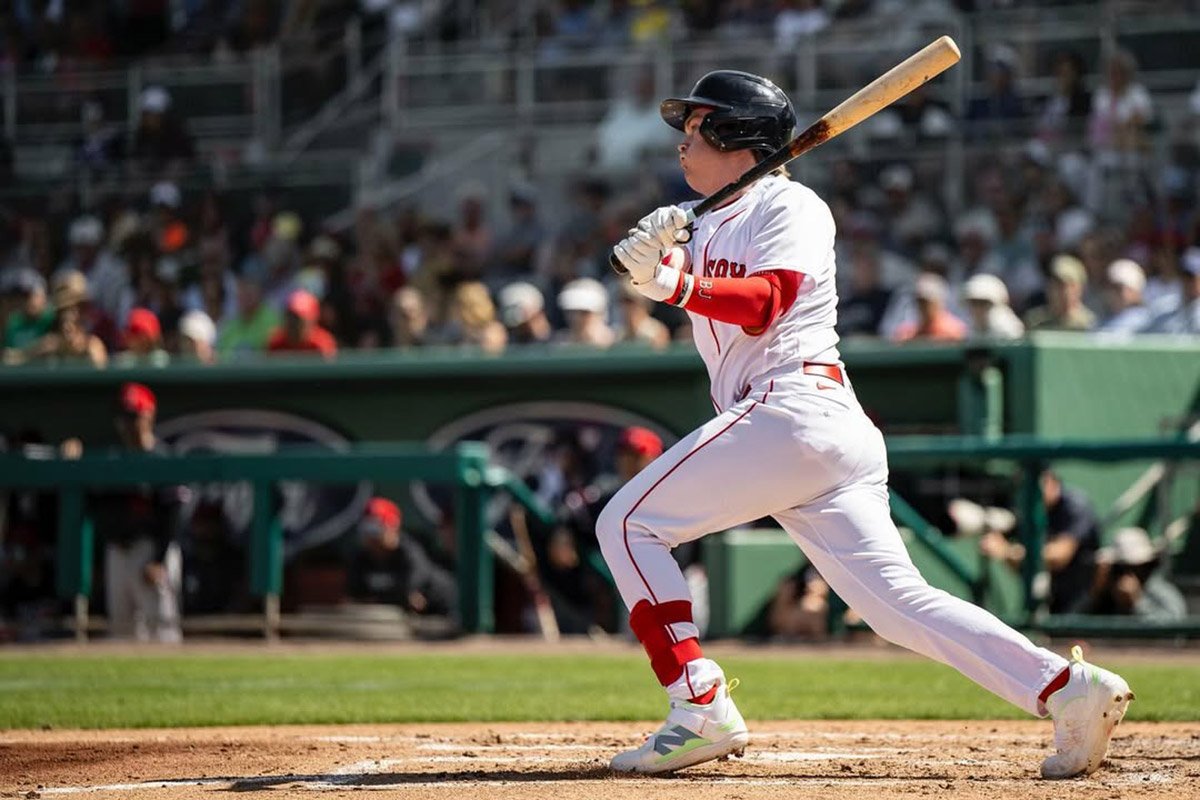 With the Talk Sox new top 20 prospect update, we have one newcomer to talk about. Due to a strong start to the season at Double-A Portland and keeping stride into the summer at Triple-A Worcester, Blaze Jordan finds his name on the top 20 as the 19th-best prospect in the farm system. Jordan was one of the most sought-after high school draft prospects in 2020 due to the elite power he demonstrated at a young age, as well as his reclassification from the 2021 draft, making him one of the youngest prospects in the class. His strong commitment to Mississippi State led to several teams passing on him, but the Red Sox felt strongly enough about him to sign him over-slot by more than $1 million. Although he's in his fifth season of minor league baseball, he's still only 22 and doesn't turn 23 until December. With that being said, he's still right on track despite a fairly slow start to his professional career compared to expectations. The calling card for Jordan is the power, but he has become a more dynamic hitter throughout his minor League career. He's a bit of a free swinger, which isn't always conducive for a power hitter like Jordan, but he has managed to keep his contact rates around league average even as he has advanced into the upper levels. He has also shown he can tone back the swing-happy approach when needed and draw his walks. The overall approach will likely need to be adjusted to help him reach his full potential as a power hitter. Jordan does produce some of the top exit velocities in the Red Sox farm system, but it's more of a line drive approach. He sprays the ball across the field very well, yielding plenty of extra-base hits. He does hit the ball on the ground at an above-average rate, so a tweak in the swing might be another adjustment on the horizon to help him reach his ceiling. With the consistent hard contact he makes, he can become a dangerous hitter if he gets the ball in the air enough. Jordan has become a better athlete as he has matured physically and gotten in better shape. He has split time between third base and first base throughout his pro career, and will likely stick at first long-term, although he does have some feel for the hot corner. At the moment, Jordan looks like he may end up being a platoon corner infielder and DH in the big leagues, but he has the upside to be a solid everyday player if the Red Sox lean into what the bat is capable of. Notable Risers Payton Tolle made the biggest jump on the ranking, going from number 13 all the way to number six. He comes in as the second-ranked pitcher, only behind Luis Perales, who moved into the top five. A strong month of May for Tolle really showcased what makes him a promising pitching prospect. In 23 innings across five starts, he struck out 37 batters while allowing just four walks. As he has begun throwing deeper into starts with improved command and an obvious ability to miss bats, Tolle is proving he can stick as a starter as he advances through the minors. His fastball is arguably the best in the system and is complemented by two different sliders as well as a solid changeup. Aside from Blaze Jordan, Miguel Bleis was the position player who climbed the most, as he rose from 19th to 16th in this edition of the top 20. The 21-year-old toolsy outfielder is having a career year at High-A Greenville. He has tapped into his game power, having now hit ten home runs on the season in 51 games compared to his 11 in 95 games a year ago. His plus defense in center field, as well as the ability to steal 30+ bases in any given season, takes pressure off the bat to perform, so any improvements in his game at the plate will only help him climb the rankings even faster. Notable Fallers Although David Sandlin has flashed some big league tools on the mound, they are struggling to translate them to in-game success. That has resulted in him dropping from 11th to 13th in the latest edition of the top 20. Through ten starts on the season, his numbers are respectable, but they're trending in the opposite direction from last year. He's 24 in Double-A and not striking out as many batters as he was last year while issuing more walks. He still has several above-average offerings that he can lean on, which sets a relatively high floor for him and keeps him in the top 20 as an arm the Red Sox may be able to utilize in the future. Yophery Rodriguez's Red Sox tenure since coming over from the Brewers via trade has been off to a bumpy start as he dropped from 15th to 17th on the ranking. He's still only 19 years old in High-A, so there's obvious upside, but the bat has struggled to come around. In 234 plate appearances since joining the org, he owns a .179/.312/.291 slash line. He's drawing walks over 15% of the time, which is promising at the High-A level, but he's still having a hard time finding the power stroke and the feel to hit. There's certainly time for Rodriguez, and there's more projection in his frame, but given he's not expected to stick in center field long-term, you would like to see the bat start to play a little more.
 -
With the Talk Sox new top 20 prospect update, we have one newcomer to talk about. Due to a strong start to the season at Double-A Portland and keeping stride into the summer at Triple-A Worcester, Blaze Jordan finds his name on the top 20 as the 19th-best prospect in the farm system. Jordan was one of the most sought-after high school draft prospects in 2020 due to the elite power he demonstrated at a young age, as well as his reclassification from the 2021 draft, making him one of the youngest prospects in the class. His strong commitment to Mississippi State led to several teams passing on him, but the Red Sox felt strongly enough about him to sign him over-slot by more than $1 million. Although he's in his fifth season of minor league baseball, he's still only 22 and doesn't turn 23 until December. With that being said, he's still right on track despite a fairly slow start to his professional career compared to expectations. The calling card for Jordan is the power, but he has become a more dynamic hitter throughout his minor League career. He's a bit of a free swinger, which isn't always conducive for a power hitter like Jordan, but he has managed to keep his contact rates around league average even as he has advanced into the upper levels. He has also shown he can tone back the swing-happy approach when needed and draw his walks. The overall approach will likely need to be adjusted to help him reach his full potential as a power hitter. Jordan does produce some of the top exit velocities in the Red Sox farm system, but it's more of a line drive approach. He sprays the ball across the field very well, yielding plenty of extra-base hits. He does hit the ball on the ground at an above-average rate, so a tweak in the swing might be another adjustment on the horizon to help him reach his ceiling. With the consistent hard contact he makes, he can become a dangerous hitter if he gets the ball in the air enough. Jordan has become a better athlete as he has matured physically and gotten in better shape. He has split time between third base and first base throughout his pro career, and will likely stick at first long-term, although he does have some feel for the hot corner. At the moment, Jordan looks like he may end up being a platoon corner infielder and DH in the big leagues, but he has the upside to be a solid everyday player if the Red Sox lean into what the bat is capable of. Notable Risers Payton Tolle made the biggest jump on the ranking, going from number 13 all the way to number six. He comes in as the second-ranked pitcher, only behind Luis Perales, who moved into the top five. A strong month of May for Tolle really showcased what makes him a promising pitching prospect. In 23 innings across five starts, he struck out 37 batters while allowing just four walks. As he has begun throwing deeper into starts with improved command and an obvious ability to miss bats, Tolle is proving he can stick as a starter as he advances through the minors. His fastball is arguably the best in the system and is complemented by two different sliders as well as a solid changeup. Aside from Blaze Jordan, Miguel Bleis was the position player who climbed the most, as he rose from 19th to 16th in this edition of the top 20. The 21-year-old toolsy outfielder is having a career year at High-A Greenville. He has tapped into his game power, having now hit ten home runs on the season in 51 games compared to his 11 in 95 games a year ago. His plus defense in center field, as well as the ability to steal 30+ bases in any given season, takes pressure off the bat to perform, so any improvements in his game at the plate will only help him climb the rankings even faster. Notable Fallers Although David Sandlin has flashed some big league tools on the mound, they are struggling to translate them to in-game success. That has resulted in him dropping from 11th to 13th in the latest edition of the top 20. Through ten starts on the season, his numbers are respectable, but they're trending in the opposite direction from last year. He's 24 in Double-A and not striking out as many batters as he was last year while issuing more walks. He still has several above-average offerings that he can lean on, which sets a relatively high floor for him and keeps him in the top 20 as an arm the Red Sox may be able to utilize in the future. Yophery Rodriguez's Red Sox tenure since coming over from the Brewers via trade has been off to a bumpy start as he dropped from 15th to 17th on the ranking. He's still only 19 years old in High-A, so there's obvious upside, but the bat has struggled to come around. In 234 plate appearances since joining the org, he owns a .179/.312/.291 slash line. He's drawing walks over 15% of the time, which is promising at the High-A level, but he's still having a hard time finding the power stroke and the feel to hit. There's certainly time for Rodriguez, and there's more projection in his frame, but given he's not expected to stick in center field long-term, you would like to see the bat start to play a little more. View full article

