


Matt Trueblood
-
Posts
4 -
Joined
-
Last visited
Content Type
Profiles
Boston Red Sox Videos
2026 Boston Red Sox Top Prospect Rankings
Boston Red Sox Trade & Free Agent Rumors
Boston Red Sox Fan Guides & Resources
2025 Boston Red Sox Draft Picks & Signing Bonuses
Boston Red Sox News, Rumors & Analysis
2026 Boston Red Sox Draft Picks & Signing Bonuses
Forums
Blogs
Events
Store
Downloads
Gallery
Everything posted by Matt Trueblood
-
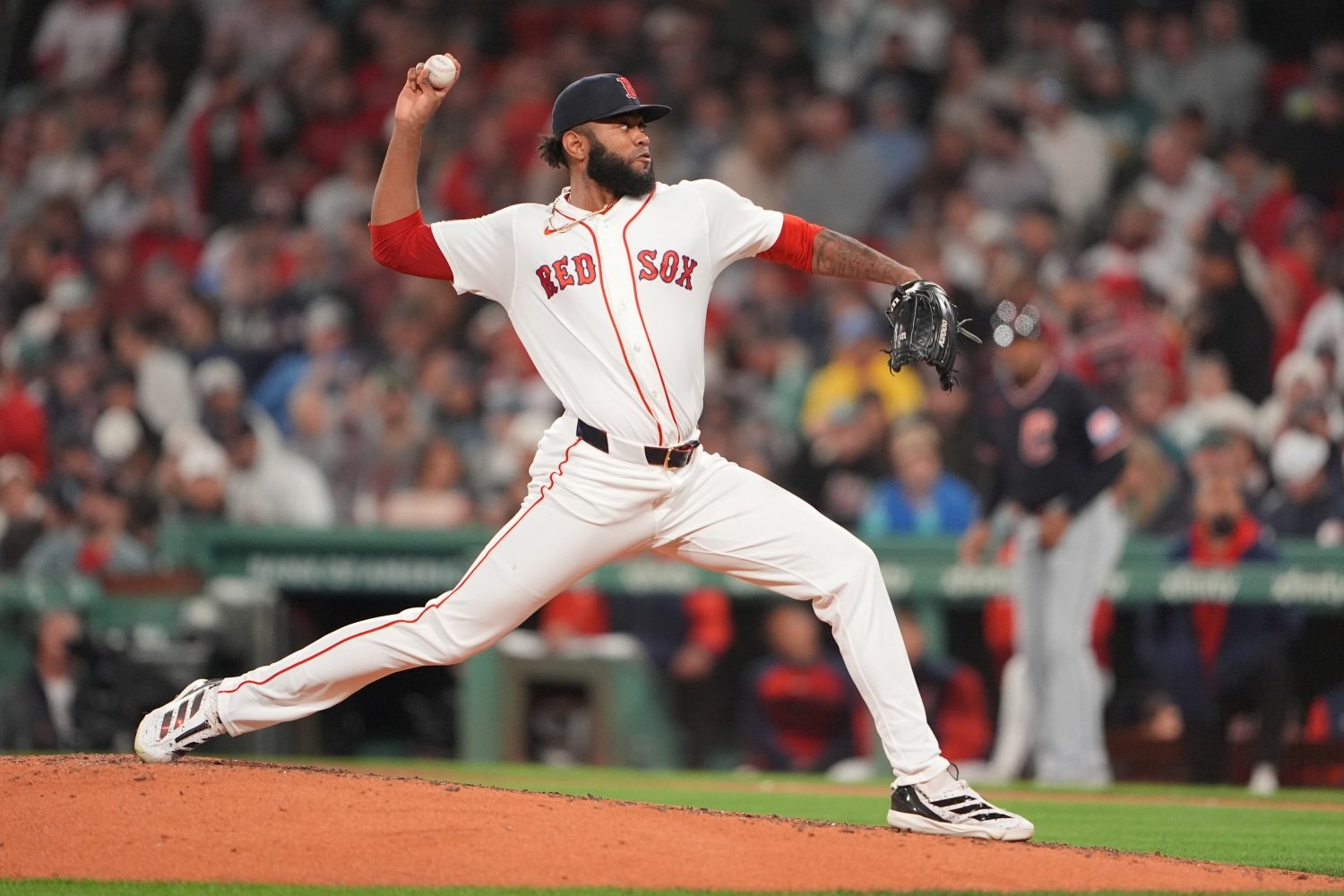 As teams reshuffle their 40-man rosters ahead of Tuesday's deadline to add players and protect them from the Rule 5 Draft, multiple clubs have had conversations with the Red Sox about pitchers from whom Boston might move on, according to sources familiar with those talks. The Sox's 40-man list is stuffed to bursting, and they're expected to add multiple players Tuesday evening, which would necessitate either early non-tenders, waiving and releasing players, or making trades. That constitutes a roster crunch, which can put a team in a poor position when negotiating about moves. Sources in other front offices indicated that Boston is open to dealing Tanner Houck, Jovani Morán, Tyron Guerrero and Johan Oviedo. A report from Rob Bradford of WEEI in Boston confirms the team's discussions about Houck and Oviedo and adds Kutter Crawford to the list. Moving Houck, Morán, Guerrero and/or Oviedo could make sense as part of restructuring the team's bullpen. All four of those players are out of options, exacerbating a broader crunch whereby only two of the eight players Roster Resource projects to be part of Boston's Opening Day bullpen can be sent to the minors without being offered to the other 29 teams. Crawford is still optionable, so trading him would make a bit less sense in one context. However, at last week's GM Meetings in Las Vegas, president of baseball operations Craig Breslow downplayed the primacy of that type of flexibility in the team's thinking. "Optionality is always really, really helpful," Breslow said, "but if you have a really talented pitching staff, then you just figure out a way to make it work. And, you know, I'm confident that that's the direction that we’re going." That's an executive more interested in having the right arms than the most fluid set of them, but of course, fluidity still matters. Every team runs some version of the bullpen shuttle throughout the year, as they try to keep people fresh and have their best arms available not only for high-leverage innings within games, but when the games count most in October. Thus, Guerrero, Houck, Morán and Oviedo are candidates to be moved if the value proposition comes out right. Guerrero, who will turn 36 in January, was a great story in 2026, making a second comeback from the brink of being out of baseball. He fills up the zone with a triple-digit two-seamer, and he's inexpensive, so the Sox would only trade him if a team were willing to pony up fairly handsomely. Two things are worth noting, though: Guerrero's slider and splitter are fairly pedestrian pitches; he lived purely on the heat in his comeback campaign. That makes it easy to envision a rapid regression and a far less impressive 2027. Late-blooming relievers under medium-term team control at very low cost have surprisingly high trade value. No player type has a bigger gap between trade value and name value than this one, so the offer that would entice the Red Sox might just materialize, even if that feels unlikely to many fans. The Tommy John surgery Houck had to undergo relatively late in 2025 has derailed his career. He's still a compelling arm, but between the low arm slot and the durability questions that will linger into his final season of team control, he's very unlikely to be a starter for the Red Sox. His health profile makes it hard to envision him as a high-functioning part of the bullpen, either, given that he's locked into the roster. At least one team has talked to the Sox about him with the idea of having Houck start for them, though, and he's showed the ability to succeed in that role. Again, the value would have to be right, but it's fairly easy to envision a trade that would be good for all parties. The Red Sox could add organizational depth and open a 40-man spot. A more pitching-needy team could reinforce its rotation. Houck, for his part, would get a chance to showcase himself as a starter in his final season before becoming a free agent. Morán took a long time to find something that works, but in 2026, he seemed to finally lock in on the right pitch mix and the right release point. He still doesn't throw as many strikes as one would prefer, but his fastball shape now allows him to both set right-handed batters up for his killer changeup and avoid hard contact, which led to a very strong campaign. He's still under team control for four more years—theoretically. In practice, though, the fact that he issues so many walks and is out of options means he's unlikely to stick around for all of his arbitration-eligible seasons. In light of that, sources say, the Red Sox have at least been willing to listen on him this month. Like Houck, Oviedo would love to build a platform for his free agency, and like Houck, he looks unlikely to find that opportunity in Boston. Teams are more wary of his health reports, a source said, after Oviedo avoided surgery on a strained flexor muscle but missed virtually the entire 2026 campaign. He's huge and has a funky delivery, so a move to the bullpen might work a bit better for him, but teams who have checked in with Boston include the Cubs, who would bring Oviedo to camp to compete for a spot in their rotation. Crawford's inclusion as a trade candidate completes the set with Houck and Oviedo, and makes clear that the Red Sox are trying to mitigate some of the aggregate injury risk on the pitching side of their roster. If he's healthy, he's probably still a starter. Getting and keeping him healthy has been even more of a challenge than for the other two righties over the last two seasons. Moving one or more of these guys could create space for two tough calls the Sox must make by 6 PM ET Tuesday, on Rule 5-eligible prospects Mikey Romero and Blake Wehunt. Romero, an infielder, had a tough 2026 campaign, but Breslow felt there was more to him than the numbers let on. "We saw the ability to impact the ball. It started in spring training," Breslow said. "I still think that he's got a ton of potential, want to make sure that he is healthy and on the field. But I think that he's a good defender. [He] took a real liking to third base, and we're excited about what the future holds for him." It's clearer that Wehunt will make his way onto the 40-man, becoming an optionable arm who could either start or relieve for Boston. "With Blake. [he's] just a massive human, it's a good place to start," Breslow said. "Still some projection left and velo that's been climbing year over year. Yeah, not quite as dominant as it was [in terms of swing-and-miss], but I think that's pretty natural. and still feel like he's got the potential to be a big-league starter. Starting with huge, huge swing-and-miss stuff, big basketball [frame]. So yeah, I'm excited to have him back in the fold, as well." One way or another, the Sox will make some moves Tuesday. They face a crunch. Most of their problems are the good kind, though, and even if they move a useful arm, they're likely to get back some long-term help for an organization benefitting from good recent strides in player development.
-
- 1
-

-
- johan oviedo
- tanner houck
- (and 3 more)
-
As teams reshuffle their 40-man rosters ahead of Tuesday's deadline to add players and protect them from the Rule 5 Draft, multiple clubs have had conversations with the Red Sox about pitchers from whom Boston might move on, according to sources familiar with those talks. The Sox's 40-man list is stuffed to bursting, and they're expected to add multiple players Tuesday evening, which would necessitate either early non-tenders, waiving and releasing players, or making trades. That constitutes a roster crunch, which can put a team in a poor position when negotiating about moves. Sources in other front offices indicated that Boston is open to dealing Tanner Houck, Jovani Morán, Tyron Guerrero and Johan Oviedo. A report from Rob Bradford of WEEI in Boston confirms the team's discussions about Houck and Oviedo and adds Kutter Crawford to the list. Moving Houck, Morán, Guerrero and/or Oviedo could make sense as part of restructuring the team's bullpen. All four of those players are out of options, exacerbating a broader crunch whereby only two of the eight players Roster Resource projects to be part of Boston's Opening Day bullpen can be sent to the minors without being offered to the other 29 teams. Crawford is still optionable, so trading him would make a bit less sense in one context. However, at last week's GM Meetings in Las Vegas, president of baseball operations Craig Breslow downplayed the primacy of that type of flexibility in the team's thinking. "Optionality is always really, really helpful," Breslow said, "but if you have a really talented pitching staff, then you just figure out a way to make it work. And, you know, I'm confident that that's the direction that we’re going." That's an executive more interested in having the right arms than the most fluid set of them, but of course, fluidity still matters. Every team runs some version of the bullpen shuttle throughout the year, as they try to keep people fresh and have their best arms available not only for high-leverage innings within games, but when the games count most in October. Thus, Guerrero, Houck, Morán and Oviedo are candidates to be moved if the value proposition comes out right. Guerrero, who will turn 36 in January, was a great story in 2026, making a second comeback from the brink of being out of baseball. He fills up the zone with a triple-digit two-seamer, and he's inexpensive, so the Sox would only trade him if a team were willing to pony up fairly handsomely. Two things are worth noting, though: Guerrero's slider and splitter are fairly pedestrian pitches; he lived purely on the heat in his comeback campaign. That makes it easy to envision a rapid regression and a far less impressive 2027. Late-blooming relievers under medium-term team control at very low cost have surprisingly high trade value. No player type has a bigger gap between trade value and name value than this one, so the offer that would entice the Red Sox might just materialize, even if that feels unlikely to many fans. The Tommy John surgery Houck had to undergo relatively late in 2025 has derailed his career. He's still a compelling arm, but between the low arm slot and the durability questions that will linger into his final season of team control, he's very unlikely to be a starter for the Red Sox. His health profile makes it hard to envision him as a high-functioning part of the bullpen, either, given that he's locked into the roster. At least one team has talked to the Sox about him with the idea of having Houck start for them, though, and he's showed the ability to succeed in that role. Again, the value would have to be right, but it's fairly easy to envision a trade that would be good for all parties. The Red Sox could add organizational depth and open a 40-man spot. A more pitching-needy team could reinforce its rotation. Houck, for his part, would get a chance to showcase himself as a starter in his final season before becoming a free agent. Morán took a long time to find something that works, but in 2026, he seemed to finally lock in on the right pitch mix and the right release point. He still doesn't throw as many strikes as one would prefer, but his fastball shape now allows him to both set right-handed batters up for his killer changeup and avoid hard contact, which led to a very strong campaign. He's still under team control for four more years—theoretically. In practice, though, the fact that he issues so many walks and is out of options means he's unlikely to stick around for all of his arbitration-eligible seasons. In light of that, sources say, the Red Sox have at least been willing to listen on him this month. Like Houck, Oviedo would love to build a platform for his free agency, and like Houck, he looks unlikely to find that opportunity in Boston. Teams are more wary of his health reports, a source said, after Oviedo avoided surgery on a strained flexor muscle but missed virtually the entire 2026 campaign. He's huge and has a funky delivery, so a move to the bullpen might work a bit better for him, but teams who have checked in with Boston include the Cubs, who would bring Oviedo to camp to compete for a spot in their rotation. Crawford's inclusion as a trade candidate completes the set with Houck and Oviedo, and makes clear that the Red Sox are trying to mitigate some of the aggregate injury risk on the pitching side of their roster. If he's healthy, he's probably still a starter. Getting and keeping him healthy has been even more of a challenge than for the other two righties over the last two seasons. Moving one or more of these guys could create space for two tough calls the Sox must make by 6 PM ET Tuesday, on Rule 5-eligible prospects Mikey Romero and Blake Wehunt. Romero, an infielder, had a tough 2026 campaign, but Breslow felt there was more to him than the numbers let on. "We saw the ability to impact the ball. It started in spring training," Breslow said. "I still think that he's got a ton of potential, want to make sure that he is healthy and on the field. But I think that he's a good defender. [He] took a real liking to third base, and we're excited about what the future holds for him." It's clearer that Wehunt will make his way onto the 40-man, becoming an optionable arm who could either start or relieve for Boston. "With Blake. [he's] just a massive human, it's a good place to start," Breslow said. "Still some projection left and velo that's been climbing year over year. Yeah, not quite as dominant as it was [in terms of swing-and-miss], but I think that's pretty natural. and still feel like he's got the potential to be a big-league starter. Starting with huge, huge swing-and-miss stuff, big basketball [frame]. So yeah, I'm excited to have him back in the fold, as well." One way or another, the Sox will make some moves Tuesday. They face a crunch. Most of their problems are the good kind, though, and even if they move a useful arm, they're likely to get back some long-term help for an organization benefitting from good recent strides in player development. View full article
-
 For as long as there has been professional baseball, there has been a patterned and almost immutable platoon advantage—favoring batters against opposite-handed pitchers and pitchers when they face same-handed batters. Yet, for just as long, there have been managers and team presidents and rabid fans and data wizards trying to figure out whether certain players show an enduring platoon skill. They wanted to know whether some players could persistently perform differently, based on the handedness of the opposing batter or pitcher, than a broad application of the standard advantage could predict. Platoon Splits, MLB, 2024 Platoon Splits Table Split PA H 2B 3B HR BB SO BA OBP SLG OPS BAbip tOPS+ sOPS+ vs RHP as RHB 69757 15210 2916 210 2009 4952 16106 .241 .303 .389 .691 .290 95 100 vs RHP as LHB 63596 13812 2735 314 2034 5954 14002 .245 .321 .412 .734 .289 106 100 vs LHP as RHB 35144 7818 1606 108 1082 3006 7735 .249 .318 .410 .728 .294 105 100 vs LHP as LHB 13952 2983 514 65 328 1017 3354 .237 .302 .366 .668 .295 89 100 Provided by Baseball-Reference.com: View Original Table Generated 3/30/2025. In fact, the existence of that kind of hitter (and, even more certainly, that kind of pitcher) has never been in doubt. You can't watch baseball closely for very long without coming to the conclusion that some batters handle same-handed pitchers better than others—and better than they themselves might be expected to handle them, given how they hit when they enjoy the advantage. Others are specialists who crush opposite-handed pitchers but can't do much against same-handed ones. Occasionally, there are even players who are genuinely better in matchups where they lack the standard or traditional platoon advantage. Most of these are pitchers, who can specialize in changeups or have an especially vertical fastball-curveball pairing that interacts well with their delivery, but journeyman infielder Kelly Johnson and Hall of Famer Ichiro Suzuki were each left-handed batters who had better career OPSes against lefty hurlers. For the most part, though, it's been tough to articulate why platoon skills exist for particular players, which has induced a natural skepticism of them. Even now, most teams run fairly programmed platoons, when they do that sort of thing. If they believe a given right-handed batter can be better against righty pitchers than against southpaws, or better than a lefty batter of similar overall ability against those righties, they do a very good job of hiding it. Sample size has always been a major problem here. Estimating a player's true talent level is difficult even when dealing with the relatively robust sample of their full performance record. Start slicing and dicing and trying to extrapolate from the subsets, the thinking goes, and you're asking to be fooled. You're going ghost-hunting, and all you'll find is what you convince yourself is there. The seminal text on modern statistical questions in baseball is still, arguably, The Book: Playing the Percentages in Baseball, published in 2007 by a trio of authors that included Tom M. Tango—the pseudonym of the man who now helps run Baseball Savant and rolls out new datasets to baseball fans on a regular basis. In The Book, individualized platoon skills receive cold suspicion, and the tone set in that tome has remained the prevailing one ever since. In the nearly 20 years since then, though, we've learned a ton about how both hitting and pitching work. We don't have to wait for the noise to leech out of a sample of performance in a given split. As of this spring, we have access not only to bat speed and swing length data, but to some of where batters set up in the batter's box and (more importantly) where their swing tends to intercept the ball, relative to their body and to home plate. Once we're pinning down the place where a hitter is trying to make contact with the ball, we gain a much greater understanding of how their skill set interacts with the opposing pitcher. As it turns out, while many hitters want to hit the ball more or less the same way regardless of handedness, there are exceptions to that rule, and they can be extremely telling. In 2024, Rafael Devers batted .272/.354/.516. It was arguably the best year of his career to date. (For a moment, set aside his struggles to start this season. They're not immediately germane for us.) Within it, though, existed two disparate versions of the slugger. He batted 377 times against right-handed pitchers, and hit .293/.385/601 against them, with 24 home runs. Against lefties, in 224 trips to the plate, he hit a meager .240/.304/.382 and managed just four long balls. Teams who could force him to face a steady diet of lefties could contain the otherwise lethal Devers most of the time. Jarren Duran had an equally dazzling season, although without as much of a track record to support it. He batted .285/.342/.492, cracked 83 total extra-base hits and led the American League in both doubles and triples. Virtually all of his power came against right-handed hurlers, though. He bludgeoned them to the tune of .298/.353/.557, but against lefties, he hit just .255/.319/.346 in 230 plate appearances. The list of hitters anywhere in baseball with platoon splits as extreme as those of both Devers and Duran is very short. Are those a mere statistical quirk—or can we now see why they're so extreme, and have more confidence in the staying power of those sp;ots? Here's a list of the left-handed batters who had the biggest gap between their average contact points against right-handed and left-handed pitchers, in favor of a deeper contact point against southpaws. These numbers are in inches from the front of home plate. Positive numbers mean the contact point was in front of the plate. Player Contact Pt. v RHP Contact Pt. v. LHP Contact Pt. Split Rafael Devers 8.6 2.7 5.9 Pete Crow-Armstrong 5.3 -0.1 5.4 Joc Pederson -0.9 -4.2 3.3 Jarren Duran 0.8 -2.4 3.2 Jake Fraley 1.7 -1.4 3.1 That the Sox's two star lefty batters rank among the five lefties whose contact point gets the farthest forward against righty hurlers is awfully suggestive. That they sit there next to Joc Pederson (.174 OPS split in 2024; .214 for his career) and Jake Fraley (.179, .277, respectively) seems to scream a particular conclusion at us. It's not necessarily the case that hitters should try to keep an equivalent contact rate against both lefties and righties, or that any two hitters should be aiming for the same contact point against any particular type of pitcher. What does seem safe to say is that both Devers and Duran have established singularly effective average contact rates against right-handed pitchers, given their swings and their contact skills. If you start from that premise, it's no surprise that a large difference between that figure and the corresponding one against lefties would be bad news for each. Other questions abound here. Are all contact point splits created equal, or does a different principle help us predict platoon skills among right-handed batters? Does it matter where you start relative to the plate, or where your contact point starts in the reference case? How does a verifiable contact point split interact with other split data teams use to make decisions about deploying players? For today, I don't want to attempt to answer all of those. It's enough, I think, to start by saying this: Some batters do have significant differences in their contact (or intercept) point based on the handedness of the opposing pitcher. That data could help us better understand what types of pitchers a batter will and won't match up well against. The Red Sox might not be anxious to take either Devers or Duran out of their lineup, even against left-handed pitchers. With these data on them, though, we can say a few things with greater confidence. Firstly. they'd need to make a major (and fairly difficult) adjustment to their approach to close their wider-than-average platoon gaps. Second, those platoon splits are probably real, to an extent we couldn't have previously been sure of. Understanding all that, the team might be well served by turning to Rob Refsnyder more often than you'd think, even if it means benching one of their All-Stars. This underscores the value and importance of bringing in Alex Bregman, of course. The key question it invites without answering, though, is what kind of contact point split might make a hitter especially good against same-handed pitchers, rather than especially vulnerable to them. For that, we'll have to plunge deeper into the weeds, another time.
-
Last year, the Red Sox's two biggest stars were left-handed batters who were unholy terrors against right-handed pitchers. Against lefties, though, they were fairly easy outs. But you knew that. What you really want to know is: Why? Last year, the Red Sox's two biggest stars were left-handed batters who were unholy terrors against right-handed pitchers. Against lefties, though, they were fairly easy outs. But you knew that. What you really want to know is: Why? For as long as there has been professional baseball, there has been a patterned and almost immutable platoon advantage—favoring batters against opposite-handed pitchers and pitchers when they face same-handed batters. Yet, for just as long, there have been managers and team presidents and rabid fans and data wizards trying to figure out whether certain players show an enduring platoon skill. They wanted to know whether some players could persistently perform differently, based on the handedness of the opposing batter or pitcher, than a broad application of the standard advantage could predict. Platoon Splits, MLB, 2024 Platoon Splits Table Split PA H 2B 3B HR BB SO BA OBP SLG OPS BAbip tOPS+ sOPS+ vs RHP as RHB 69757 15210 2916 210 2009 4952 16106 .241 .303 .389 .691 .290 95 100 vs RHP as LHB 63596 13812 2735 314 2034 5954 14002 .245 .321 .412 .734 .289 106 100 vs LHP as RHB 35144 7818 1606 108 1082 3006 7735 .249 .318 .410 .728 .294 105 100 vs LHP as LHB 13952 2983 514 65 328 1017 3354 .237 .302 .366 .668 .295 89 100 Provided by Baseball-Reference.com: View Original Table Generated 3/30/2025. In fact, the existence of that kind of hitter (and, even more certainly, that kind of pitcher) has never been in doubt. You can't watch baseball closely for very long without coming to the conclusion that some batters handle same-handed pitchers better than others—and better than they themselves might be expected to handle them, given how they hit when they enjoy the advantage. Others are specialists who crush opposite-handed pitchers but can't do much against same-handed ones. Occasionally, there are even players who are genuinely better in matchups where they lack the standard or traditional platoon advantage. Most of these are pitchers, who can specialize in changeups or have an especially vertical fastball-curveball pairing that interacts well with their delivery, but journeyman infielder Kelly Johnson and Hall of Famer Ichiro Suzuki were each left-handed batters who had better career OPSes against lefty hurlers. For the most part, though, it's been tough to articulate why platoon skills exist for particular players, which has induced a natural skepticism of them. Even now, most teams run fairly programmed platoons, when they do that sort of thing. If they believe a given right-handed batter can be better against righty pitchers than against southpaws, or better than a lefty batter of similar overall ability against those righties, they do a very good job of hiding it. Sample size has always been a major problem here. Estimating a player's true talent level is difficult even when dealing with the relatively robust sample of their full performance record. Start slicing and dicing and trying to extrapolate from the subsets, the thinking goes, and you're asking to be fooled. You're going ghost-hunting, and all you'll find is what you convince yourself is there. The seminal text on modern statistical questions in baseball is still, arguably, The Book: Playing the Percentages in Baseball, published in 2007 by a trio of authors that included Tom M. Tango—the pseudonym of the man who now helps run Baseball Savant and rolls out new datasets to baseball fans on a regular basis. In The Book, individualized platoon skills receive cold suspicion, and the tone set in that tome has remained the prevailing one ever since. In the nearly 20 years since then, though, we've learned a ton about how both hitting and pitching work. We don't have to wait for the noise to leech out of a sample of performance in a given split. As of this spring, we have access not only to bat speed and swing length data, but to some of where batters set up in the batter's box and (more importantly) where their swing tends to intercept the ball, relative to their body and to home plate. Once we're pinning down the place where a hitter is trying to make contact with the ball, we gain a much greater understanding of how their skill set interacts with the opposing pitcher. As it turns out, while many hitters want to hit the ball more or less the same way regardless of handedness, there are exceptions to that rule, and they can be extremely telling. In 2024, Rafael Devers batted .272/.354/.516. It was arguably the best year of his career to date. (For a moment, set aside his struggles to start this season. They're not immediately germane for us.) Within it, though, existed two disparate versions of the slugger. He batted 377 times against right-handed pitchers, and hit .293/.385/601 against them, with 24 home runs. Against lefties, in 224 trips to the plate, he hit a meager .240/.304/.382 and managed just four long balls. Teams who could force him to face a steady diet of lefties could contain the otherwise lethal Devers most of the time. Jarren Duran had an equally dazzling season, although without as much of a track record to support it. He batted .285/.342/.492, cracked 83 total extra-base hits and led the American League in both doubles and triples. Virtually all of his power came against right-handed hurlers, though. He bludgeoned them to the tune of .298/.353/.557, but against lefties, he hit just .255/.319/.346 in 230 plate appearances. The list of hitters anywhere in baseball with platoon splits as extreme as those of both Devers and Duran is very short. Are those a mere statistical quirk—or can we now see why they're so extreme, and have more confidence in the staying power of those sp;ots? Here's a list of the left-handed batters who had the biggest gap between their average contact points against right-handed and left-handed pitchers, in favor of a deeper contact point against southpaws. These numbers are in inches from the front of home plate. Positive numbers mean the contact point was in front of the plate. Player Contact Pt. v RHP Contact Pt. v. LHP Contact Pt. Split Rafael Devers 8.6 2.7 5.9 Pete Crow-Armstrong 5.3 -0.1 5.4 Joc Pederson -0.9 -4.2 3.3 Jarren Duran 0.8 -2.4 3.2 Jake Fraley 1.7 -1.4 3.1 That the Sox's two star lefty batters rank among the five lefties whose contact point gets the farthest forward against righty hurlers is awfully suggestive. That they sit there next to Joc Pederson (.174 OPS split in 2024; .214 for his career) and Jake Fraley (.179, .277, respectively) seems to scream a particular conclusion at us. It's not necessarily the case that hitters should try to keep an equivalent contact rate against both lefties and righties, or that any two hitters should be aiming for the same contact point against any particular type of pitcher. What does seem safe to say is that both Devers and Duran have established singularly effective average contact rates against right-handed pitchers, given their swings and their contact skills. If you start from that premise, it's no surprise that a large difference between that figure and the corresponding one against lefties would be bad news for each. Other questions abound here. Are all contact point splits created equal, or does a different principle help us predict platoon skills among right-handed batters? Does it matter where you start relative to the plate, or where your contact point starts in the reference case? How does a verifiable contact point split interact with other split data teams use to make decisions about deploying players? For today, I don't want to attempt to answer all of those. It's enough, I think, to start by saying this: Some batters do have significant differences in their contact (or intercept) point based on the handedness of the opposing pitcher. That data could help us better understand what types of pitchers a batter will and won't match up well against. The Red Sox might not be anxious to take either Devers or Duran out of their lineup, even against left-handed pitchers. With these data on them, though, we can say a few things with greater confidence. Firstly. they'd need to make a major (and fairly difficult) adjustment to their approach to close their wider-than-average platoon gaps. Second, those platoon splits are probably real, to an extent we couldn't have previously been sure of. Understanding all that, the team might be well served by turning to Rob Refsnyder more often than you'd think, even if it means benching one of their All-Stars. This underscores the value and importance of bringing in Alex Bregman, of course. The key question it invites without answering, though, is what kind of contact point split might make a hitter especially good against same-handed pitchers, rather than especially vulnerable to them. For that, we'll have to plunge deeper into the weeds, another time. View full article
