


Jamie Cameron
-
Posts
36 -
Joined
-
Last visited
Jamie Cameron's Achievements


-
I take MLB mock draft rankings from major industry outlets like MLB Pipeline, ESPN, The Athletic (and many others) to form a consensus board, with a working hypothesis that using this approach will eliminate some of the noise and variance in MLB Draft mock rankings. This is the final mock draft board, locked in just before the 2026 MLB Draft on Saturday, July 11. Round 1: Cole Carlon, LHP, Arizona State Carlon is one of the fastest-rising college arms in 2026 in a demographic that has suffered from injuries and inconsistent performance. After contributing to the Sun Devils immediately as a freshman bullpen arm, Carlon improved his sophomore season significantly, cutting his ERA in half and flashing far more dominant stuff. It's a good-looking delivery from Carlon. While there aren't outlier release traits, he hides the ball well during his delivery and has an ideal pitcher's frame at 6'5, 220 pounds. He's moved from the bullpen to a starting role in 2026. The results have been spectacular. Carlon had a 4.30 FIP through 83.2 innings of work this season while striking out 38% of hitters. The stuff is as explosive as ever, his fastball sits 94-96 mph, but he's run it up to 100 mph. His slider is one of the best in the class, a mid-80s gyro offering that generates a ton of swing and miss. Carlon mixes in a curveball and a changeup, too. There's still some refinement needed to the strike throwing, but Carlon's walk rate has improved from 11.3% in 2025 to 8.9% in 2026. Carlon is looking like a first-round prospect with starter traits who should move quickly as a pro. Competitive Balance Round B: Kaiden McCarthy, RHP, Vermont Academy, VT Kaiden McCarthy is one of my favorite prep arms in the class. He's on the younger side (he'll be 17 on draft day) and has been seen less than many of his peers, as he's from Vermont. It's a bit of an undersized frame at 6'0, 190 pounds, but McCarthy is a dynamic mover and athlete. His fastball is already an above-average to plus pitch, hitting 99 mph, but typically sitting in the 94-96 mph range. There's a knuckle curve and slider in the mix for breakers, with an above-average changeup with good fade to round out a solidly constructed arsenal. There are plenty of strikes with McCarthy in a delivery I like for its simplicity. He's a hidden gem in this class, for me. Round 3: Jack Slightom, RHP, Lyons HS, IL Slightom is a cold-weather arm out of Illinois, currently committed to Cincinnati, who has surged up draft boards towards the end of the cycle. A projectable righty at 6'4, 200 pounds, he's made strides in the last 12 months and should flourish in a pro system after splitting time between baseball and football in high school. Slightom has some interesting release traits with a lower arm slot and above-average extension. It's a run and ride fastball that has been as high as 98 mph, but will likely sit in the 93-95 mph range, a significant step forward from his junior year. Slightom's primary breaking pitch is a sweeping slider that could use more firmness. He's also shown capacity for a changeup with tumble and fade. Curious to see the players around the Boston Red Sox picks in the draft? Click on the button below to view the entire mock draft board! View full article
-
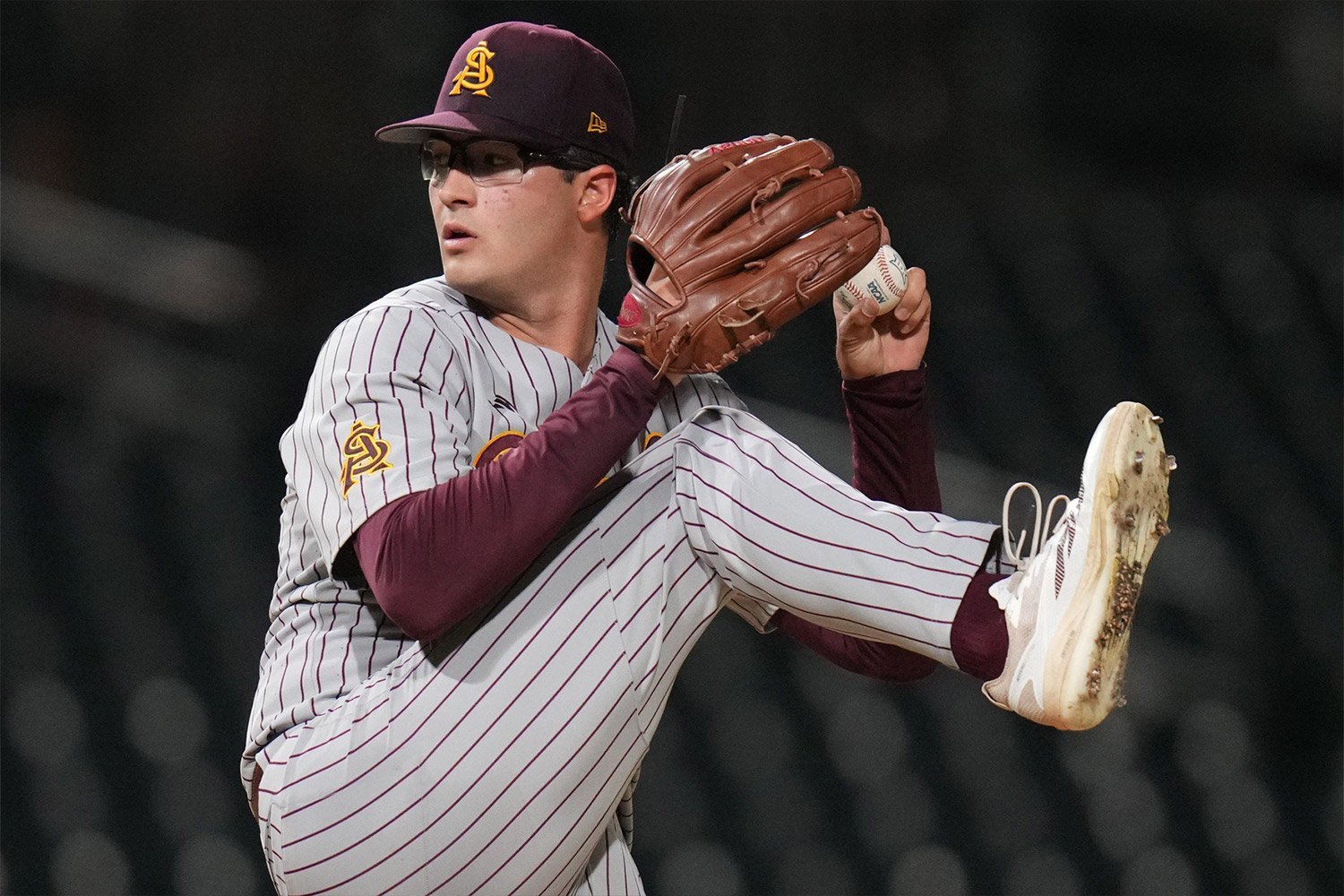 I take MLB mock draft rankings from major industry outlets like MLB Pipeline, ESPN, The Athletic (and many others) to form a consensus board, with a working hypothesis that using this approach will eliminate some of the noise and variance in MLB Draft mock rankings. This is the final mock draft board, locked in just before the 2026 MLB Draft on Saturday, July 11. Round 1: Cole Carlon, LHP, Arizona State Carlon is one of the fastest-rising college arms in 2026 in a demographic that has suffered from injuries and inconsistent performance. After contributing to the Sun Devils immediately as a freshman bullpen arm, Carlon improved his sophomore season significantly, cutting his ERA in half and flashing far more dominant stuff. It's a good-looking delivery from Carlon. While there aren't outlier release traits, he hides the ball well during his delivery and has an ideal pitcher's frame at 6'5, 220 pounds. He's moved from the bullpen to a starting role in 2026. The results have been spectacular. Carlon had a 4.30 FIP through 83.2 innings of work this season while striking out 38% of hitters. The stuff is as explosive as ever, his fastball sits 94-96 mph, but he's run it up to 100 mph. His slider is one of the best in the class, a mid-80s gyro offering that generates a ton of swing and miss. Carlon mixes in a curveball and a changeup, too. There's still some refinement needed to the strike throwing, but Carlon's walk rate has improved from 11.3% in 2025 to 8.9% in 2026. Carlon is looking like a first-round prospect with starter traits who should move quickly as a pro. Competitive Balance Round B: Kaiden McCarthy, RHP, Vermont Academy, VT Kaiden McCarthy is one of my favorite prep arms in the class. He's on the younger side (he'll be 17 on draft day) and has been seen less than many of his peers, as he's from Vermont. It's a bit of an undersized frame at 6'0, 190 pounds, but McCarthy is a dynamic mover and athlete. His fastball is already an above-average to plus pitch, hitting 99 mph, but typically sitting in the 94-96 mph range. There's a knuckle curve and slider in the mix for breakers, with an above-average changeup with good fade to round out a solidly constructed arsenal. There are plenty of strikes with McCarthy in a delivery I like for its simplicity. He's a hidden gem in this class, for me. Round 3: Jack Slightom, RHP, Lyons HS, IL Slightom is a cold-weather arm out of Illinois, currently committed to Cincinnati, who has surged up draft boards towards the end of the cycle. A projectable righty at 6'4, 200 pounds, he's made strides in the last 12 months and should flourish in a pro system after splitting time between baseball and football in high school. Slightom has some interesting release traits with a lower arm slot and above-average extension. It's a run and ride fastball that has been as high as 98 mph, but will likely sit in the 93-95 mph range, a significant step forward from his junior year. Slightom's primary breaking pitch is a sweeping slider that could use more firmness. He's also shown capacity for a changeup with tumble and fade. Curious to see the players around the Boston Red Sox picks in the draft? Click on the button below to view the entire mock draft board!
 -
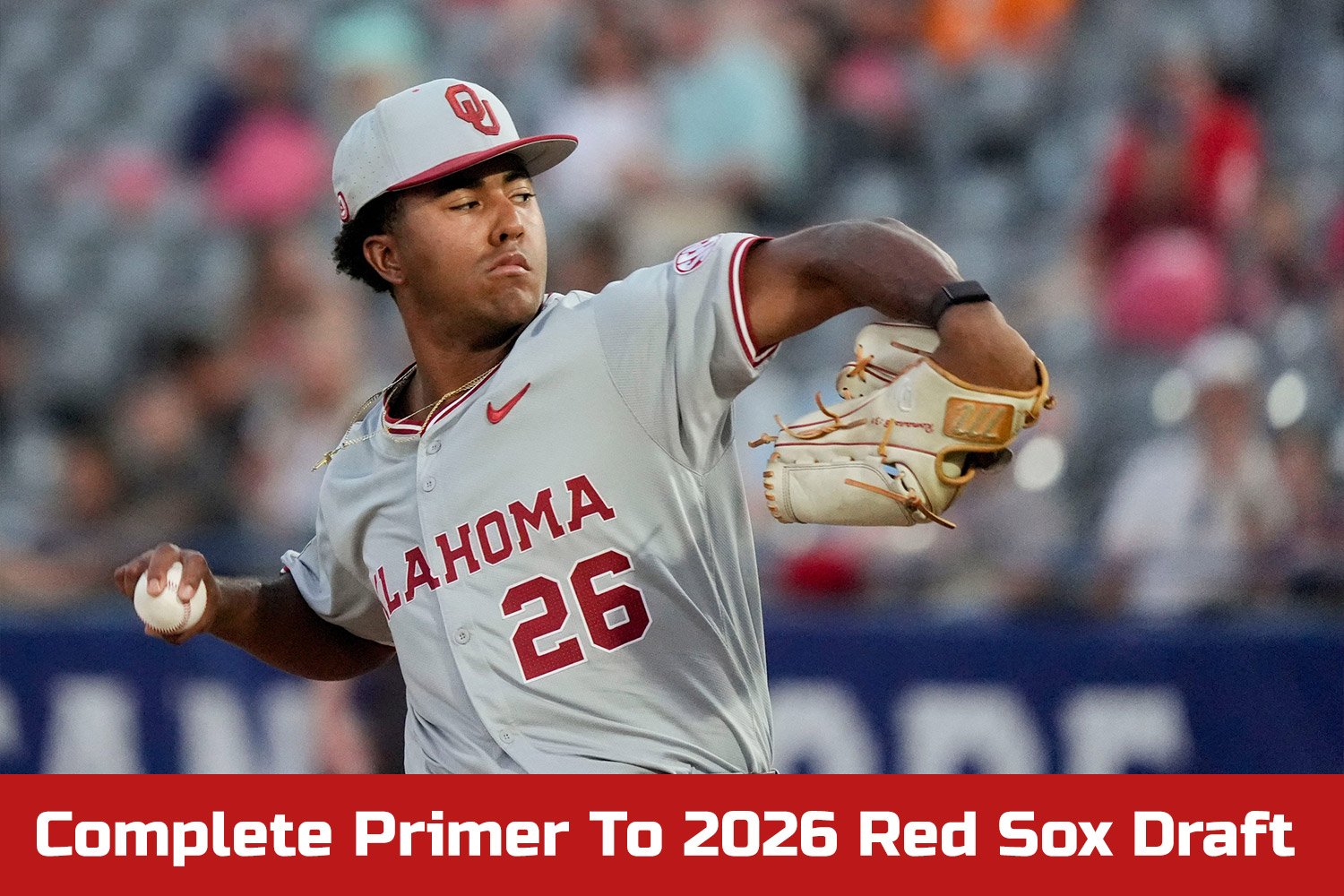 This guide is a comprehensive look at the 2026 MLB Draft with a focus on the Boston Red Sox. You’ll find a list of key dates for the draft cycle, including the release of bonus pools and pick values, the MLB Draft combine, and a breakdown of the draft itself. Additionally, you’ll find an overview of the draft combine and MLB draft weekend, in addition to links to other important draft resources like the consensus board. Red Sox 2025 MLB Draft Recap The Red Sox leaned into arms early in the 2025 draft. They selected Oklahoma righty Kyson Witherspoon at 15th overall, followed by Tennessee flamethrower Marcus Phillips in Comp Round A. Boston also tabbed LSU right-hander Anthony Eyanson in the third round, one of the most impressive prospect arms in spring training after appearing to undergo a major velocity breakout. The Red Sox did select some bats, drafting hit-first infielder Henry Godbout out of Virginia with the 75th overall pick, before taking free-swinging, power-hitting shortstop Mason White out of Arizona with the 118th overall pick. When Is The 2026 MLB Draft? April 1st 2026 - MLB announced draft bonus pools and pick values June 2026 - MLB Draft Combine (Chase Field, Arizona) July 11th - 12th: 2026 MLB Draft (Philadelphia, PA) July 11th - Rounds 1-4 (time TBA) July 12th - Round 5 through Round 20 (time TBA) 2026 MLB Draft Combine The draft combine is a newer event that started in the 2021 draft cycle. Held over a five-day period around a month before the draft itself, it serves as an opportunity for prospects to showcase their talents and boost their draft stock, while giving organizations better access to potential picks. In addition to medical examinations and educational programming, players have an opportunity to meet with teams in advance of the draft. Additionally, there are a number of televised workouts, featuring infield and outfield drills, batting practice for hitters, and bullpens for pitchers, all of which are tracked and underpinned by Statcast data. There is an incentive for players to attend and complete medicals, as prospects are guaranteed 75 percent of their draft slot bonus if they participate and complete medicals. How Many Rounds Are There In The MLB Draft? There is yet another design shift ahead of the 2026 draft cycle. It was shortened from a three-day event to a two-day event. Previously, day one included rounds 1 through the supplemental second round, day two included rounds 3 through 10, and day three included rounds 10 through 20. For the 2026 cycle, day one will be adjusted to include rounds one through four (~135 picks). The draft will conclude on day two with rounds five through twenty. MLB Draft Day One Explained The first day of the draft can be chaotic, as additional rounds and picks are in play beyond rounds one and two. The top of the draft (top 6 picks) is now determined by the draft lottery. Every non-playoff team is entered into the lottery, giving them the opportunity to move up in the draft order. Non-lottery-eligible teams are picked in the order they are eliminated from the postseason, with regular-season record ties broken. After the first round, prospect promotion incentive picks take place. If an eligible player wins Rookie of the Year, they earn their organization an extra pick immediately after the completion of the first round. Next come compensation picks, where teams who extend the qualifying offer to a player (who rejects it) earn an additional draft pick. Compensation pick positions depend on the contract size signed by the player rejecting the qualifying offer, as well as the payroll of the organization receiving them (there are additional compensation picks after competitive balance round B and the fourth round). After any compensation picks, comes the competitive balance round A. Teams that have one of the ten smallest markets or ten smallest revenue pools receive an additional pick in round A or round B, on an annually rotating basis. The first day of the draft is capped by the second round, competitive balance round B, and the third and fourth rounds, which typically takes us through approximately 135 picks. MLB Draft Bonus Pool Allocations & Pick Values Prior to the draft, in April, MLB announces each team's bonus pool for the forthcoming draft cycle and the value of every pick in the top 10 rounds. Each pick in the first ten rounds of the draft is assigned a value, with the total of the slots for the picks each organization has in the top ten rounds comprising their total ‘bonus pool’. Organizations can sign a player to a deal greater than a slot or less than a slot, depending on their negotiations with the player, so it’s useful to think of the slots as ‘guidelines’ and little more. Organizations are allowed to spend up to 5% more than their total pool without incurring a penalty, a choice many teams take advantage of. The Twins and the Rockies are the only teams that have never spent any overage on their bonus pool. Any amount up to 5% over the pool is met with a 75% tax on the overage. If a team spends between 5-10% more than their pool, the penalty is 75% tax on the overage and loss of a future first-rounder. Any team that exceeds its bonus pool by more than 10% up to 15% pays 100% tax on the overage and will lose a first and second-round future pick. Any team that exceeds its bonus pool by more than 15% loses two future first-round picks in addition to paying 100% tax on the overage. Rounds 11-20 work differently from the first half of the draft. These picks do not come with an assigned slot value. Teams can spend up to $150,000 per pick without that spending coming out of their bonus pool. If they spend over that amount, any overage will be deducted from their bonus pool. For example, an 11th round pick signing for $250,000 will result in $100,000 being subtracted from that team’s bonus pool. This is where some financial strategy comes into play. Often, teams will look to accrue some ‘savings’ from their bonus pool so they can spend over the maximum of $150,000 for a prospect in the second half of the draft. NOTE: Slot values increased by 2.5% from 2025 to 2026. View Red Sox Mock Draft Board Red Sox 2026 MLB Draft Bonus Pool Round Pick Slot Value Round 1 20th $4,373,900 Comp B (Durbin Trade) 67th $1,317,300 Round 3 96th $815,700 Round 5 156th $454,100 Round 6 185th $352,900 Round 7 214th $278,700 Round 8 244th $227,200 Round 9 274th $205,400 Round 10 304th $194,000 Total Bonus Pool Allocation $8,219,200 (23rd in MLB)
 -
I take MLB mock draft rankings from major industry outlets like MLB Pipeline, ESPN, The Athletic (and many others) to form a consensus board, with a working hypothesis that using this approach will eliminate some of the noise and variance in MLB Draft mock rankings. The Boston Red Sox’s first five picks are: Round 1: 20th Overall Competitive Balance Round B: 67th Overall Round 3: 96th Overall Round 5: 156th Overall Round 6: 185th Overall Round 1: Ace Reese, 3B, Mississippi State Reese has raked for Mississippi State since transferring from Houston ahead of his sophomore campaign. He's one of the better dual hit/power threats in the class, with any ceiling on his value being placed by an uncertain defensive home and limited supplementary tools. Reese stands 6'4, 220, and has primarily played third base and first base in college. It's a solid arm, but fringe-to-average run and fielding tools. That might mean a long-term home at first base, which requires a greater level of offensive production. Offensively, Reese shines. It's good bat speed and excellent raw power. He can homer to any part of the park (21 in 2025). Reese displays good bat-to-ball skills, both in and out of the strike zone, and he takes plenty of walks. A slightly elevated strikeout rate is rooted in his propensity to chase and expand the zone. If he can rein that in, he'll be a nightmare at-bat. Reese finished 2026 with a .336/.432/.721 line with 24 home runs (27 XBH), a 14 BB%, a 21.6 K%, and a 144 wRC+. His approach and defensive home remain the only questions in an excellent, offensively driven profile. Competitive Balance Round B: Cole Koeninger, SS/RHP, Keller HS (TX) Cole Koeninger is a Tennessee commit on the older side for the prep class; he's also one of the most legitimate two-way prospects on the high school side of the class. A terrific athlete with plus speed at 6'3, 210 pounds, Koeninger has typically played shortstop, with a plus arm and above average actions in the infield that could lend themselves to any position on the dirt. Offensively, at his best, it's a clean, short right-handed stroke. He provides plenty of impact and extra base power. Occasionally, his swing can look off balance, leading to some questions about the hit tool, especially given a poor summer showcase in 2025. On the bump, Koeninger relies on a fastball that has taken a velo jump in the past year. It's been up to 97 mph but sits 93-94 mph. It's complemented by a big downer curveball and an emerging changeup. It remains to be seen which side of the ball Koeninger will focus on long term. As soon as he settles into one, the skills will likely jump forward with additional attention and focus. Round 3: Trey Ebel, SS, Corona HS (CA) Trey Ebel is the younger brother of Brady Ebel, drafted 32nd overall by the Brewers in 2025, and the son of Dino Ebel, the Dodgers' long-time third base coach. Ebel will be 17 years old on draft day, a face likely to make him pop on organizational models. Ebel is a right-handed hitter with what's currently a hit over power profile. He has an excellent approach and rarely chases pitches out of the zone. In the summer of 2025, he put together some of the best contact and approach numbers of any player on the summer circuit. In the last 12 months, Ebel has grown into more bat speed. That has translated to in-game, pull-side power, which can likely further develop to solid average power in time. Defensively, there are good infield actions and a solid arm. He's a high baseball IQ player whose intelligence and feel for the game will likely help him outperform his physical tools. Ebel is committed to Texas A&M and is one of the sharpest risers on the prep side of the draft in the last few months leading up to day one. Curious to see the players around the Boston Red Sox picks in the draft? Click on the button below to view the entire mock draft board! View full article
-
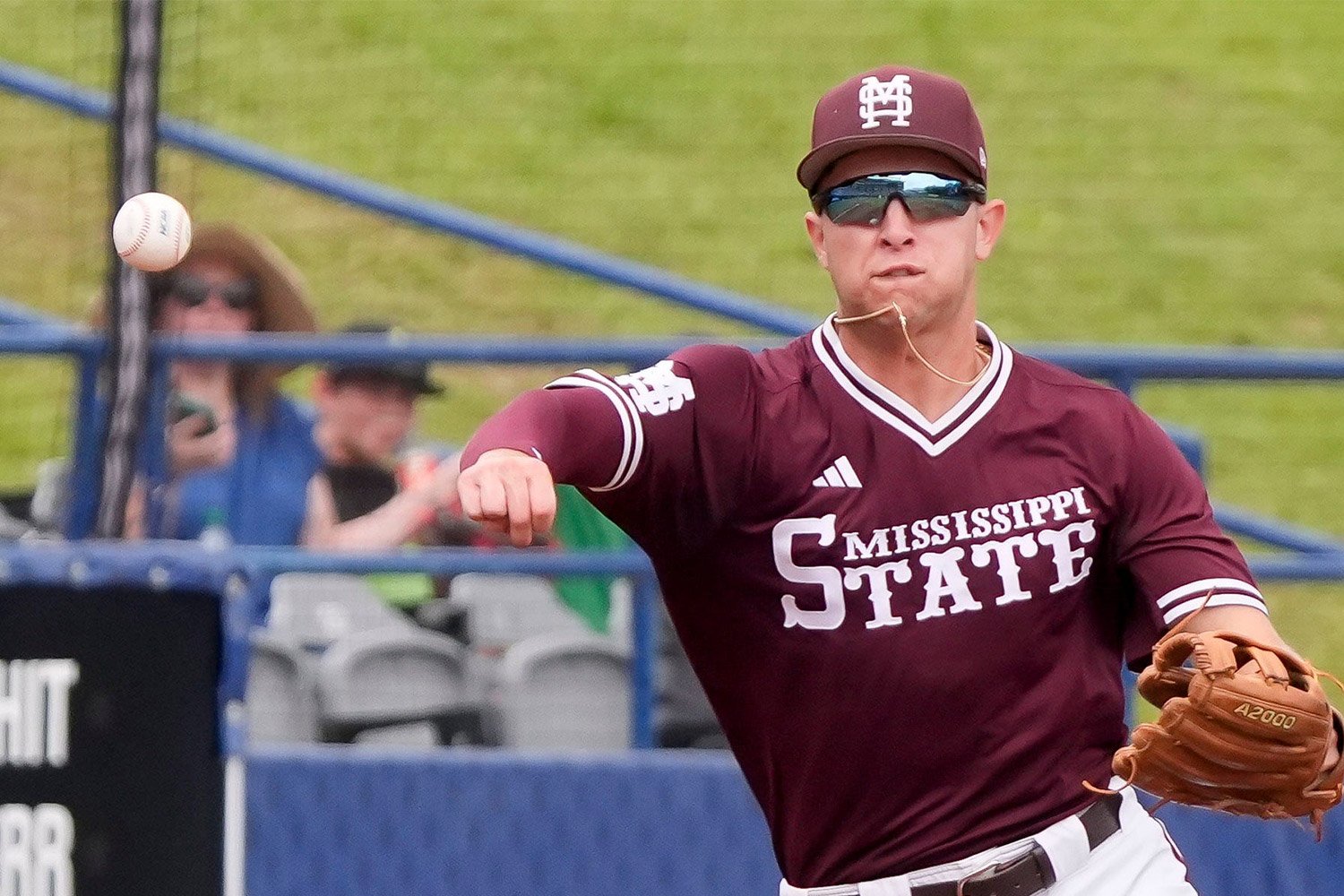 I take MLB mock draft rankings from major industry outlets like MLB Pipeline, ESPN, The Athletic (and many others) to form a consensus board, with a working hypothesis that using this approach will eliminate some of the noise and variance in MLB Draft mock rankings. The Boston Red Sox’s first five picks are: Round 1: 20th Overall Competitive Balance Round B: 67th Overall Round 3: 96th Overall Round 5: 156th Overall Round 6: 185th Overall Round 1: Ace Reese, 3B, Mississippi State Reese has raked for Mississippi State since transferring from Houston ahead of his sophomore campaign. He's one of the better dual hit/power threats in the class, with any ceiling on his value being placed by an uncertain defensive home and limited supplementary tools. Reese stands 6'4, 220, and has primarily played third base and first base in college. It's a solid arm, but fringe-to-average run and fielding tools. That might mean a long-term home at first base, which requires a greater level of offensive production. Offensively, Reese shines. It's good bat speed and excellent raw power. He can homer to any part of the park (21 in 2025). Reese displays good bat-to-ball skills, both in and out of the strike zone, and he takes plenty of walks. A slightly elevated strikeout rate is rooted in his propensity to chase and expand the zone. If he can rein that in, he'll be a nightmare at-bat. Reese finished 2026 with a .336/.432/.721 line with 24 home runs (27 XBH), a 14 BB%, a 21.6 K%, and a 144 wRC+. His approach and defensive home remain the only questions in an excellent, offensively driven profile. Competitive Balance Round B: Cole Koeninger, SS/RHP, Keller HS (TX) Cole Koeninger is a Tennessee commit on the older side for the prep class; he's also one of the most legitimate two-way prospects on the high school side of the class. A terrific athlete with plus speed at 6'3, 210 pounds, Koeninger has typically played shortstop, with a plus arm and above average actions in the infield that could lend themselves to any position on the dirt. Offensively, at his best, it's a clean, short right-handed stroke. He provides plenty of impact and extra base power. Occasionally, his swing can look off balance, leading to some questions about the hit tool, especially given a poor summer showcase in 2025. On the bump, Koeninger relies on a fastball that has taken a velo jump in the past year. It's been up to 97 mph but sits 93-94 mph. It's complemented by a big downer curveball and an emerging changeup. It remains to be seen which side of the ball Koeninger will focus on long term. As soon as he settles into one, the skills will likely jump forward with additional attention and focus. Round 3: Trey Ebel, SS, Corona HS (CA) Trey Ebel is the younger brother of Brady Ebel, drafted 32nd overall by the Brewers in 2025, and the son of Dino Ebel, the Dodgers' long-time third base coach. Ebel will be 17 years old on draft day, a face likely to make him pop on organizational models. Ebel is a right-handed hitter with what's currently a hit over power profile. He has an excellent approach and rarely chases pitches out of the zone. In the summer of 2025, he put together some of the best contact and approach numbers of any player on the summer circuit. In the last 12 months, Ebel has grown into more bat speed. That has translated to in-game, pull-side power, which can likely further develop to solid average power in time. Defensively, there are good infield actions and a solid arm. He's a high baseball IQ player whose intelligence and feel for the game will likely help him outperform his physical tools. Ebel is committed to Texas A&M and is one of the sharpest risers on the prep side of the draft in the last few months leading up to day one. Curious to see the players around the Boston Red Sox picks in the draft? Click on the button below to view the entire mock draft board!
 -
 It's time to check back in with another Red Sox mock. The MLB Draft is just five weeks away. This class is as muddled as any I've covered, though it's plenty deep in talent. You can find our mock consensus board here. Let's check in on some player profiles it's currently mocking to the Red Sox with their first few picks in July. With the 20th Overall Pick, the Red Sox Select: Ace Reese, CI, Mississippi State Reese has raked for Mississippi State since transferring from Houston ahead of his sophomore campaign. He's one of the better dual hit/power threats in the class, with any ceiling on his value being placed by an uncertain defensive home and limited supplementary tools. Reese stands 6'4, 220 pounds and has primarily played third base and first base in college. It's a solid arm, but fringe-to-average run and fielding tools. That might mean a long-term home at first base, which requires a greater level of offensive production. Offensively, Reese shines. It's good bat speed and excellent raw power. He can homer to any part of the park (21 in 2025). Reese displays good bat-to-ball skills, both in and out of the strike zone, and he takes plenty of walks. A slightly elevated strikeout rate is rooted in his propensity to chase and expand the zone. If he can reign that in, he'll be a nightmarish at-bat. Reese is near the top of D1 baseball in barrel percentage, EV90, and his ability to pull the ball in the air. His approach and defensive home remain the only questions in an excellent offensively driven profile. With the 67th Overall Pick, the Red Sox Select: Cooper Harris, RHP, Flower Mound HS, TX Harris is one of my favorite prep pitching prospects in the class. He's on the younger side, and will have just turned 18 by the time day one rolls around. It's a good frame at 6'3, 200 pounds, with plenty more room to add size and strength. It's a clean, rhythmic delivery from Harris, who throws from a higher three quarter slot that generates some steepness and angle to his arm stroke. His fastball has been as high as 96 mph, but will sit in the 93-94 mph range currently, with more in the tank. Harris has two distinct breaking balls, a two plane slider he throws in the low 80s, and a depthier curveball in the high 70s. There's also a burgeoning changeup in the mix with good fade. Harris is how you draw up a prep pitching prospect. Young and projectable, with good stuff and the ability to throw plenty of strikes. In a year where the prep pitching talent wasn't so abundant, he'd be ranked quite a bit higher. With the 96th Overall Pick, the Red Sox Select: Caden Bogenpohl, OF, Missouri State Caden Bogenpohl is one of the most physically imposing hitters in the entire class at 6'6, 240 pounds. Raw power is the calling card here. Bogenpohl has generated exit velocities north of 117 mph in 2026, figures among the very best in the class. He pulverizes fastballs and pitchers on the inner third of the plate but has a much tougher time when pitched away with secondaries or up with velocity. There are doubts about the hit tool with Boegnpohl, who's posted a whiff rate north of 27% in 2026 against primarily mid-major competition. In terms of supplementary tools, it's a solid profile. He's played plenty of center field, with good speed for his size and above average arm strength. It's a profile best suited for right field, if he can hit enough.
 -
It's time to check back in with another Red Sox mock. The MLB Draft is just five weeks away. This class is as muddled as any I've covered, though it's plenty deep in talent. You can find our mock consensus board here. Let's check in on some player profiles it's currently mocking to the Red Sox with their first few picks in July. With the 20th Overall Pick, the Red Sox Select: Ace Reese, CI, Mississippi State Reese has raked for Mississippi State since transferring from Houston ahead of his sophomore campaign. He's one of the better dual hit/power threats in the class, with any ceiling on his value being placed by an uncertain defensive home and limited supplementary tools. Reese stands 6'4, 220 pounds and has primarily played third base and first base in college. It's a solid arm, but fringe-to-average run and fielding tools. That might mean a long-term home at first base, which requires a greater level of offensive production. Offensively, Reese shines. It's good bat speed and excellent raw power. He can homer to any part of the park (21 in 2025). Reese displays good bat-to-ball skills, both in and out of the strike zone, and he takes plenty of walks. A slightly elevated strikeout rate is rooted in his propensity to chase and expand the zone. If he can reign that in, he'll be a nightmarish at-bat. Reese is near the top of D1 baseball in barrel percentage, EV90, and his ability to pull the ball in the air. His approach and defensive home remain the only questions in an excellent offensively driven profile. With the 67th Overall Pick, the Red Sox Select: Cooper Harris, RHP, Flower Mound HS, TX Harris is one of my favorite prep pitching prospects in the class. He's on the younger side, and will have just turned 18 by the time day one rolls around. It's a good frame at 6'3, 200 pounds, with plenty more room to add size and strength. It's a clean, rhythmic delivery from Harris, who throws from a higher three quarter slot that generates some steepness and angle to his arm stroke. His fastball has been as high as 96 mph, but will sit in the 93-94 mph range currently, with more in the tank. Harris has two distinct breaking balls, a two plane slider he throws in the low 80s, and a depthier curveball in the high 70s. There's also a burgeoning changeup in the mix with good fade. Harris is how you draw up a prep pitching prospect. Young and projectable, with good stuff and the ability to throw plenty of strikes. In a year where the prep pitching talent wasn't so abundant, he'd be ranked quite a bit higher. With the 96th Overall Pick, the Red Sox Select: Caden Bogenpohl, OF, Missouri State Caden Bogenpohl is one of the most physically imposing hitters in the entire class at 6'6, 240 pounds. Raw power is the calling card here. Bogenpohl has generated exit velocities north of 117 mph in 2026, figures among the very best in the class. He pulverizes fastballs and pitchers on the inner third of the plate but has a much tougher time when pitched away with secondaries or up with velocity. There are doubts about the hit tool with Boegnpohl, who's posted a whiff rate north of 27% in 2026 against primarily mid-major competition. In terms of supplementary tools, it's a solid profile. He's played plenty of center field, with good speed for his size and above average arm strength. It's a profile best suited for right field, if he can hit enough. View full article
-
MLB Mock Draft: Red Sox Nab Elite Hit Tool With No. 20 Overall Pick
Jamie Cameron posted an article in MLB Draft
 Welcome to the 2026 MLB Consensus Draft Board. This is the fifth version of the board, which started in 2022 as a top thirty. Since then, it’s expanded to around 150 players on an annual basis, featuring at eight different team sites. So what is the Consensus Board? How is it made? How should it be used? The concept is loosely based on Arif Hasan’s NFL Consensus Board. It’s meant to be a tool for folks getting interested in the MLB Draft. As I was learning about the draft, I struggled to navigate wildly varied rankings and evaluations of players. The Consensus Board takes every major publicly available board and combines them into a consensus ranking, eliminating some of the noise and variance of an extremely challenging evaluation process. We’ve found this process to be useful in ranking players in appropriate ranges through around the first five rounds of the draft. On the board, you’ll find player names, handedness, listed height and weight, age, and a write-up, walking through their strengths and opportunities as a prospect. As we go through the cycle, these will be updated with tweaks, final college stats, etc. Every time a major outlet (Baseball America, ESPN, The Athletic, etc.) releases an updated list, the consensus ranking shifts. As such, the board is a lagging reflection of what the industry thinks of the class and its key players. The final Consensus Board will incorporate at least 10 other boards as inputs. New MLB Mock Draft Board Features There are a few important features to point out to help you navigate the board. There’s a search bar to help you find players of interest. If you click ‘expand’ the board will focus on the writeup you are engaged with, in addition to one immediately above it and one immediately below it. Additionally, you’ll find the logo of your team next to their draft slots to help understand where they are picking. There will be a player slotted there, based on their consensus ranking. Rather than using that ranking as an indicator of who they might actually pick, it’s more useful to use it as a proxy for what caliber of talent is available at that slot. We’ll dig in deeper to team-specific mock drafts later in the cycle. The last important note is that this year the board features ‘push’ updates. It updates automatically every hour. The board is typically updated with new write-ups five days per week, so check back regularly for updates. At No. 20, the Boston Red Sox Select: Derek Curiel, OF, LSU Curiel was a highly touted prep prospect out of Southern California ahead of the 2024 draft but found his way to campus in Baton Rouge as one of the most anticipated freshmen in the country. Fast forward to 2026, and he's draft eligible as a sophomore with one of the best hit tools in the entire draft class. Curiel has a direct, smooth, left-handed swing. It's elite bat to ball skills, as Curiel ran an 88% overall contact rate (95% in zone) in 2025, while rarely chasing and taking plenty of walks. While he finds the barrel often, the questions around Curiel's profile center around his power projection. He managed 7 home runs as a freshman and his top end EVs are not the portent of significant power as a pro. Curiel is an above average runner with good range who should stick in center field as a pro, with a fringe average arm. If he can develop more power, this becomes a much more interesting profile. Right now, it's a table setting, top of the lineup type with strong on-base skills and an outstanding hit tool.
 -
Welcome to the 2026 MLB Consensus Draft Board. This is the fifth version of the board, which started in 2022 as a top thirty. Since then, it’s expanded to around 150 players on an annual basis, featuring at eight different team sites. So what is the Consensus Board? How is it made? How should it be used? The concept is loosely based on Arif Hasan’s NFL Consensus Board. It’s meant to be a tool for folks getting interested in the MLB Draft. As I was learning about the draft, I struggled to navigate wildly varied rankings and evaluations of players. The Consensus Board takes every major publicly available board and combines them into a consensus ranking, eliminating some of the noise and variance of an extremely challenging evaluation process. We’ve found this process to be useful in ranking players in appropriate ranges through around the first five rounds of the draft. On the board, you’ll find player names, handedness, listed height and weight, age, and a write-up, walking through their strengths and opportunities as a prospect. As we go through the cycle, these will be updated with tweaks, final college stats, etc. Every time a major outlet (Baseball America, ESPN, The Athletic, etc.) releases an updated list, the consensus ranking shifts. As such, the board is a lagging reflection of what the industry thinks of the class and its key players. The final Consensus Board will incorporate at least 10 other boards as inputs. New MLB Mock Draft Board Features There are a few important features to point out to help you navigate the board. There’s a search bar to help you find players of interest. If you click ‘expand’ the board will focus on the writeup you are engaged with, in addition to one immediately above it and one immediately below it. Additionally, you’ll find the logo of your team next to their draft slots to help understand where they are picking. There will be a player slotted there, based on their consensus ranking. Rather than using that ranking as an indicator of who they might actually pick, it’s more useful to use it as a proxy for what caliber of talent is available at that slot. We’ll dig in deeper to team-specific mock drafts later in the cycle. The last important note is that this year the board features ‘push’ updates. It updates automatically every hour. The board is typically updated with new write-ups five days per week, so check back regularly for updates. At #20, The Boston Red Sox Select: Derek Curiel, OF, LSU Curiel was a highly touted prep prospect out of Southern California ahead of the 2024 draft but found his way to campus in Baton Rouge as one of the most anticipated freshmen in the country. Fast forward to 2026, and he's draft eligible as a sophomore with one of the best hit tools in the entire draft class. Curiel has a direct, smooth, left-handed swing. It's elite bat to ball skills, as Curiel ran an 88% overall contact rate (95% in zone) in 2025, while rarely chasing and taking plenty of walks. While he finds the barrel often, the questions around Curiel's profile center around his power projection. He managed 7 home runs as a freshman and his top end EVs are not the portent of significant power as a pro. Curiel is an above average runner with good range who should stick in center field as a pro, with a fringe average arm. If he can develop more power, this becomes a much more interesting profile. Right now, it's a table setting, top of the lineup type with strong on-base skills and an outstanding hit tool. View full article
-
Destination, The Show: Episode 86. 2025 MLB Draft Review
Jamie Cameron posted an article in Podcasts
 In episode 86 of Destination: The Show, Jeremy and Jamie do a full recap of the 2025 MLB Draft. They dig in on the primary picks for the Blue Jays, Padres, and Red Sox before spending some time on the Cubs. Is Chicago leaning into more college upside and volatility than other teams? The guys spend a good amount of time examining the Brewers draft, one of Jamie’s favorites, in which the Brewers took a typical power-hitting corner infield bat before loading up on interesting prep profiles. Finally, they review a tweaked approach from the Twins, who leaned into more volatility and upside with the college arms, digging in specifically on Riley Quick, James Ellwanger, Jason Reitz, and Matt Barr. 0:00 Intro 4:25 Housekeeping 7:50 Episode 86 coverage plan 8:30 Toronto Blue Jays 17:59 San Diego Padres 21:40 Boston Red Sox 27:53 Chicago Cubs 38:48 Milwaukee Brewers 52:11 Minnesota Twins 53:36 Marek Houston 1:00:19 Quentin Young 1:04:20 Riley Quick 1:11:00 James Ellwanger, Jason Reitz, Matt Barr 1:21:23 Closing You can support the show by downloading it from your preferred podcast platform, including iTunes and Spotify. If you enjoy our content, consider leaving us a five-star rating and review, and also share or retweet DTS-related content. You can follow us on Twitter @DTS_POD1, @Jeremynygaard, @J_D_Cameron, and @TheodoreTollef1. We’re now on Bluesky @destinationtheshow.bsky.social. You can also find full episodes and clips of our shows on our YouTube page @DestinationTheShow.
 -
In episode 86 of Destination: The Show, Jeremy and Jamie do a full recap of the 2025 MLB Draft. They dig in on the primary picks for the Blue Jays, Padres, and Red Sox before spending some time on the Cubs. Is Chicago leaning into more college upside and volatility than other teams? The guys spend a good amount of time examining the Brewers draft, one of Jamie’s favorites, in which the Brewers took a typical power-hitting corner infield bat before loading up on interesting prep profiles. Finally, they review a tweaked approach from the Twins, who leaned into more volatility and upside with the college arms, digging in specifically on Riley Quick, James Ellwanger, Jason Reitz, and Matt Barr. 0:00 Intro 4:25 Housekeeping 7:50 Episode 86 coverage plan 8:30 Toronto Blue Jays 17:59 San Diego Padres 21:40 Boston Red Sox 27:53 Chicago Cubs 38:48 Milwaukee Brewers 52:11 Minnesota Twins 53:36 Marek Houston 1:00:19 Quentin Young 1:04:20 Riley Quick 1:11:00 James Ellwanger, Jason Reitz, Matt Barr 1:21:23 Closing You can support the show by downloading it from your preferred podcast platform, including iTunes and Spotify. If you enjoy our content, consider leaving us a five-star rating and review, and also share or retweet DTS-related content. You can follow us on Twitter @DTS_POD1, @Jeremynygaard, @J_D_Cameron, and @TheodoreTollef1. We’re now on Bluesky @destinationtheshow.bsky.social. You can also find full episodes and clips of our shows on our YouTube page @DestinationTheShow. View full article
-
 In episode 85 of Destination: The Show, Jeremy and Jamie live stream an episode to get ready for day one of the 2025 MLB Draft. They walk through a mock draft of the first 36 picks and alternate picking for teams based on fit, industry steam, and value. The guys pause at each team we cover in more depth to talk about options from particular demographics that make sense with their picks. Destination: The Show will be live streaming throughout day one of the 2025 MLB Draft, breaking down every pick, kicking off at 4:30 CT on Sunday, July 13th. 0:00 Intro 3:59 Mock Draft preview 5:10 Picks 1-5 14:34 Picks 6-7 18:08 Blue Jays at 8 22:35 Picks 9-14 32:35 Red Sox at 15 35:00 Twins at 16 45:40 Cubs at 17 47:00 Picks 18-19 48:55 Brewers at 20 51:33 Picks 21-24 56:04 Padres at 25 58:00 Picks 26-31 1:07:52 Brewers at 32 1:09:45 Red Sox at 33 1:10:43 Picks 34-35 1:12:18 Twins at 36 1:16:43 Listener Questions You can support the show by downloading it from wherever you get your podcasts, including iTunes and Spotify. If you enjoy the content, consider leaving us a five-star rating and review in addition to sharing or retweeting DTS-related content. You can follow us on Twitter @DTS_POD1, @Jeremynygaard, @J_D_Cameron, and @TheodoreTollef1. We’re now on Bluesky @destinationtheshow.bsky.social. You can also find full episodes and clips of our shows on our YouTube page @DestinationTheShow.
 -
In episode 85 of Destination: The Show, Jeremy and Jamie live stream an episode to get ready for day one of the 2025 MLB Draft. They walk through a mock draft of the first 36 picks and alternate picking for teams based on fit, industry steam, and value. The guys pause at each team we cover in more depth to talk about options from particular demographics that make sense with their picks. Destination: The Show will be live streaming throughout day one of the 2025 MLB Draft, breaking down every pick, kicking off at 4:30 CT on Sunday, July 13th. 0:00 Intro 3:59 Mock Draft preview 5:10 Picks 1-5 14:34 Picks 6-7 18:08 Blue Jays at 8 22:35 Picks 9-14 32:35 Red Sox at 15 35:00 Twins at 16 45:40 Cubs at 17 47:00 Picks 18-19 48:55 Brewers at 20 51:33 Picks 21-24 56:04 Padres at 25 58:00 Picks 26-31 1:07:52 Brewers at 32 1:09:45 Red Sox at 33 1:10:43 Picks 34-35 1:12:18 Twins at 36 1:16:43 Listener Questions You can support the show by downloading it from wherever you get your podcasts, including iTunes and Spotify. If you enjoy the content, consider leaving us a five-star rating and review in addition to sharing or retweeting DTS-related content. You can follow us on Twitter @DTS_POD1, @Jeremynygaard, @J_D_Cameron, and @TheodoreTollef1. We’re now on Bluesky @destinationtheshow.bsky.social. You can also find full episodes and clips of our shows on our YouTube page @DestinationTheShow. View full article
-
Talk Sox 2025 MLB Consensus Draft Board and Day One Live Stream
Jamie Cameron posted an article in MLB Draft
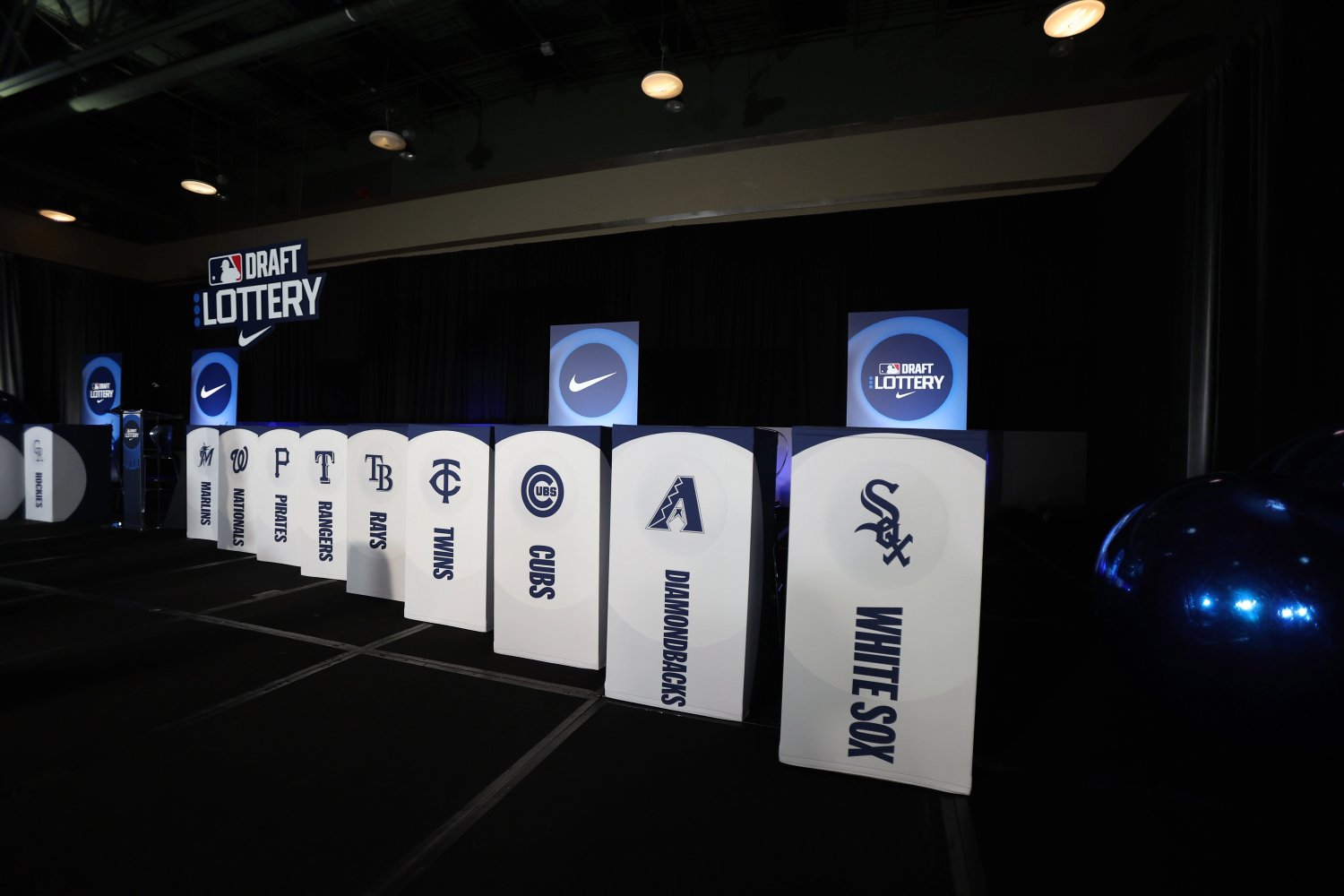 Draft week is finally here! We’ll have a ton of coverage for you here at Talk Sox. Here’s a few important details to get you oriented to our coverage. The Red Sox finished the 2024 season with the 13th-worst record in MLB. Normally, their draft bonus pool would be lower than other teams who receive compensation picks for being revenue receiving teams. However, the Red Sox will have the 13th-largest bonus pool overall, at $12,409,300. This is a function of receiving an additional pick (33rd overall) from the Brewers as part of the Quinn Priester trade. The Red Sox's top-100 picks and slot values are as follows: Slot value for pick 15: $5,114,200 Slot value for pick 33: $2,898,300 Slot value for pick 75: $1,093,800 (compensation for Nick Pivetta) Slot value for pick 87: $907,200 The Red Sox forfeited their second-round pick for signing a player who received the qualifying offer (Alex Bregman) . You can find our MLB Draft board here. This is a project I’ve been working on since February. The rankings are consensus rankings, taken from leveraging all of the major draft boards in the industry. The goal is to eliminate some of the noise in rankings for casual fans looking to get more interested and get to know the class better. You’ll find the logo from the team next to their pick positions in each round, to give folks an idea of the caliber of talent available in a particular portion of the draft. By Sunday (the first day of the draft), you’ll find a write up for 136 player profiles with biographical information, scouting reports, 2025 performance for college players, and potential fits. The board will be updated every day or so until Day One. Additionally, we’ll be live streaming an episode of Destination: The Show through the entirety of day one. We’ll get started at 5:30 ET/4:30 CT. We’ll bring you information on all Day One picks, live reactions, and team-specific special guests. We hope you’ll join us.
 -
Draft week is finally here! We’ll have a ton of coverage for you here at Talk Sox. Here’s a few important details to get you oriented to our coverage. The Red Sox finished the 2024 season with the 13th worst record in MLB. Normally, their draft bonus pool would be lower than other teams who receive compensation picks for being revenue receiving teams. The Red Sox will have the 13th largest bonus pool overall, at $12,409,300. This is a function of receiving an additional pick (33rd overall) from the Brewers as part of the Quinn Priester trade. The Red Sox top 100 picks and slot values are as follows: Slot value for pick 15: $5,114,200 Slot value for pick 33: $2,898,300 Slot value for pick 75: $1,093,800 (compensation for Nick Pivetta) Slot value for pick 87: $907,200 The Red Sox forfeited their second round pick for signing a player who received the qualifying offer. You can find our MLB Draft board here. This is a project I’ve been working on since February. The rankings are consensus rankings, taken from leveraging all of the major draft boards in the industry. The goal is to eliminate some of the noise in rankings for casual fans looking to get more interested and get to know the class better. You’ll find the logo from the team next to their pick positions in each round, to give folks an idea of the caliber of talent available in a particular portion of the draft. By Sunday, you’ll find a write up for 136 player profiles with biographical information, scouting reports, 2025 performance for college players, and potential fits. The board will be updated every day or so until day one. Additionally, we’ll be live streaming an episode of Destination: The Show through the entirety of day one. We’ll get started at 5:30 ET/4:30 CT. We’ll bring you information on all day one picks, live reactions, and team-specific special guests. We hope you’ll join us. View full article
